2026 NASG Convention Summary

"Michigan Central"
The 2026 NASG Convention was held in Detroit, Michigan from August 5th through August 9th, 2026. A total of 203 people attended the event. The Convention was brought to you by the Southeastern Michigan S Gaugers.
Most photos can be clicked to see a larger version of them.
Quick Jumps
* Bill Lane's extracurricular visits.
Venue
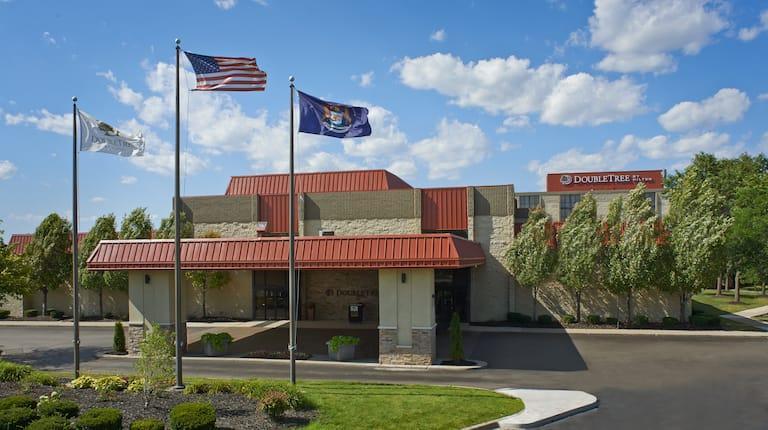
The event was held at the DoubleTree by Hilton Hotel Detroit, Dearborn, MI.
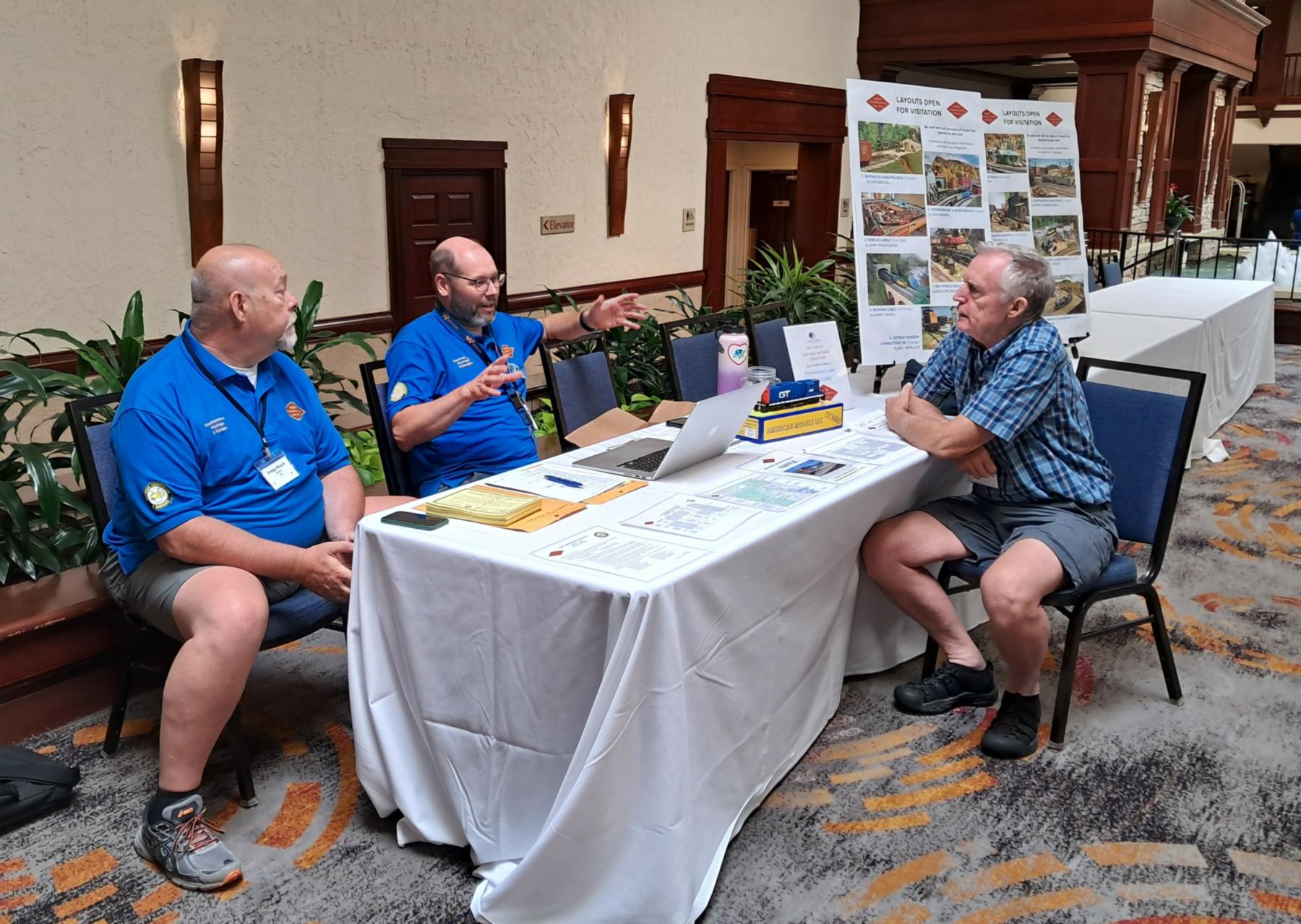
A quiet moment at the Registration Desk, Gregg Wujcik (left), the Convention Vendor Hall Manager, and Jeff Jundt, the Convention's overall Manager, conversing about a potential future Convention.
photo © Gaylord Gill; used by permission

photo © Bill Lane; used by permission
Convention Locomotive
For the first time ever, an NASG Convention hosting group took the gamble at having a Convention Locomotive! Not only that, due to the short notice and the needed lead time to have American Models produce this engine, there was a short time-frame in which members could order it. The engine was a Grand Trunk Western GP9. There were two paint schemes offered, the 1960 and the 1971 versions. Three road numbers were available: 4427, 4428, 4916. As is standard with American Models' ready-to-run engines, these were available in the following configurations: AC motor hi-rail wheels and couplers, DC motor hi-rail wheels and couplers, DC motor scale wheels and couplers. These came with windows and railings installed, but GTW-specific details can be added by the modeler.
The Grand Trunk Western purchased 17 GP9 engines in 1954. They would eventually own 68 of them. Both of the paint schemes they used had red ends and white lettering. The main body of the locomotive was painted black in the early scheme and blue in the later scheme.
The Southeastern Michigan S Gaugers needed a minimum of 30 models ordered to be able to give American Models the go-ahead with the production. When the order deadline of March 1, 2026 was reached, they had a firm commitment for 68 models. These are exclusive models that American Models will never produce again. If you were able to acquire one of them, you have a rare model.

photo © Michael McConnell; used by permission
Convention Car
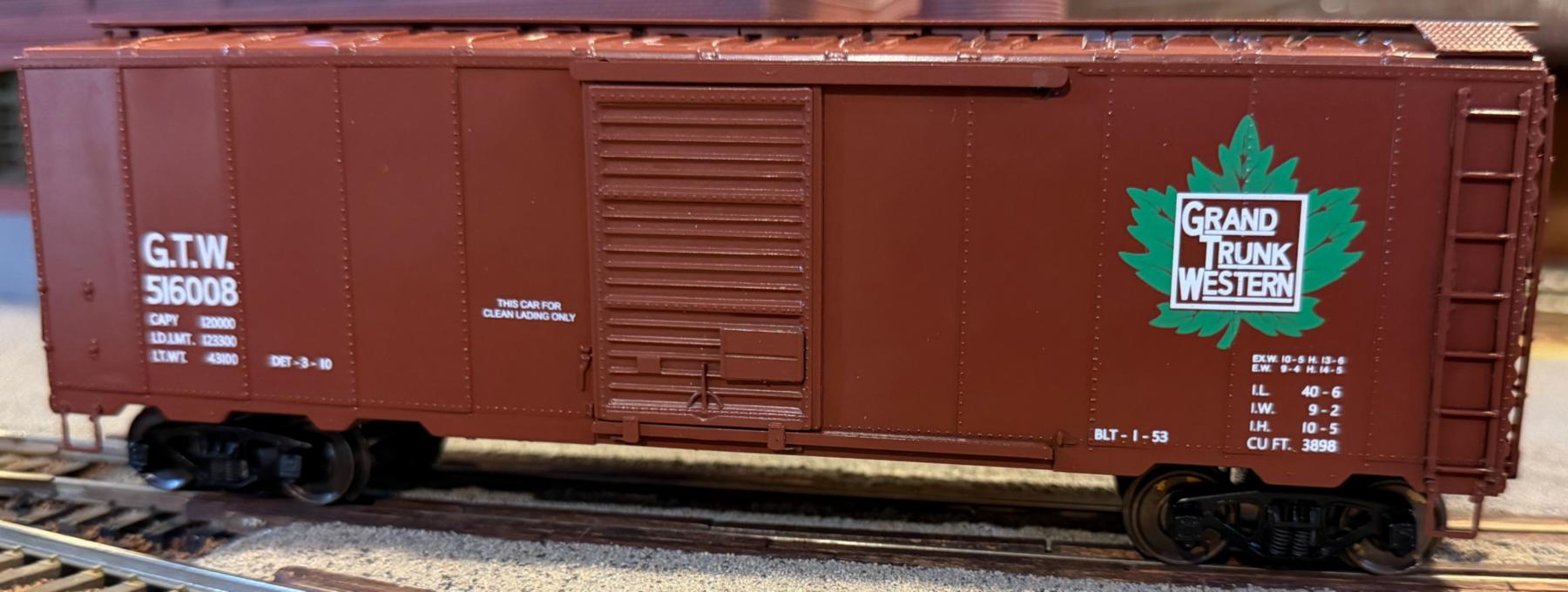
In January of 1953 Grand Trunk Western purchased 250 new 40' type XM box cars. They were built by American Car & Foundry, lot #3755, road numbers 516000 through 516249. These cars had a capacity of 120,000lbs, a light weight of 45,100lbs, and a load limit of 123,900lbs. They were a taller car at 10'6" and held a volume of 3,898 cubic feet. All 516000-series cars were supplied with a specific "box car brown" paint and an eye-catching green maple leaf logo. After a corporate reorganization, many were slowly repainted to an altered brown with the later "squiggle" logo, and, subsequently, with the 1971 blue paint, still with the "squiggle" logo.
The models were produced by American Models, in a livery never done in S-scale before. Available with three road numbers, namely 516008 and 516182 are prototype-accurate numbers, and #2026 as the commemorative car. These were available with either hi-rail trucks and couplers or scale trucks and couplers. Much care has been taken to ensure prototype fidelity. The models match the 516000-series GTW cars in all aspects; doors, roof, sidewalls, and end stampings are correct copies of the prototypes. Considerable research data was compiled to create the original paint colors of the GTW originals. Even the trucks are replicated to match the equipped units. Between the pre-orders and the in-person sales at the Convention, the Convention Car sold out during the Convention.
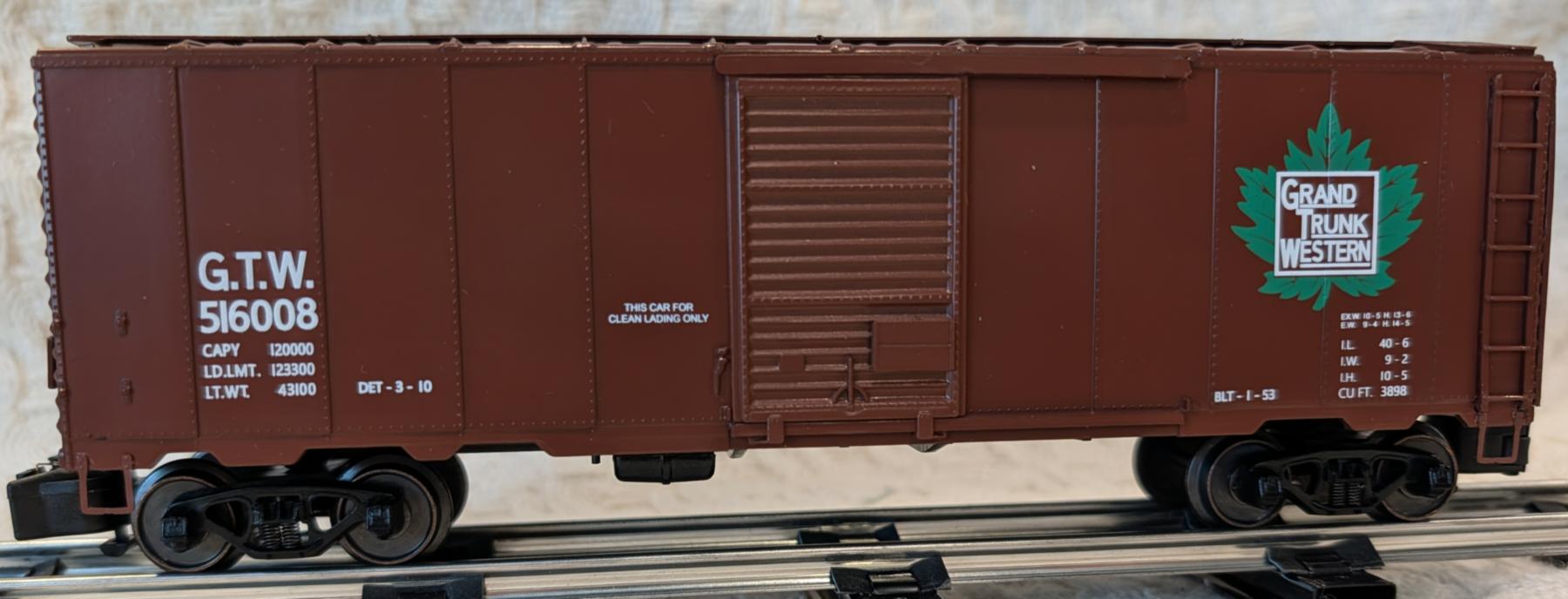
Hi-rail versions.
photo © Chris Crnich; used by permission
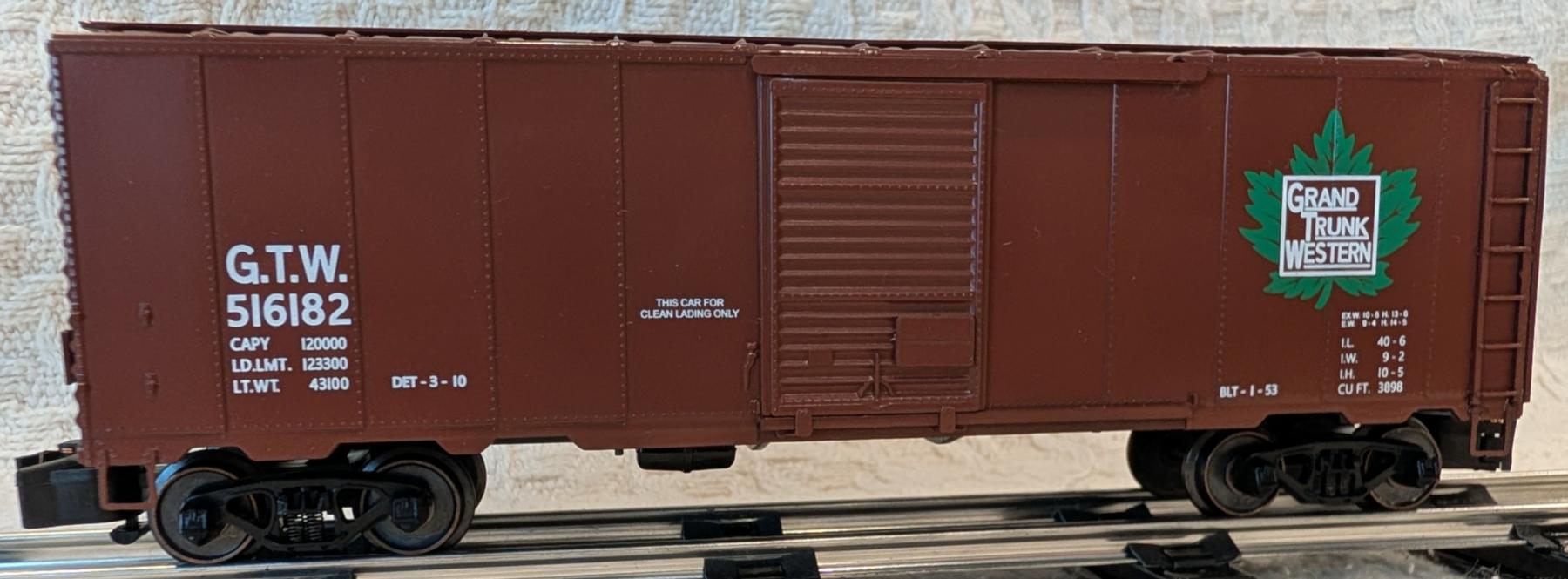
photo © Chris Crnich; used by permission
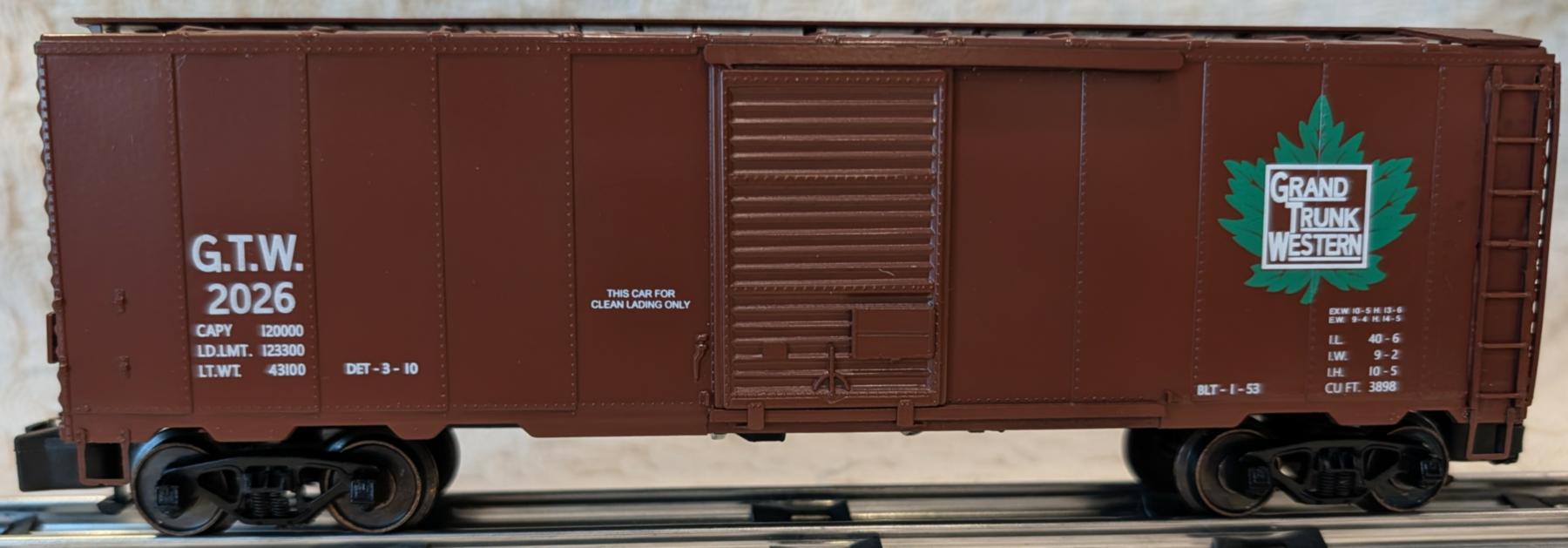
photo © Chris Crnich; used by permission
"Scale" version.
photo © R. James Whipple; used by permission
The Vendor Hall
Commercial Vendors
American Models
Owner: Karen Bashista Hanger
Ready-to-run locomotives, freight cars, passenger cars, cabooses, track, electronics. One of S-scale's main suppliers.
web site
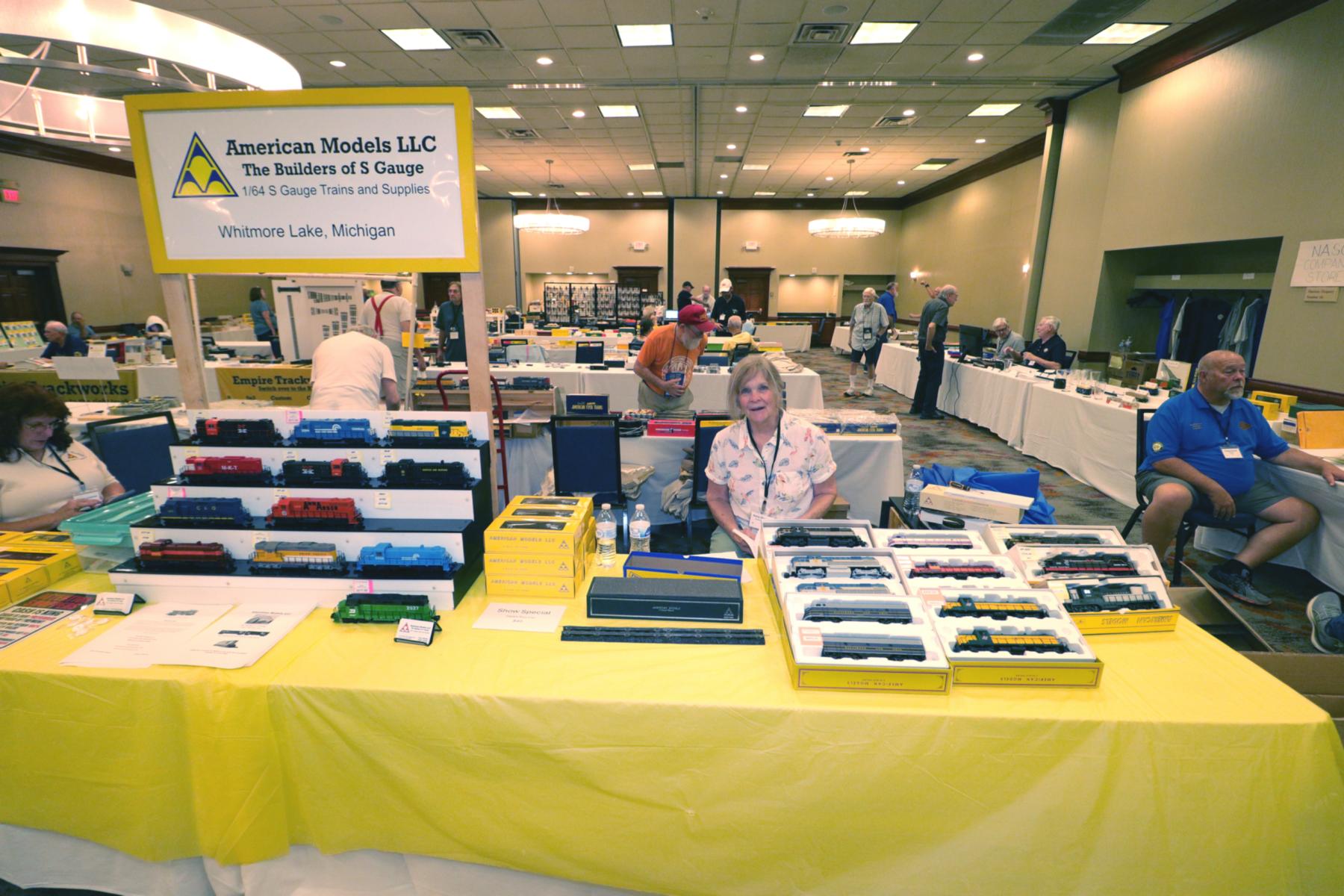
photo © Bill Lane; used by permission
Benn Central Shops
Owner: Ben Trousdale
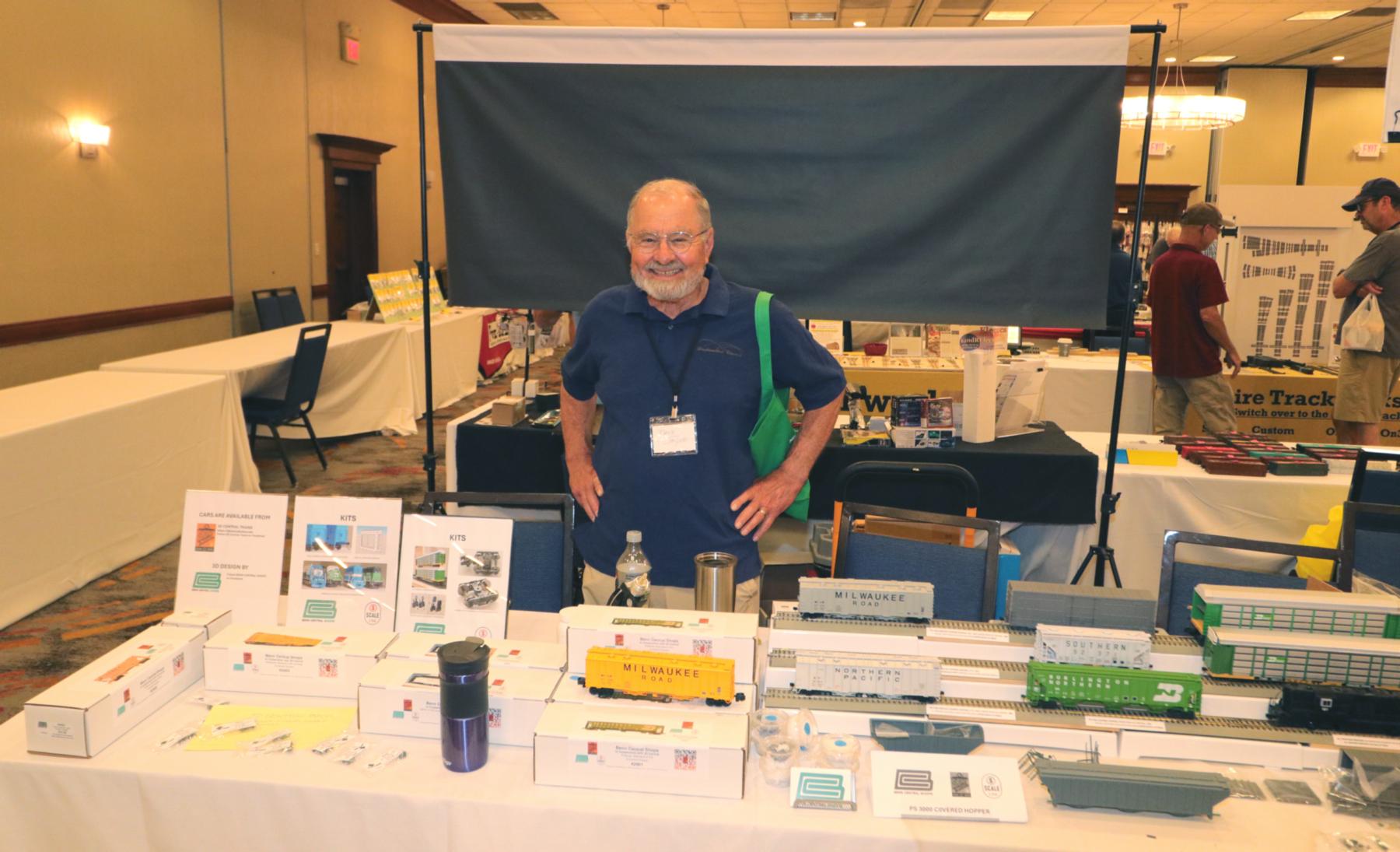
3D-printed freight cars, and replacement bolsters for Lionel cylindrical hoppers.
web site
CB Train Junction
Owner: Michael Byle
Brick-n-mortar retailer carrying Lionel, American Models, S-Helper Service, S Scale America/Des Plaines, and offering repair services.
web site
Depot G Hobbies
Owner: Jim Marski
Brick-n-mortar retailer carrying various brands, and custom American Models commissions.
web site
Empire Trackworks
Owner: Alan Loizeaux
S and Sn3 track components and kits.
web site
Gold In Hands
Owner: Edward Goldin
A.F. repair, and TMCC installations.
web site
Great Decals!
Owner: Bill Mosteller
Large offering of various decals in S.
web site
Pre-Size Model Specialties
Owner: Steve Wolcott & Linda Lindsey
Freight car loads, freight car parts, freight car kits, passenger car parts, truck kits, bridge abutments, bridge piers, bridge shoes, culverts, tunnel
portals, walls.
web site
Ridgeway Models
Owner: Brett Neupert
3D-printed grain elevator, construction/mining vehicles, road-side details, and scenery details.
web site
Royal Train Equipment
Owner: John Royal
Gondola & hopper loads (junk, ballast, coal), diecast metal signs, crossbucks, figures, street signs, detailing parts.
web site
Private/Commercial Sales
Robert Adler
(individual)
Allen L. Ambler
(individual)
Norman Bos
(individual)
Mark H. Charles
(commercial)
John Griffin
(individual)
George Hockley
(commercial)
Dennis Hultay
(individual)
Jim Kindraka
(commercial)
Jeffrey H. Madden
(individual)
Samuel J. McCoy
(commercial)
Roy J. Meissner
(commercial)
Daniel Navarre
(individual)
Thomas J. Robichaud
(individual)
Stan A Ulman
(commercial)
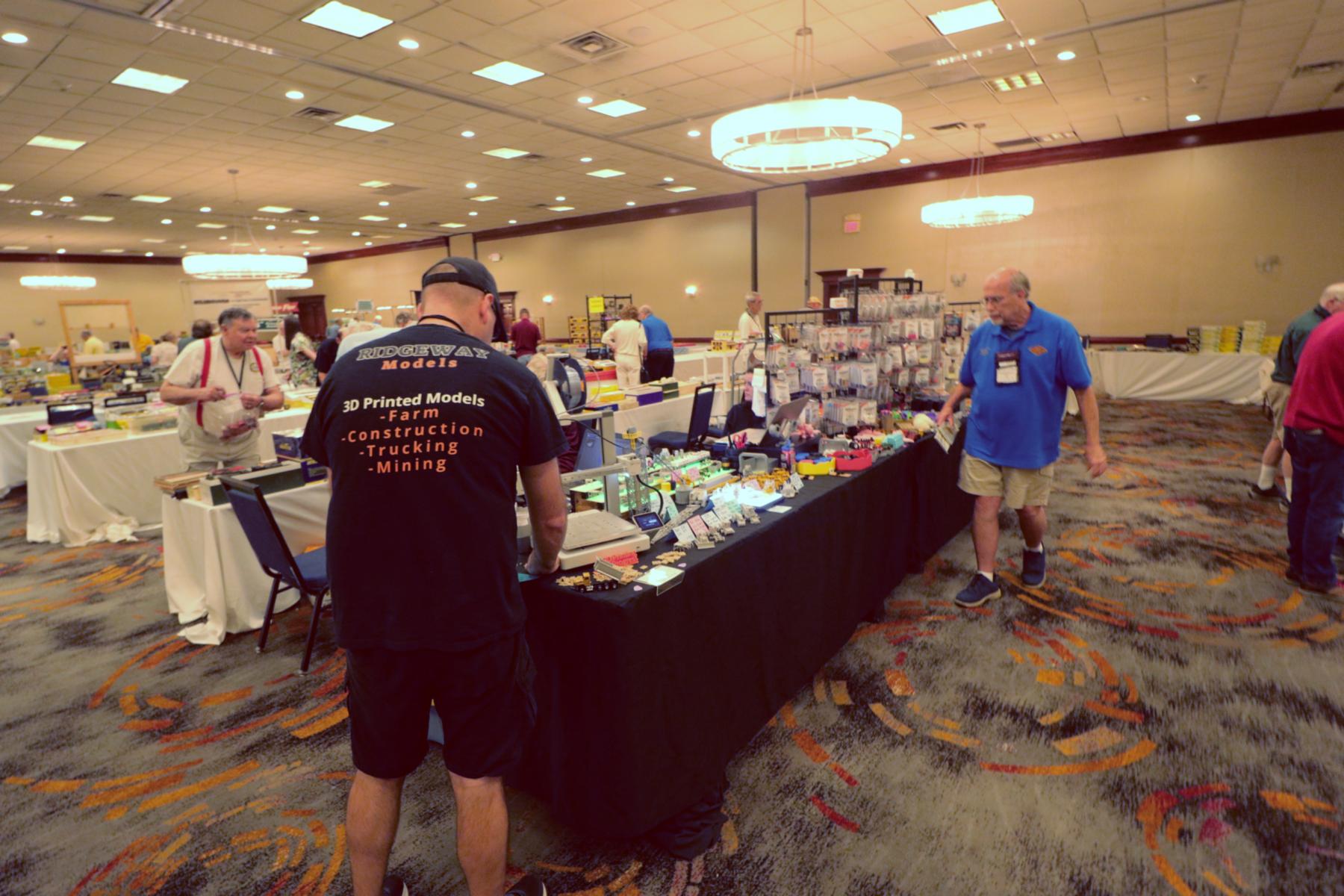
photo © Bill Lane; used by permission

photo © Bill Lane; used by permission
photo © Bill Lane; used by permission
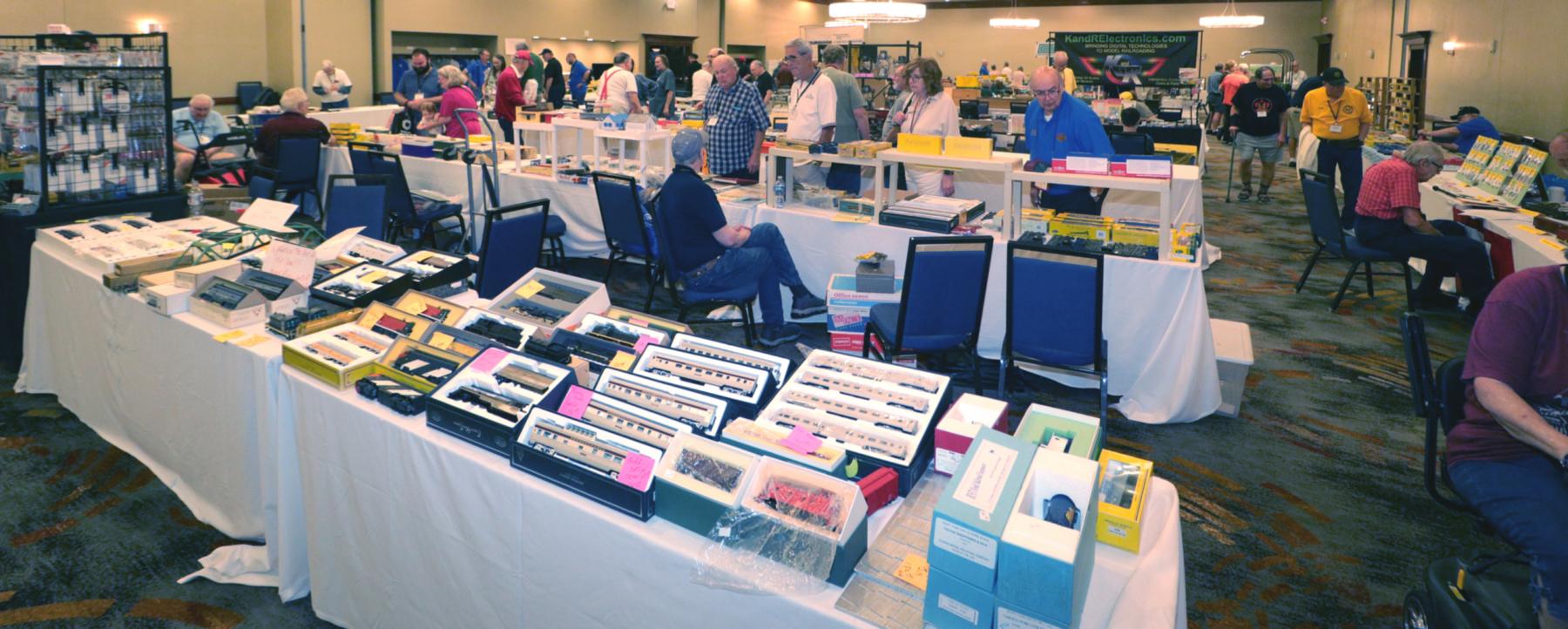
photo © Bill Lane; used by permission

photo © Bill Lane; used by permission

photo © Bill Lane; used by permission

photo © Bill Lane; used by permission

photo © Bill Lane; used by permission

photo © Bill Lane; used by permission

photo © Bill Lane; used by permission
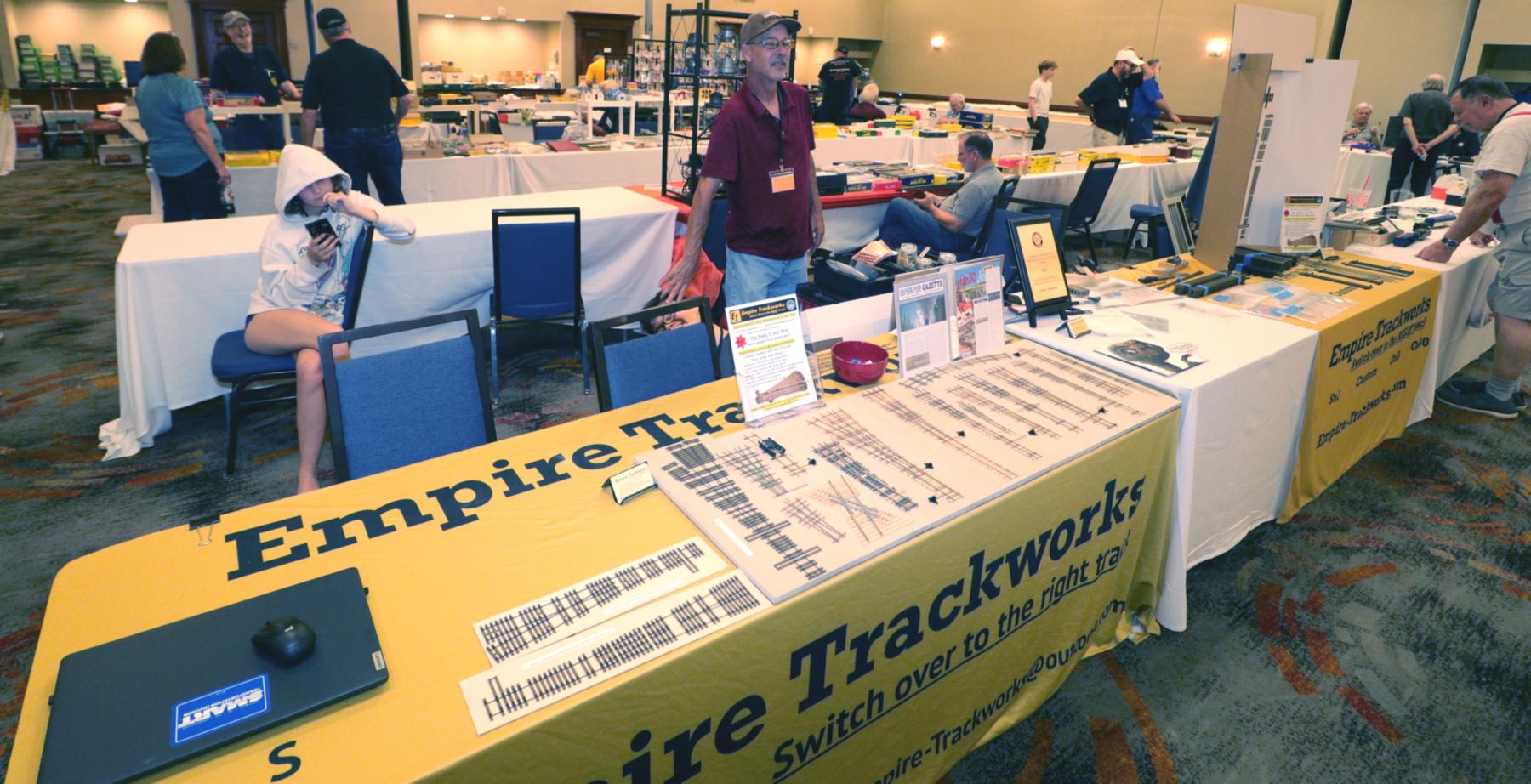
photo © Bill Lane; used by permission
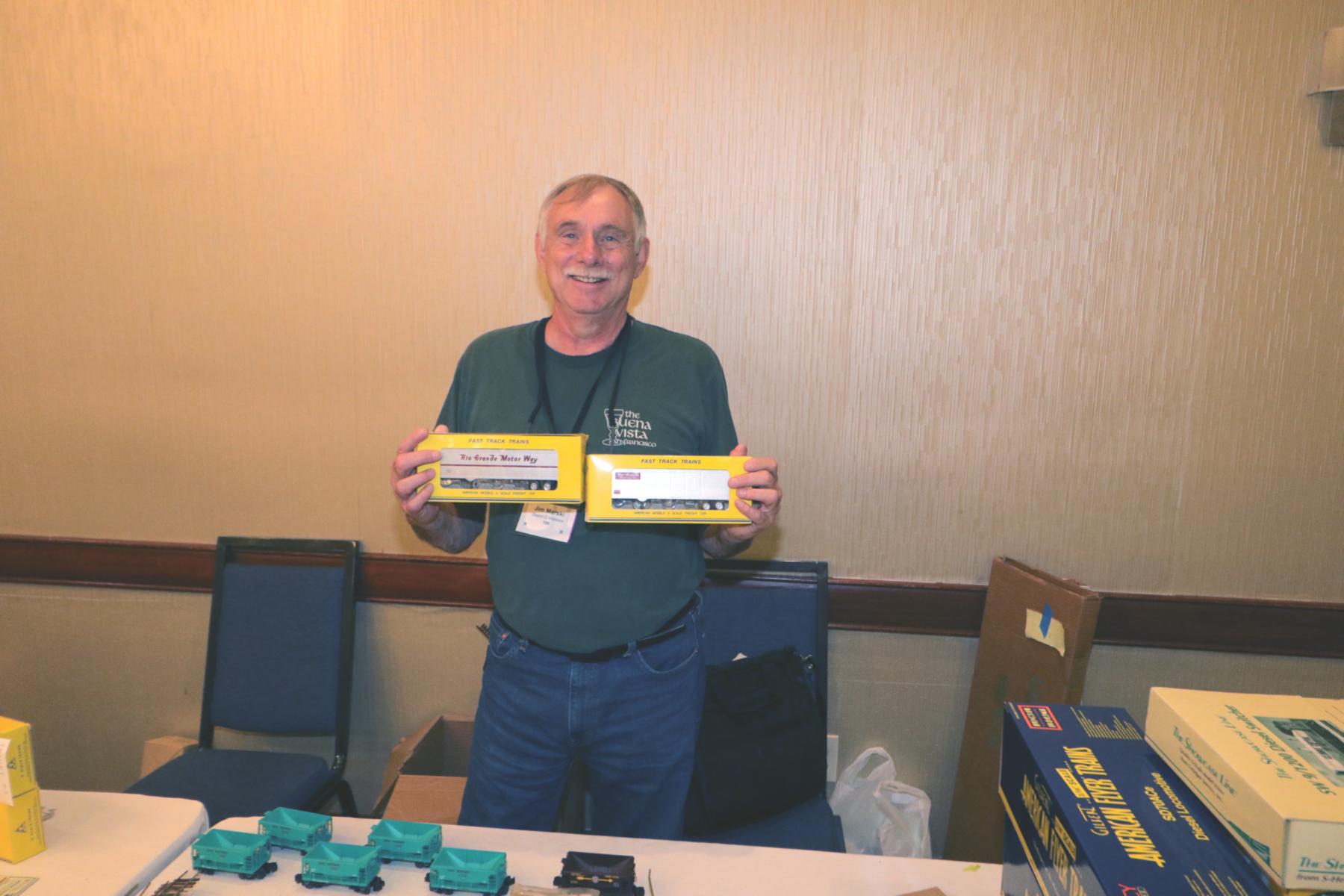
photo © Bill Lane; used by permission
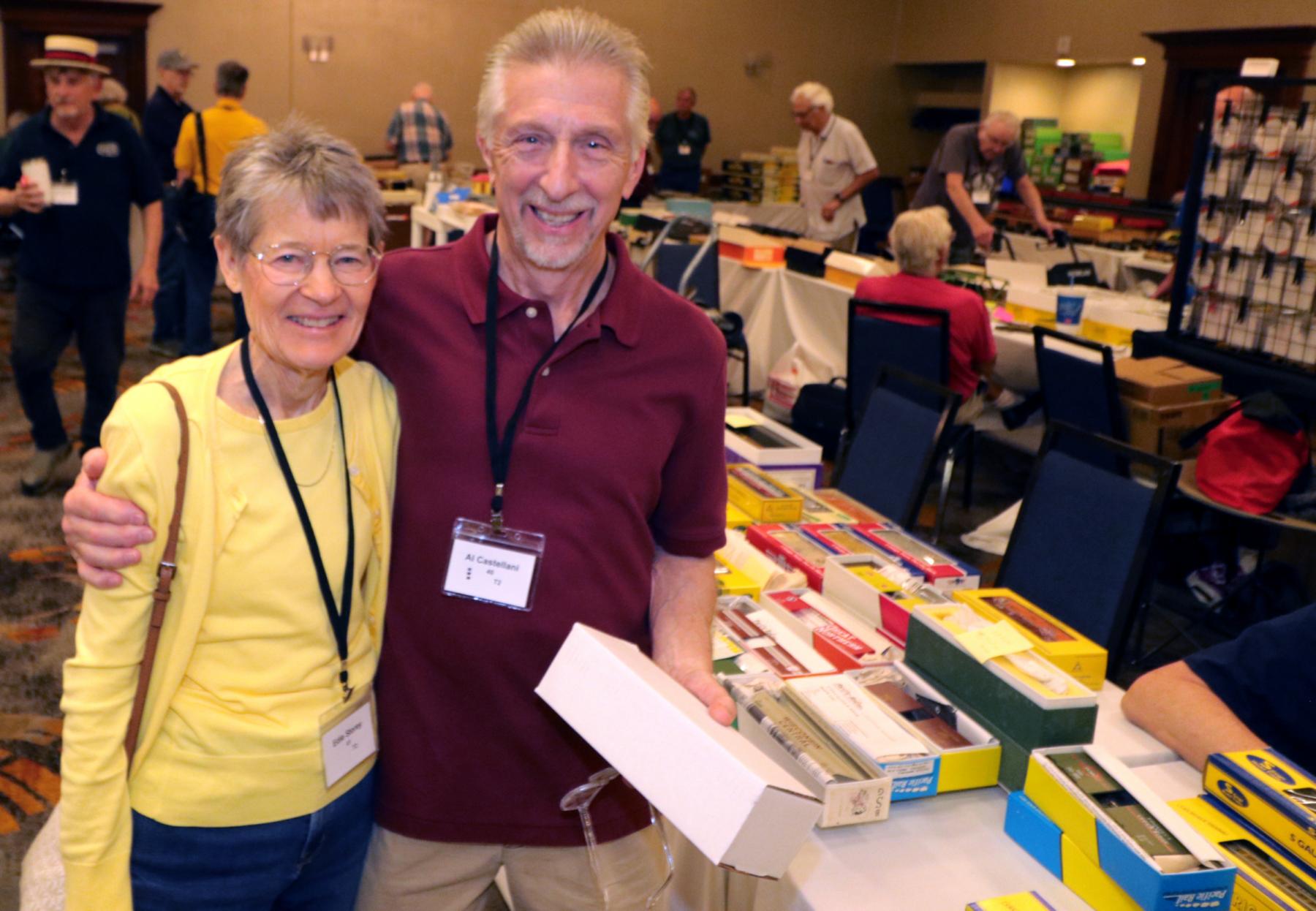
photo © Bill Lane; used by permission
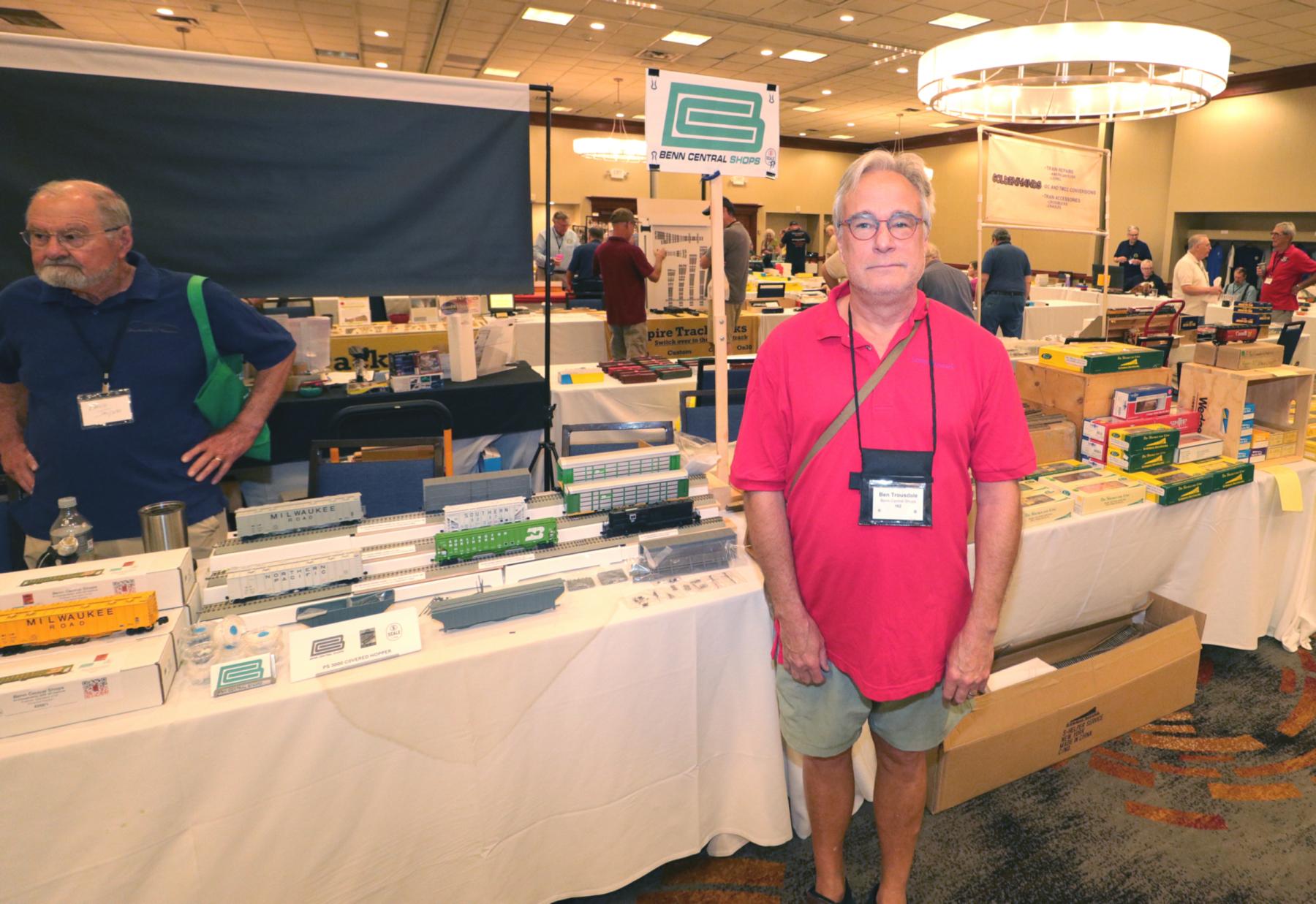
photo © Bill Lane; used by permission
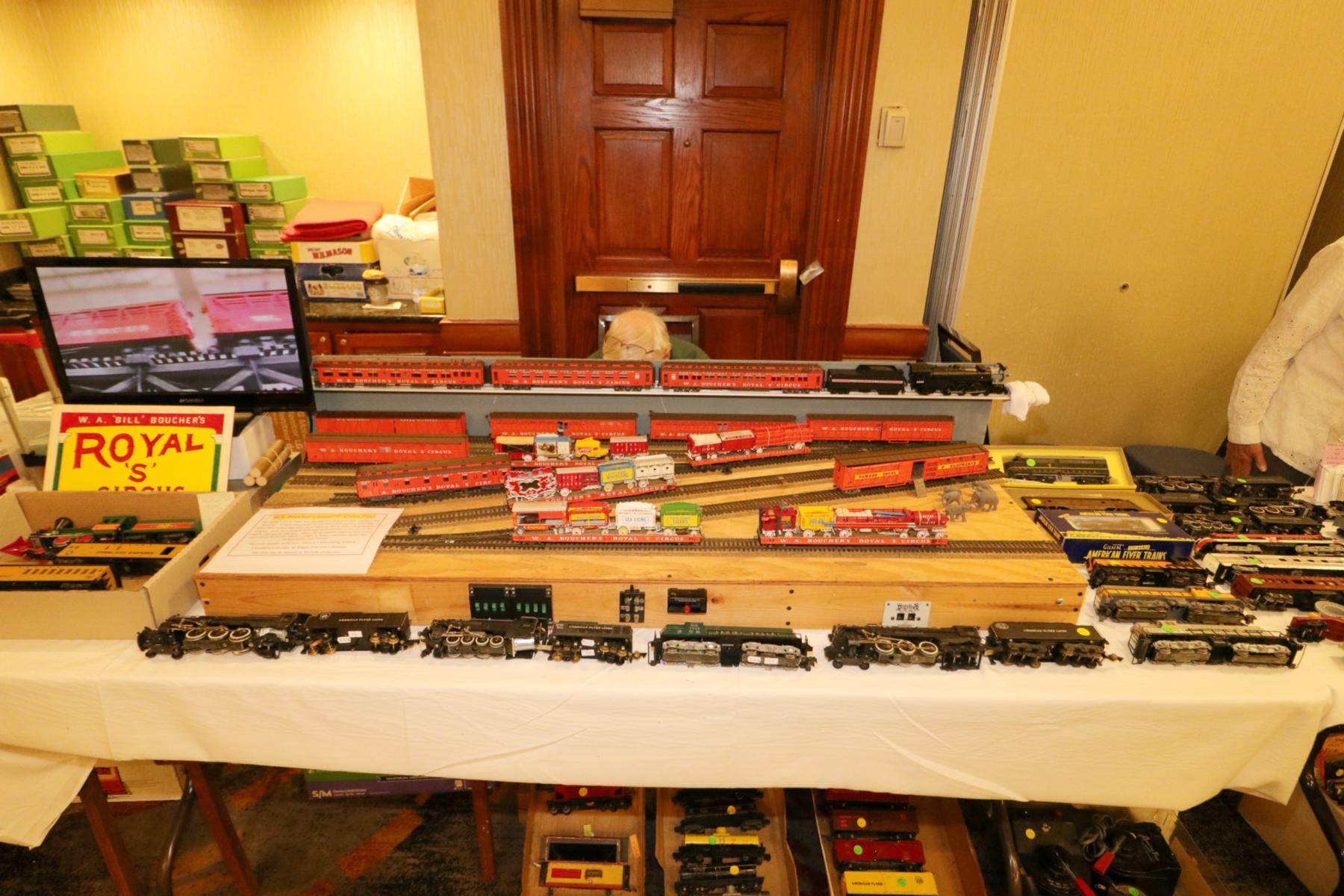
Bill Boucher's circus train display.
photo © Bill Lane; used by permission
Ice Breaker
Wednesday, August 5
A great place to meet all of the attendees in a more casual, relaxed environment.
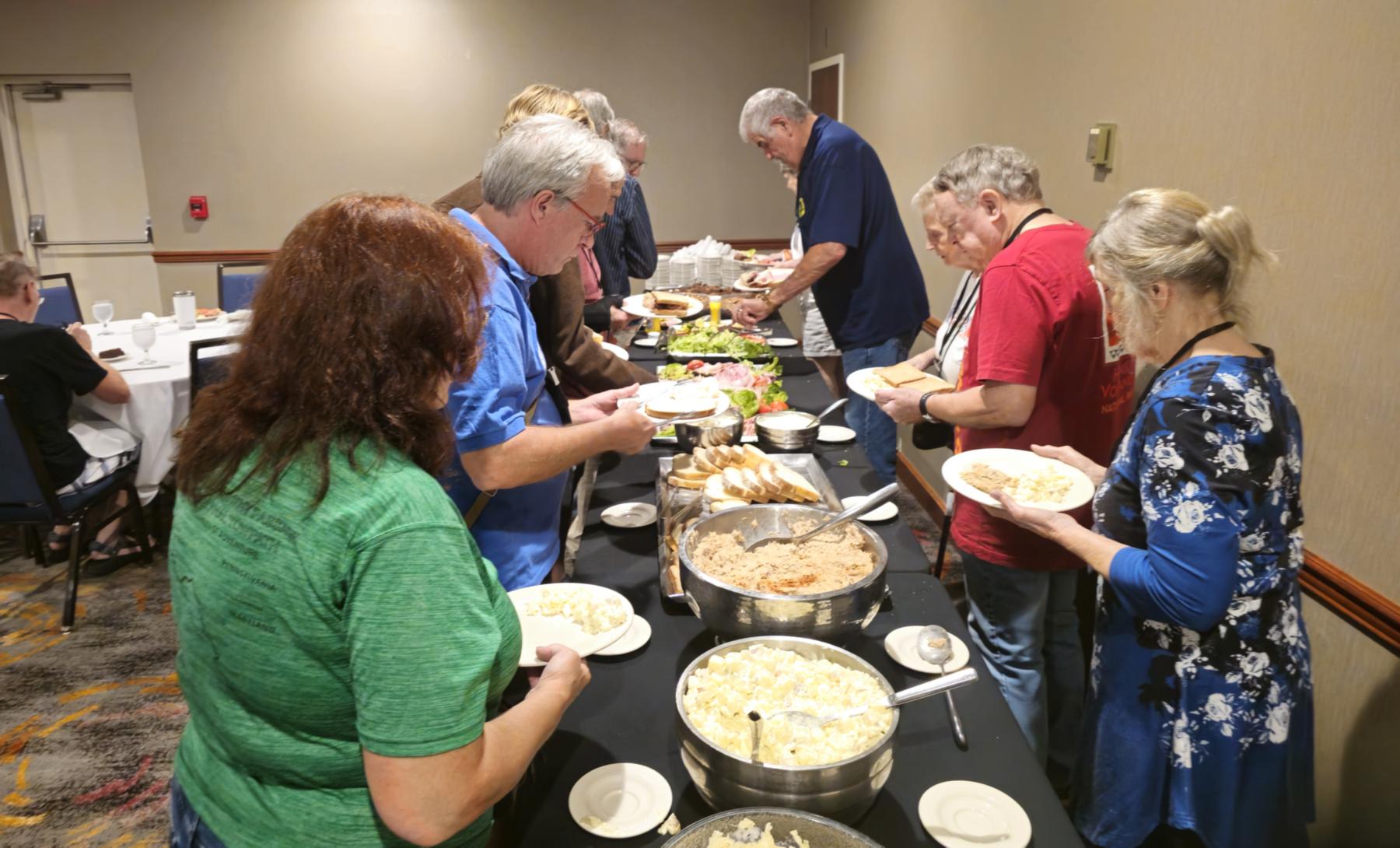
photo © Bill Lane; used by permission
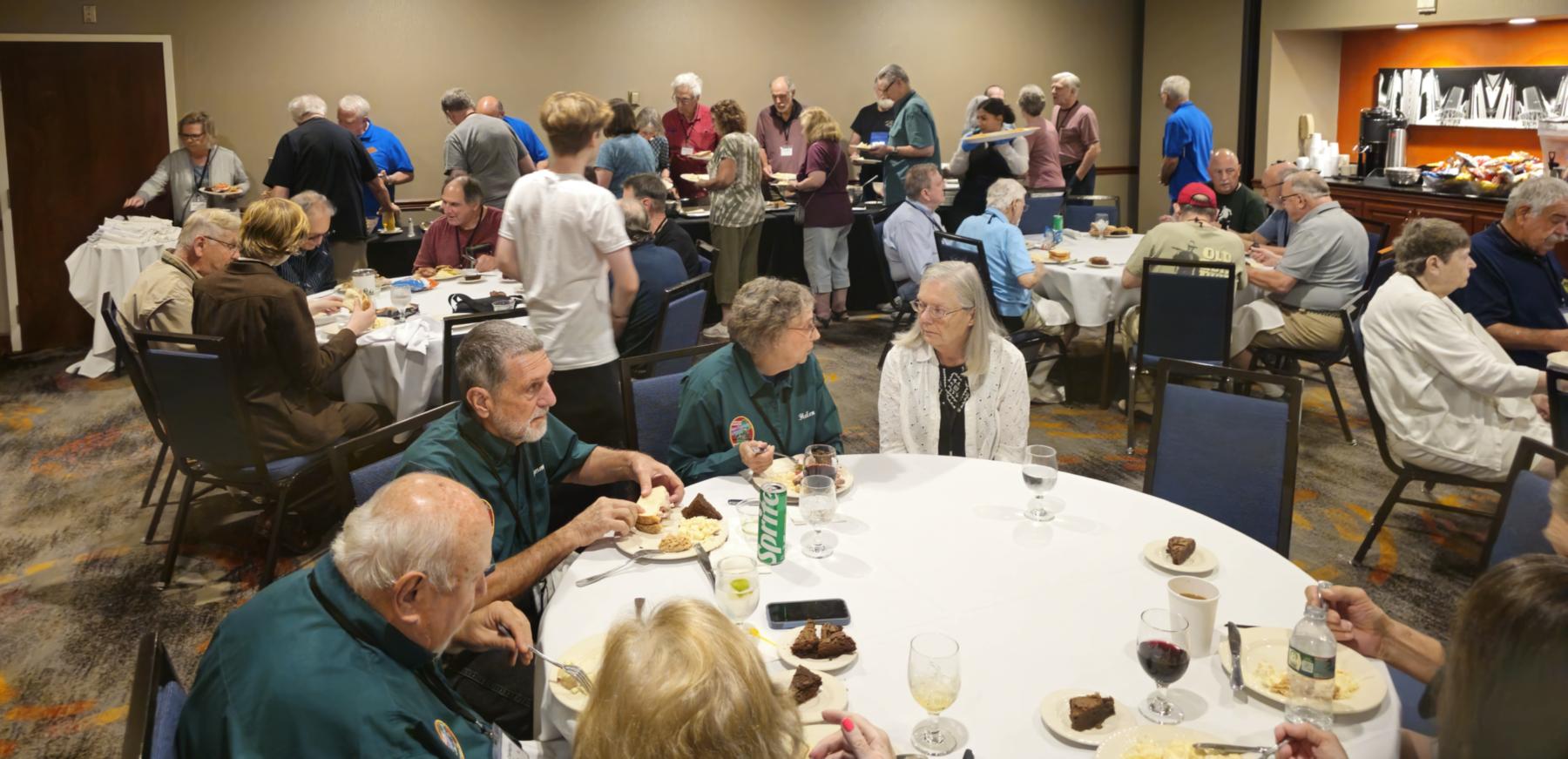
photo © Bill Lane; used by permission

photo © Bill Lane; used by permission
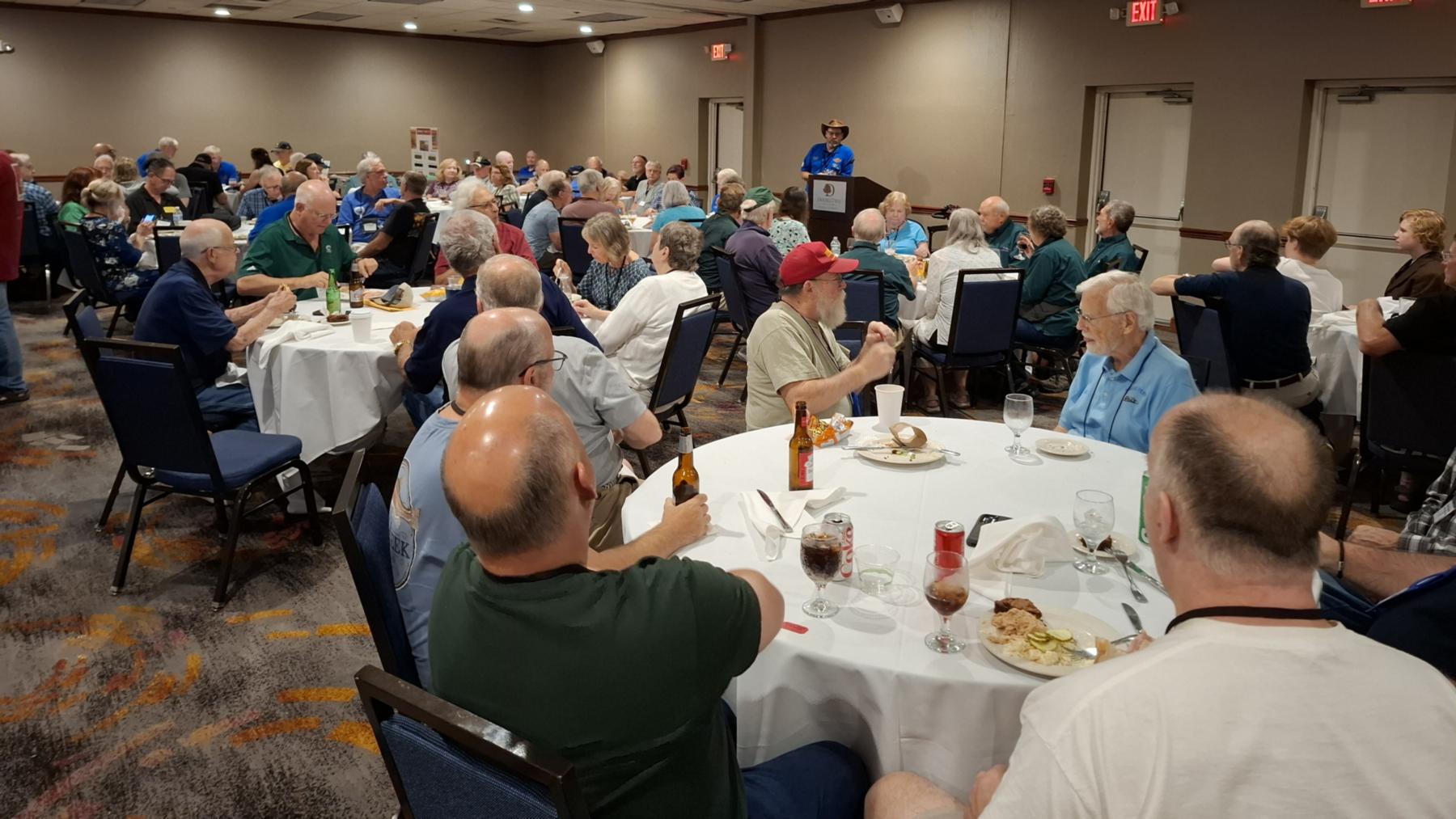
Jeff Jundt, who managed the entire Convention, addresses the over one hundred people who attended the Ice Breaker.
photo © Michael McConnell; used by permission
Steam Railroading Institute
Thursday, August 6
The first stop was the Steam Railroading Institute (SRI) in Owosso, MI. As well as being an active car repair shop, SRI is the home base and repair facility for Pere Marquette #1225, a Berkshire class steam locomotive (2-8-4). The tour included the backshop, with an up-close view of work in progress. The second stop was the Detroit Model Railroad Club, which has been in operation since 1935. The members have constructed a massive, highly detailed, O-scale (2 rail) layout, which fills a former movie theater! All locomotives are controlled with DCC, and a dispatcher in the basement communicates with the engineers via headphones to coordinate train movements.
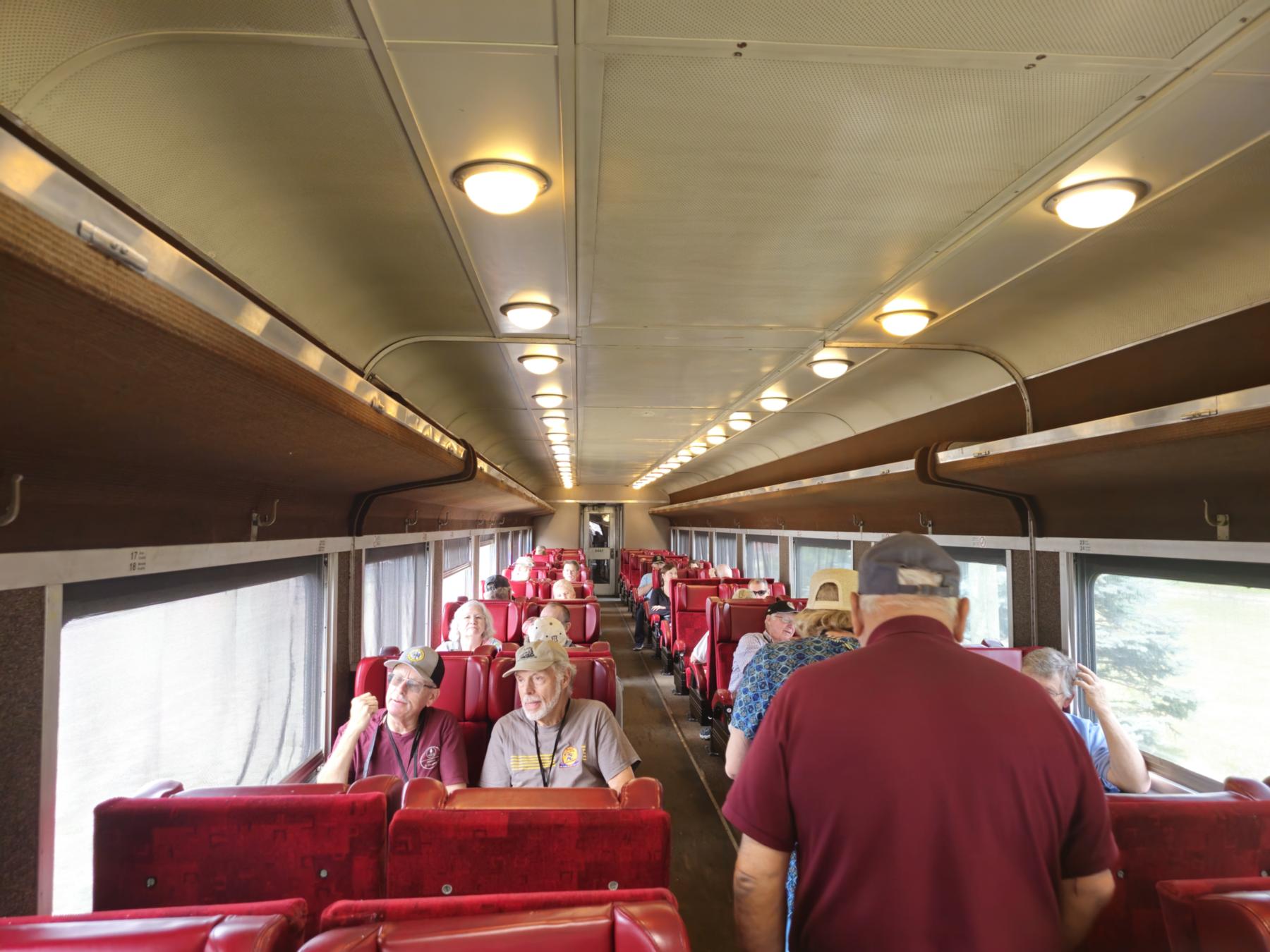
The train ride at the Steam Railroading Institute.
photo © Bill Lane; used by permission

photo © Bill Lane; used by permission

The Pere Marquette #1225 was inside the shop.
photo © Bill Lane; used by permission

photo © Bill Lane; used by permission
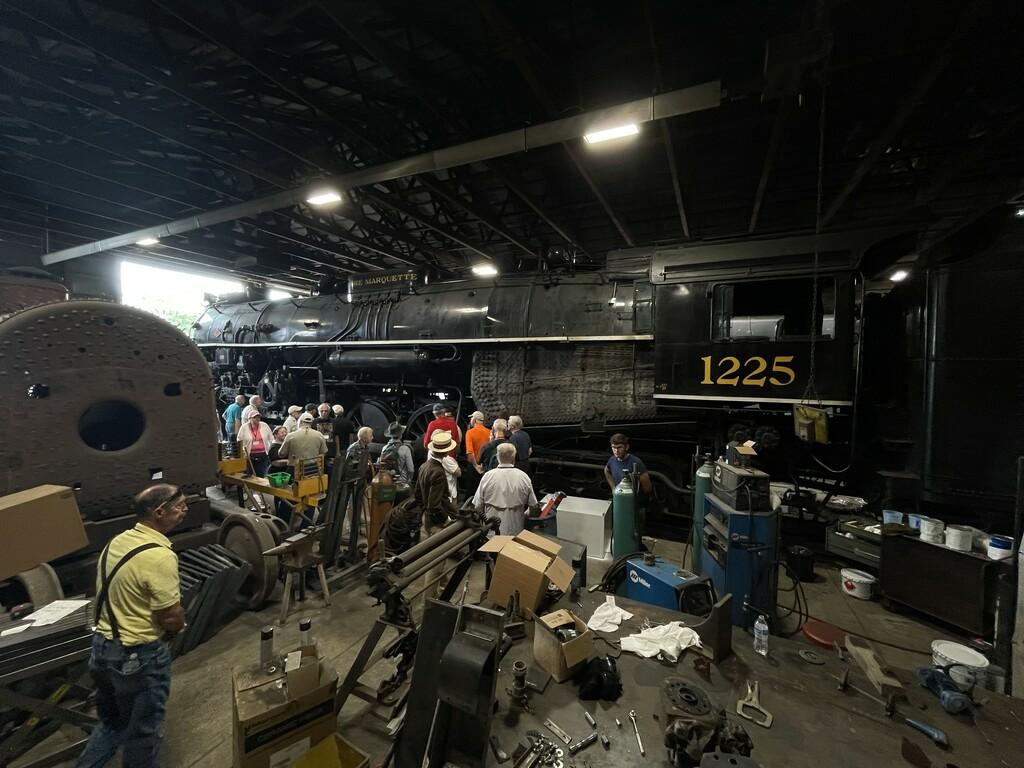
photo © Joe McGee; used by permission
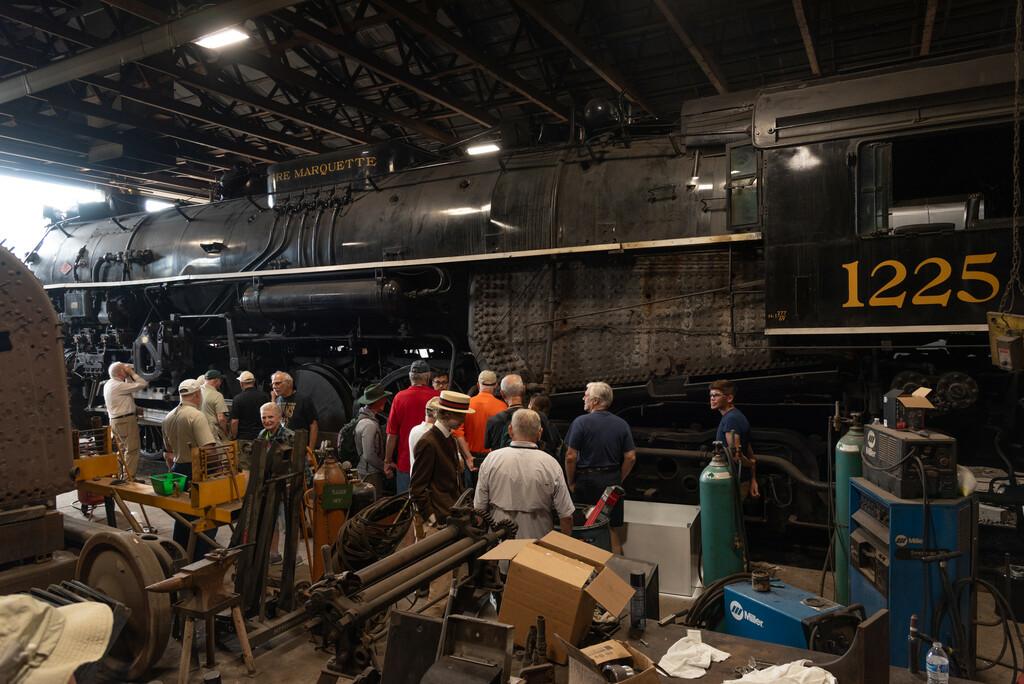
photo © Joe McGee; used by permission

photo © Bill Lane; used by permission
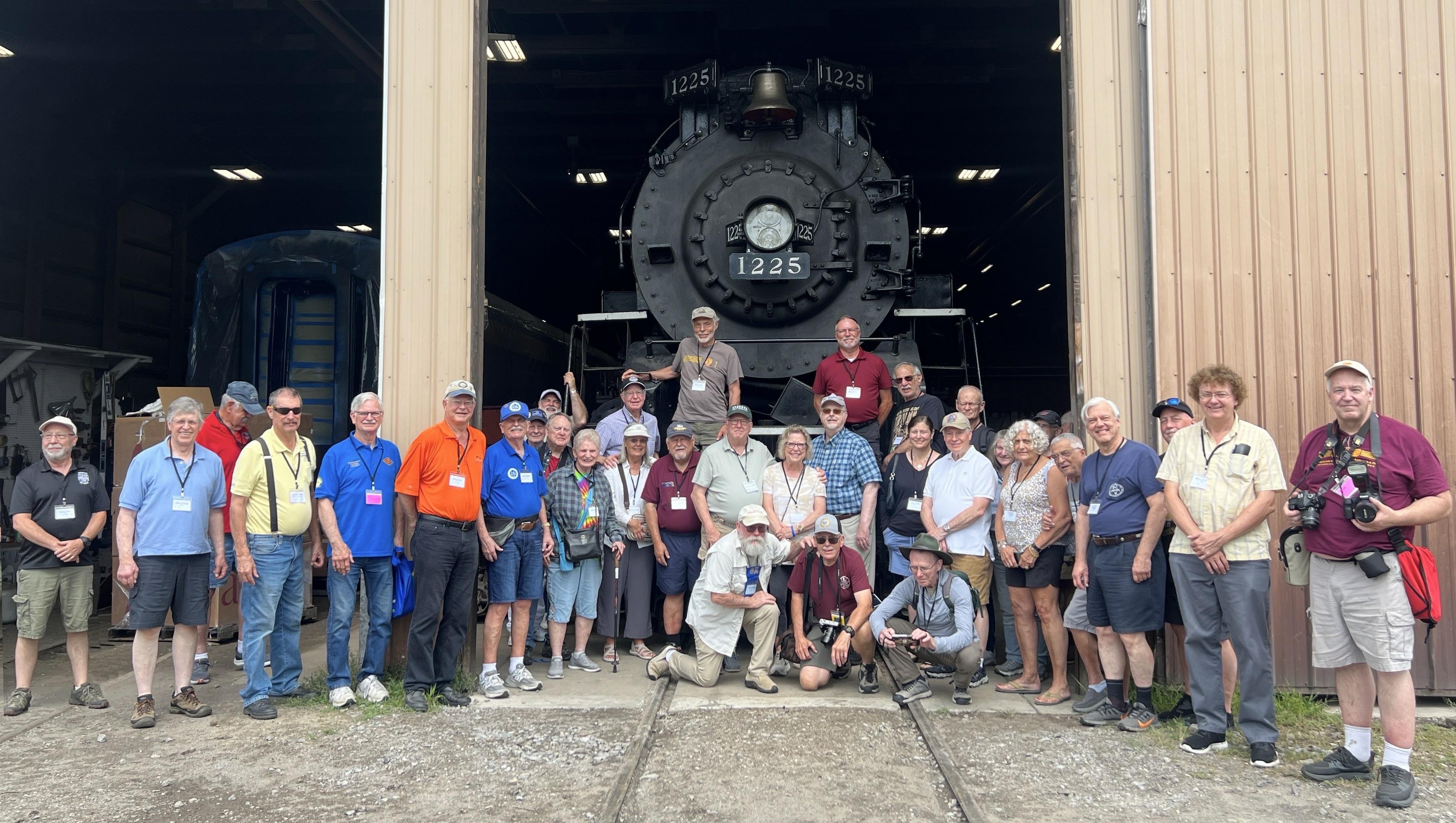
photo © Steam Railroading Institute; John E. Henning collection; used by permission

photo © Bill Lane; used by permission
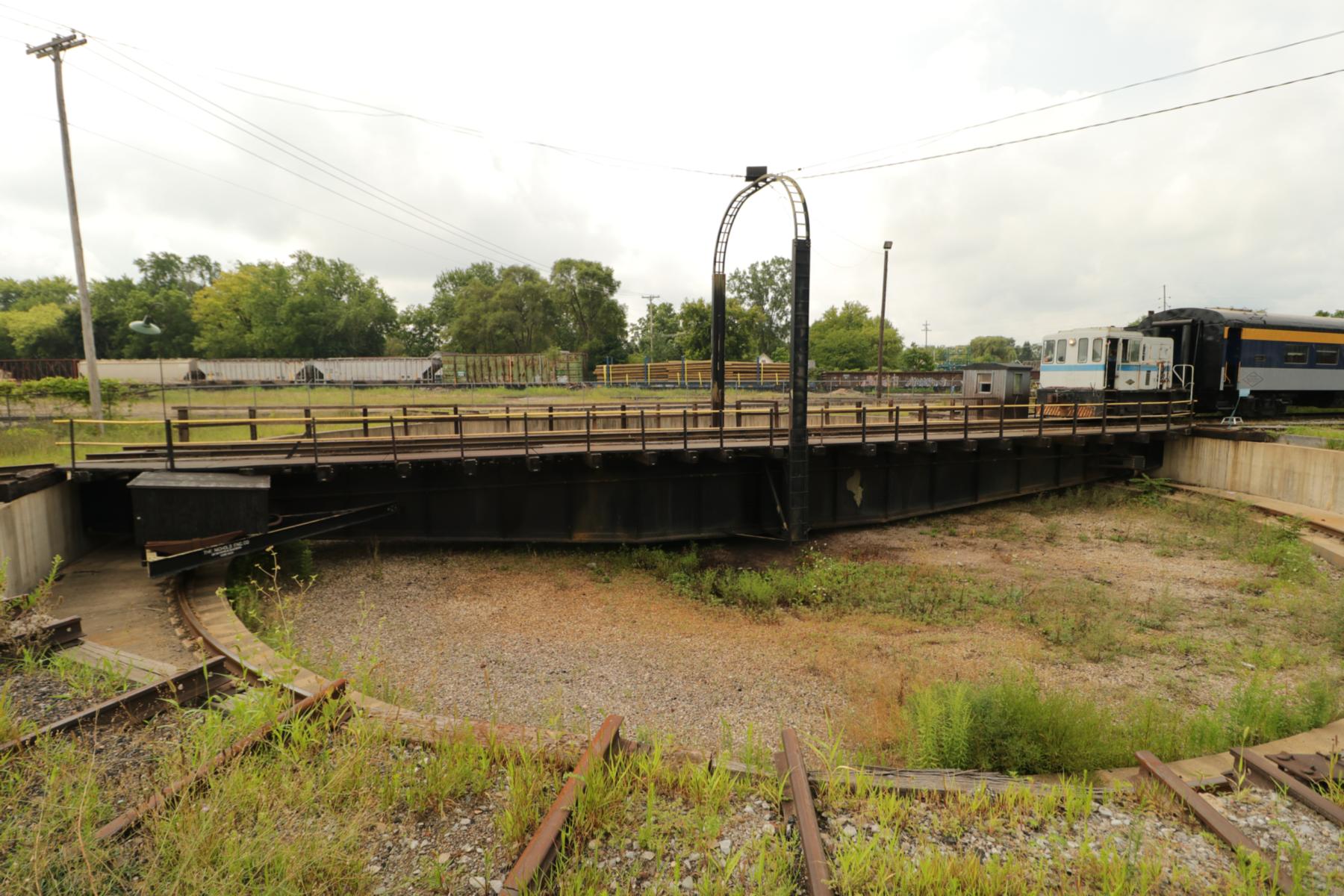
photo © Bill Lane; used by permission
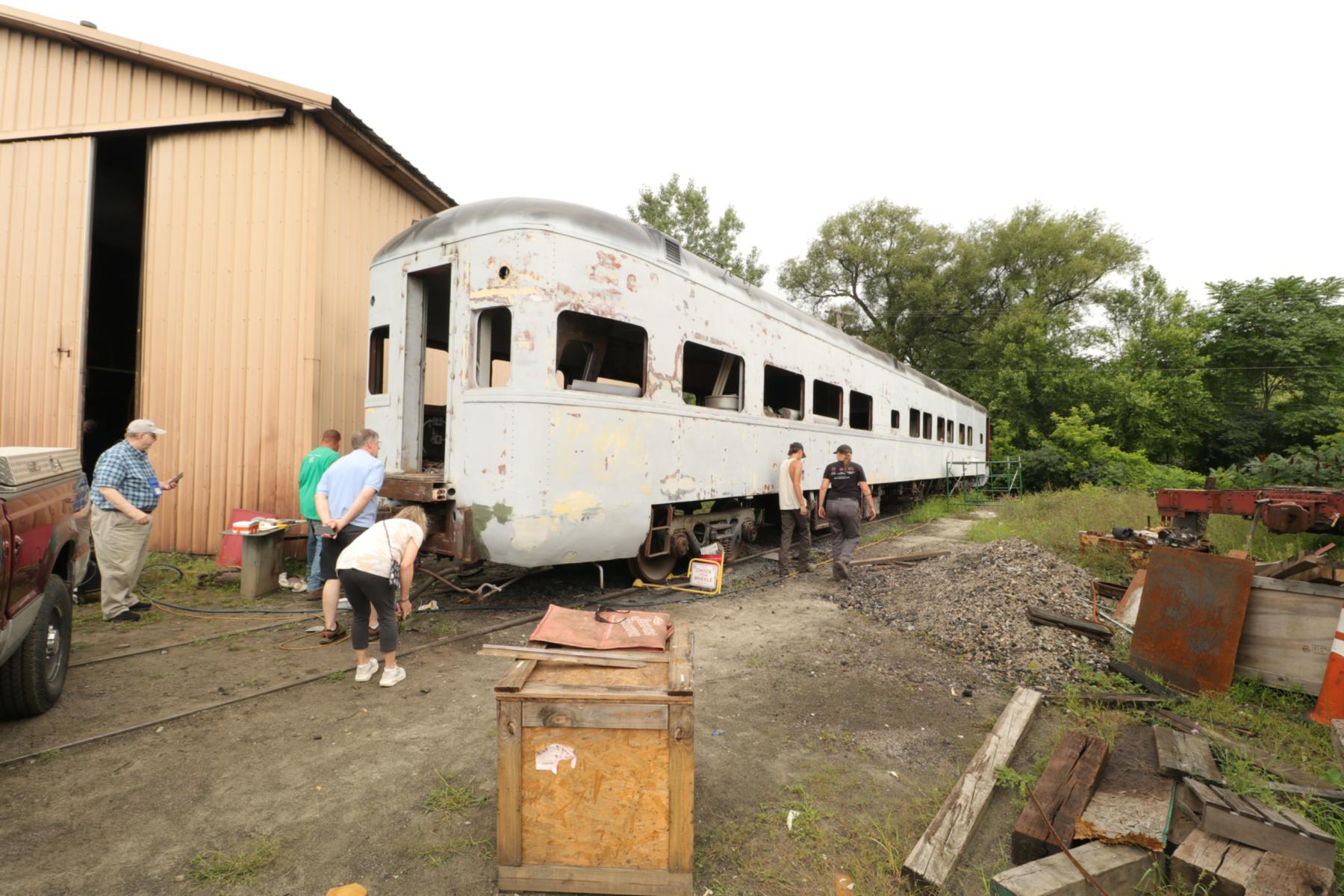
The former "Samuel Rea" PRR observation car (outside was restored by SRI)
photo © Bill Lane; used by permission
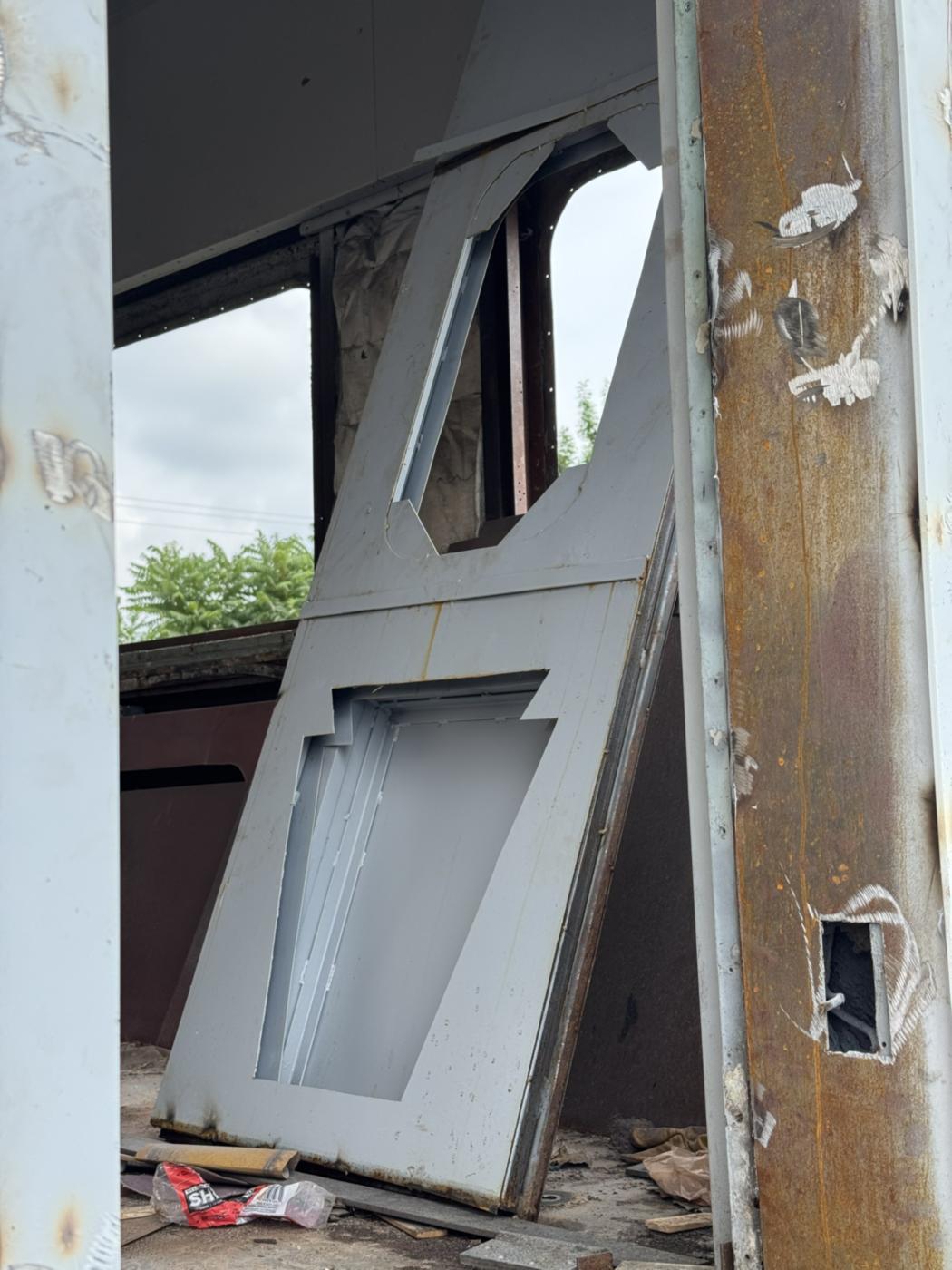
Inside the "Samuel Rea" PRR observation car. Inside to be restored by the "Pennsylvania Railroad T1 Steam Locomotive
Trust". When the PRR T1 is restored, this car is planned to be in its train.
photo © John E. Henning; used by permission
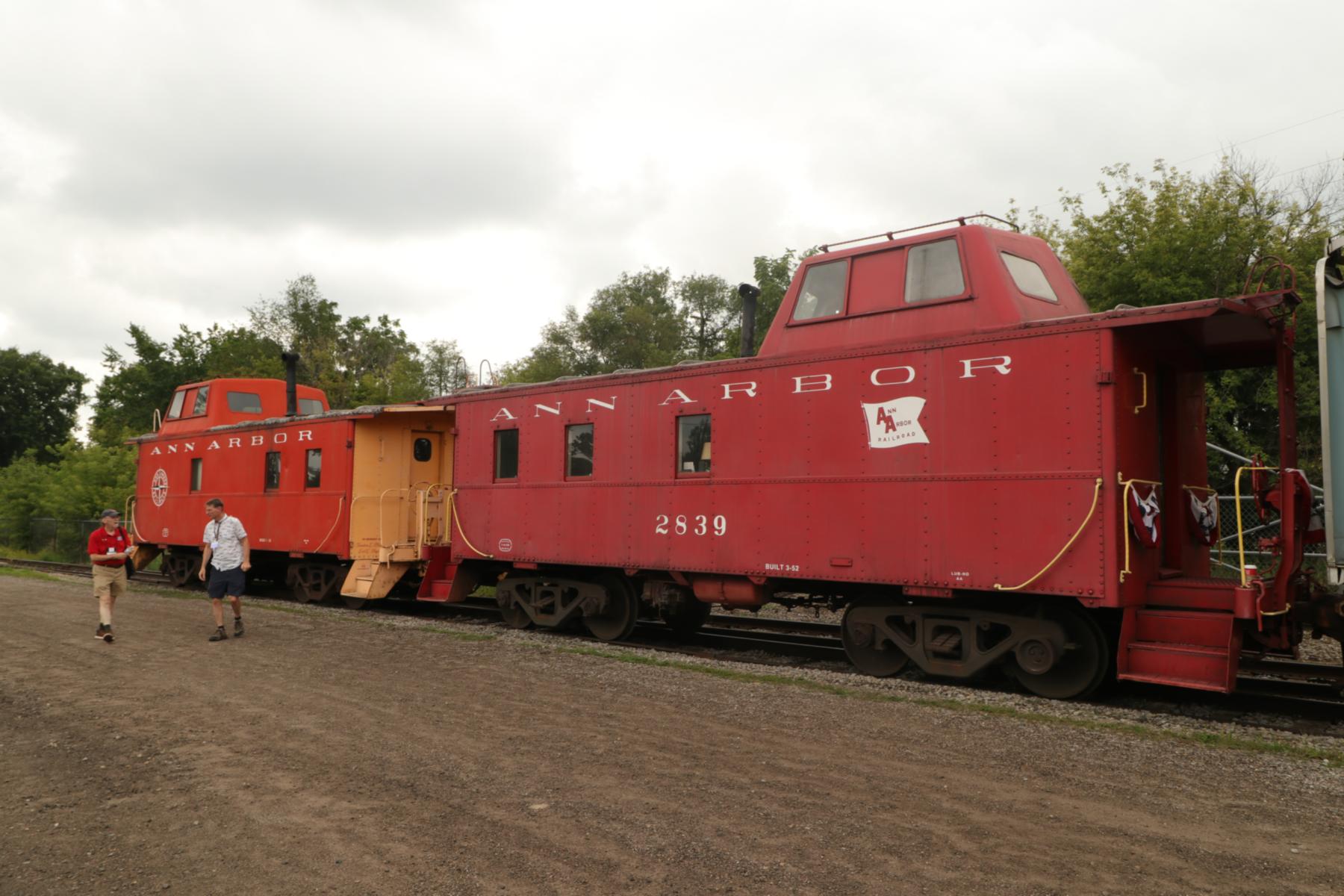
photo © Bill Lane; used by permission
photo © Bill Lane; used by permission
photo © Bill Lane; used by permission
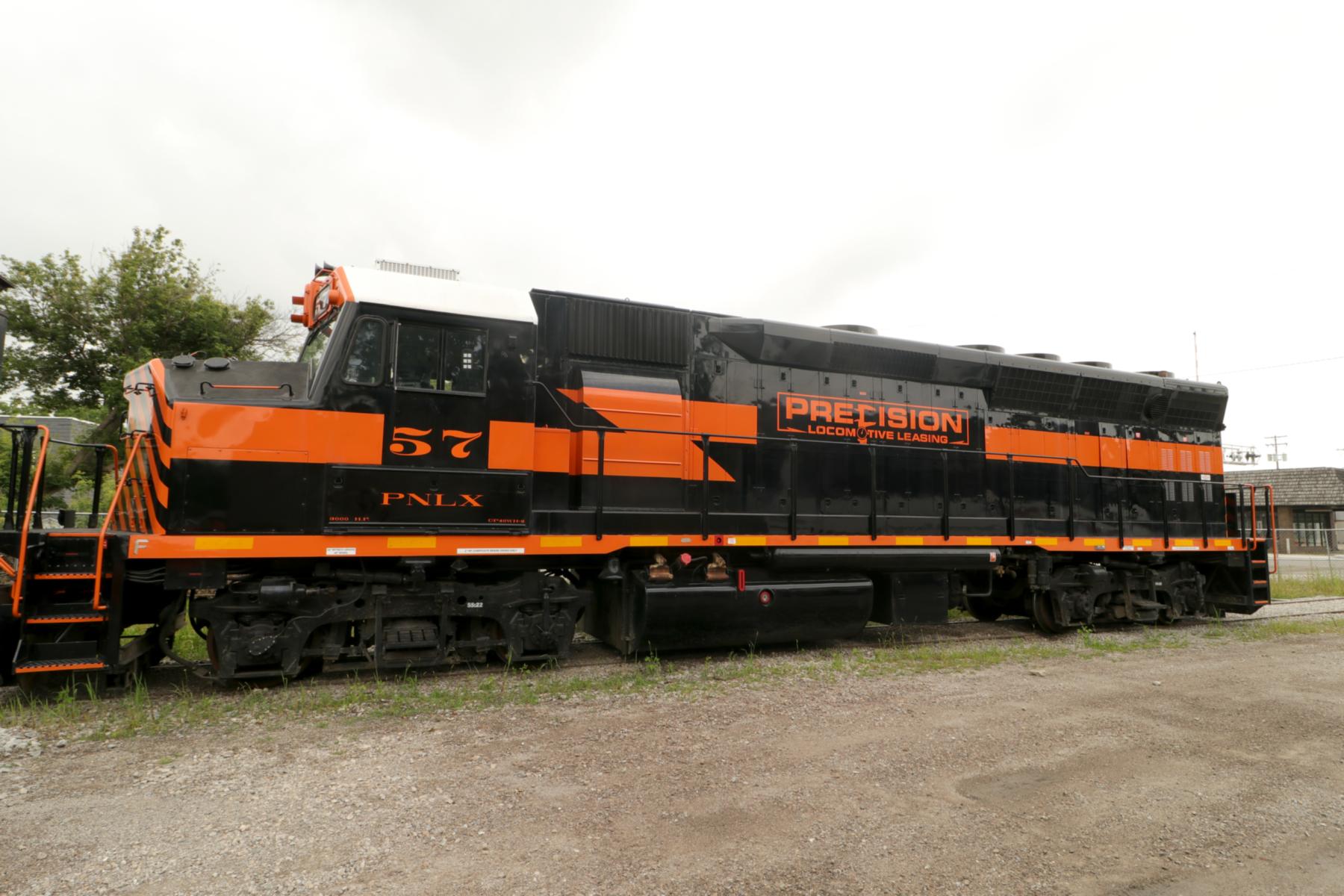
photo © Bill Lane; used by permission

photo © Bill Lane; used by permission
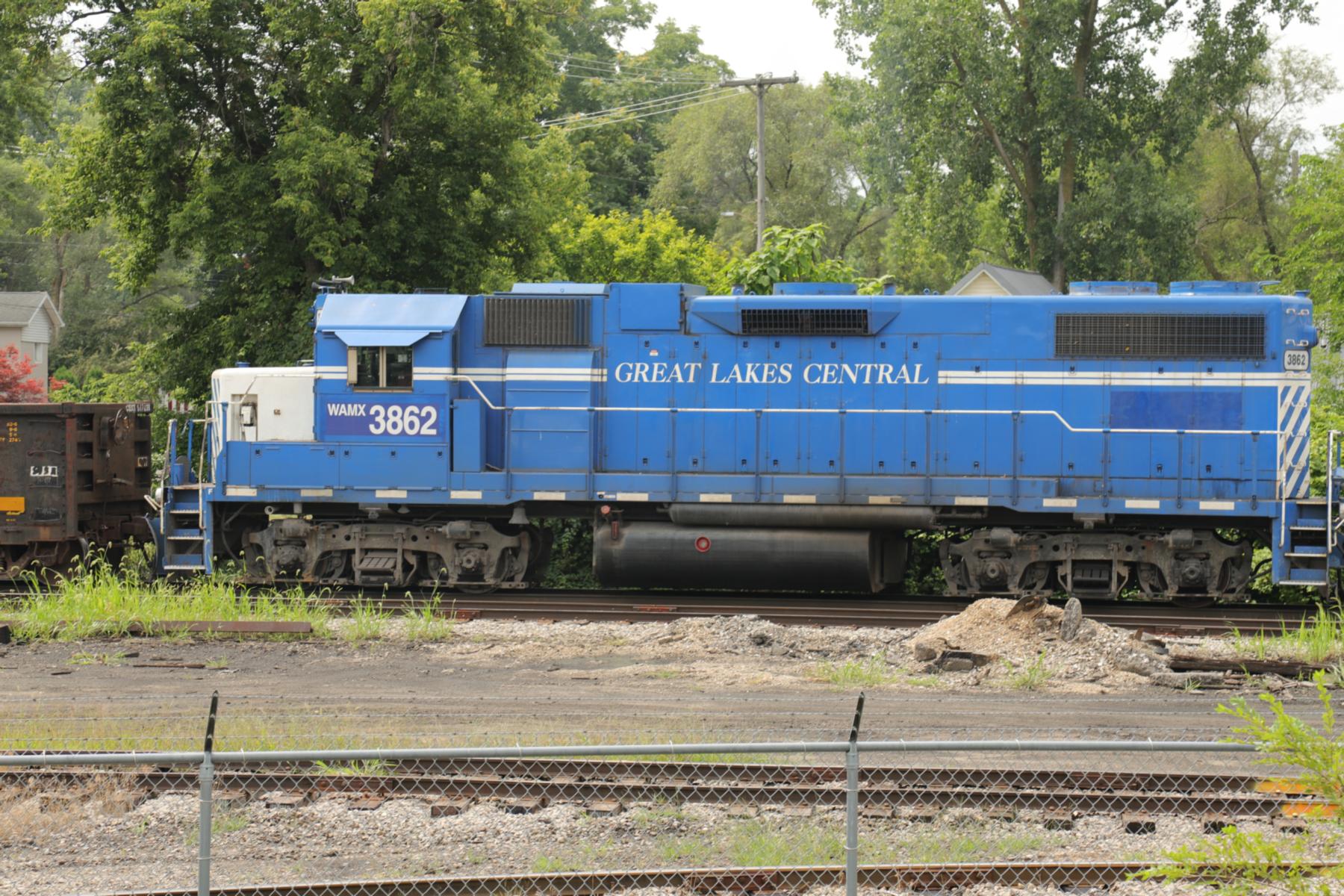
photo © Bill Lane; used by permission
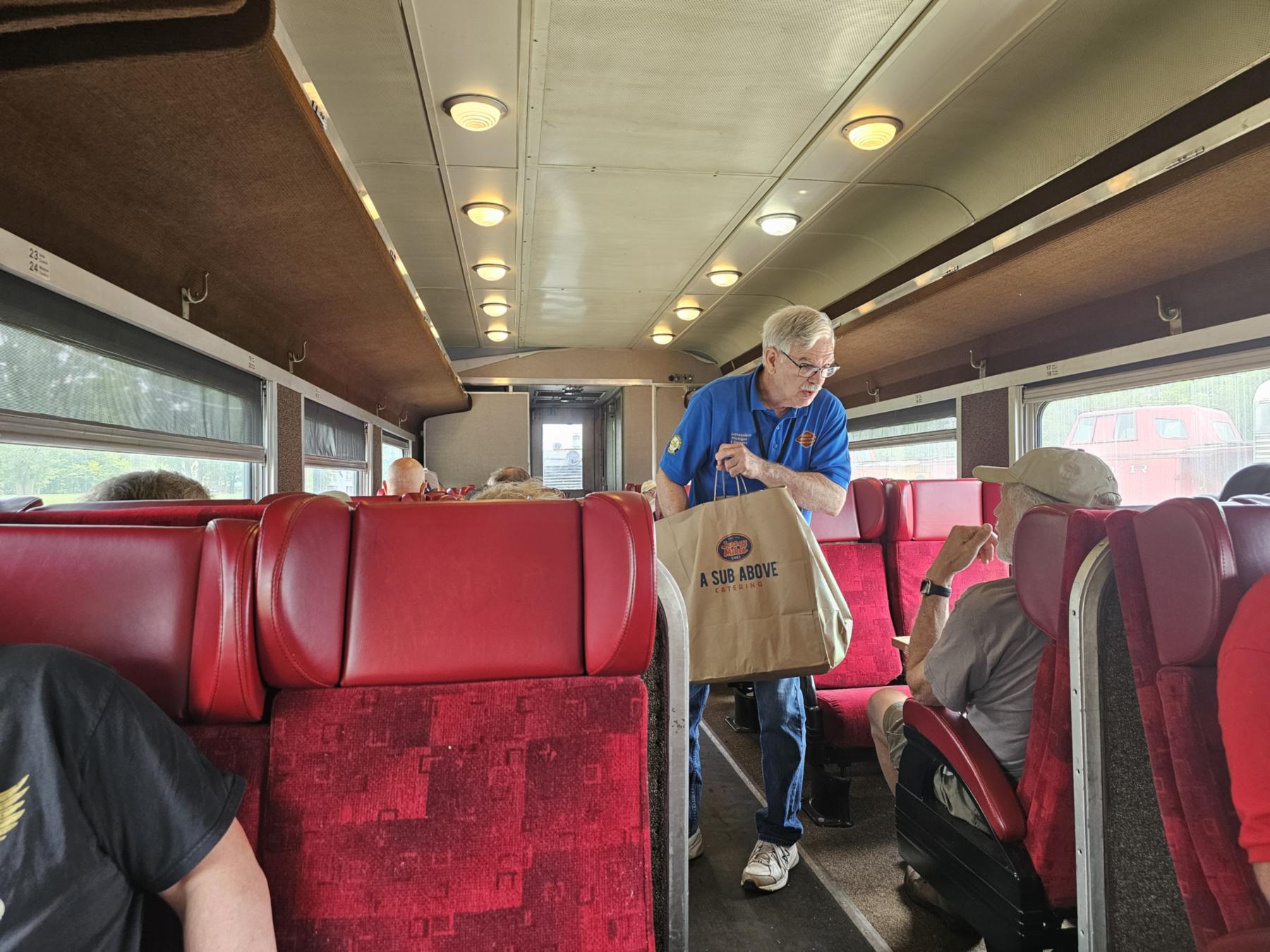
Lunch was served after the SRI visit, on the way to the Detroit Model Railroad Club.
photo © Bill Lane; used by permission

On the left is NASG Eastern Vice-president Brian Jackson, pictured with Dan Mastrobuono. Brian, Dan, and Bill are working together to bring to fruition a "scale" ready-to-run turnout for S.
photo © Bill Lane; used by permission
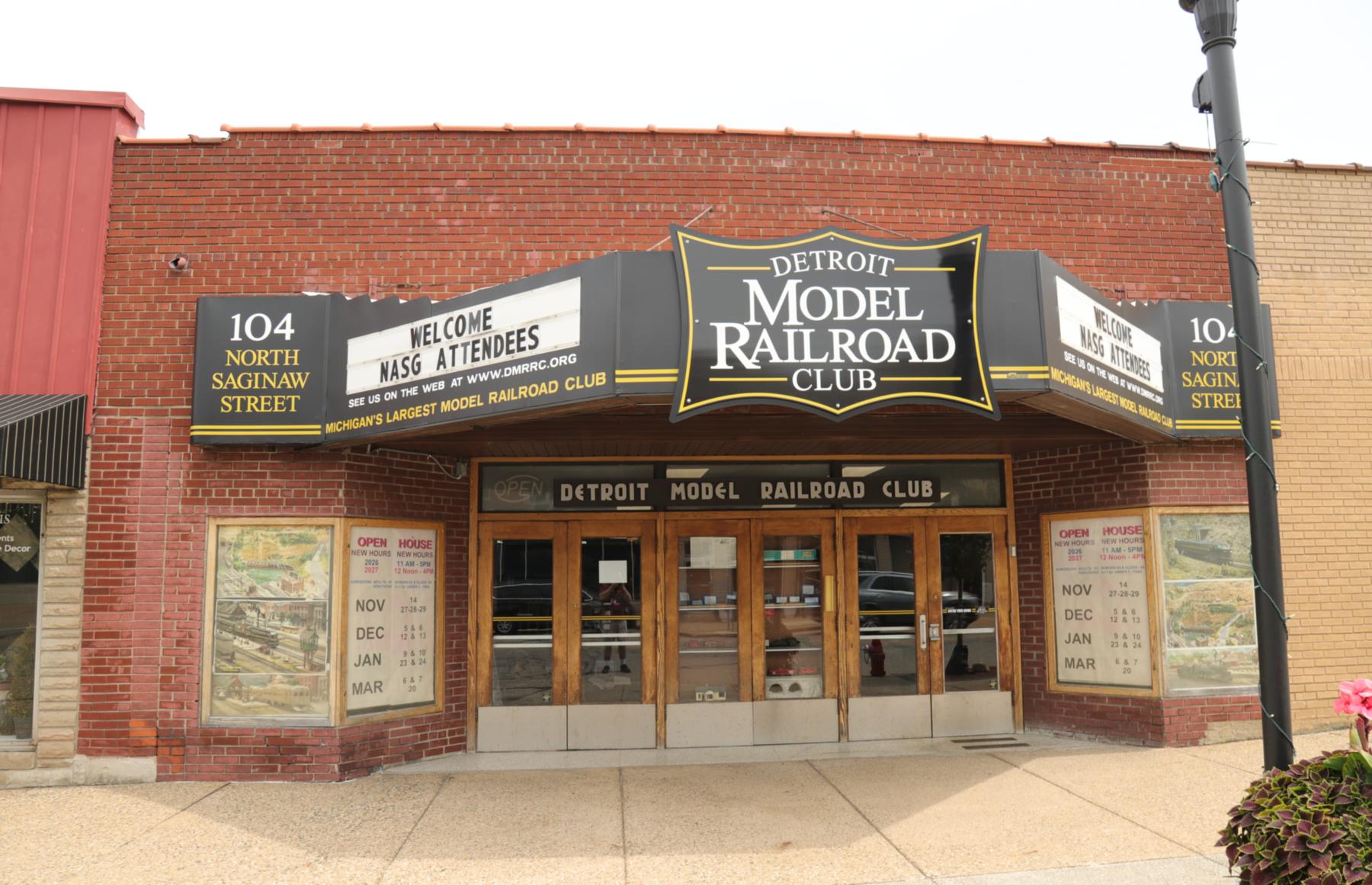
The Detroit Model Railroad Club is based in a former movie theater. Note the marque!
photo © Bill Lane; used by permission
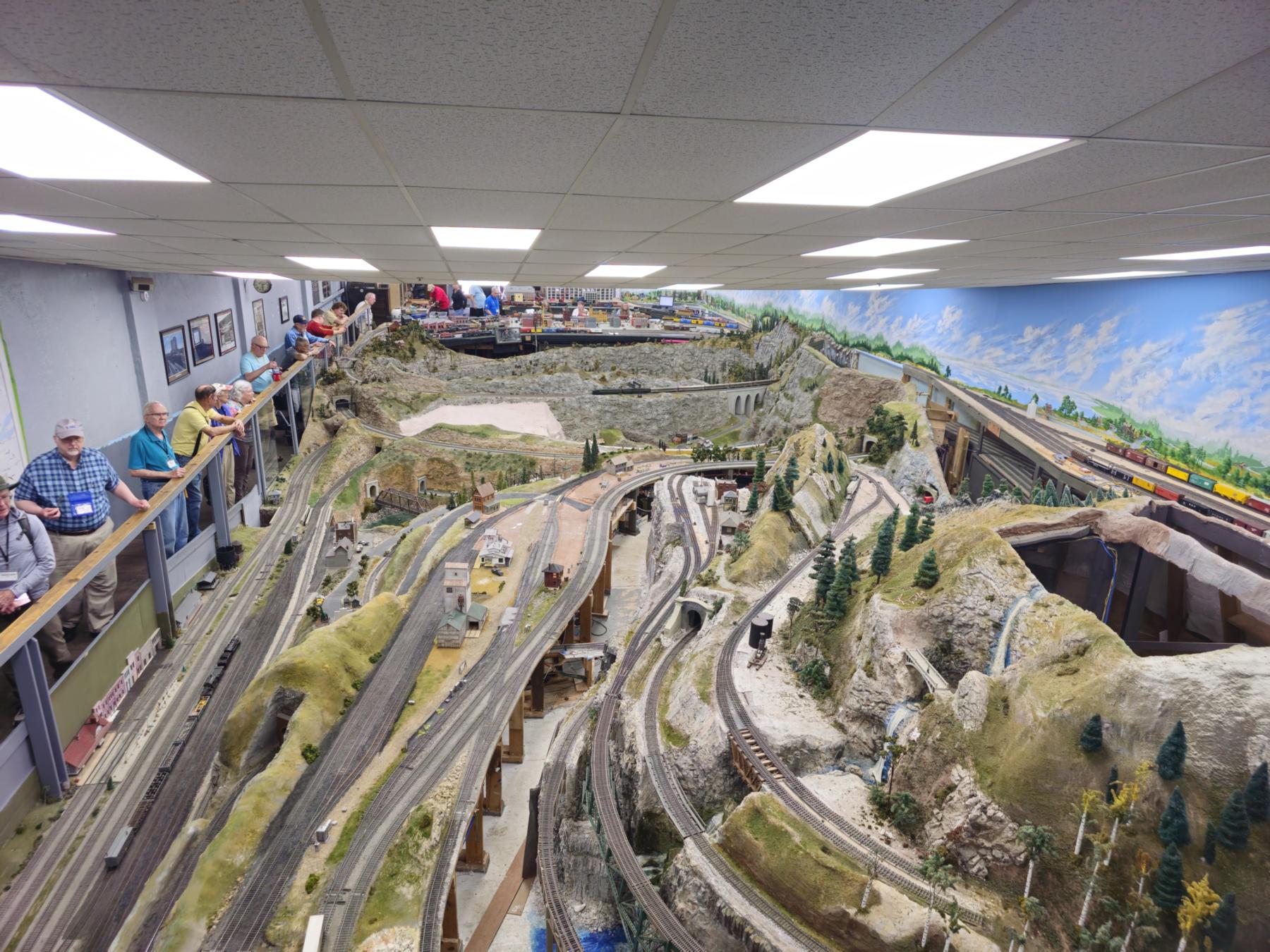
The Detroit Model Railroad Club's layout is a monster of a layout!
photo © Bill Lane; used by permission
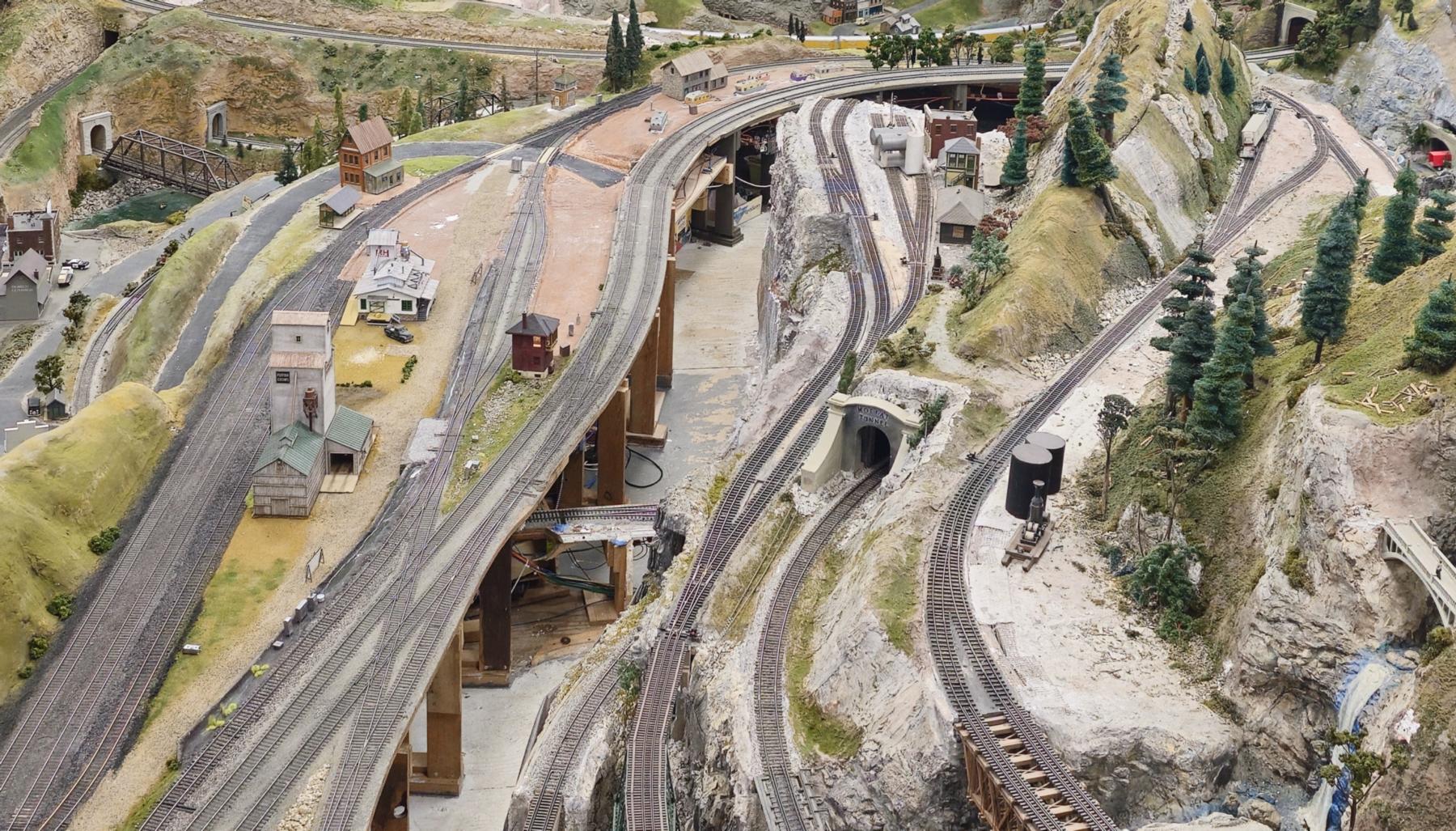
An amazing amount of track, including some On3 on the right-hand side of this photo.
photo © Bill Lane; used by permission

photo © Bill Lane; used by permission
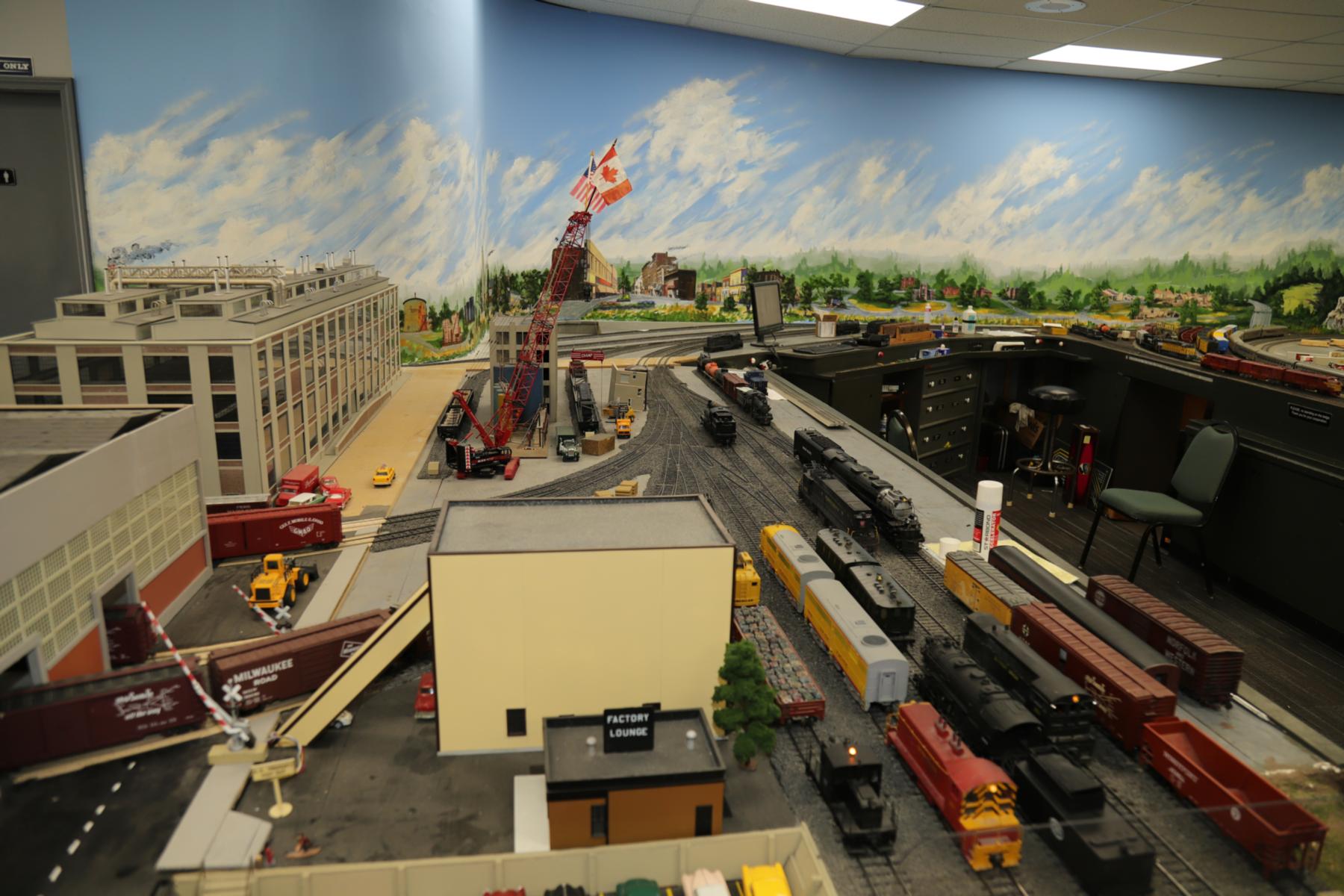
photo © Bill Lane; used by permission

photo © Bill Lane; used by permission

photo © Bill Lane; used by permission

photo © Bill Lane; used by permission

photo © Bill Lane; used by permission
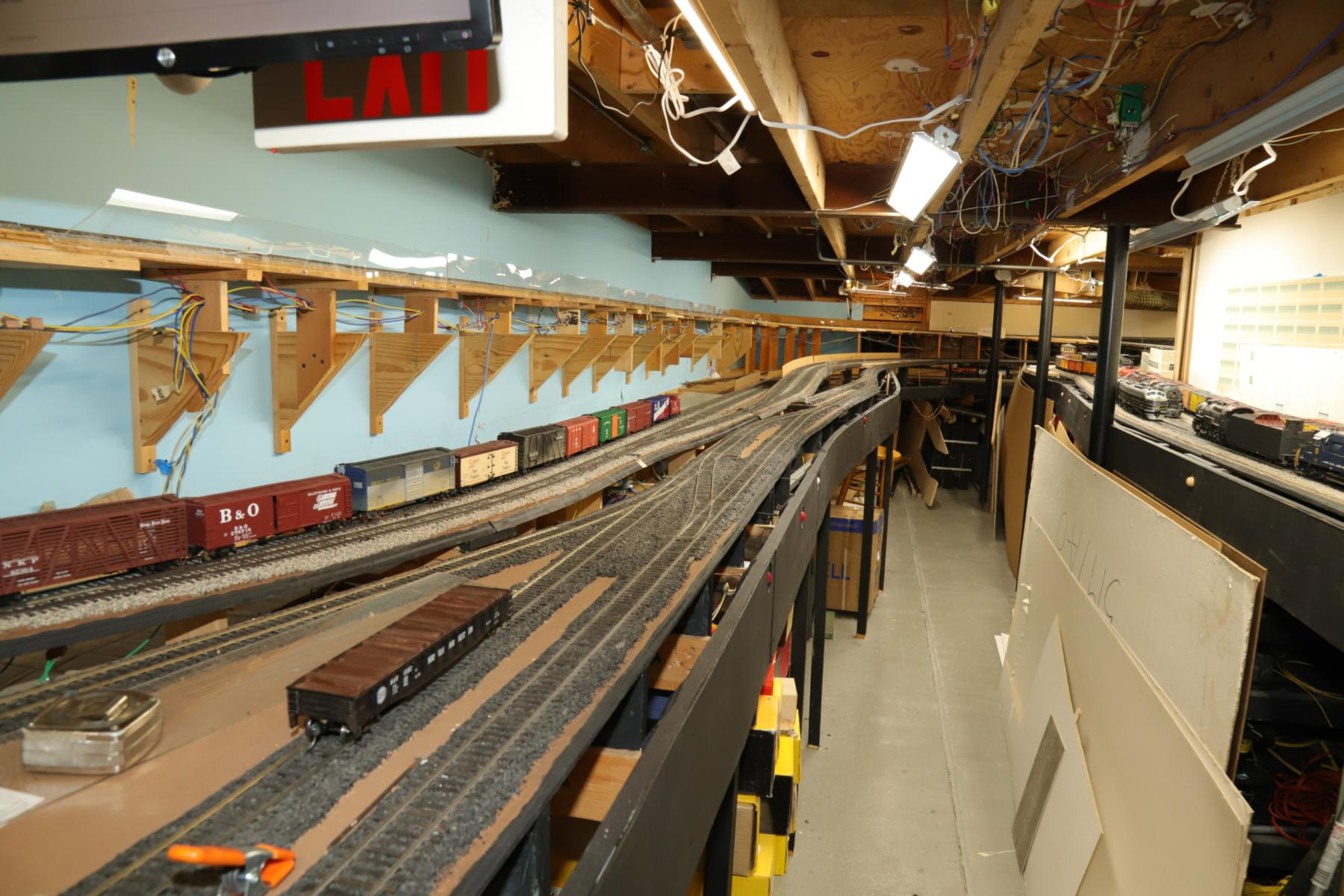
photo © Bill Lane; used by permission
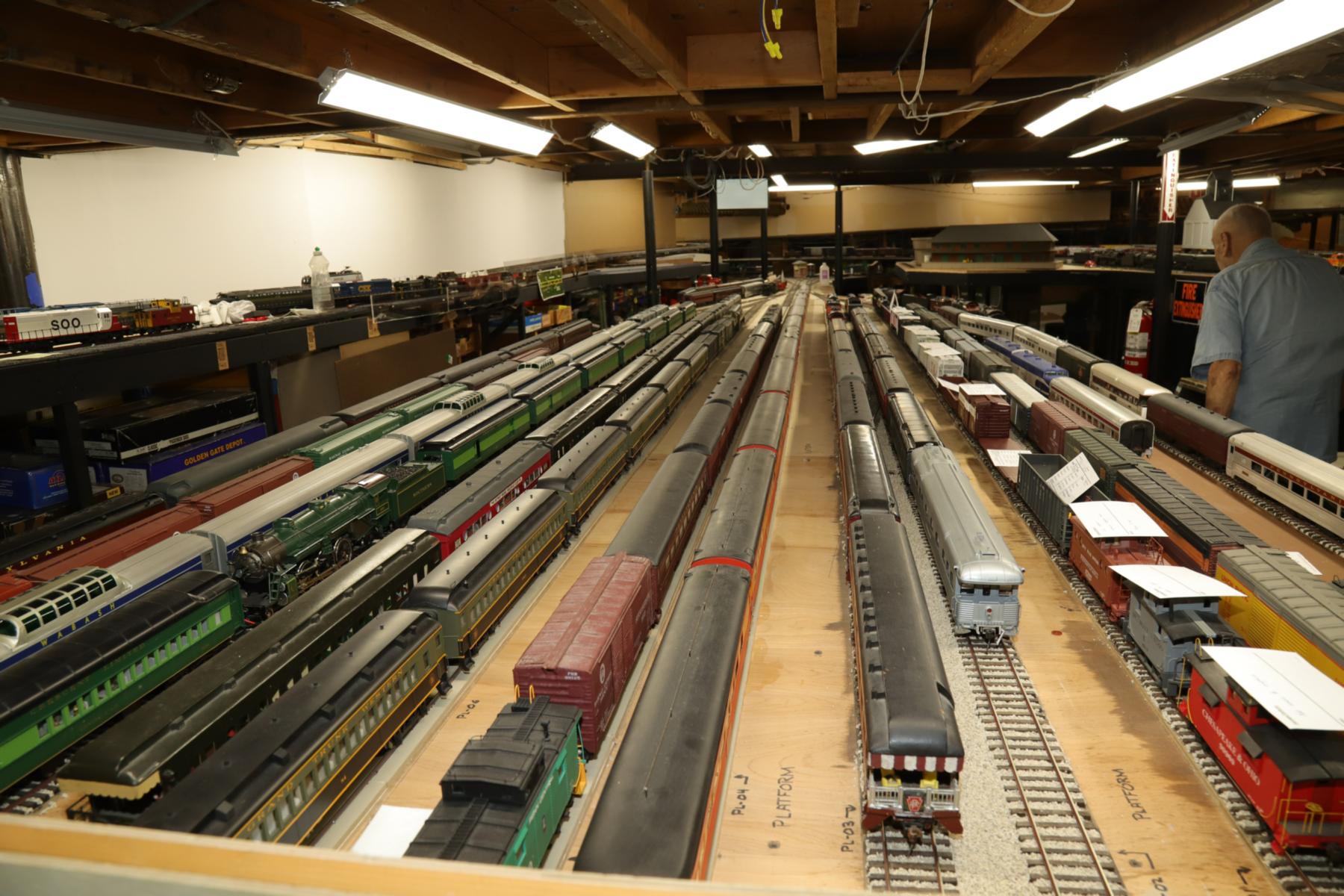
photo © Bill Lane; used by permission
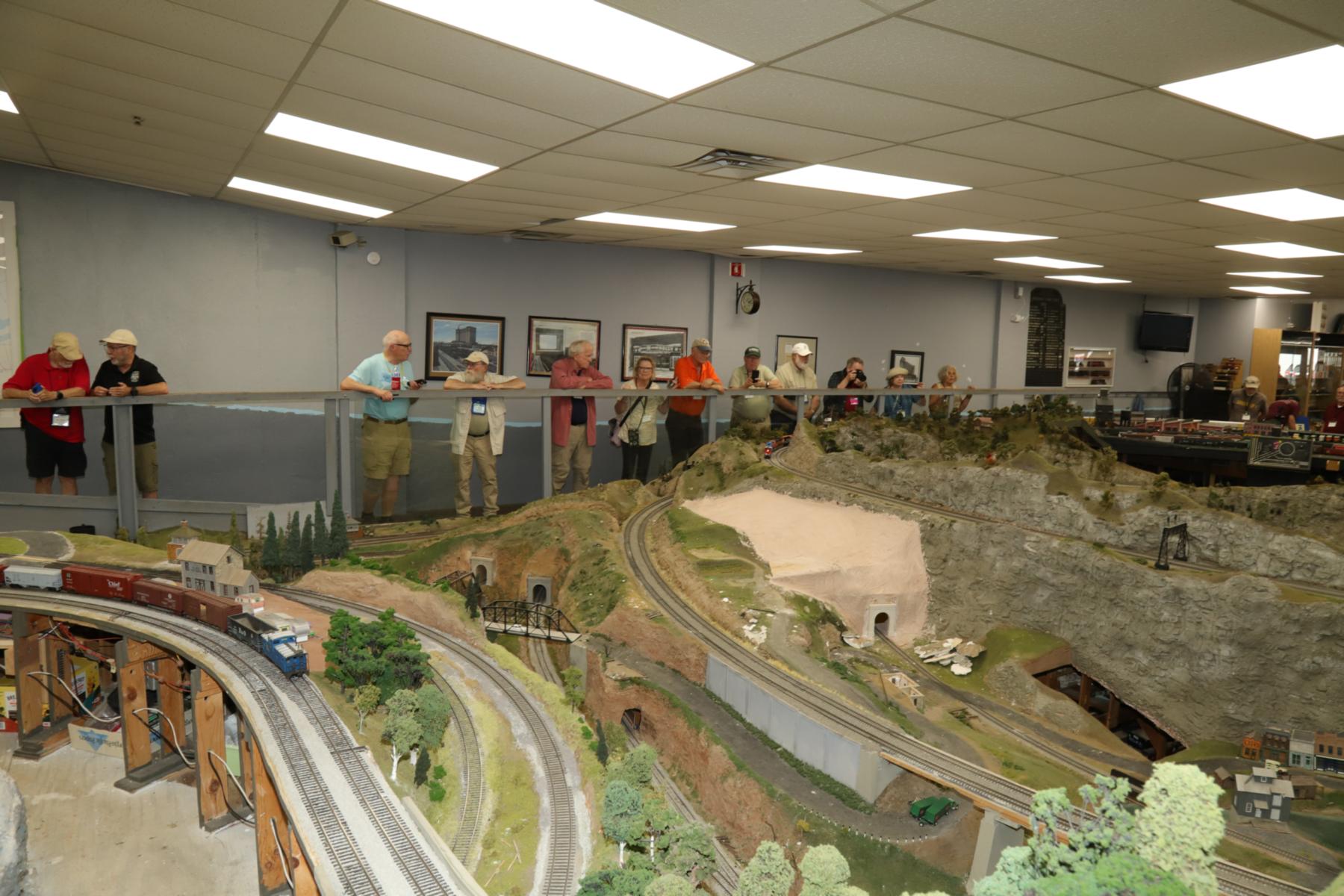
photo © Bill Lane; used by permission

A dedicated Dispatcher is just about a requirement for a layout of this size.
photo © Bill Lane; used by permission
Crossroads Village & Huckleberry Railroad
Friday, August 7
The tour took us to the Crossroads Village & Huckleberry Railroad. This is two venues in one. With more than thirty structures, Crossroads Village allows you to travel back to a simpler time in an authentic Great Lakes town reminiscent of the early 1900s. Watch traditional trades come to life through skilled artisans, and enjoy rides on the Charles W Parker Carousel and the Superior Wheel. The Huckleberry Railroad is a 3-foot gauge rail line that takes you on a 40-minute journey along the shores of Mott Lake, down a stretch of the historic Pere Marquette roadbed that was established in 1857, and back to Crossroads Village. The collection of cars includes 11 original and replica wooden coaches, and a classic red wooden caboose. The locomotive roster is made up of a diesel switch engine and two coal-fired steamers.
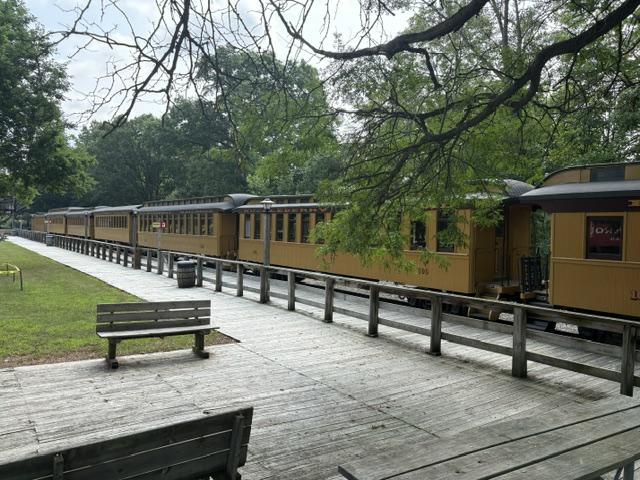
photo © Clay Buckage; used by permission
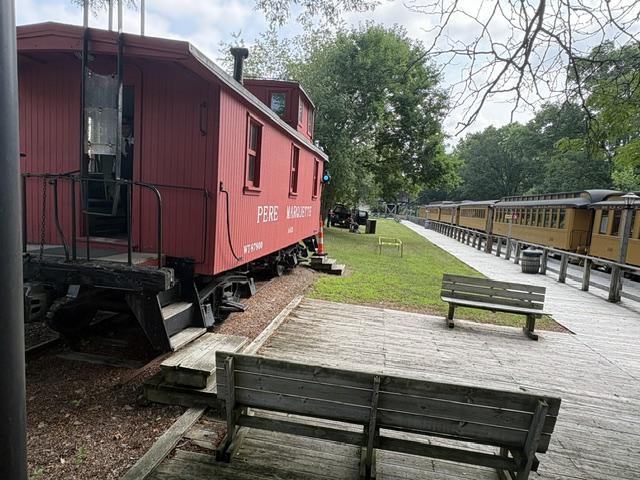
photo © Clay Buckage; used by permission
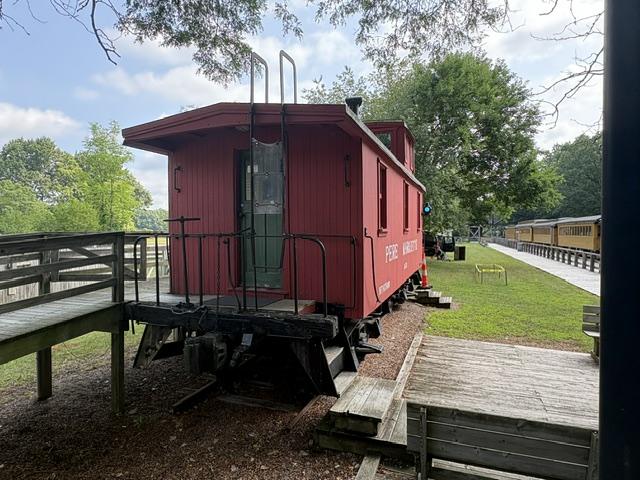
photo © Clay Buckage; used by permission
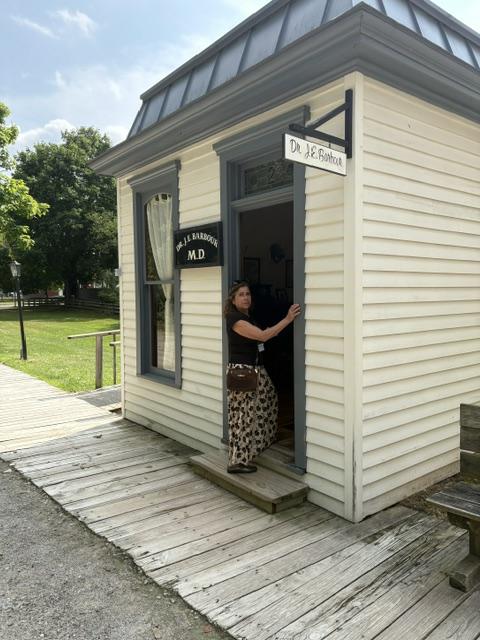
photo © Clay Buckage; used by permission

photo © Clay Buckage; used by permission

photo © Clay Buckage; used by permission
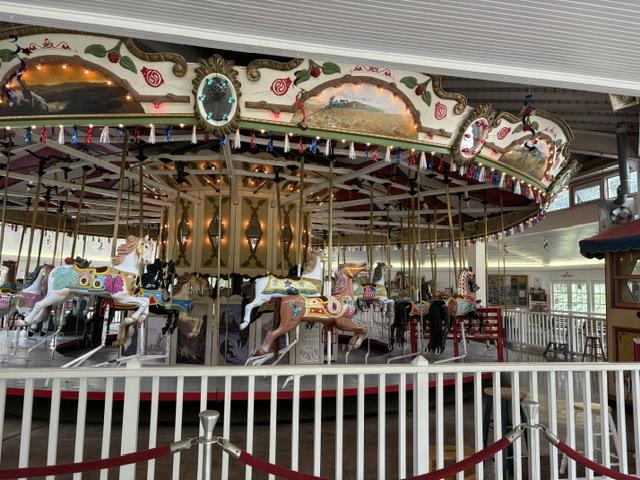
photo © Clay Buckage; used by permission
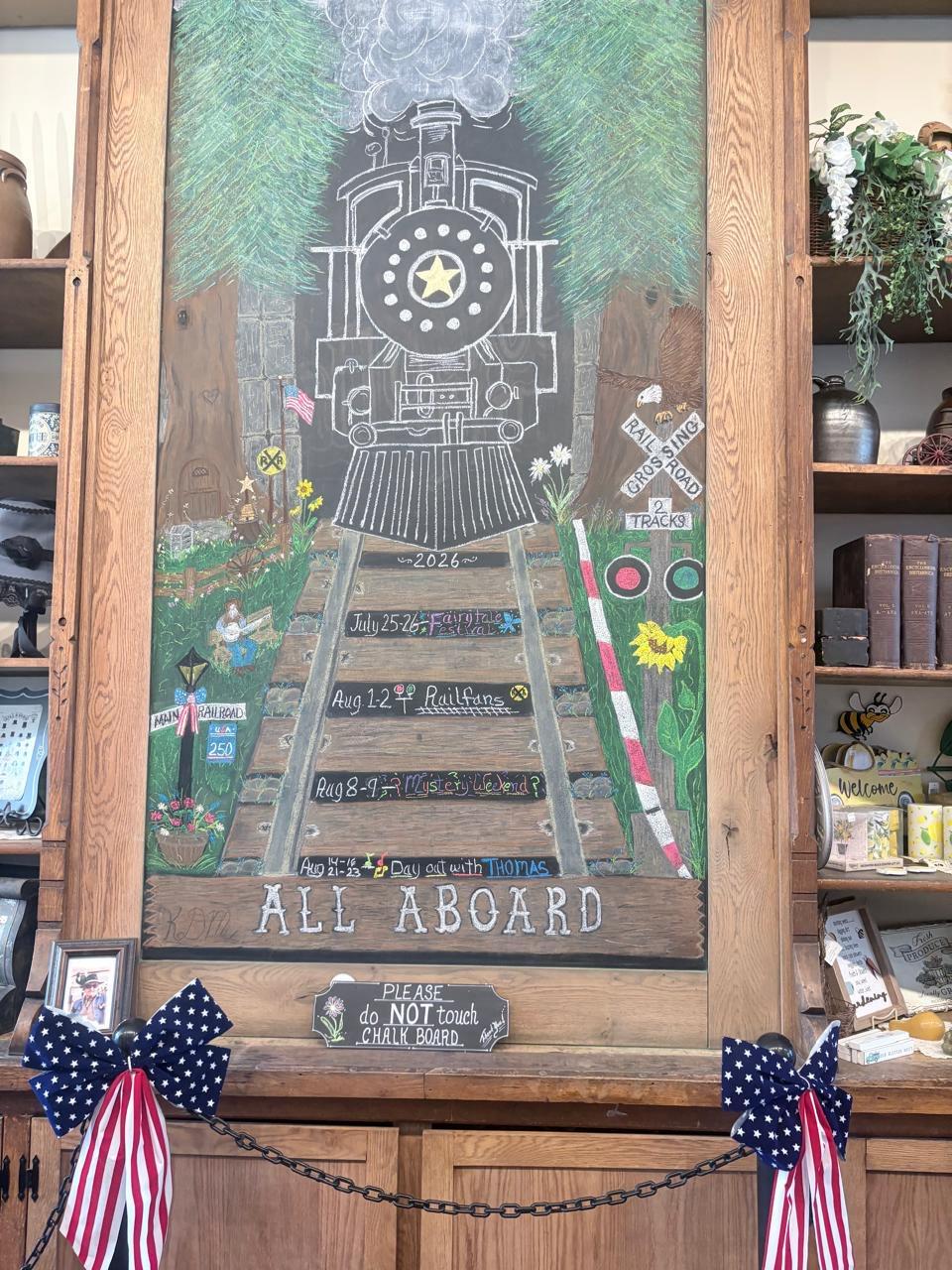
photo © Clay Buckage; used by permission

photo © Clay Buckage; used by permission
NASG General Membership Meeting
Saturday, August 8
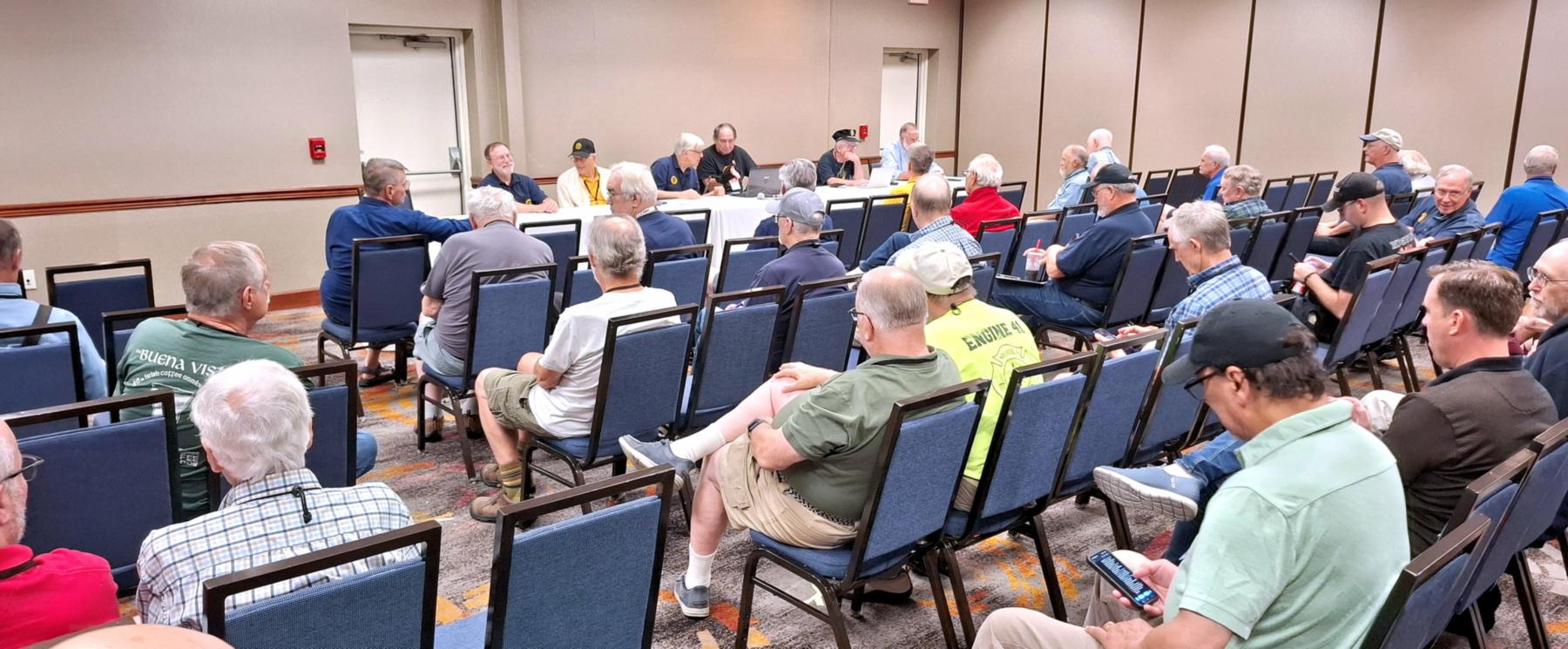
Since the NASG, Inc. is a corporation, it is required to have an annual membership meeting. At this meeting the NASG Board of Trustees (BOT) reports any decisions made while they themselves had their annual private BOT meeting, pass on any other news, and open the floor up for any member discussions, questions, and issues. If a vote is taken during this meeting, it becomes part of the official NASG records.
photo © Michael McConnell; used by permission
Banquet
Saturday, August 8
The banquet kicks off the last evening's activities with a delicious first-rate meal. Members get to know each other and visit with friends during the meal.
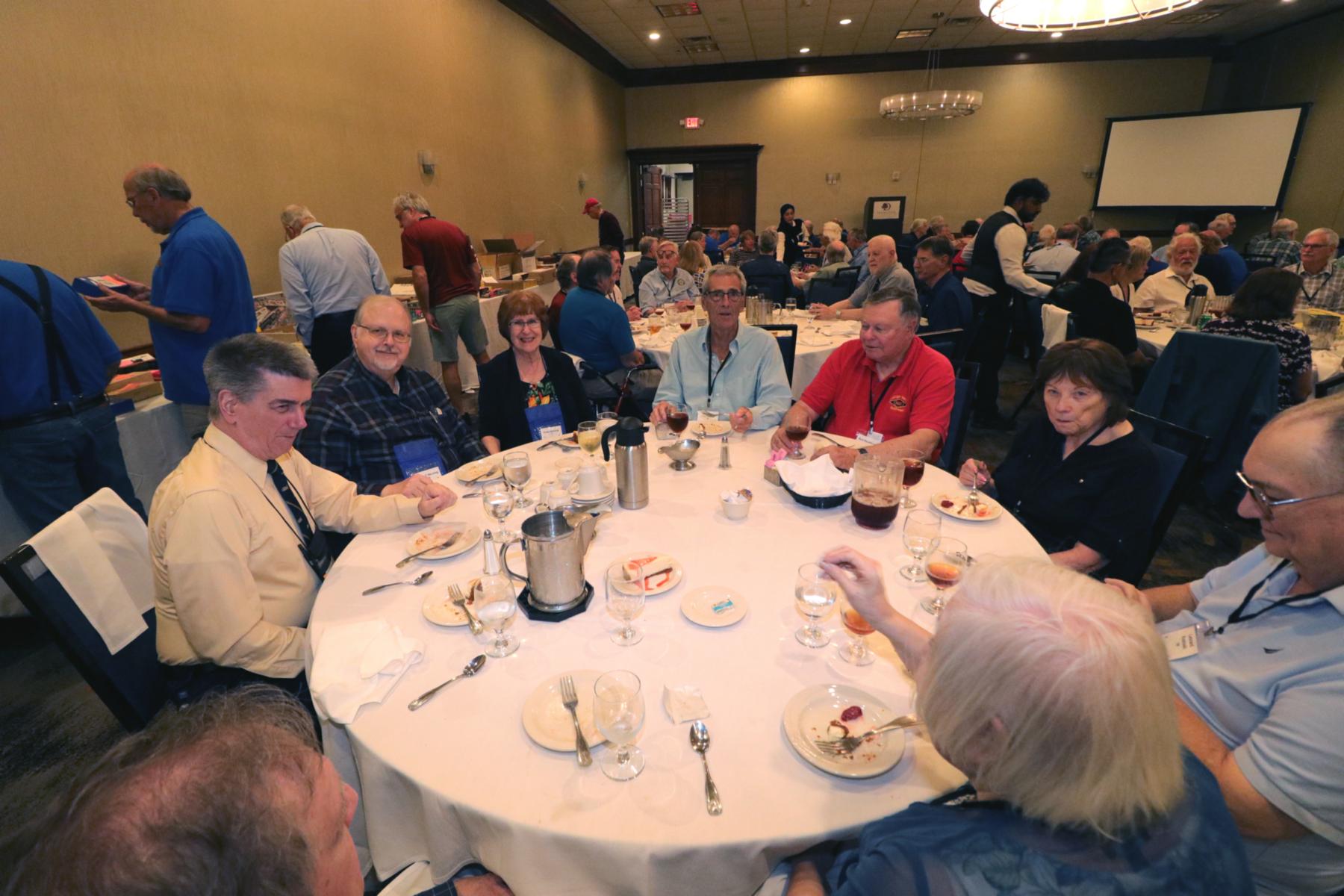
Fellowship at all of the tables at the Banquet. In the background are a set of tables holding the items that are up for the auction following the banquet.
photo © Bill Lane; used by permission

NASG President, Jim Whipple, on the left.
photo © Bill Lane; used by permission
NASG Awards
Saturday, August 8
The NASG offers awards for outstanding service in which members have participated, helping the NASG and S-scale grow, during the previous fiscal year. You can see all of the details about these awards by visiting this page.
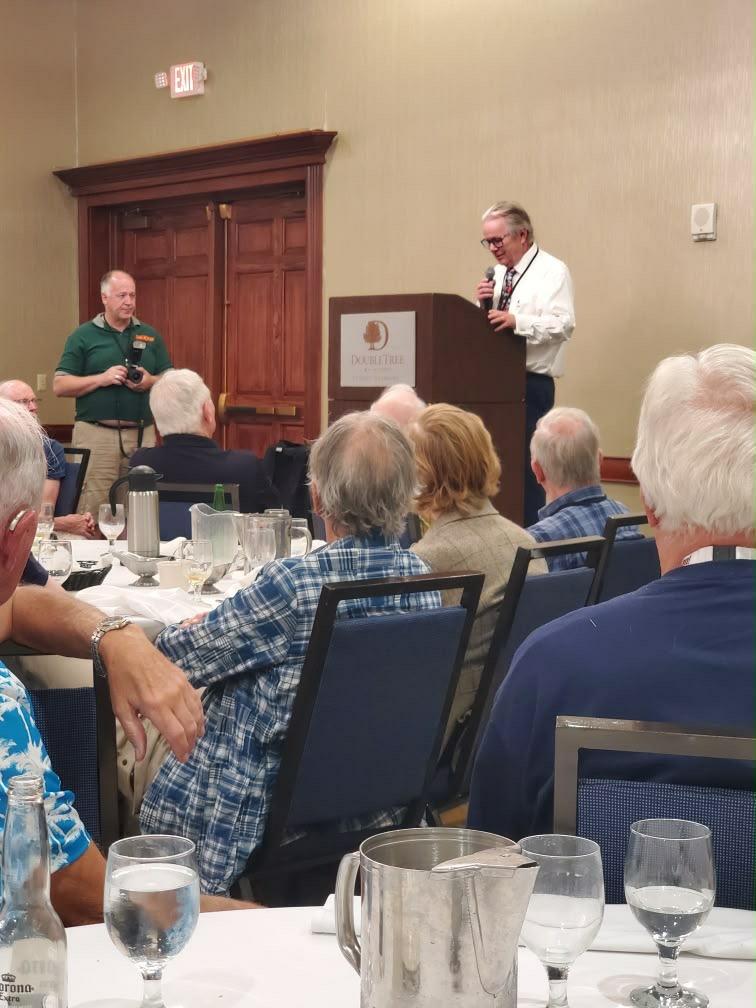
Clay Buckage, the NASG Western Vice-President, announces the winners of the annual NASG awards.
photo © Steve Galka; used by permission

Clay congratulates Merlyn Jarman on winning the 2026 NASG Trustee's Award.
photo © Bill Lane; used by permission
The second set of awards offered are to those who received certificates for their models entered into the NASG's Contests. Jerry Poniatowski officiated those.

Jerry Poniatowski congratulates James McAuliffe on his win.
photo © Bill Lane; used by permission

photo © Bill Lane; used by permission
Please note that awards are only handed out in-person to those who were able to attend the Convention. Other winners had their awards postal-mailed after the Convention was over. For example, Trevor Marshall, won the 2026 NASG Perles/Heimburger Publication Award for his May 2025 Railroad Model Craftsman article titled "Building an Electric Loco in Brass". Trevor shows his certificate on his web site and the receipt of his award in the photo below.
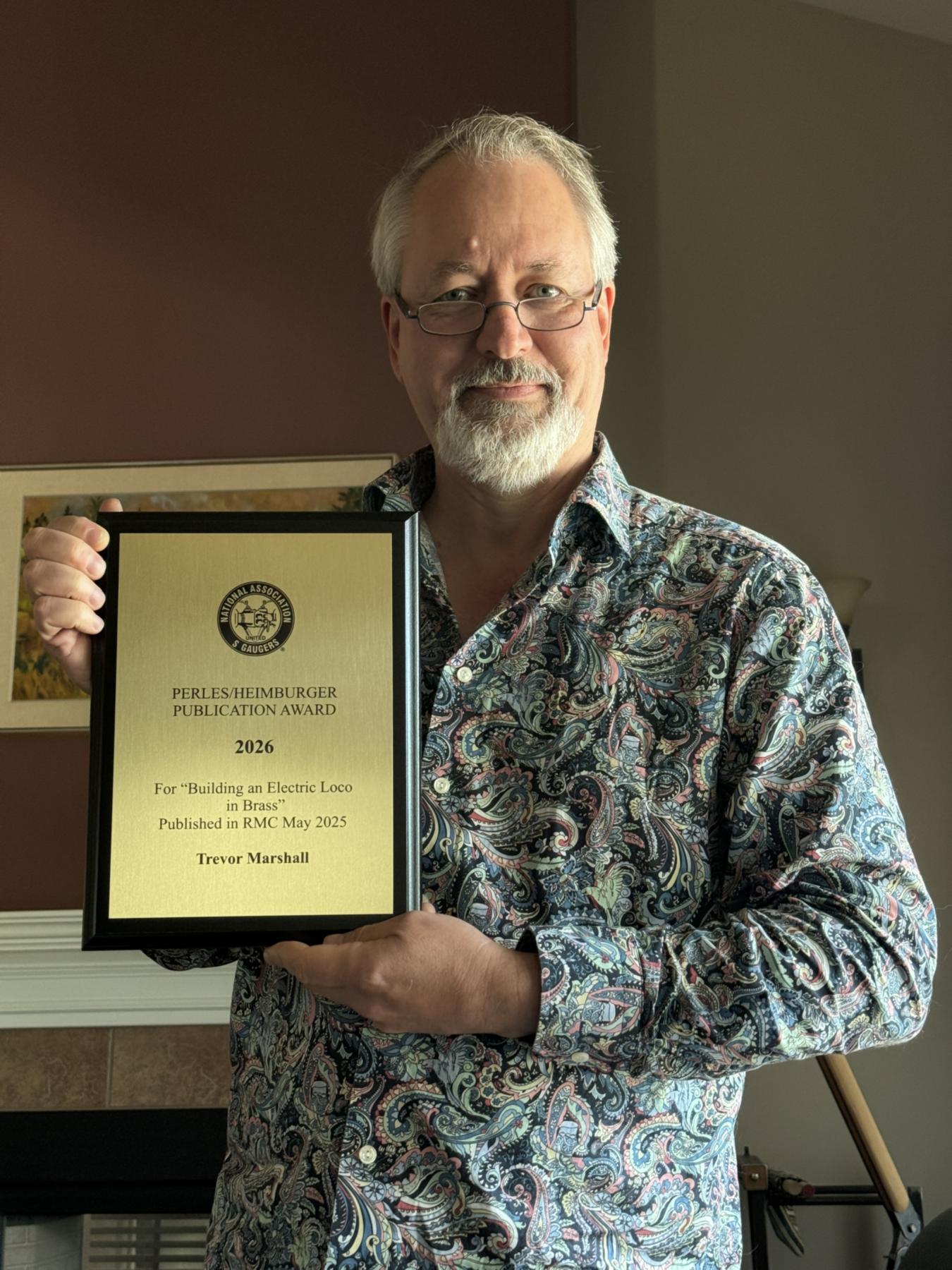
photo © Trevor Marshall; used by permission
Auction
Saturday, August 8
Members are encouraged to bring items to the NASG auction, which takes place immediately after all of the formalities of the last evening of the Convention have completed. Ten percent of the proceeds of the auctions provide additional revenue for the NASG, but it is really the entertainment value that makes it all worth while. Jamie Bothwell, our auctioneer, is hilarious!

Jamie Bothwell is pretty much our resident comedian (auctioneer, oh, and the NASG's Election chairman, and avid cyclist). He has managed several NASG Conventions himself. If you have never attended an NASG Convention, you must stay for the Banquet, to "experience" Jamie. :=) I mean, who else would show up to such a formal event wearing pajama pants?!
photo © Bill Lane; used by permission
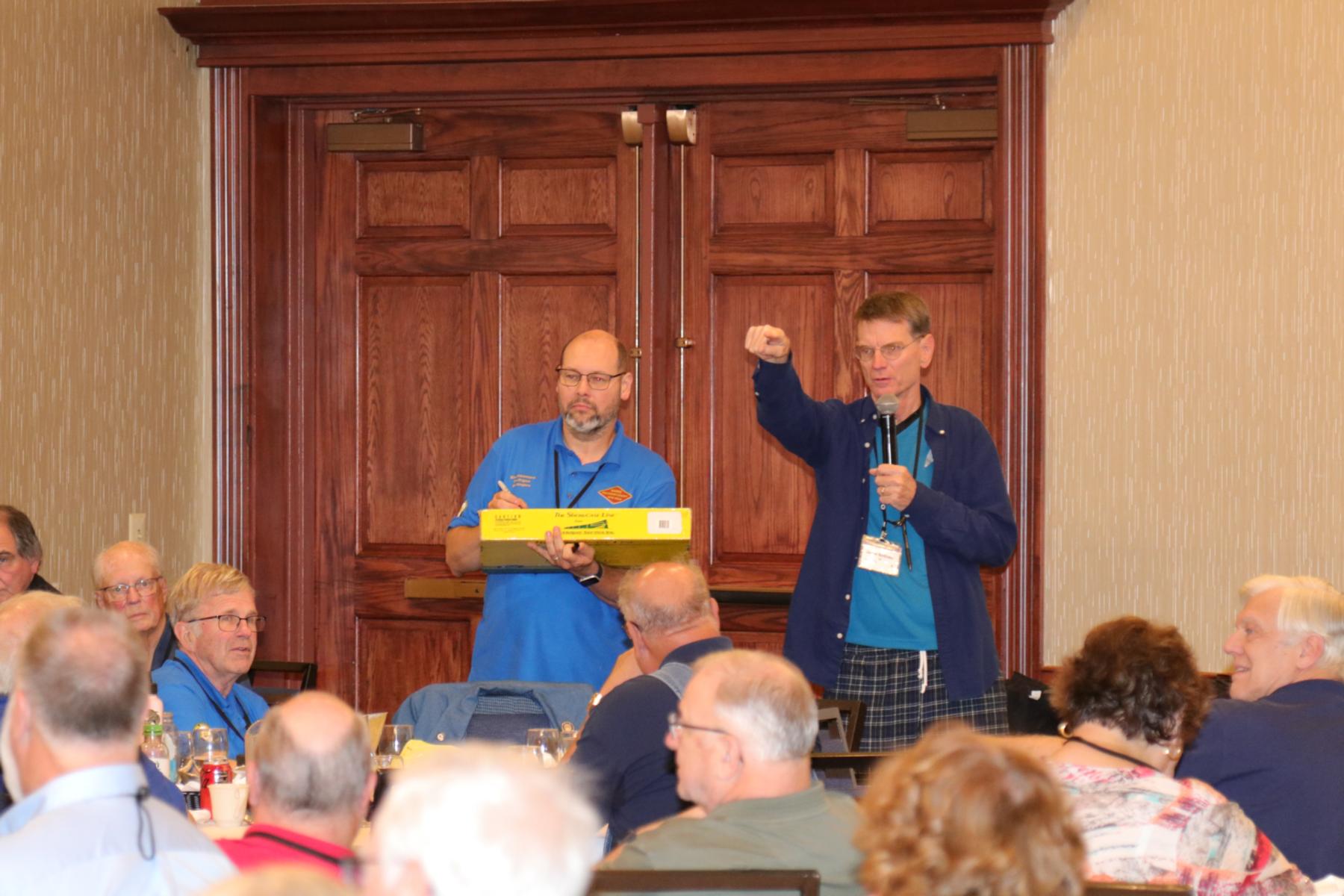
Jamie points to a high bidder, while Jeff Jundt documents the potential winner.
photo © Bill Lane; used by permission

photo © Michael McConnell; used by permission

The NASG President, Jim Whipple, addresses the crowd at the end of the evening.
photo © Bill Lane; used by permission
Clinics
Ron King
Improving Passenger Cars for Better Operation
Ron described several modifications that can be made to S-Helper Service and American Models
passenger cars to improve their performance, especially around tight curves. Specific topics include car weight, coupler mountings, coupler height, and
relocation of bolster pins.
Irv Chmielewski
Temporary Scenery and Structures
We learned about a process to make and install an inexpensive scenic element which can easily be moved to
another location when it is no longer needed in its temporary spot.
Bruce DeYoung
Using Artificial Intelligence as a Modeling Tool
Artificial Intelligence (AI) is in the news virtually every day. This clinic looked at what
prompted a 78-year-old to start using AI in our hobby and some of its many uses in model railroading.
Irv Chmielewski
1940s Railroads of Michigan's Upper Peninsula
As Irv built his freelanced Iron River Valley RR (IRVRR), he looked to the railroads of Michigan's
Upper Peninsula for ideas related to scenery colors, track layout, operations, and other elements. This presentation looked at a relatively small geographic
area in which both national railroads and local short line railroads operated in the late 1940s-era.
Mike Byle
Geology for Realistic Model Railroading
Modeling rocks realistically can contribute significantly to the appearance of your layout. This clinic
discussed the nature of rocks and rock outcroppings and the many characteristics of rock formations including fracturing, folding, and faulting.
William Mosteller
Working With a Professional Layout Designer
This clinic discussed the many steps involved when working with a professional layout designer and
builder. These include chosing an era and location for the railroad, selecting motive power, making track plan tradeoffs, selecting a control system, and
developing an operating scheme.
Bruce DeYoung
Railroads and the Natural Ice Industry
The harvesting of natural ice to preserve food and cool drinks began in the early 1800s. By the middle
1800s, it became a large industry. For the next 50 to 60 years, the natural ice industry became huge customers of the railroads. At the same time, shipping
refrigerated products by rail increased dramatically. Bruce looked at the commercial process of harvesting, storing, and shipping natural ice and the role that
railroads played in the process.
Jeff Jundt
Using Pastels for Painting and Weathering
Soft artist pastels are an effective and inexpensive way to color and weather models. This hands-on
clinic provided an introduction to the techniques.
Ben Trousdale
3D-Design Tools
Ben discussed the tools needed for your first 3D-design project. These include CAD software drawing, editing, and viewing tools
which are common to most software systems.
Tim Fisher
Concept Phase of Layout Planning
Reviewed what needs to be done to develop a layout concept before construction is started. These include
identifying what you want most out of your model railroad and understanding the constraints that must be dealt with when track planning begins.
Jamie Bothwell
Michigan Car Ferries
Being surrounded by water on three sides made Michigan a headache for railroads. The shortcut solutions were car ferries
across the lakes and rivers that separated Michigan from its neighbors. The clinic took a brief look at services across the Detroit River, Lake Michigan, and
the Straits of Mackinac.
Tim Fisher
Adding Automotive Industry Traffic to your Model Railroad
There are about a hundred auto-related factories, including 25 assembly plants, in
North America. Roughly 10% of all US rail shipments support the auto industry. This clinic showed how you can represent the shipping of engines, transmissions,
frames, body panels, seats, and other functional components, as well as completed automobiles.
Mike Byle
Building A Matchstick Shed
Answered the question, "Is it possible to build a model for $1 today as the series in Model Railroader in the 1950s
did?"
Jim Whipple
The P&WV - An S Modeler's Paradise
The Pittsburgh & West Virginia Railway featured a wonderful mix of freight and passenger service running
through industrial, rural, and mountainous terrain. How to model this area using the hi-rail and scale models available in S to represent the diverse steam and
diesel power operated on the P&WV.
Ken Glaza
Electronics for Model Railroads
The topics included basic layout wiring, unique wiring situations with turnouts, the use of sensors,
demystifying DCC systems, using a Digitrax example, and covered components such as throttles and decoders.
Brett Neupert
3D-printing and CAD Systems
Computer-Aided Design (CAD) and affordable 3D-printing now make it possible to create highly-detailed, custom scale
models that were once available only through expensive die-cast molds or plastic injection tooling. This clinic covered the complete process of designing
custom structures, vehicles, and scenic details using CAD software, along with the advantages and limitations of both filament (FDM) and resin (SLA/MSLA)
3D-printers.
Mark Charles
Moving Milk Products on Your Railroad
Milk, cream, and cheese were important sources of revenue for railroads prior to the 1950s. This was an
overview of the traffic milk products generated and the equipment railroads used, especially in North America.
Jamie Bothwell
You Too Can Laser-cut Structures and Rolling Stock
You may have thought that laser-cutting is beyond your skill level or means, but the basic
techniques are easy to master, and access is more widespread than you might think. This clinic covered some basic drawing techniques and possible materials. It
also suggested some possible options for free or low cost laser access.
Bob Bubeck
Lionel Production Prototyping of Modern Era American Flyer
Lionel has been producing American Flyer S trains for about 46 years. However, except
for a few items, they have now ceased offering a full product line. This clinic was a review of the first 25 years of pre-production prototyping related to
original Gilbert tooling, the condition and modification of that tooling, and the need in many cases for new tooling.

photo © Michael McConnell; used by permission
Norm Logan
Creating a Museum-quality Backdrop
If you are tired of flat blue walls and want an effective backdrop for your layout this is the clinic for
you. Painting a backdrop can be the quickest way to add a lot of scenery to your model railroad in the shortest amount of time. It is also a great way to unify
all your scenic ideas and give focus to your modeling theme. This two-session clinic covered design and planning choices, as well as backdrop painting
materials and techniques, and using and installing clipped photos from magazines and internet photos to enhance your background.
George Van Duyne
Maintaining a Steam Locomotive
Have you ever wondered what it took to maintain and operate a locomotive in the days of steam? The Steam
Railroading Institute of Owosso, Michigan owns and operates the Pere Marquette 1225, a 2-8-4 Berkshire built by Lima in 1941. This clinic described the work
needed to maintain the locomotive, including the recent project to rebuild the drivers and running gear, and the specific steps needed to fire up the
locomotive, raise steam pressure to bring the locomotive to life, and operate it on excursions.
Model Contests & Displays
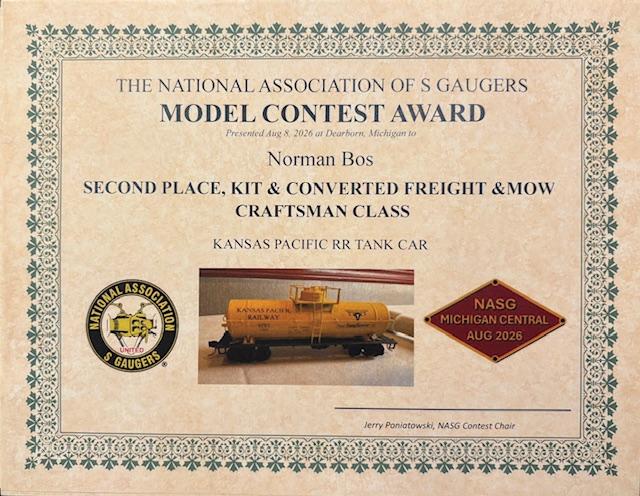
The Contest room has items which modelers have officially submitted for judging as per the NASG's Contest Rules, as well as models displayed just for show.
Attendees were able to view the models when the doors were open to admire fellow modelers' work and get inspired. Judges confer as to who won in which
category, with the awards presented during Saturday evening's events.
On the right is an example of the certificates presented to this year's winners.
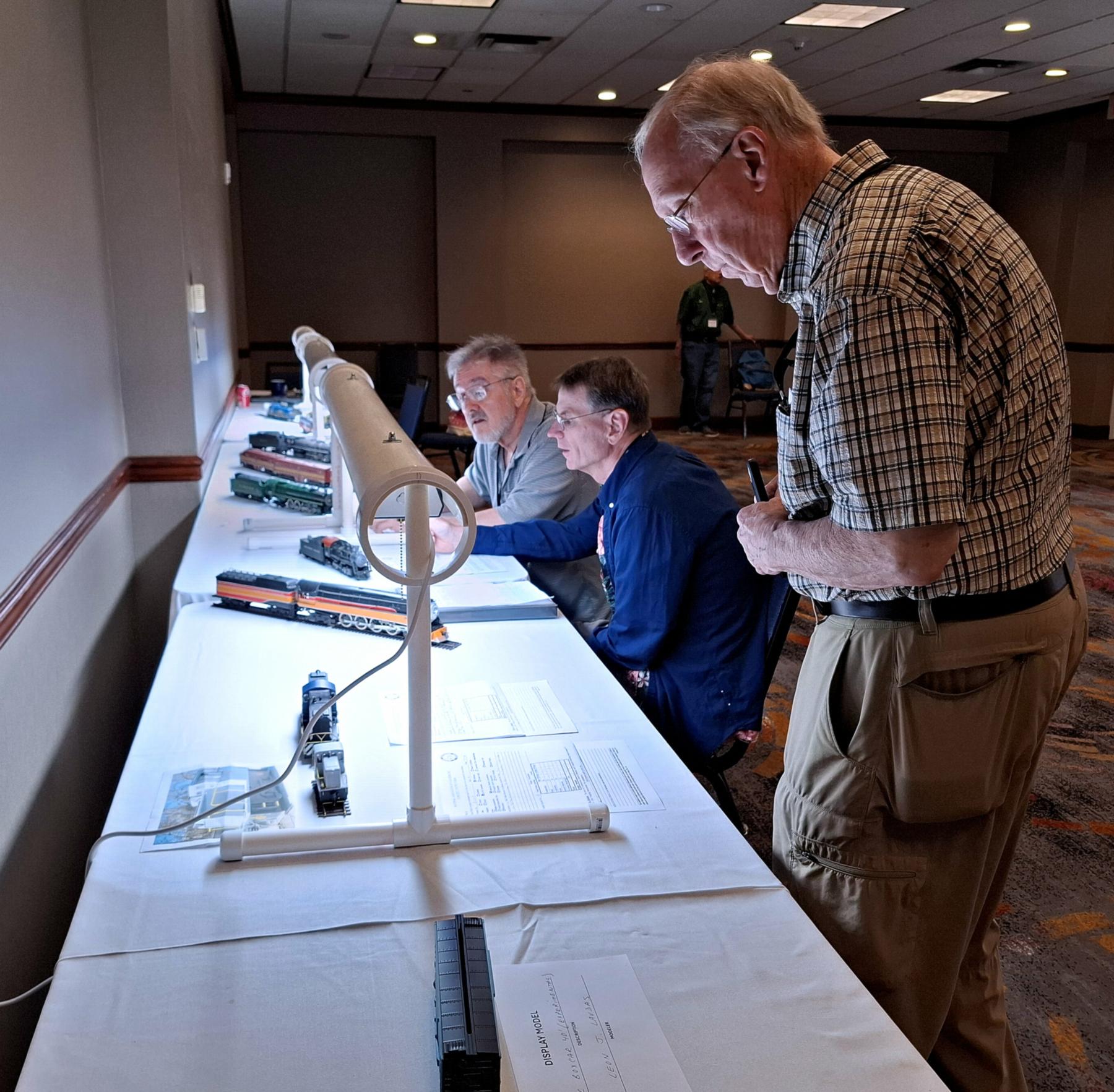
Contest judging is serious business and can take many hours. From left to right are Lindsey Neas, Jamie Bothwell, Charlie Leonard (NASG Contest chairman).
photo © Michael McConnell; used by permission
Frank Titman Best-of-Show Award
The Lehigh Valley Class T-2b 4-8-4 locomotive built by Dick Karnes.
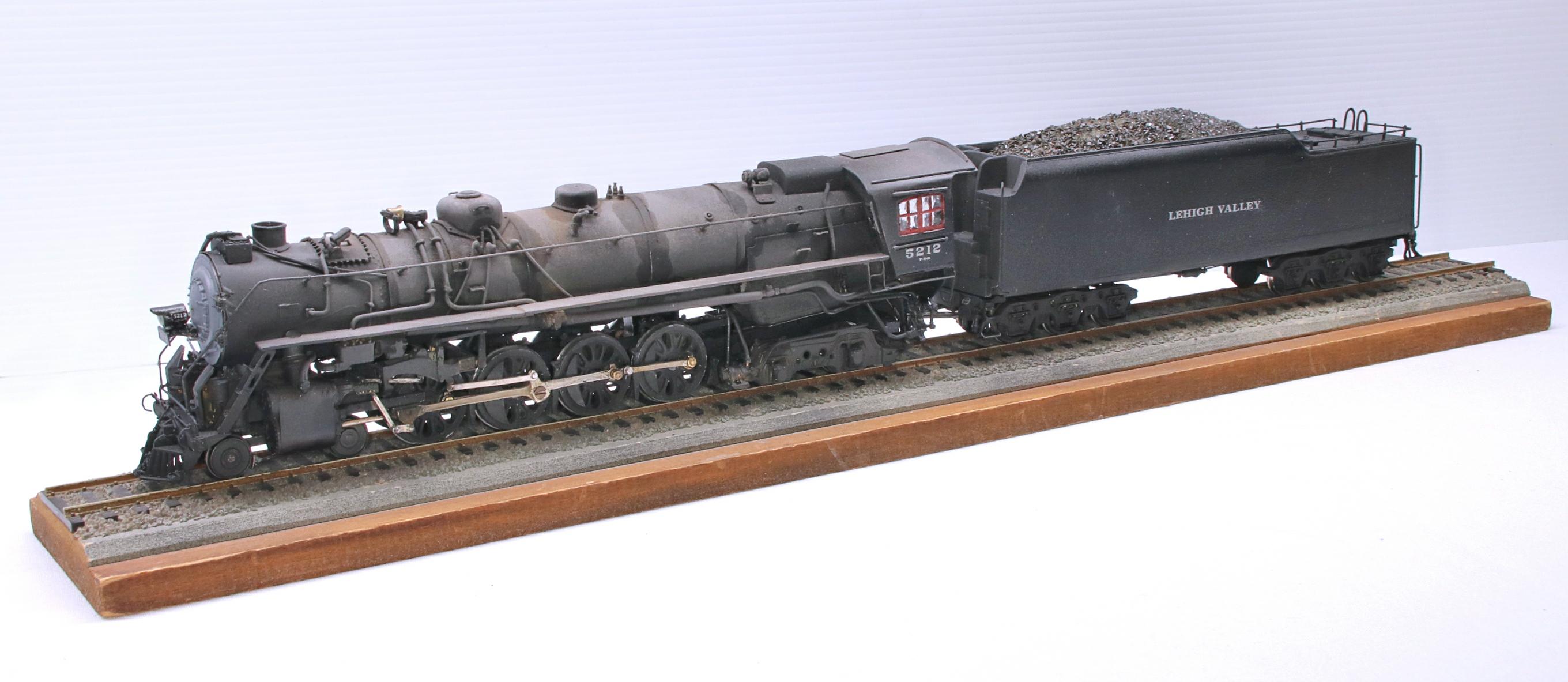
Dick Karnes created this model from scratch using brass, and scratchbuilt and commercial brass details. The tender started off as two Marx plastic tenders glued together, to which Dick fabricated a brass underframe and applied brass details. The tender bunker and rear deck were scratchbuilt from styrene. Dick completed this model just weeks before the Convention.
photo © Michael McConnell; used by permission
Steam Locomotives - Master Craftsman
1. Richard Karnes: Lehigh Valley Class T-2b 4-8-4 Locomotive (see photo above).
Steam Locomotives - Craftsman
1. Jay Mellon: SP 2-6-0 Mogul.
Steam Locomotives - Amateur
1. Steven Stallings: UP Daylight 4-8-4.
Steam Locomotives - AF Imagineering
1. Leon V. Lavdas: Timkin "Four Aces" 4-8-4.

Jay Mellon set about to see what it must have been like to build this model back in the 1960s when this Rex 2-6-0 kit came out. He built the kit as intended, but mentioned that a large amount of flash needed to filed off of the parts. Screw holes has to be pre-tapped before "attaching with screws" (kit instructions) was possible. The pilot steps were missing from the kit, so Jay fabricated those from styrene. The headlight lense was made from clear plastic packaging material. To keep with theme, he used American Models non-operational couplers, and a 12-volt incandescent lamp in the headlight. The figures are by Artistta and S-Helper Service. The tender coal load was made out of foam covered with course ballast. Jay did state that an SP Mogul would likely have an oil tender, but he didn't have one available. Jay's conclusion was that this model would be something the modeler might be proud of in the 1970s.
photo © Michael McConnell; used by permission

Steve Stallings' model started off as an A.C. Gilbert #335AC UP Northern, converted into the Southern Pacific GS-2 Daylight #4412. Many 3D-printed parts were used, which Steve designed in CAD and then printed on his home printer. The Skyline casing and the tender were converted and created by Steve from sheet steel. He painted the model, applied decals, and installed a DC motor and Soundtraxx' Blunami DCC sound decoder.
photo © Michael McConnell; used by permission

Leon Lavdas' 4-8-4 is a converted A.C. Gilbert model. He used the A.C.G. #332 engine and the #322 A.C.G. Hudson's tender. Both were stripped of their paint. He scratchbuilt the doghouse out of styrene, the headlight out of a brass tube, and the sand covers were made out of styrene. He painted the model and applied custom-made decals.
photo © Michael McConnell; used by permission
Diesel & Electric Locomotives - Master Craftsman
1. Gary Ippolito: Norfolk Southern GP50.
2. Steve Kutash: New Haven EMD FL9.
Diesel & Electric Locomotives - Craftsman
1. Rob Berridge: GE 25-ton Diesel Switcher.
Diesel & Electric Locomotives - Amateur
1. Woody Hanger: 44-tonner.
2. Kim Hartshorn: D&H RS3.
Diesel & Electric Locomotives - AF Imagineering
1. Ray G. Nase: PRR Alco PA-PB-PA.
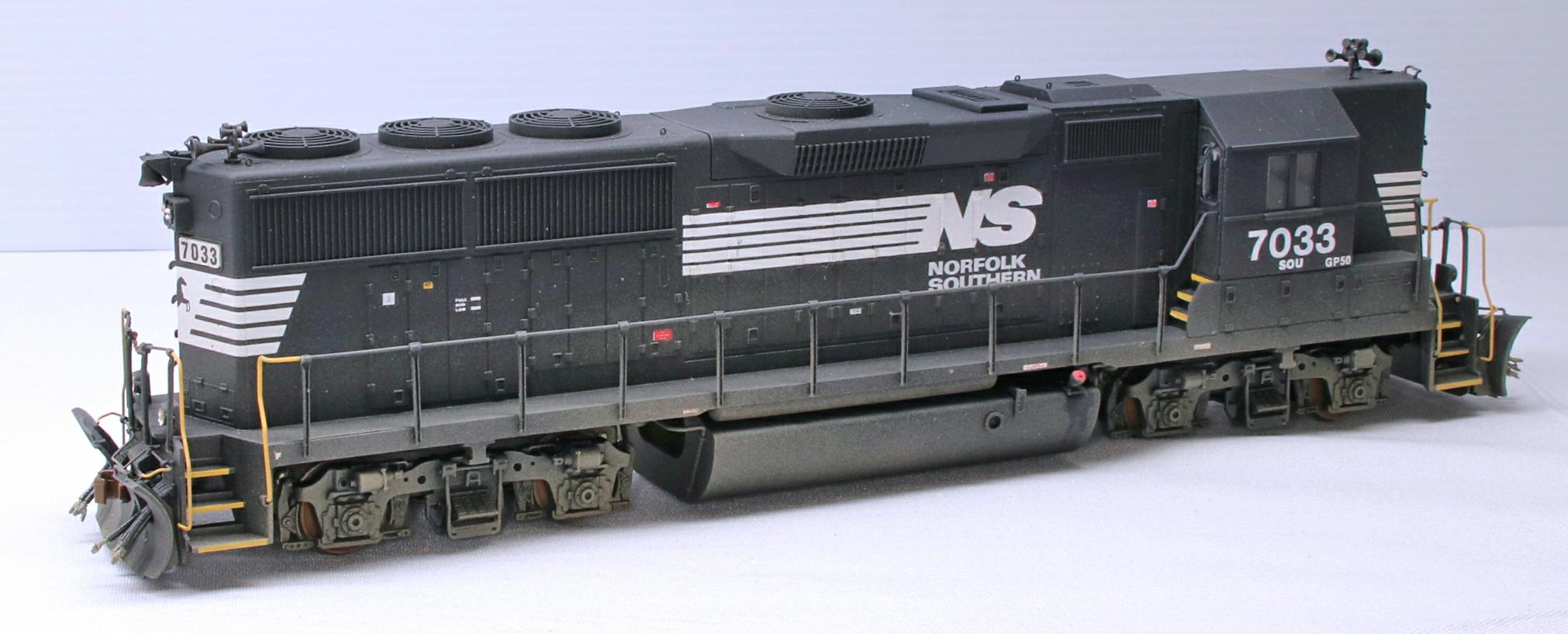
Gary Ippolito started his NAS GP50 by using an American Models GP35 shell and drive system and the long hood from an SD60, to create this unique model. He started the project in 2001 but wasn't able to complete it until this year. While mostly a kitbash project, Gary did have to make the dynamic brake fan from a home-made casting, as well as the high-hood ends. Detailing parts came from various manufacturers, and hand-made ones.
photo © Michael McConnell; used by permission
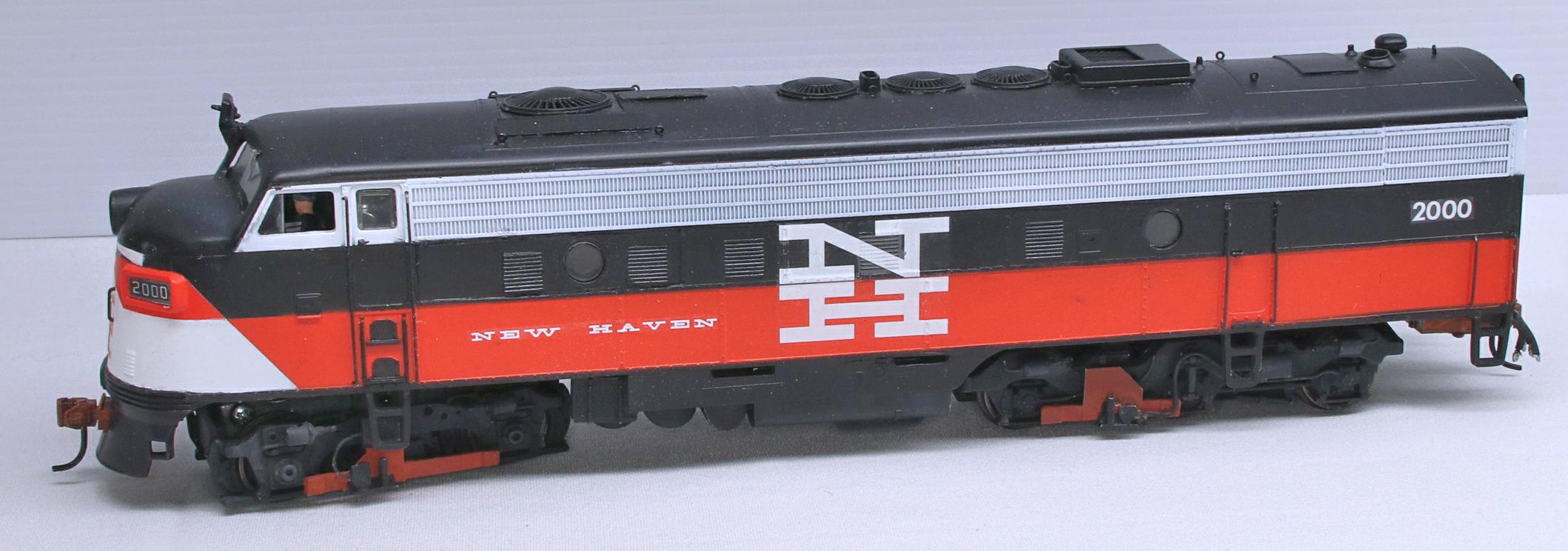
Steve Kutash did some custom painting, applied decals custom-made for him by PDC, used details from several manufacturers and hand-made a number of details that he couldn't get commercially.
photo © Michael McConnell; used by permission
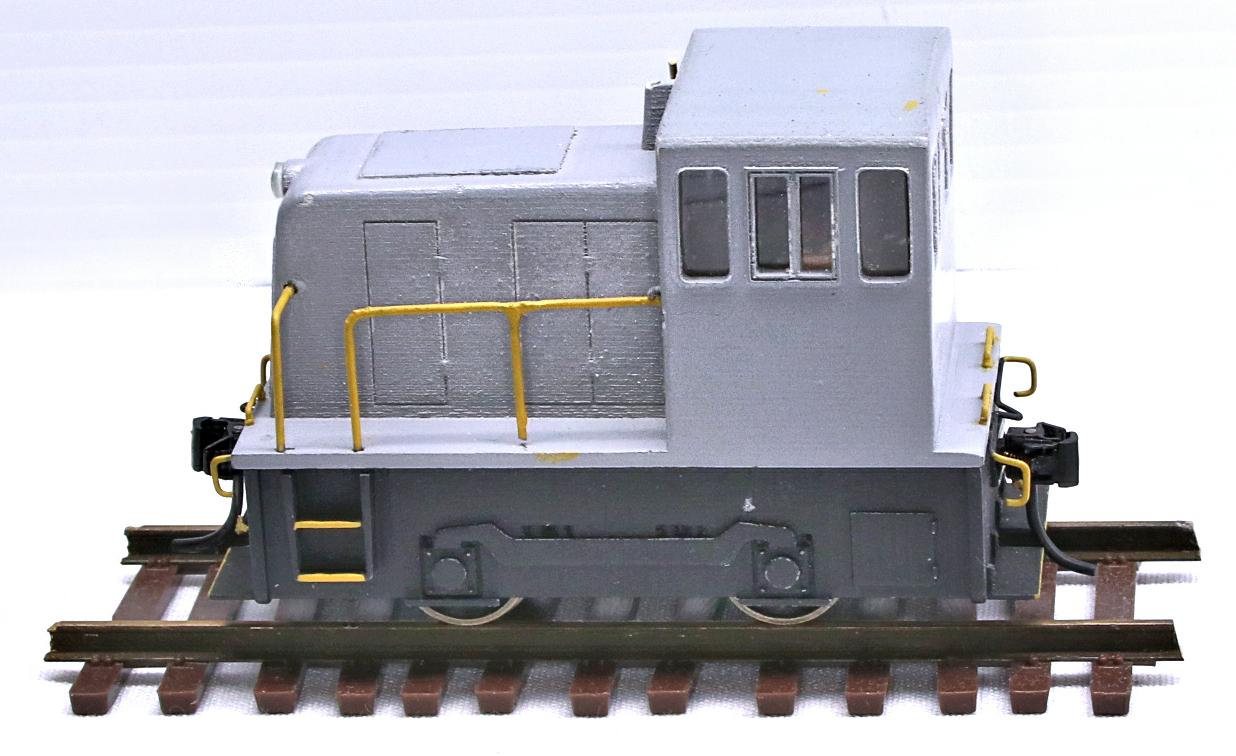
Rob Berridge built this GE 25-ton industrial switcher using a 3D-printed shell formerly available from Shapeways. Rob used a NorthWest ShortLine Stanton Drive to make the model operational. Weights were added. Detailing parts can from his parts box.
photo © Michael McConnell; used by permission
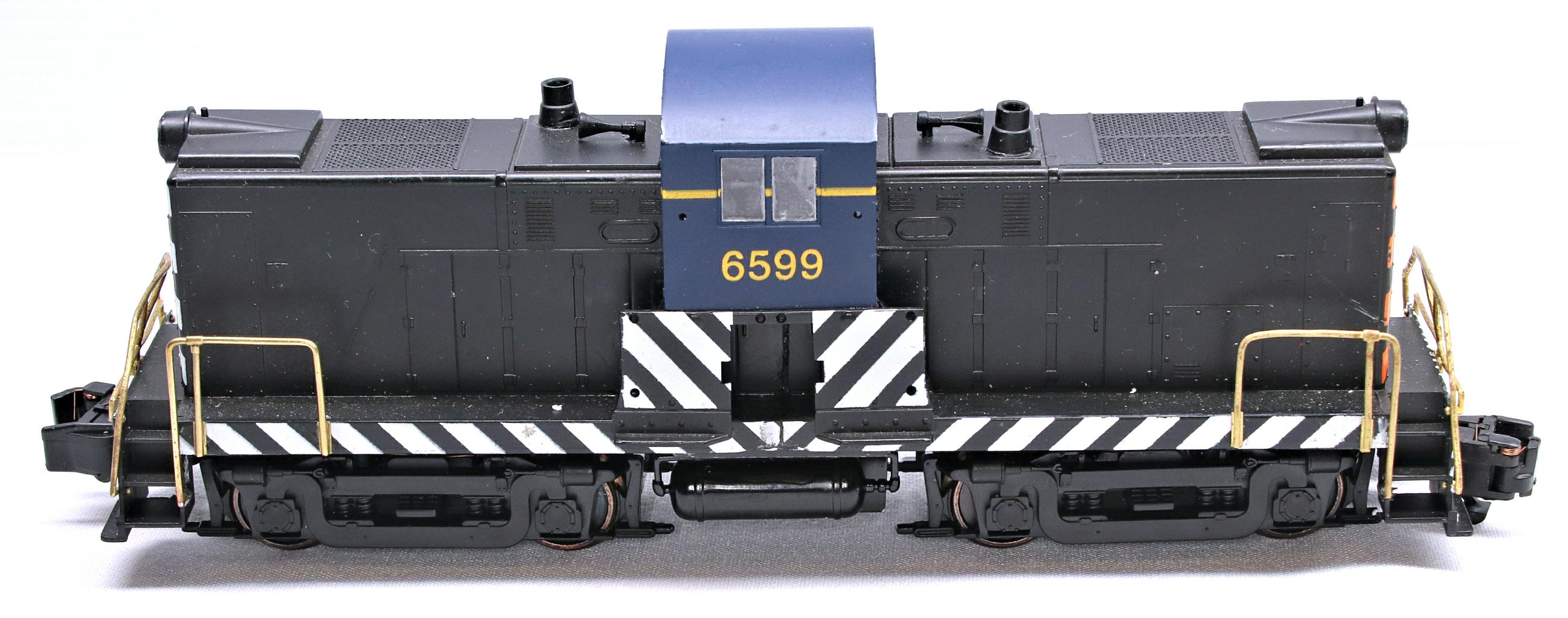
Woody Hanger built this custom 44-ton industrial switcher from two American Models S-12 shells and a GP7 cab. Handrails were made out of brass.
photo © Michael McConnell; used by permission
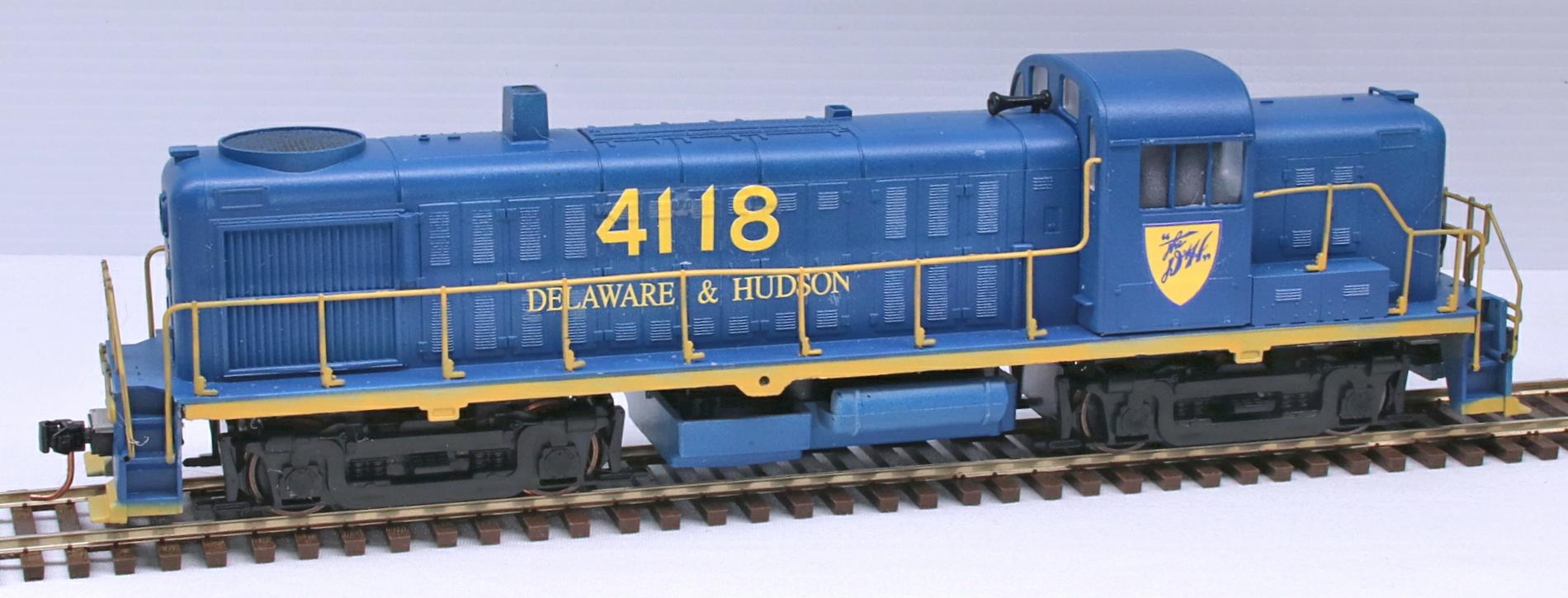
Kim Hartshorn Delaware & Hudson RS3 painted (airbrushed) based on prototype photos. The decals are CMR Blue Scheme Alco 420 set.
photo © Michael McConnell; used by permission
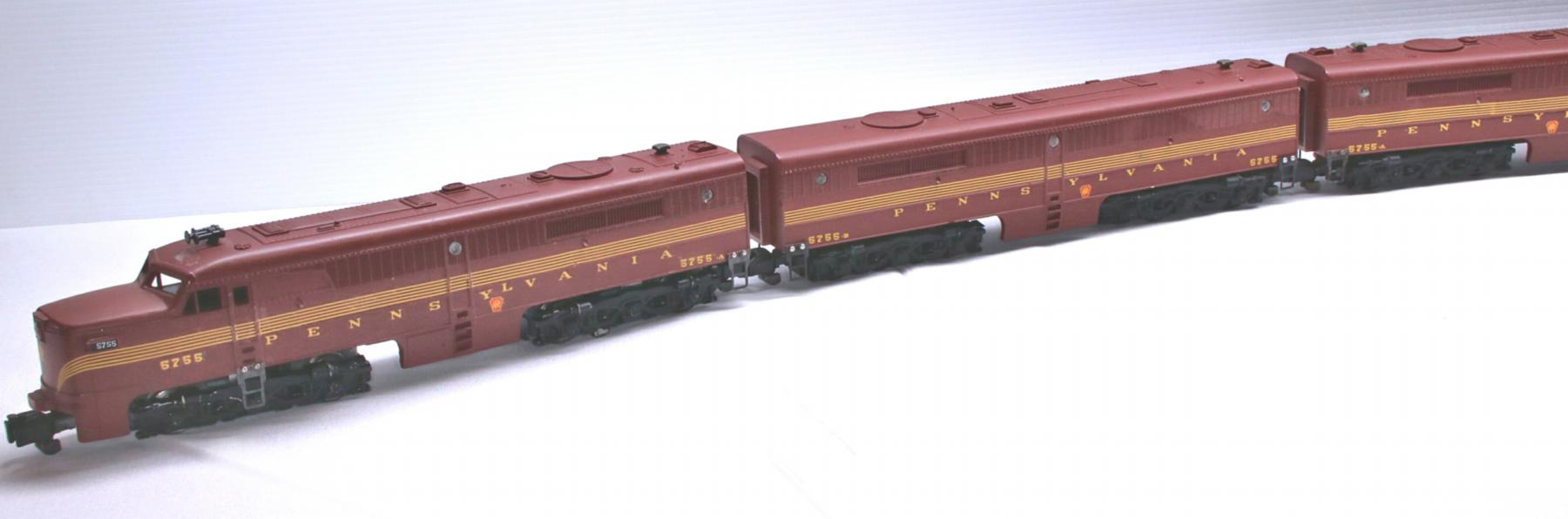
Ray Nase took an A.C. Gilbert Alco PA-PB-PA set and replaced the motors with DC ones, installed DCC, custom-painted the models for the PRR, and applied the decals.
photo © Michael McConnell; used by permission
Freight & MOW Equipment - Craftsman
1. James McAuliffe: CNR 8-hatch Reefer
2. (tie) Norman Bos: Kansas Pacific Railroad Tank Car "Pure Sunflower Oil".
2. (tie) Rob Berridge: PRR F36 flat car with boiler load.
Freight & MOW Equipment - Amateur
1. Brett Neupert: Caterpillar D5 Bulldozer.

James McAuliffe built the resin kit by M.L.W. Services. The kit included brass etchings and metal casts. The model has details from various manufacturers, S-Helper Service trucks, and Kadee couplers.
photo © Michael McConnell; used by permission

Norman Bos' model started off as an S Scale America tank car, which he disassembled, applied primer, painted yellow with Rust-oleum, and applied home-made decals (except the herald).
photo © Michael McConnell; used by permission
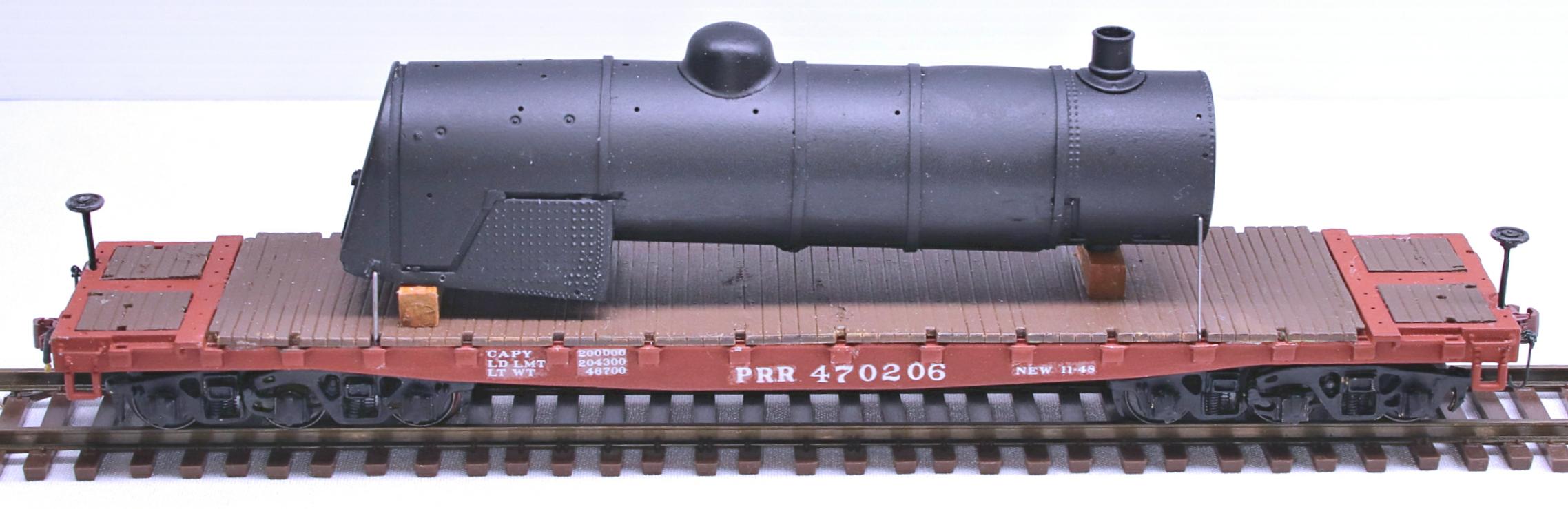
Rob Berridge's PRR F36 flat car holds steam locomotive boiler load. The car is an S-Helper Service model, with its trucks replaced with Buckeye trucks to match the prototype. The frame had to be modified to fit those trucks. The load is also an S-Helper Service original.
photo © Michael McConnell; used by permission

Brett Neupert produced this 1980s Caterpillar D5 bulldozer with 4-post ROPS, which has working blades. He created the CAD design and 3D-printed the parts. The parts were painted with genuine Caterpillar paint, and then assembled.
photo © Michael McConnell; used by permission
Structures - Master Craftsman
1. Jeff English: Rutland Railroad Bridge.
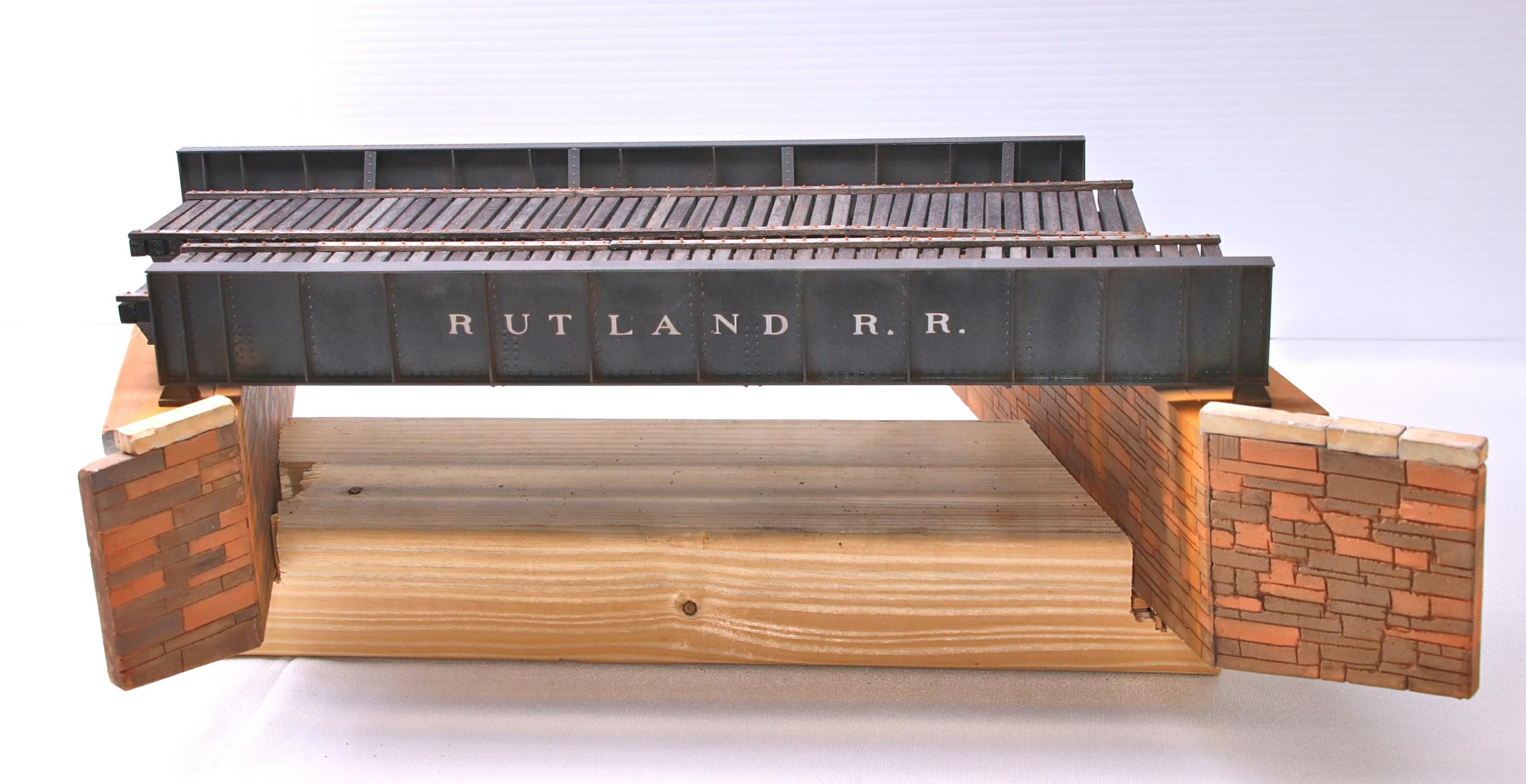
Jeff English modeled this bridge after the one found over Amsden Street in Malone, New York. This model was completely built from scratch.
photo © Michael McConnell; used by permission
Photos - B&W
1. John E. Henning. "NYC Sanding & Refueling Platform".
Photos - Color
1. John E. Henning. "Loon Lake Shay #9".

John Henning took this photo on Wayne Tomsic's NYC S layout. "NYC Sanding & Refueling Platform". Winner "B&W".
photo © Michael McConnell; used by permission
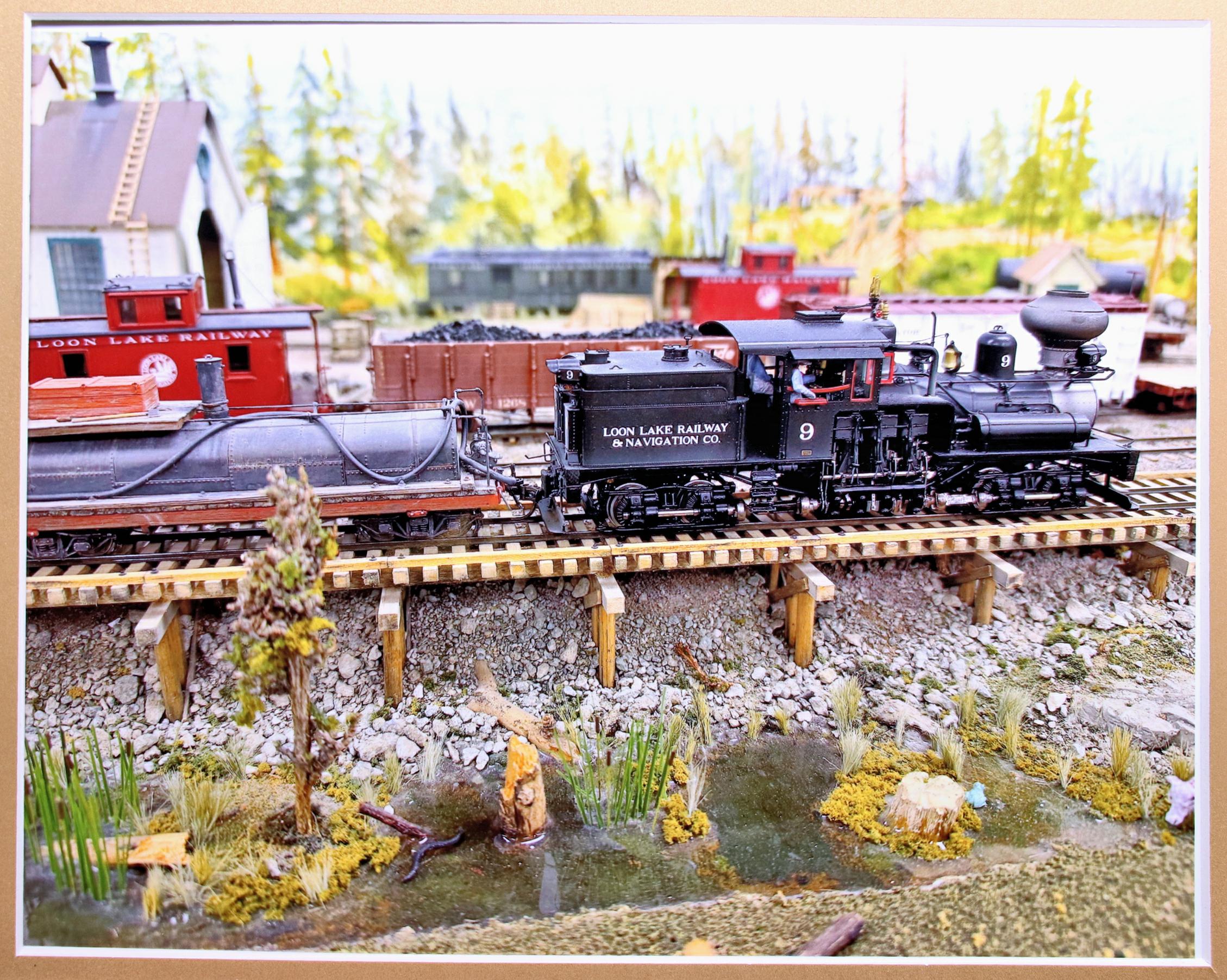
John Henning took this photo on Pete Smith's Sn3 layout in 2024. "Loon Lake Shay #9". Winner "Color".
photo © Michael McConnell; used by permission
Contest Room Additional Photos

Kim Hartshorn started with an American Models S12 to represent a fictionalized version of the Canadian Pacific DS-4-4-1000 #7065. The paint scheme is based on the D&H. He applied K4 Decals' plug door box car decals for the lettering, with the road numbers coming from a CMR decal set for a D&H Alco. The model is lightly weathered.
photo © Michael McConnell; used by permission
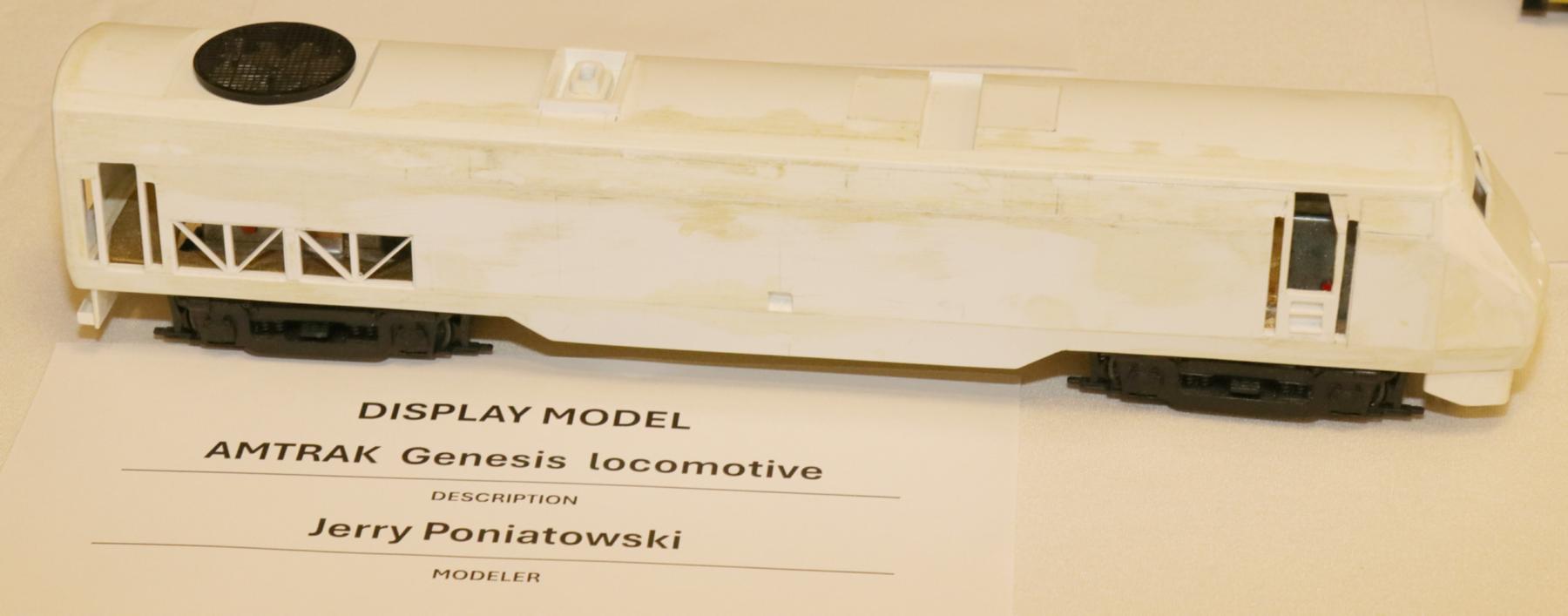
Jerry Poniatowski displayed this Amtrak Genesis locomotive.
photo © Bill Lane; used by permission
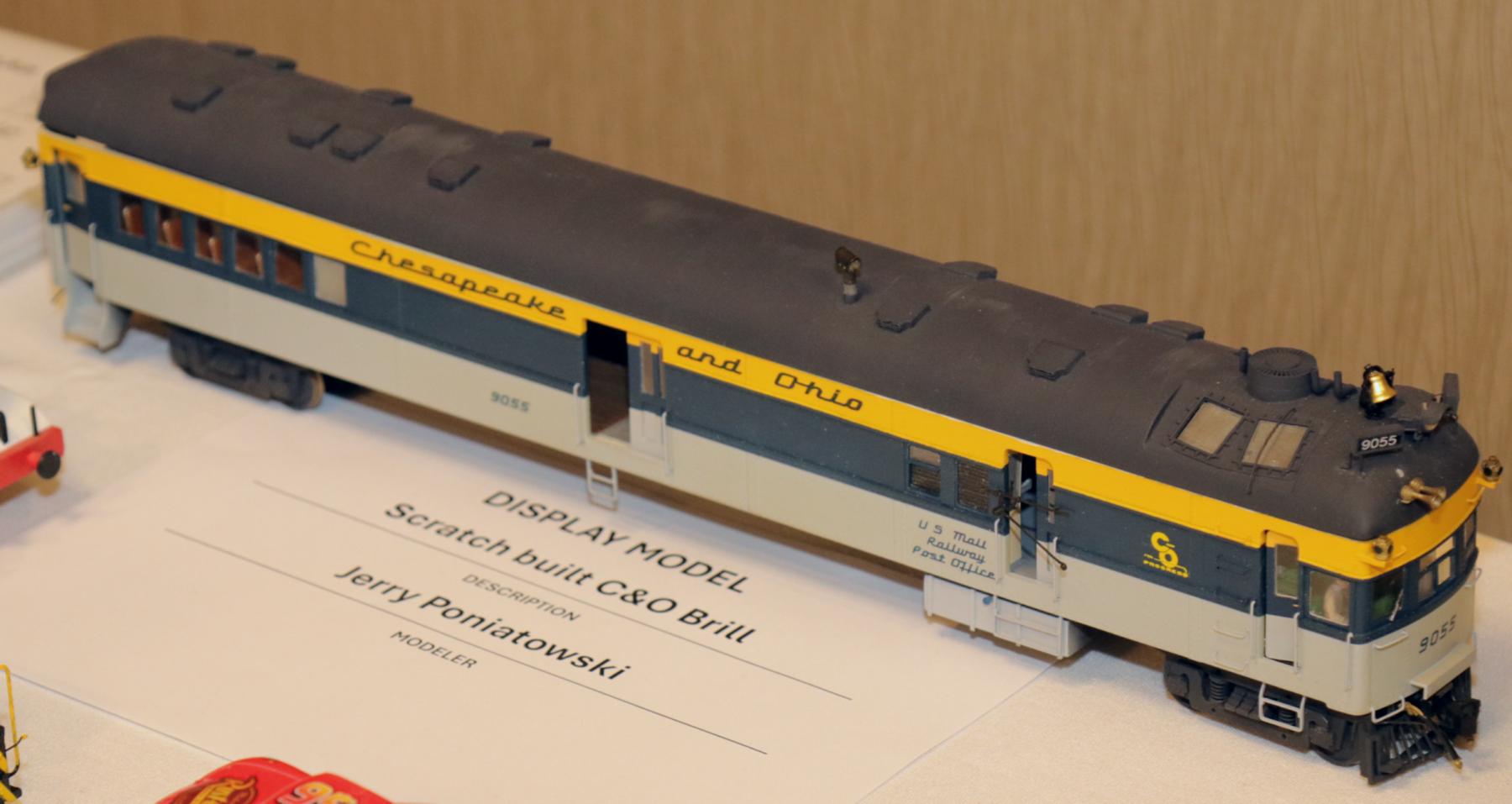
Jerry Poniatowski displayed his previous best-of-show winner, the scratchbuilt C&O Brill.
photo © Bill Lane; used by permission

Bill Geracci showed his EMD BL2 still under construction.
photo © Bill Lane; used by permission
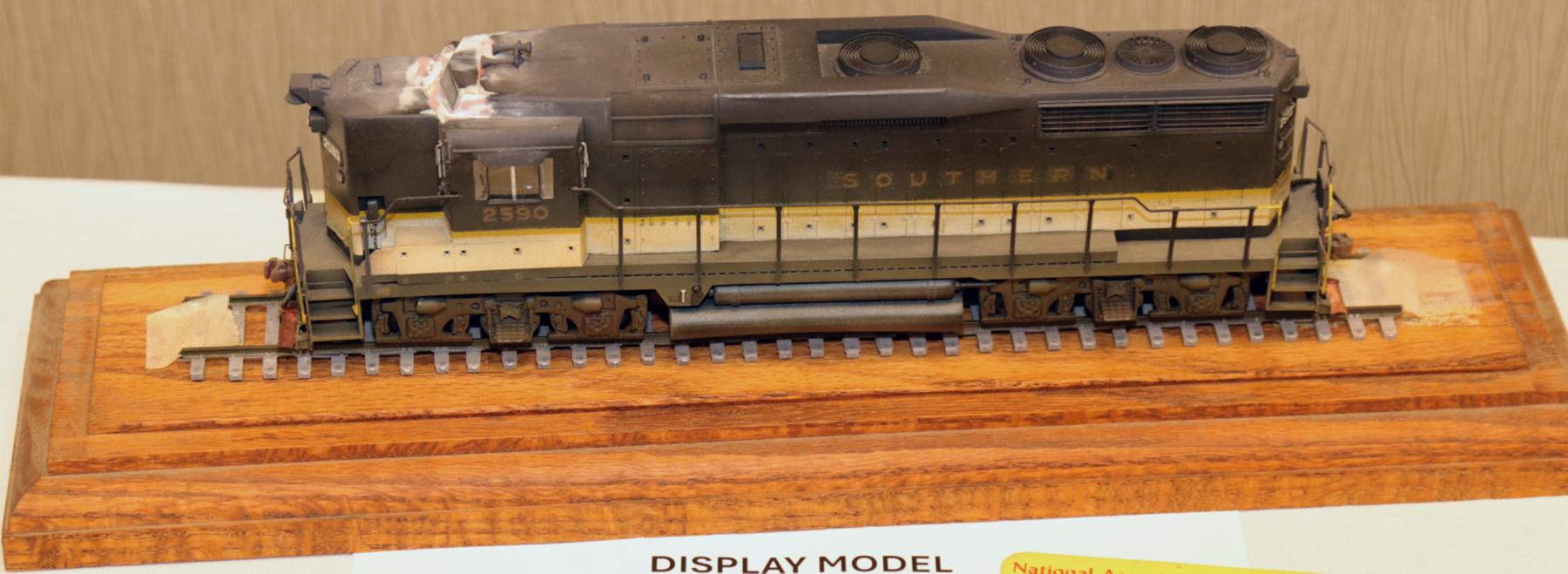
Bill Geracci displayed his EMD GP30 still under construction.
photo © Bill Lane; used by permission

Bob Stelmach showed his conversion of the Bachmann On30 equipment to S-scale. On the left are the original Bachmann engine and passenger, and on the right are his S-scale conversions.
photo © Bill Lane; used by permission

Ron King displayed his modified American Models NYC PA2 A-B-A set.
photo © Bill Lane; used by permission

Ron King displayed his modified American Models NYC passenger cars.
photo © Bill Lane; used by permission
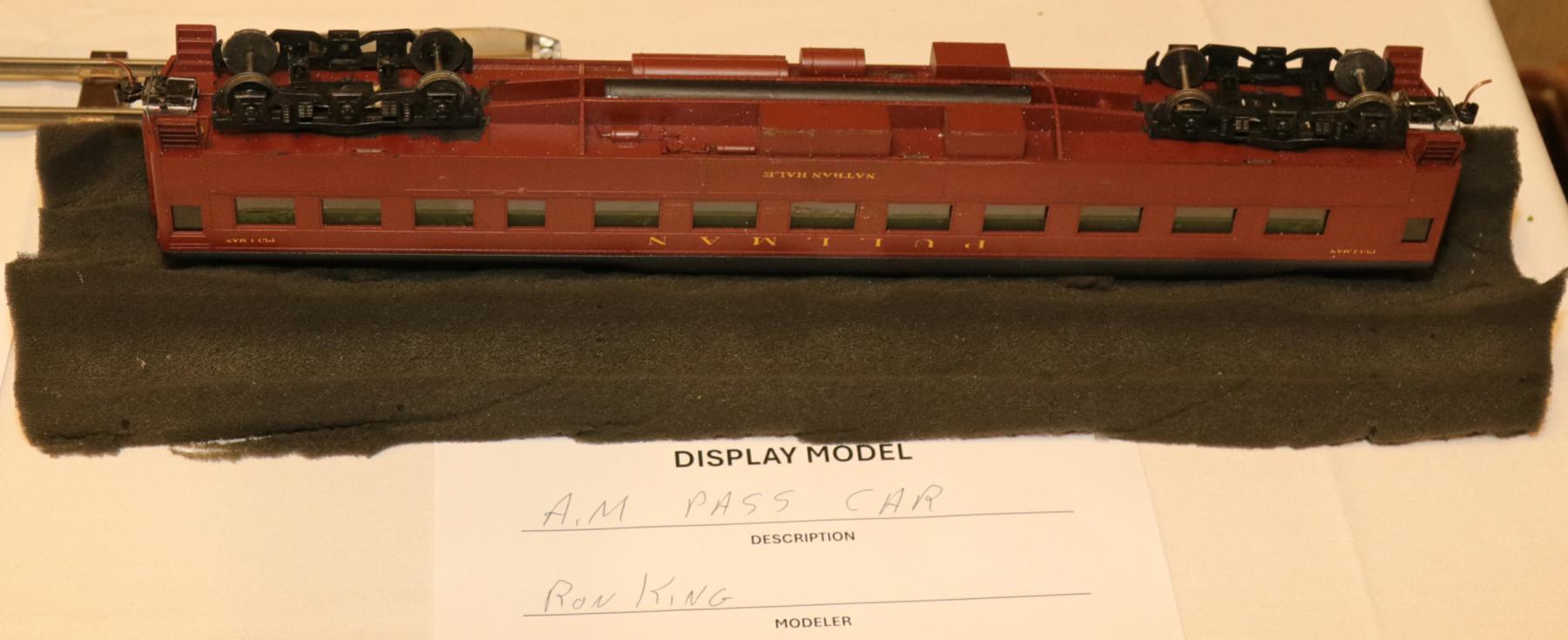
Ron King displayed the underframe of this Pullman coach.
photo © Bill Lane; used by permission

Joel Lebovitz This Canadian Pacific 89-foot flat car was scratchbuilt from Evergreen strip styrene, Kappler strip wood, and uses Smoky Mountain Model Works' 100-ton trucks and Kadee couplers.
photo © Michael McConnell; used by permission

Rob Berridge built this car from a shortened A.C. Gilbert flat car. It is part of an early 1900s logging work train. The bulldozer load was made from spare parts Rob had available.
photo © Michael McConnell; used by permission
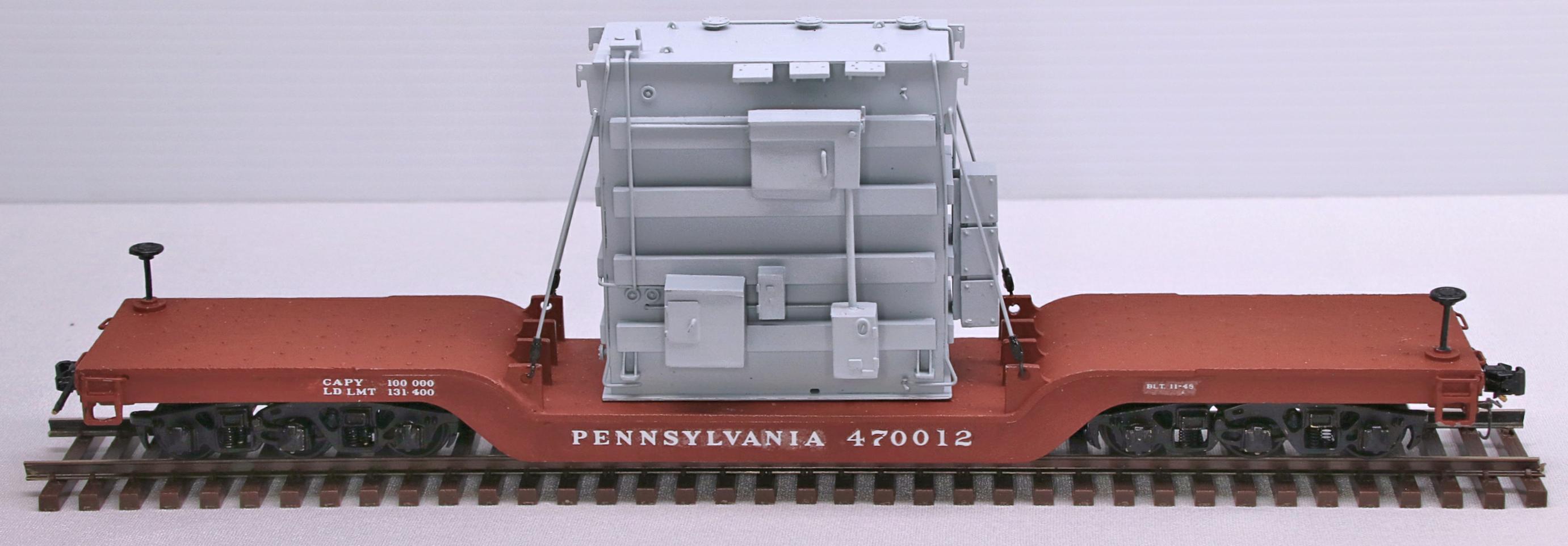
Rob Berridge's PRR F35 depressed-center flat car holds a SouthWind Models transformer load. Rob made the car out of two A.C. Gilbert depressed-center flat cars so that the final model matched the prototype's length. He applied paint and decals. The Buckeye trucks are of unknown origin.
photo © Michael McConnell; used by permission
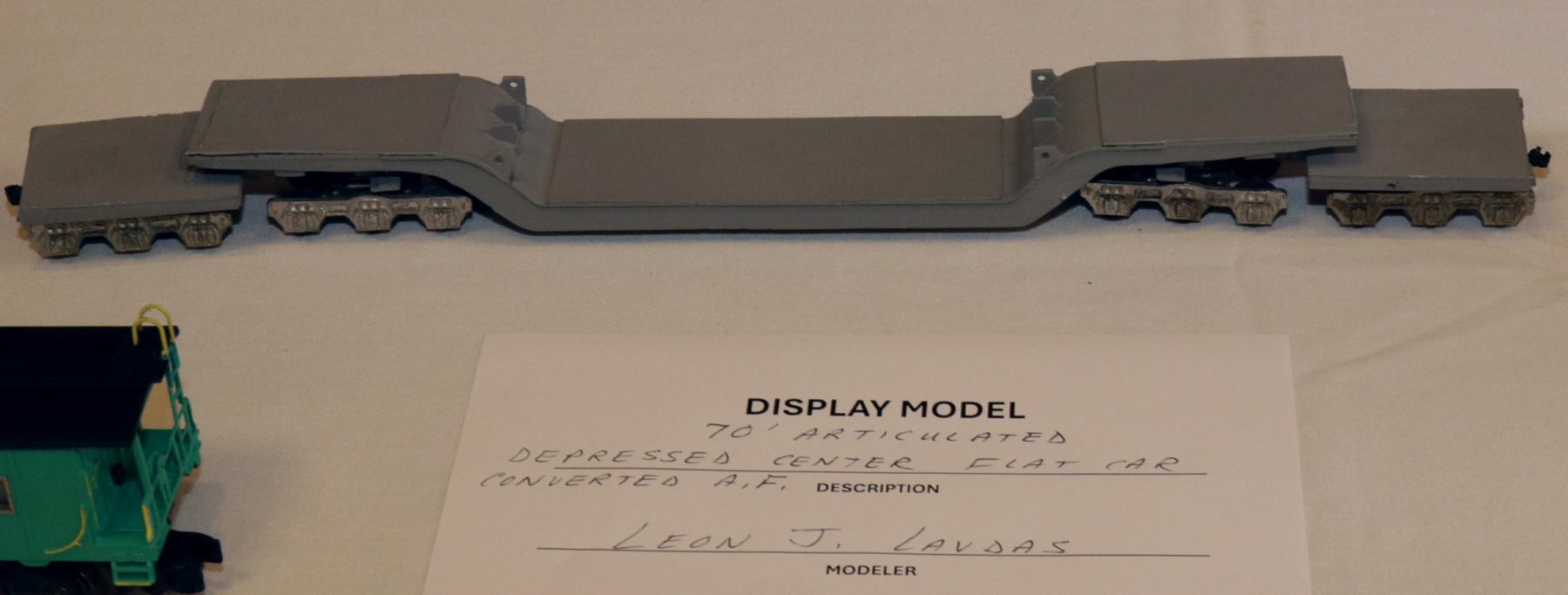
Leon Lavdas displayed his articulated depressed-center flat car, built from an A.C. Gilbert car.
photo © Bill Lane; used by permission
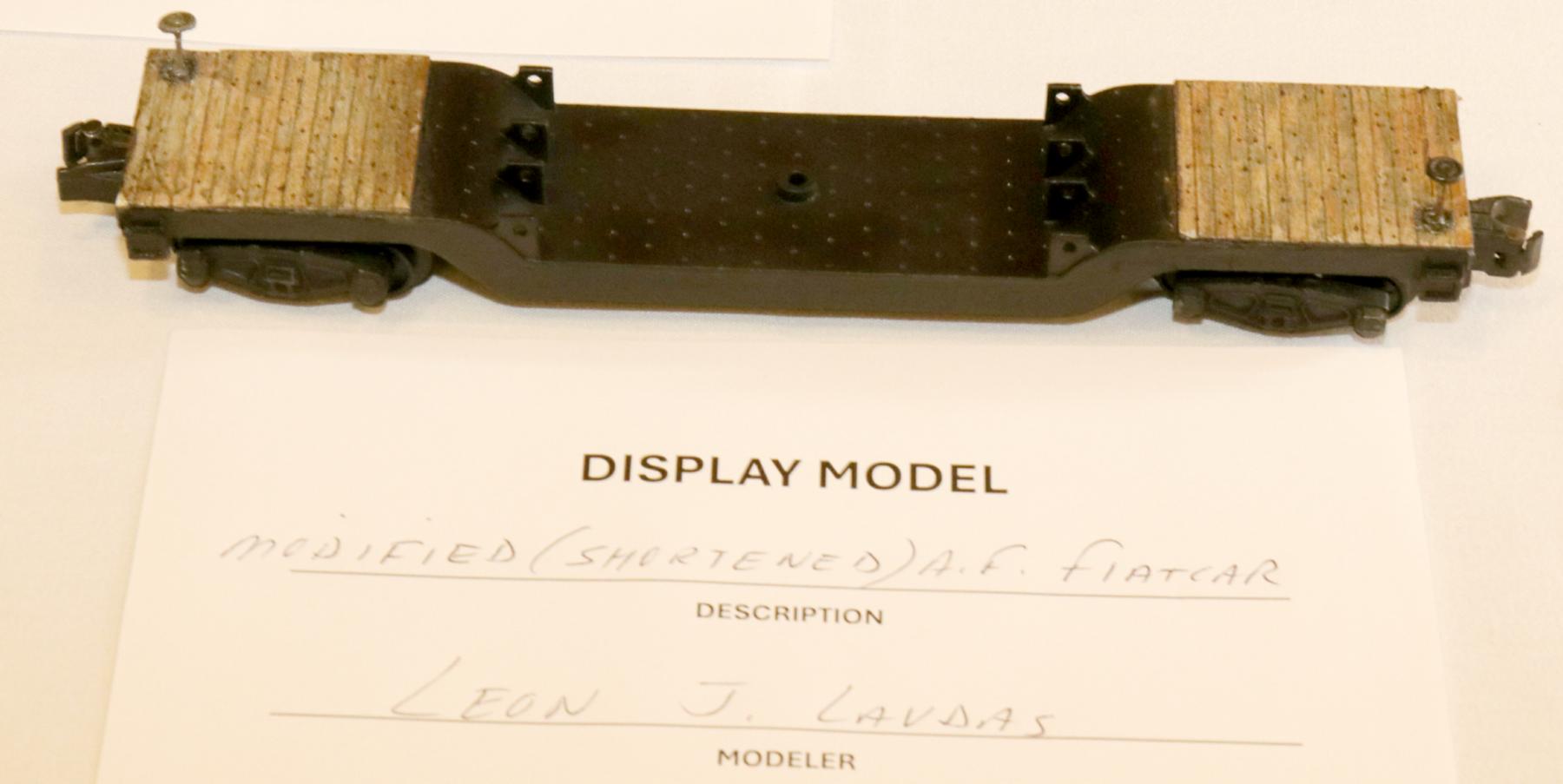
Leon Lavdas's shortened and modified A.C. Gilbert depressed-center flat car.
photo © Bill Lane; used by permission

Ray Nase displayed this Conrail flat car with the Lightning McQueen, Mater, and the Sheriff automobiles.
photo © Bill Lane; used by permission

Woody Hanger's "Hot Tub Party Car" was completely built from scratch. The figures are mostly Artistta.
photo © Michael McConnell; used by permission
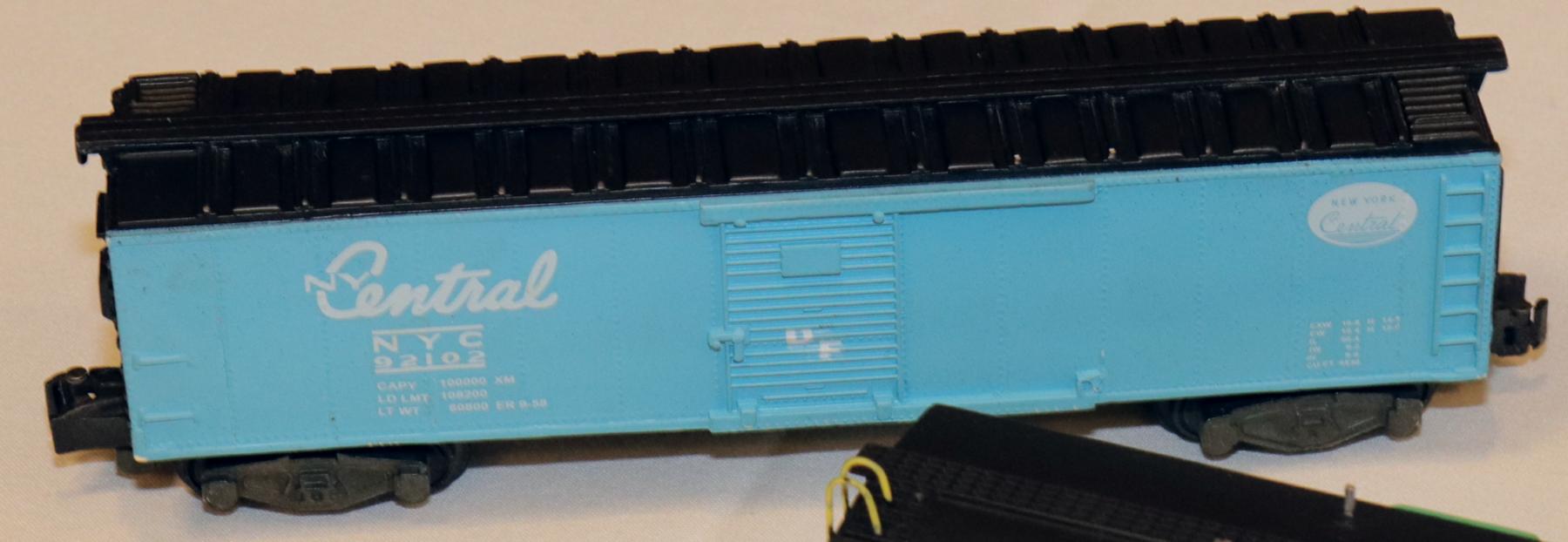
Leon Lavdas showed this 50-foot NYC experimental box car.
photo © Bill Lane; used by permission
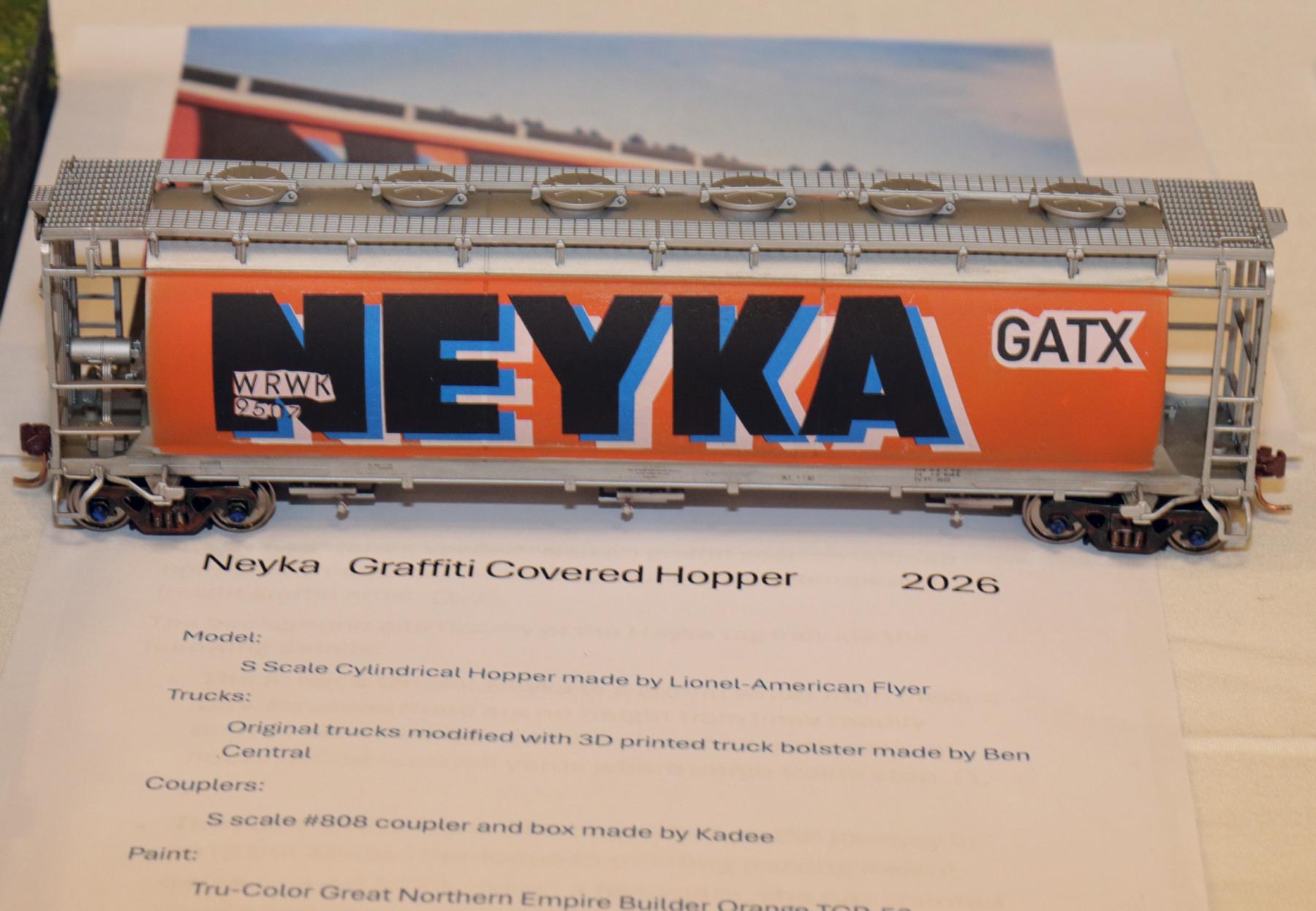
(unknown) hopper.
photo © Bill Lane; used by permission
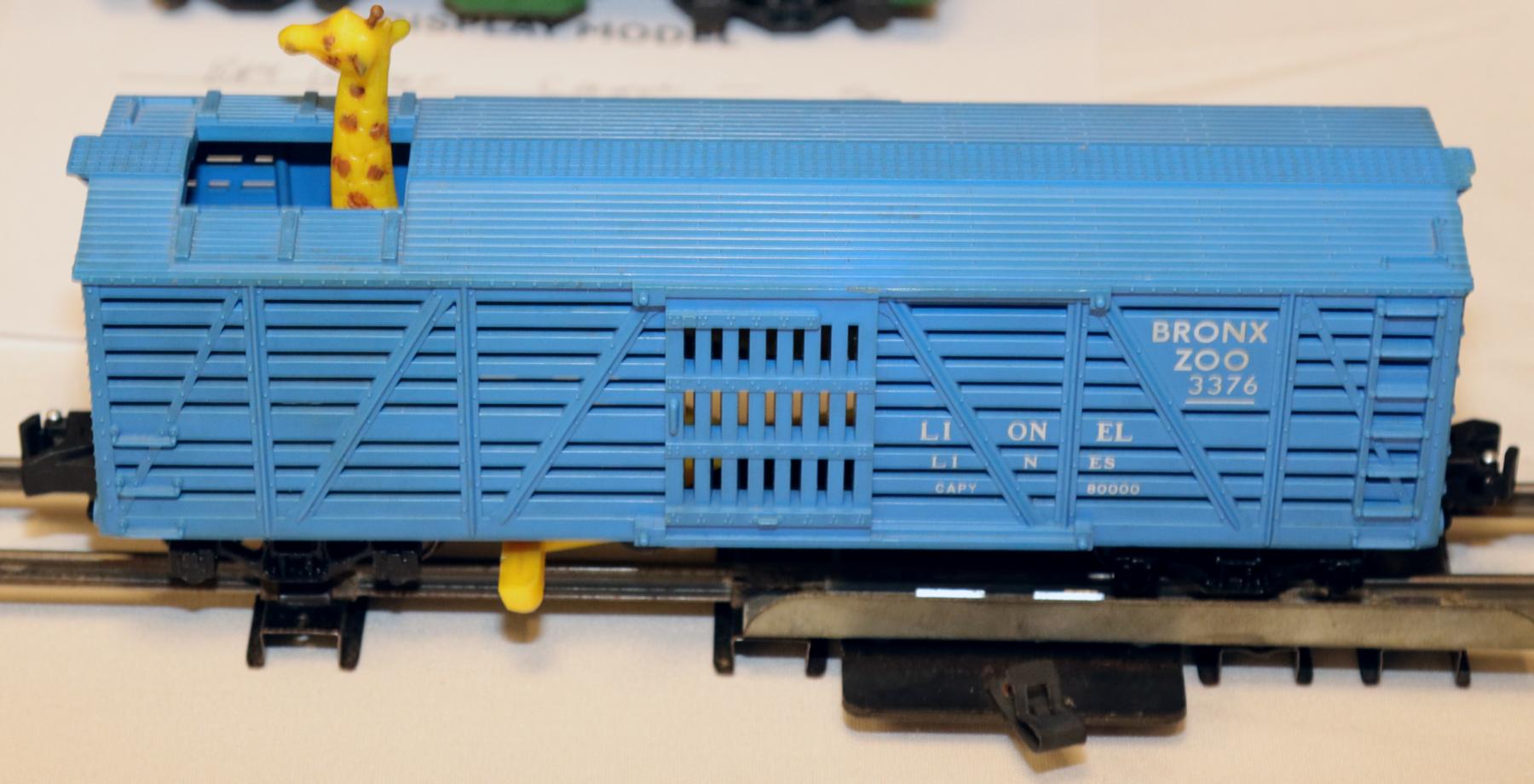
(unknown) stock car.
photo © Bill Lane; used by permission

Rob Berridge built this car from scratch, as part of an early 1900s logging work train. The model was completely made out of basswood. The dimensions are prototypically-accurate.
photo © Michael McConnell; used by permission

Leon Lavdas showed a converted NYC bay-window caboose.
photo © Bill Lane; used by permission

(unknown) KCS caboose.
photo © Bill Lane; used by permission
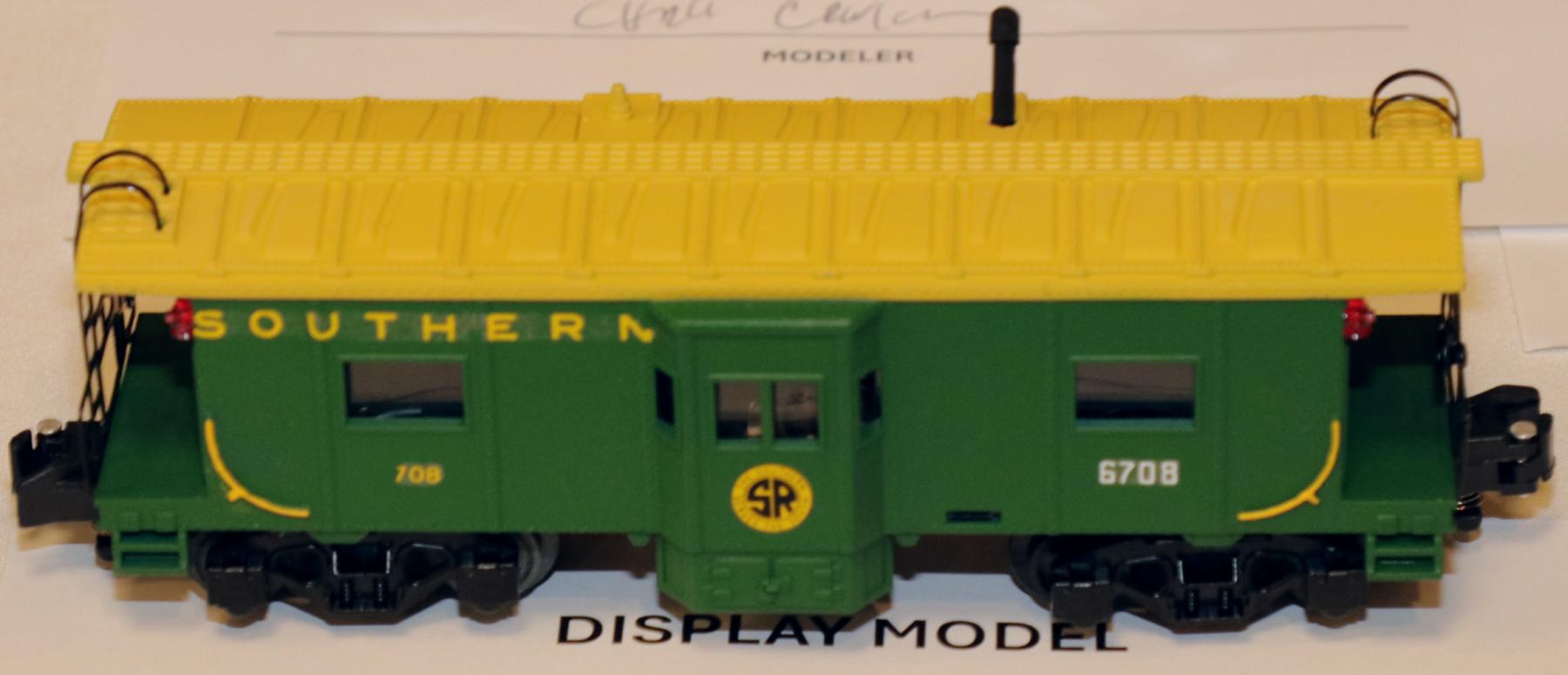
(unknown) Southern caboose.
photo © Bill Lane; used by permission
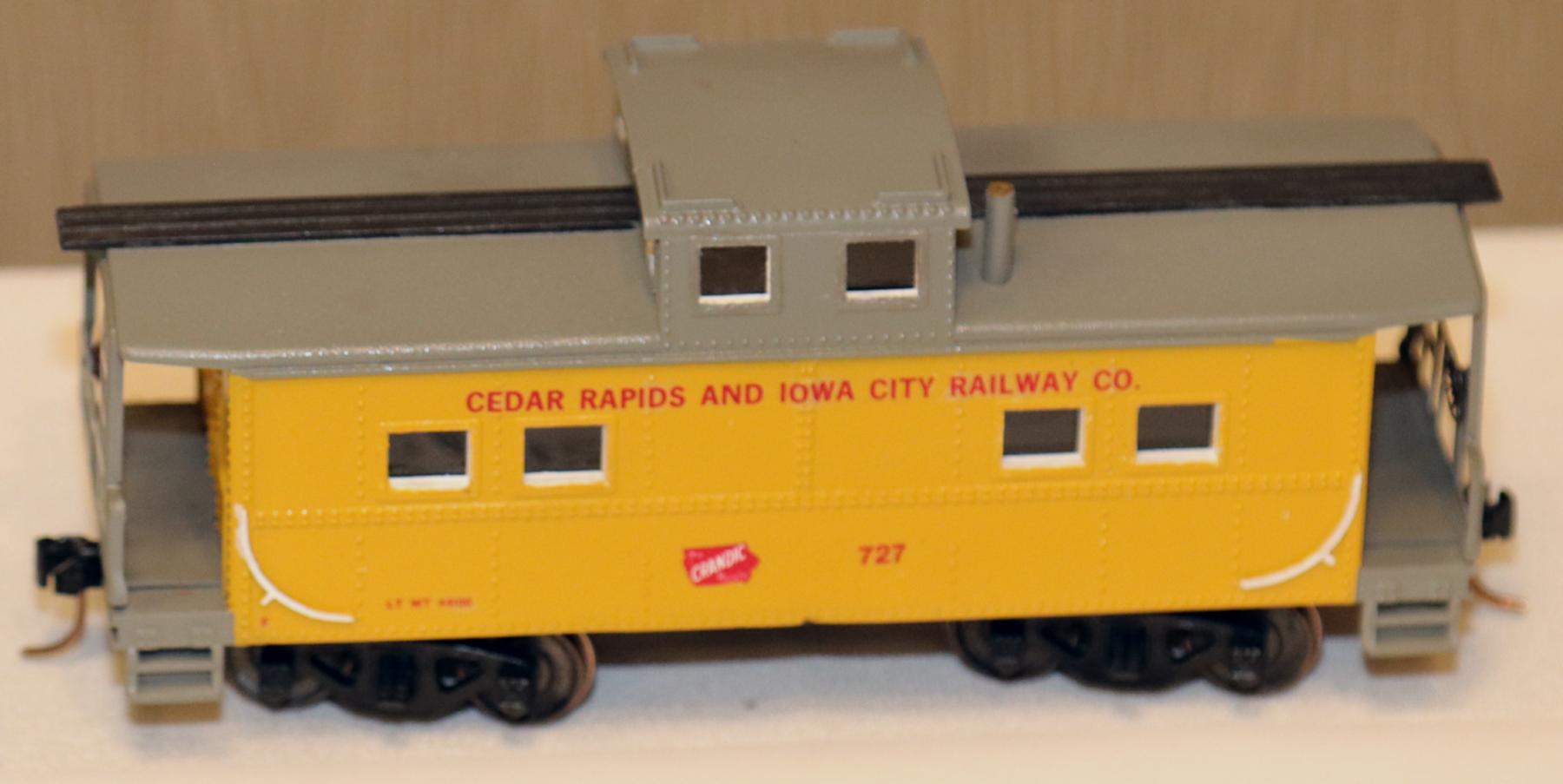
(unknown) Cradic caboose.
photo © Bill Lane; used by permission
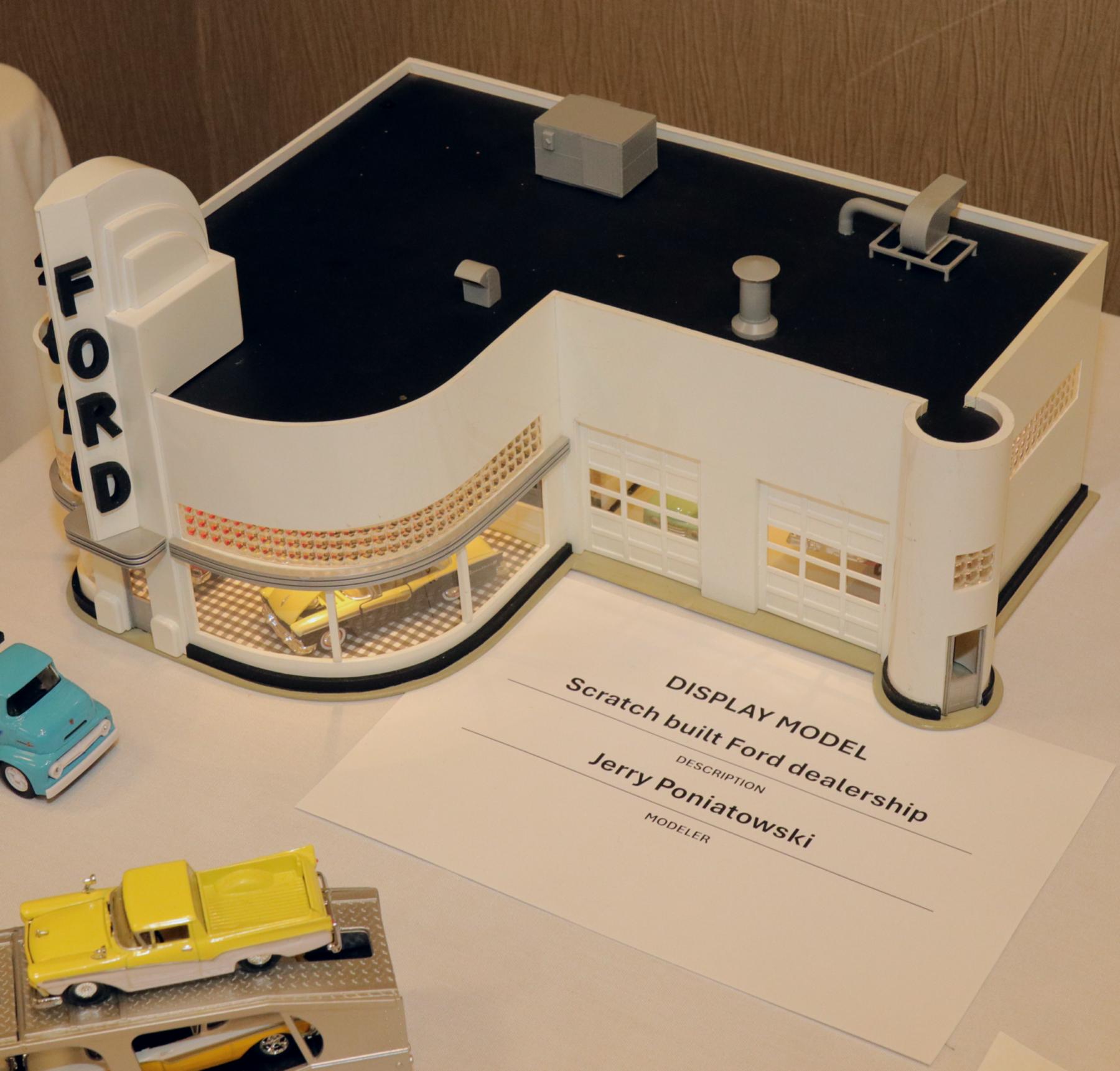
Jerry Poniatowski displayed his scratchbuilt Ford dealership.
photo © Bill Lane; used by permission

(unknown) "Royals Convenience Store".
photo © Michael McConnell; used by permission
Bob Stelmach showed his turnout which allows for both A.F., hi-rail, and scale equipment to run through it.
photo © Bill Lane; used by permission
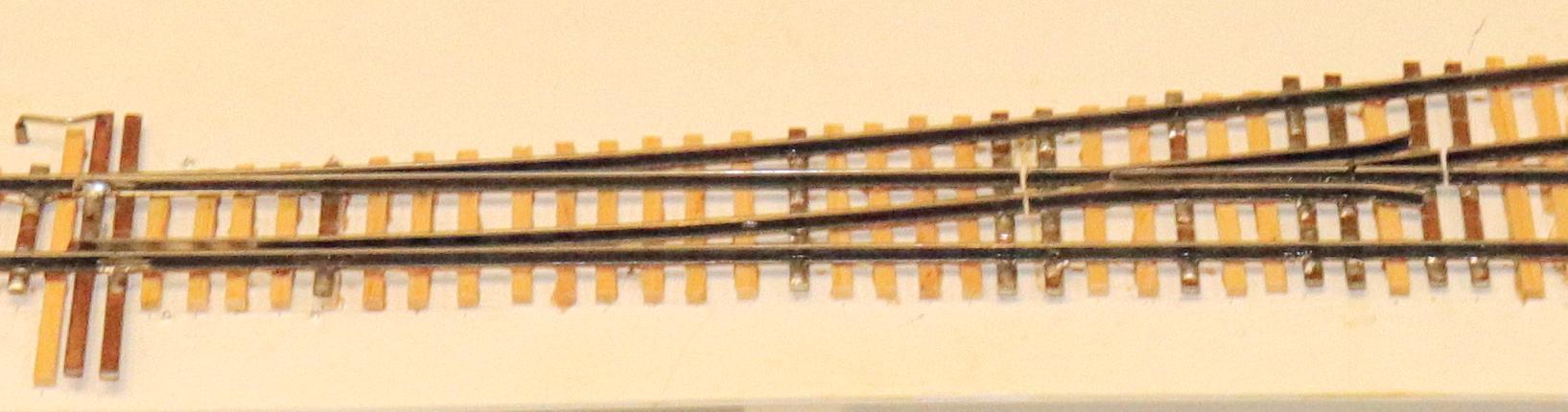
photo © Bill Lane; used by permission
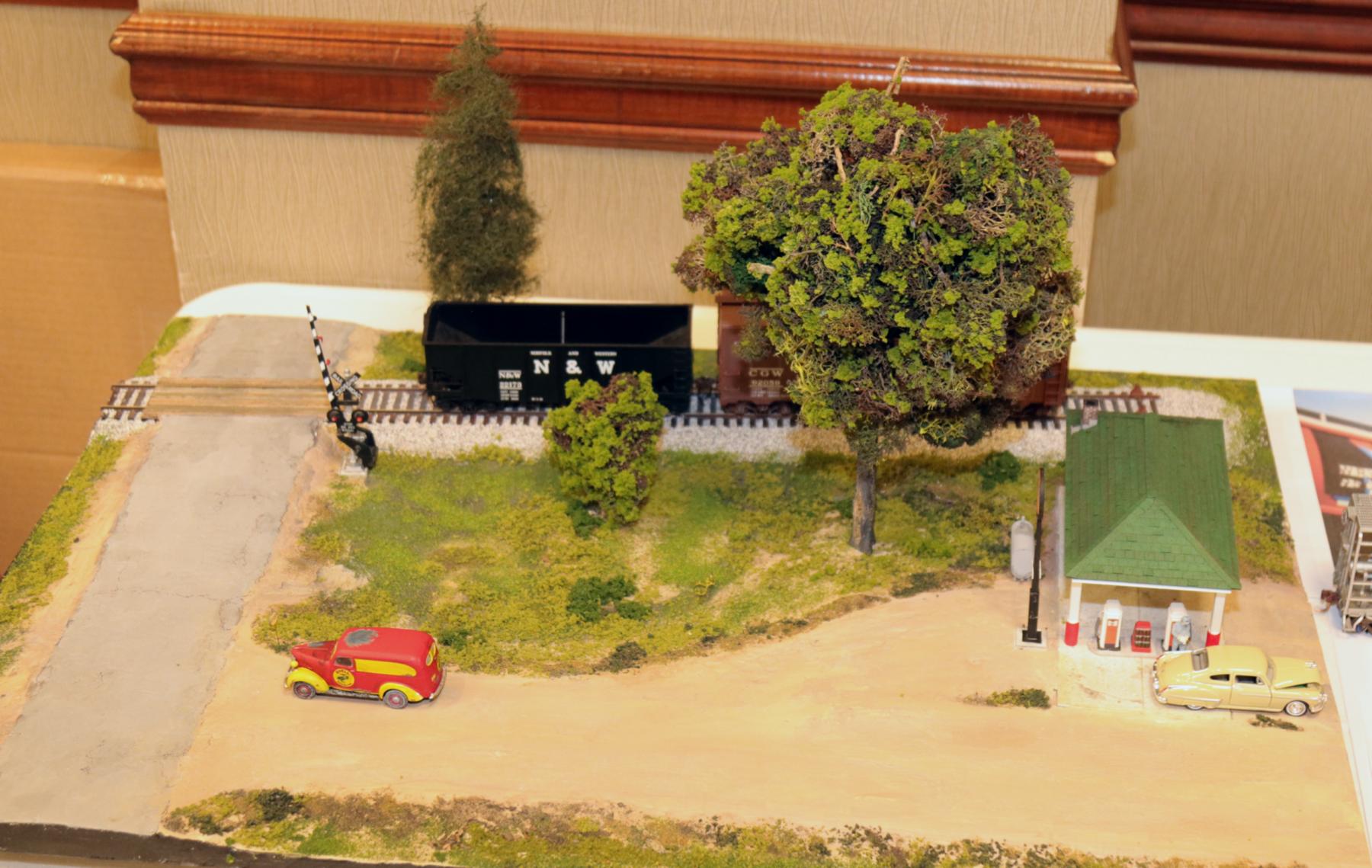
Gaylord Gill brought his small diorama display.
photo © Bill Lane; used by permission
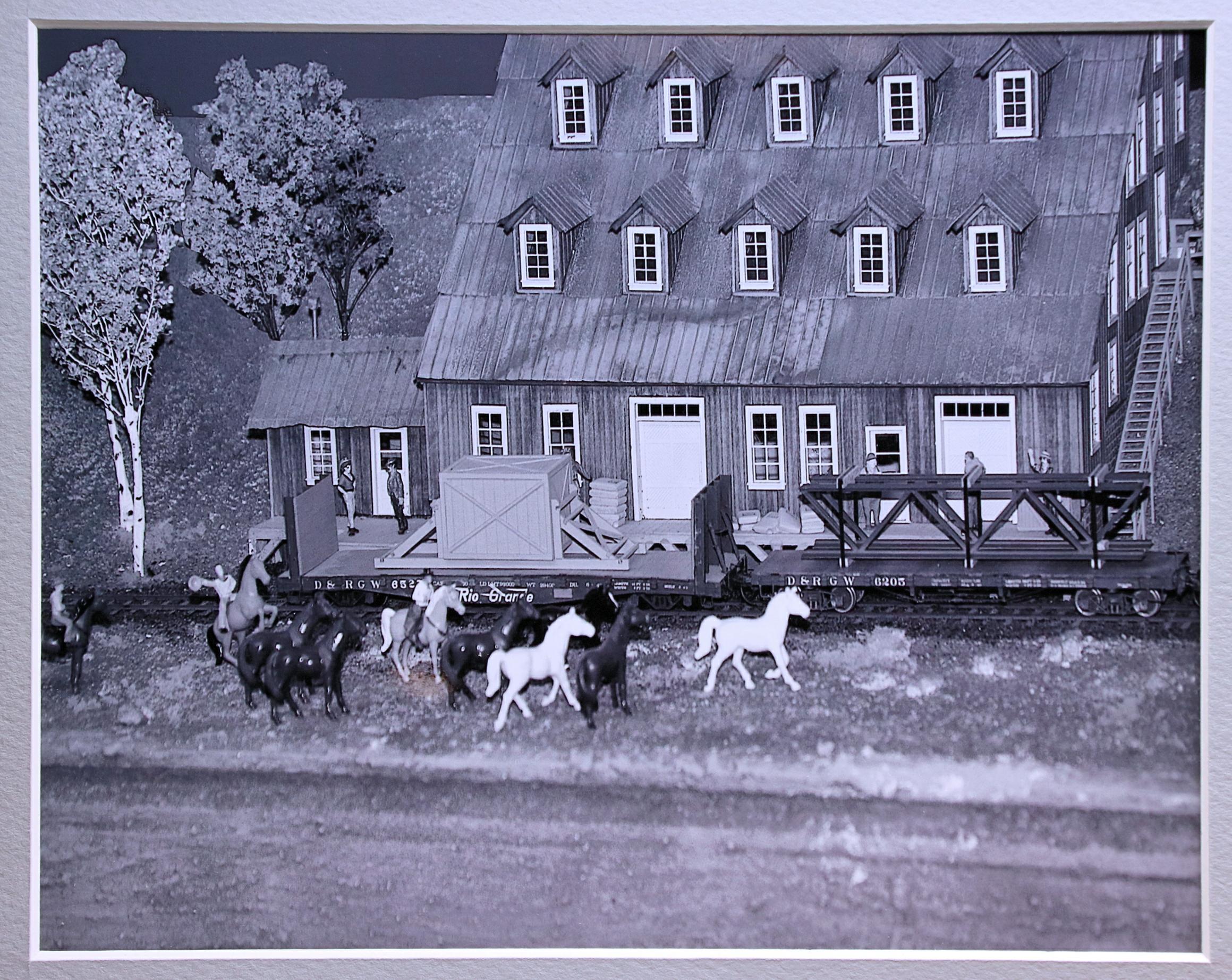
John Henning took this photo on John Clebowski's Sn3 D&RGW layout.
photo © Michael McConnell; used by permission
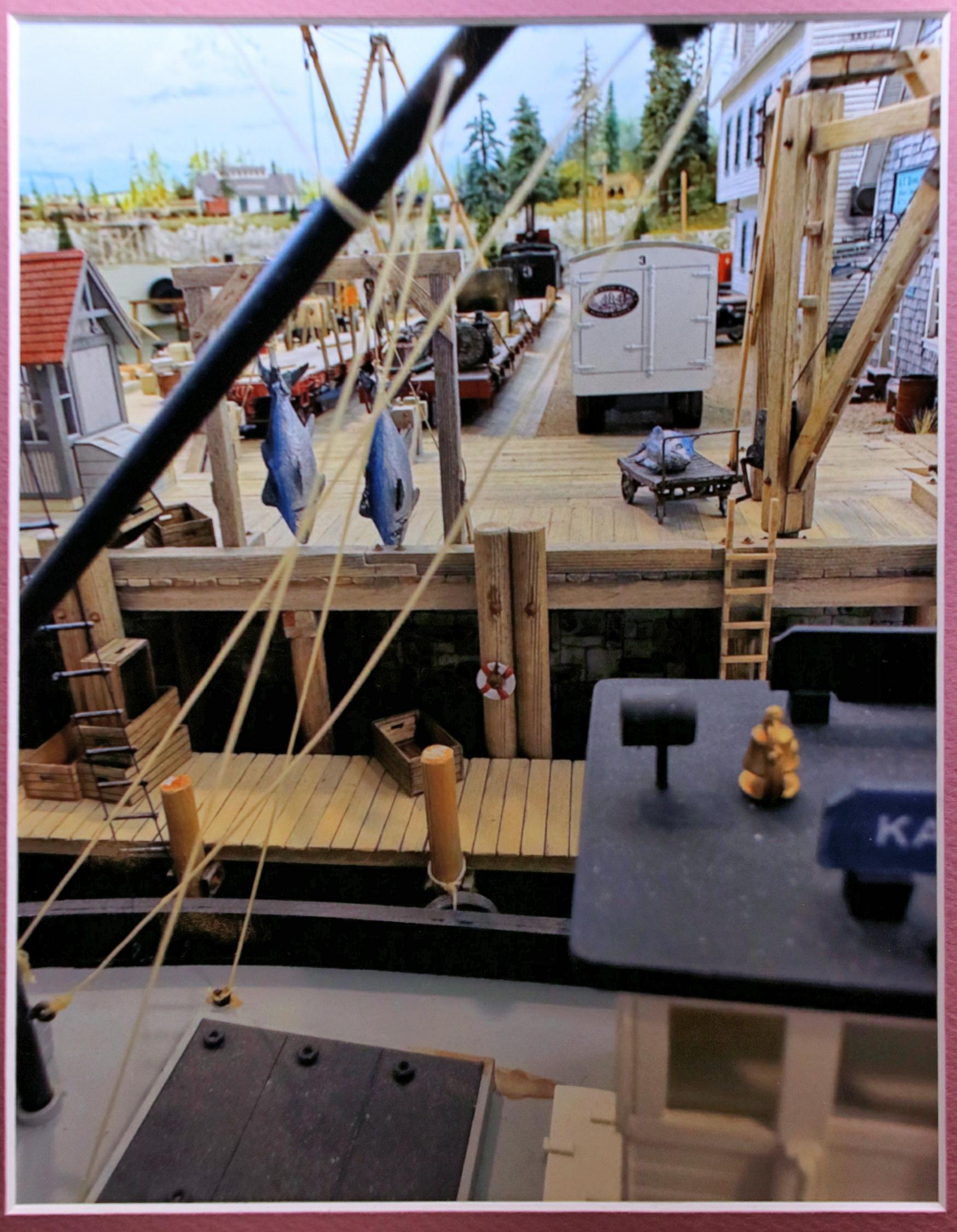
John Henning took this photo on Pete Smith's Sn3 layout in 2024.
photo © Michael McConnell; used by permission
Layouts
Hotel
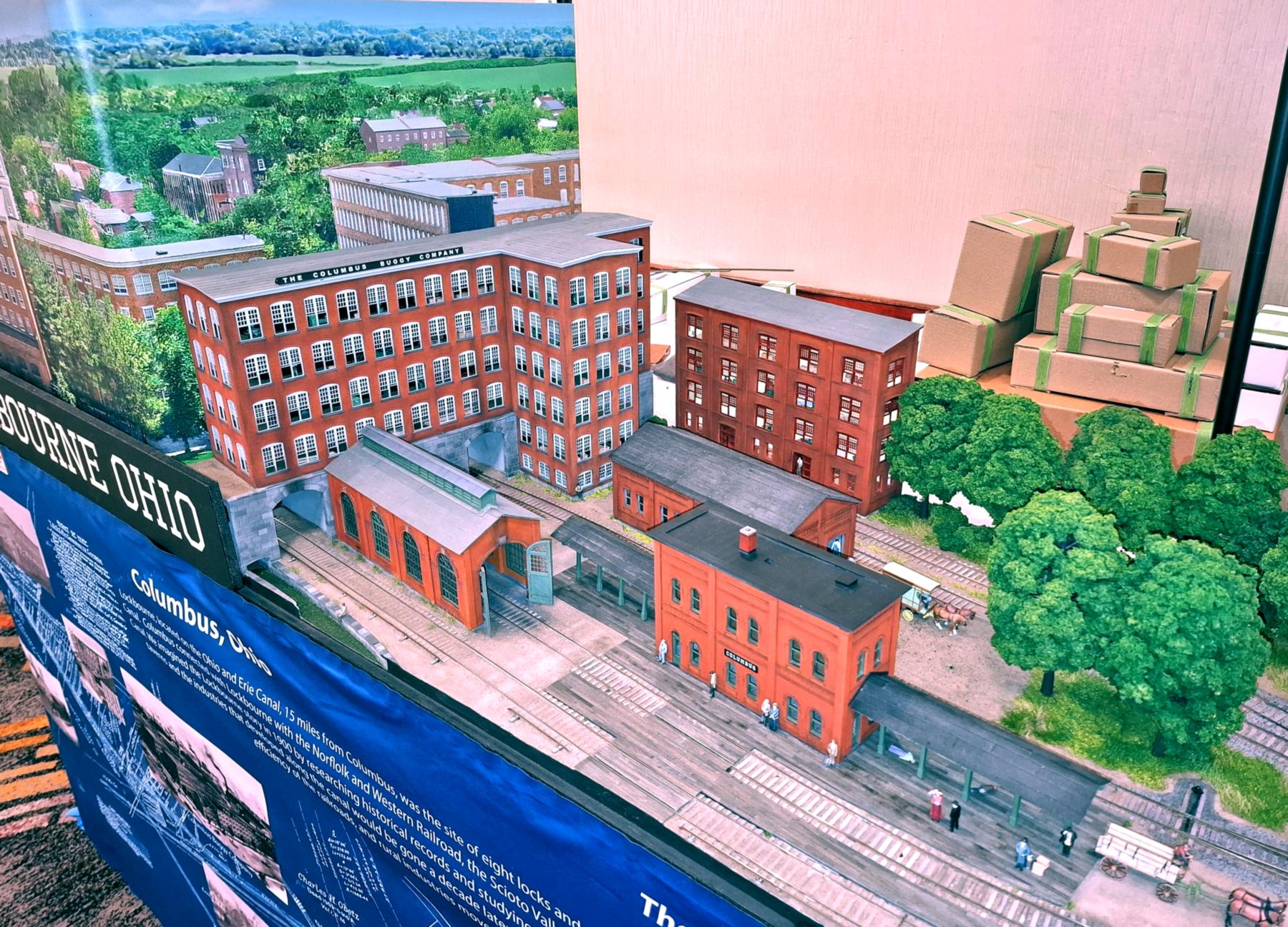
The Lockbourne, Ohio layout, managed by Willy Monaghan and Larry Janeski, has traveled to previous NASG Conventions, as well as to several shows in the United Kingdom. The lightweight layout consists of five modules, which are designed to be transportable on airplanes! Passenger, freight, and interurban electric operations are automated and/or operator-controlled from the front of the layout using iPads and the DCC system.
photo © Michael McConnell; used by permission
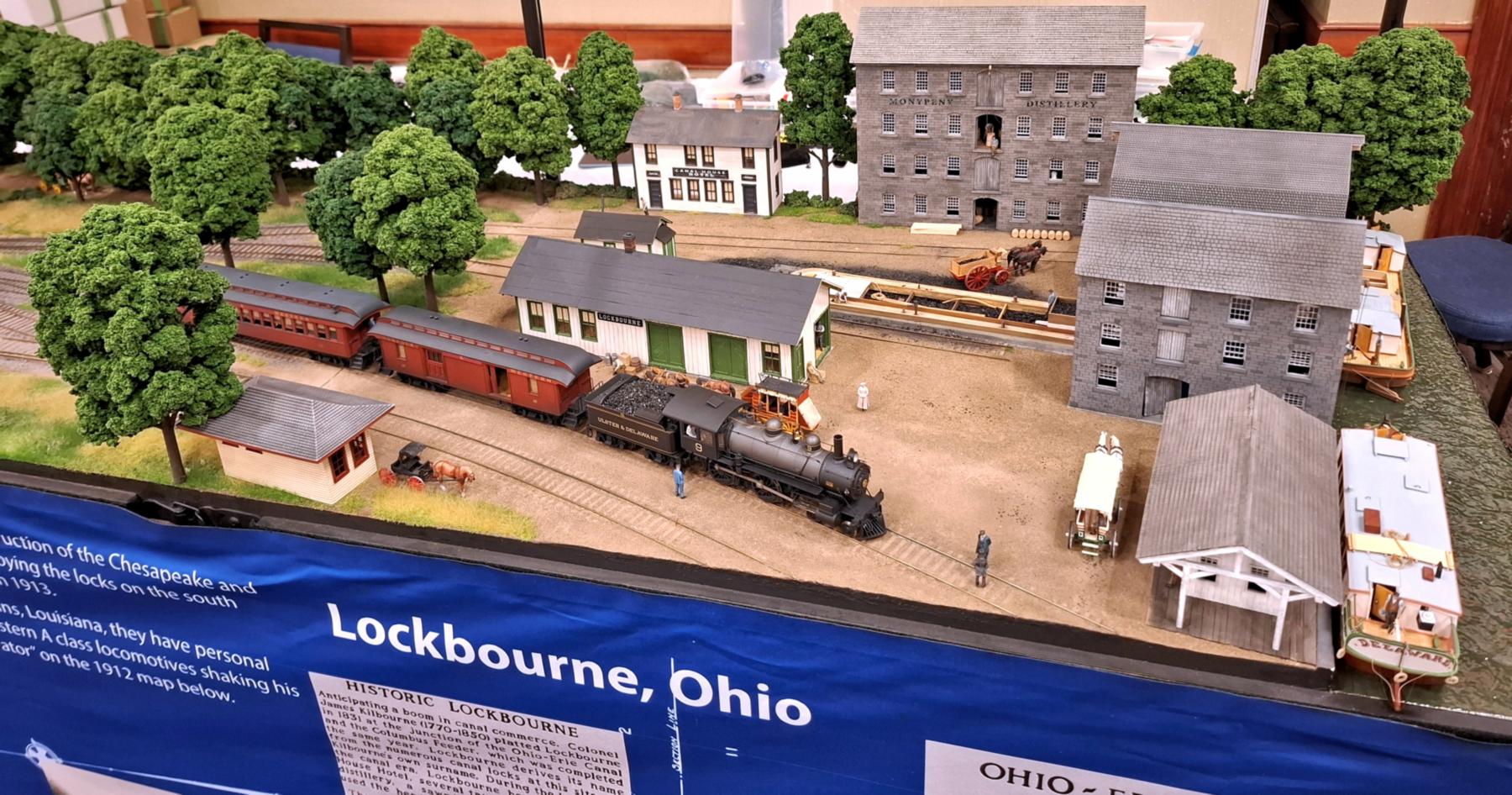
The above photo shows the left half of the layout, and this photo shows the right half.
photo © Michael McConnell; used by permission
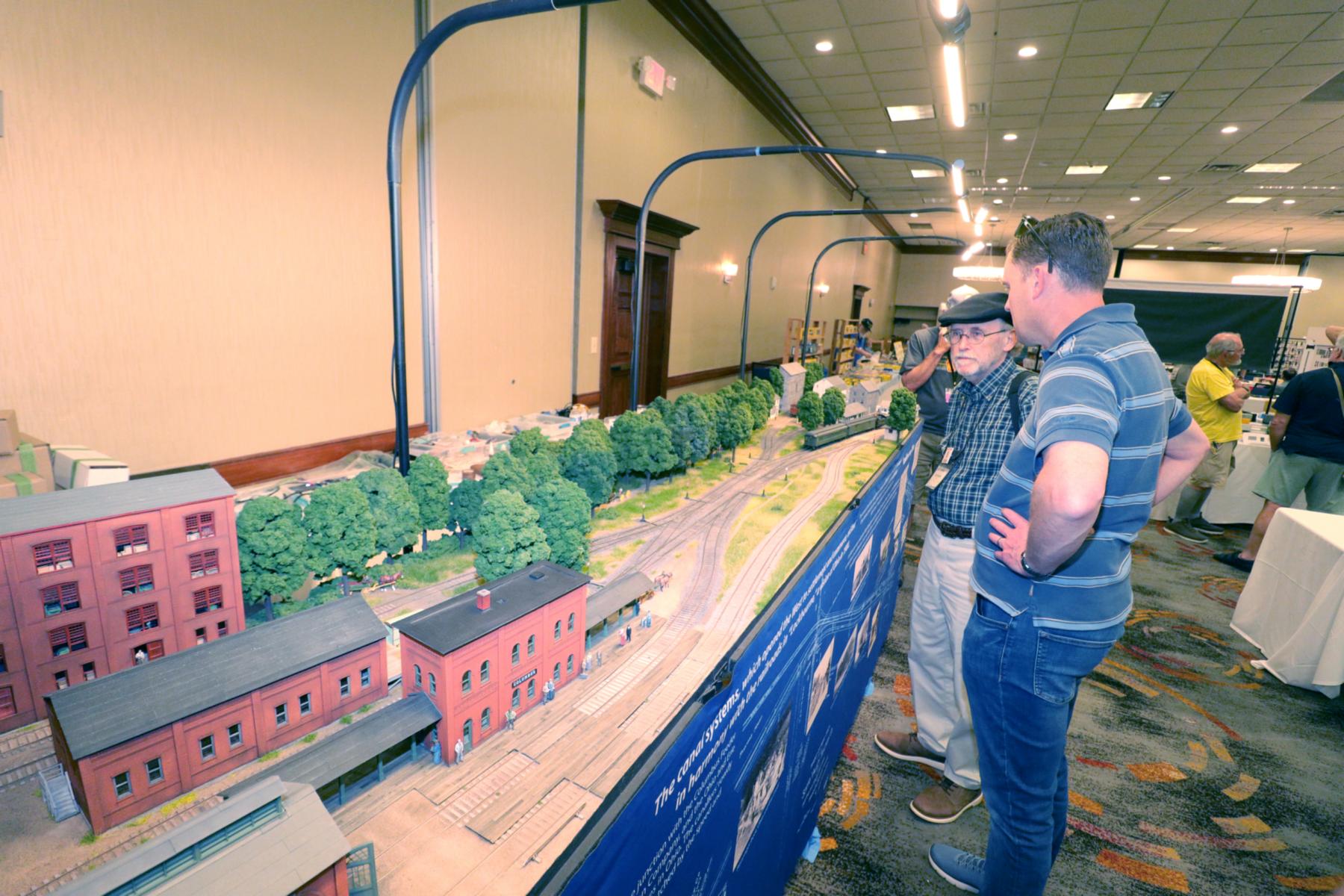
photo © Bill Lane; used by permission
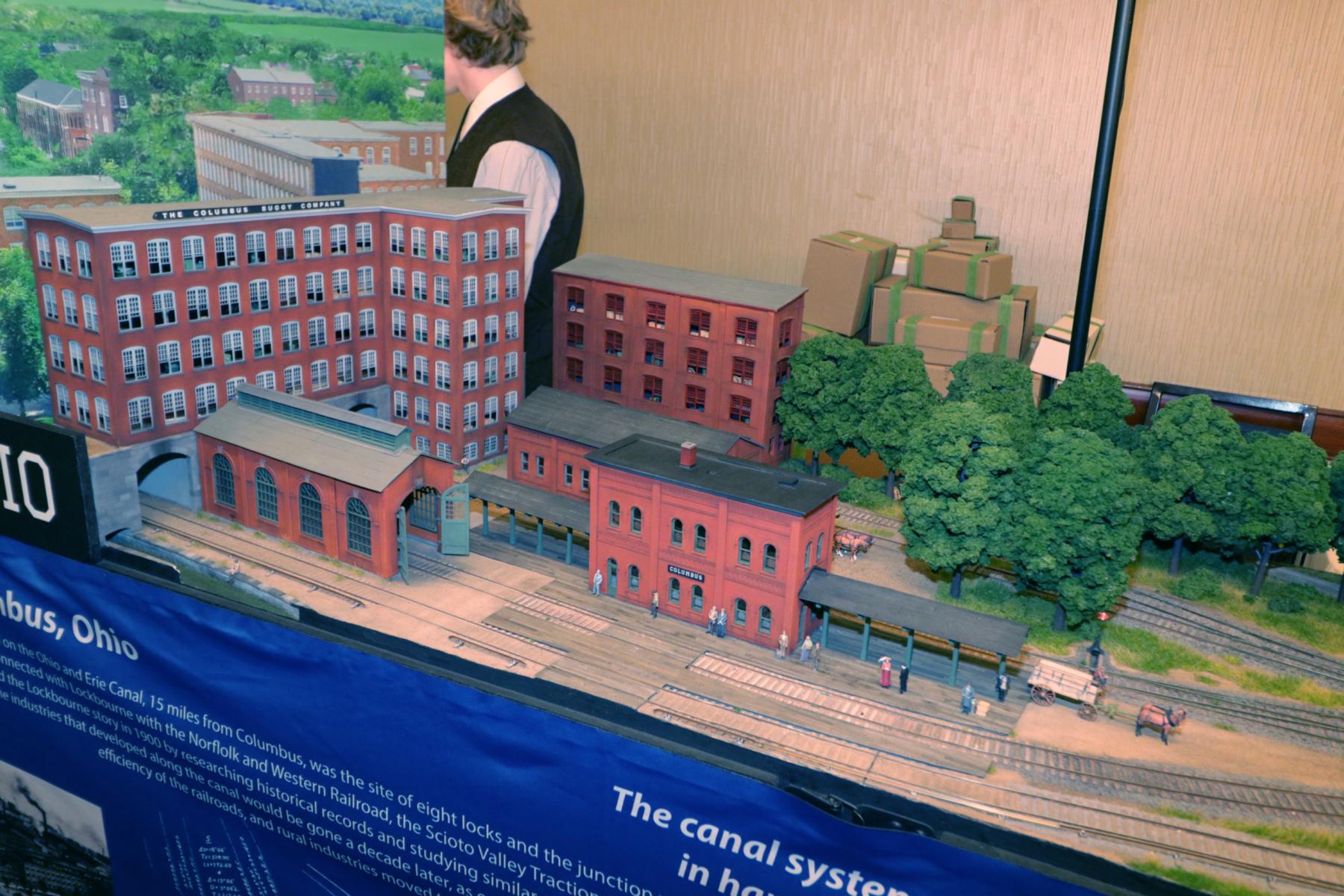
photo © Bill Lane; used by permission

photo © Bill Lane; used by permission
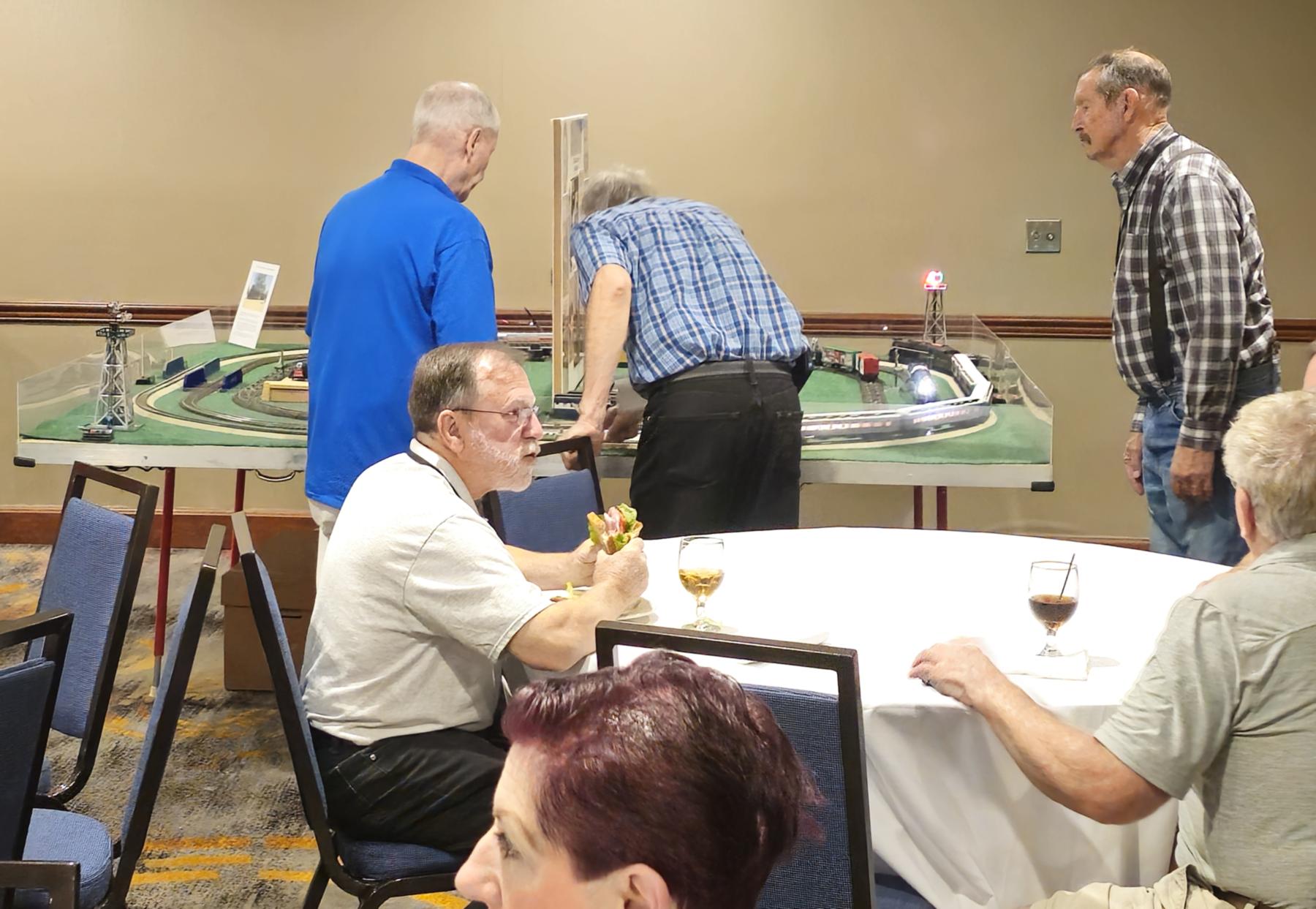
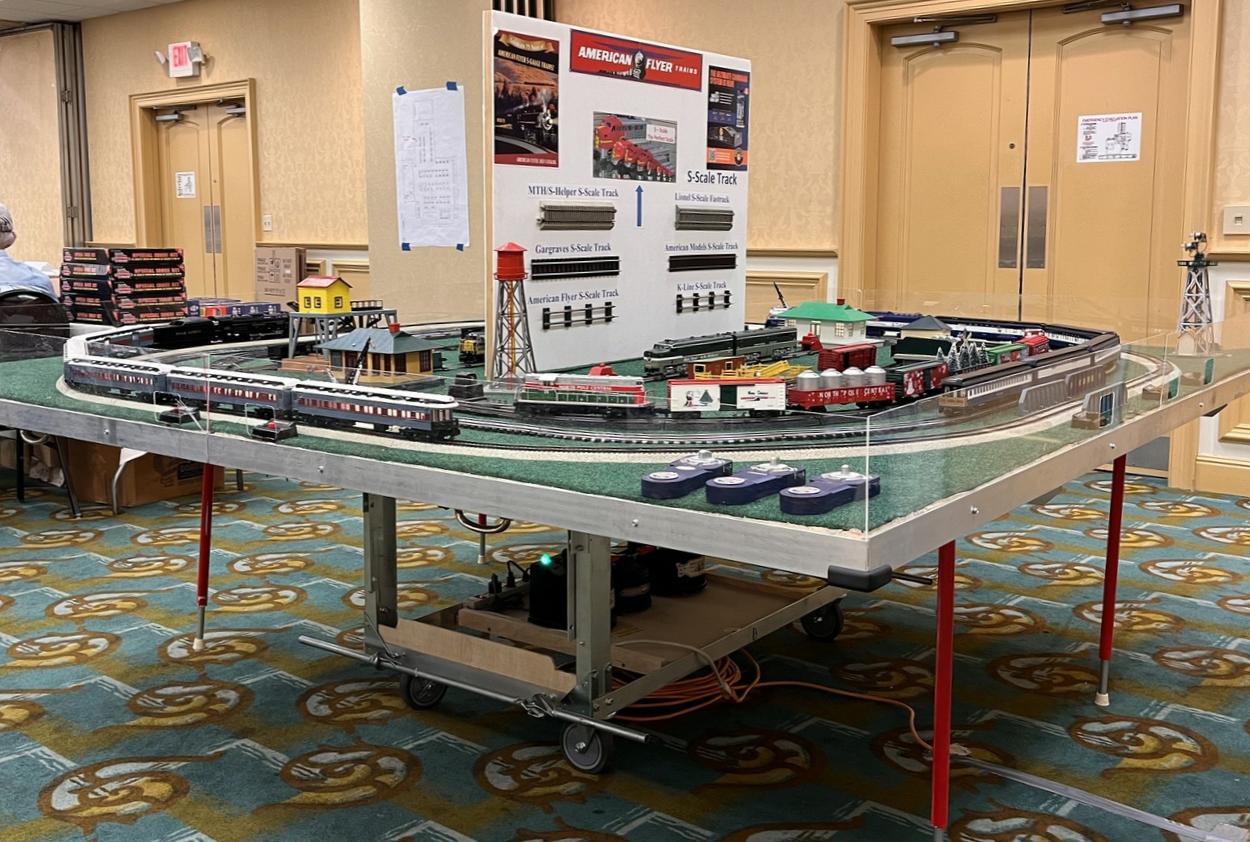
Robbie Tonneberger brought his 8' x 8' layout, which had three trains running. There are eleven accessories which attendees could activate with pushbuttons, such as the log loader, barrel loader, sawmill, and talking station. It was set up in the room that held the Ice Breaker event. It was later moved to the vendor hall (see below).
photo © Bill Lane; used by permission
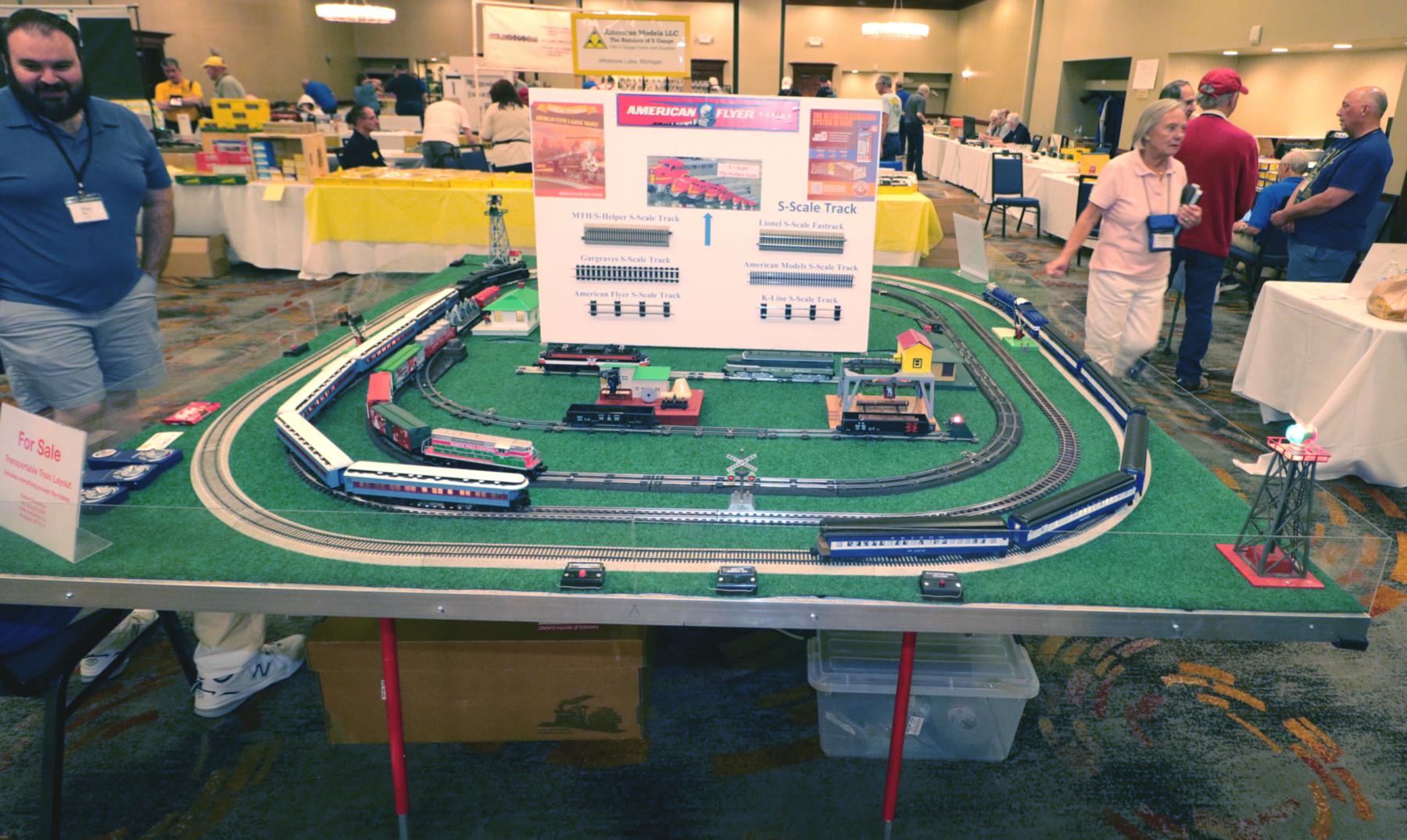
photo © Bill Lane; used by permission
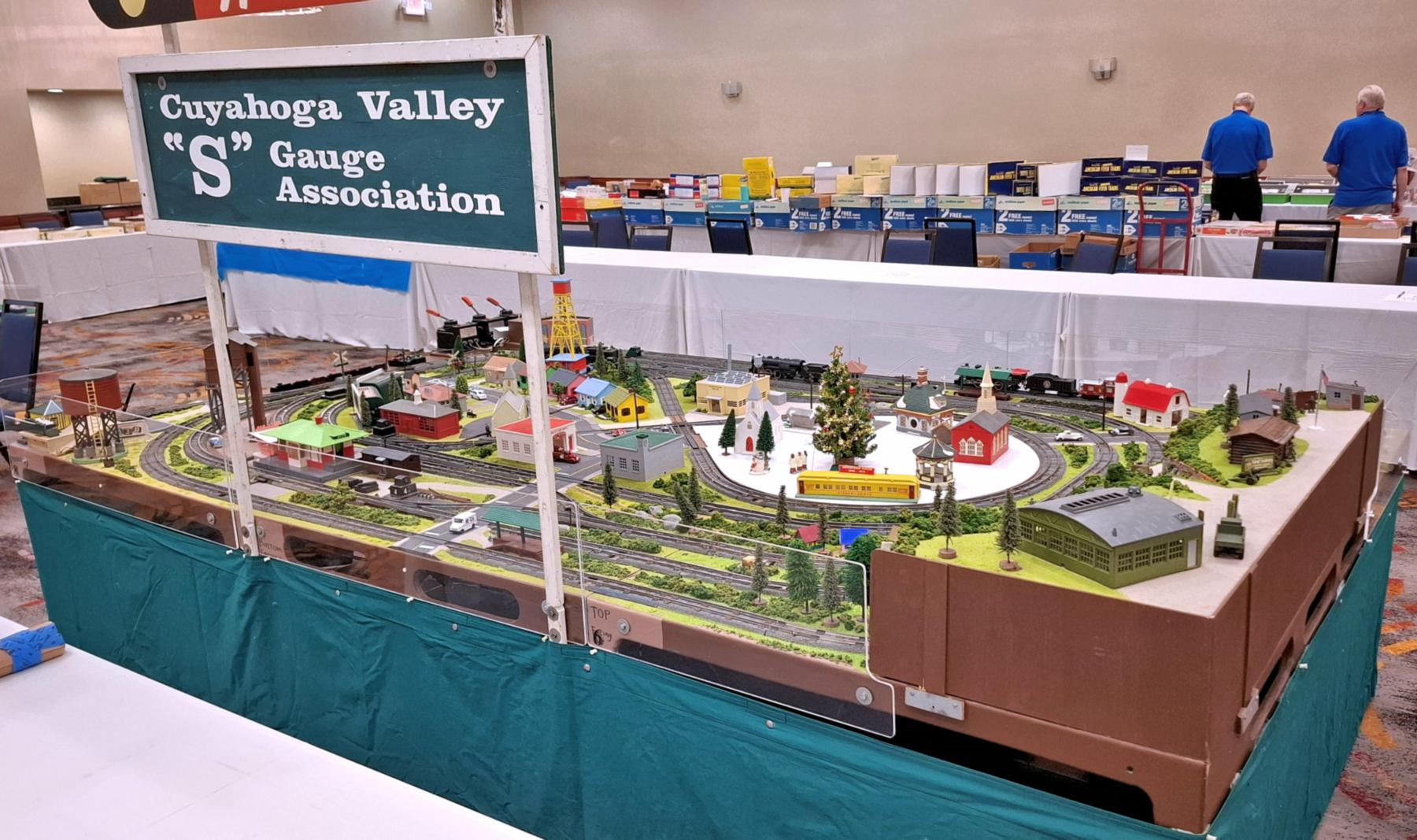
The Cuyahoga Valley S Gauge Assn's 5' x 9' club layout has two loops of track, as well as a figure-8 for independent running of American Flyer equipment.
photo © Michael McConnell; used by permission
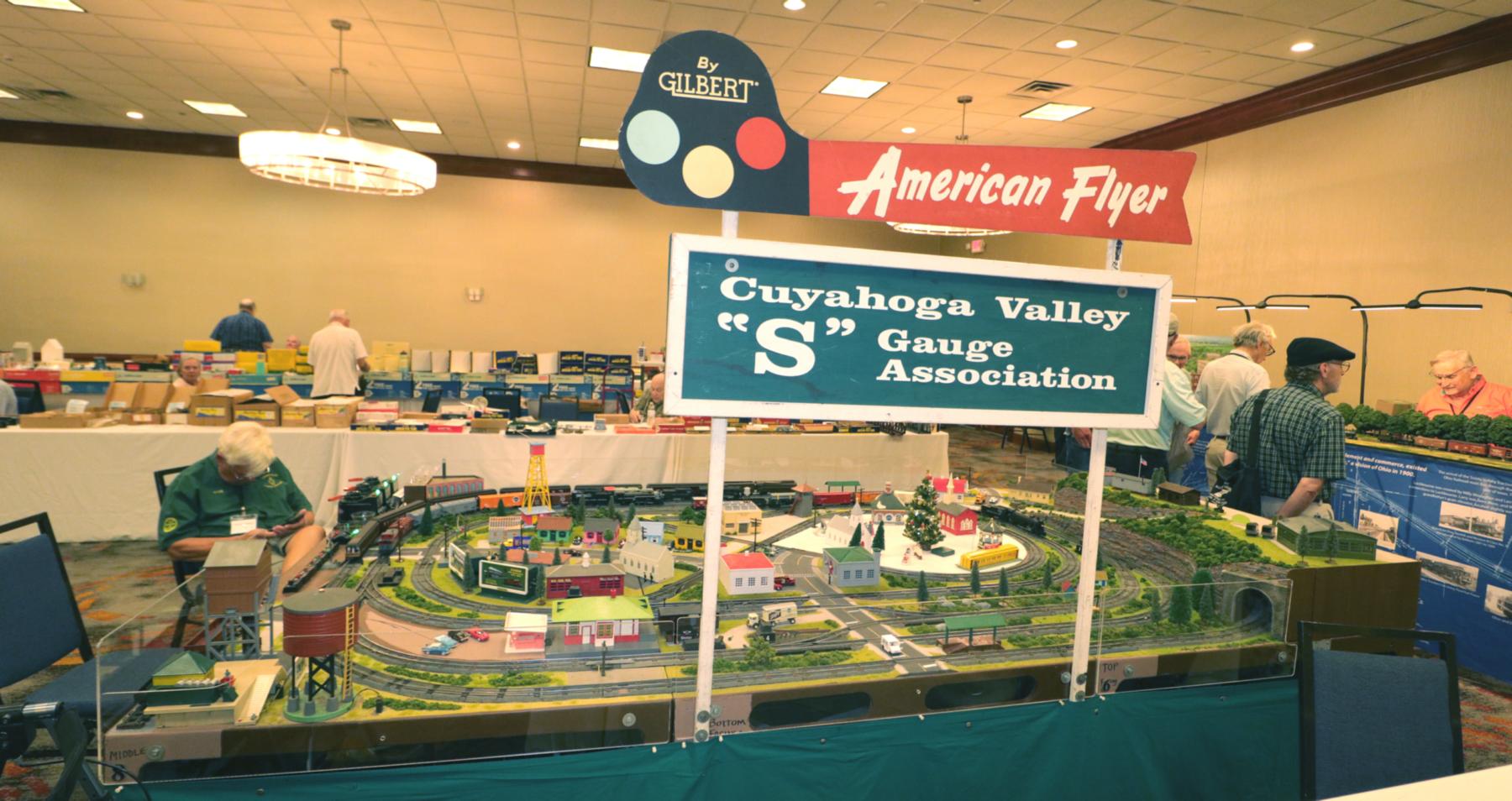
photo © Bill Lane; used by permission
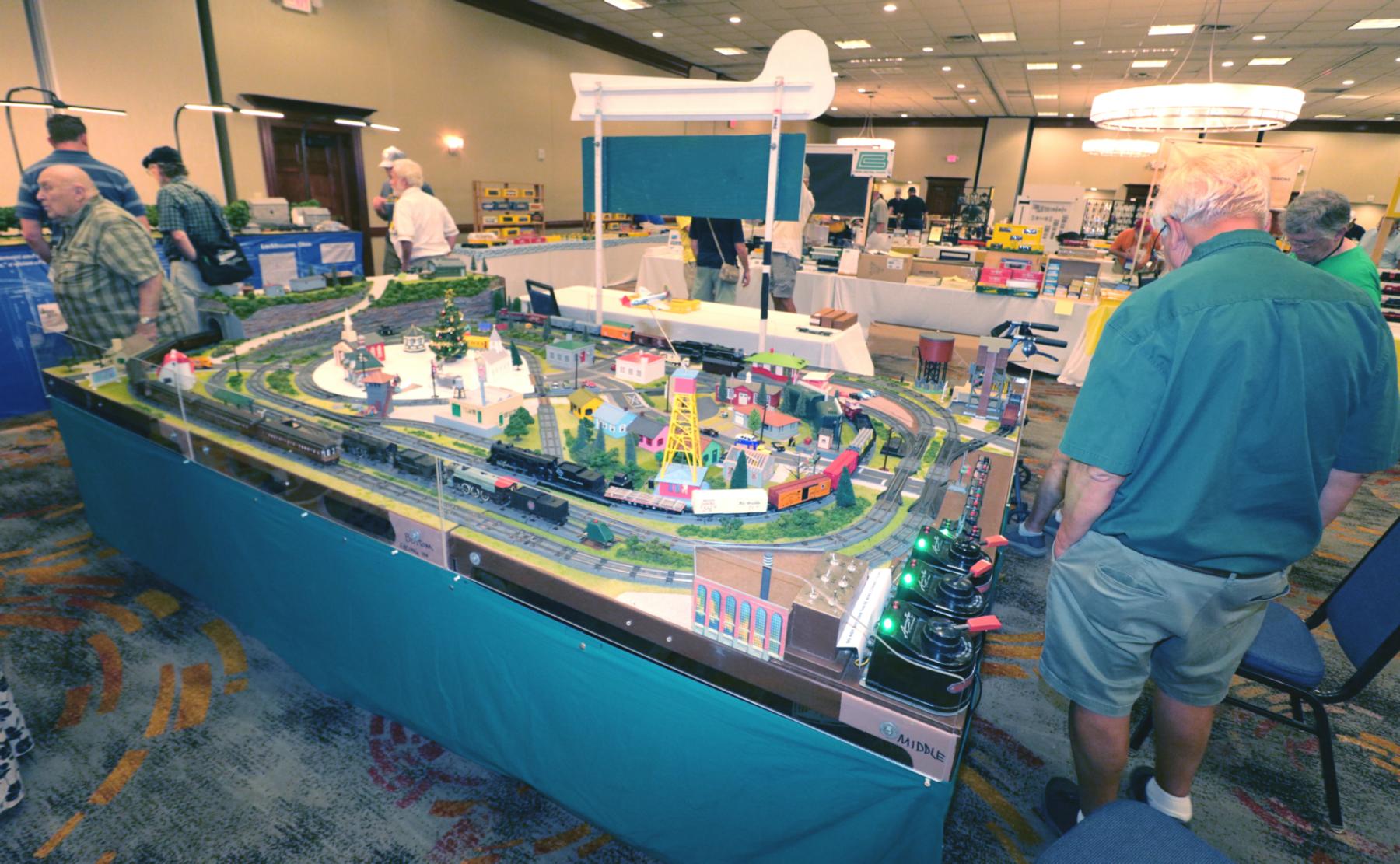
photo © Bill Lane; used by permission
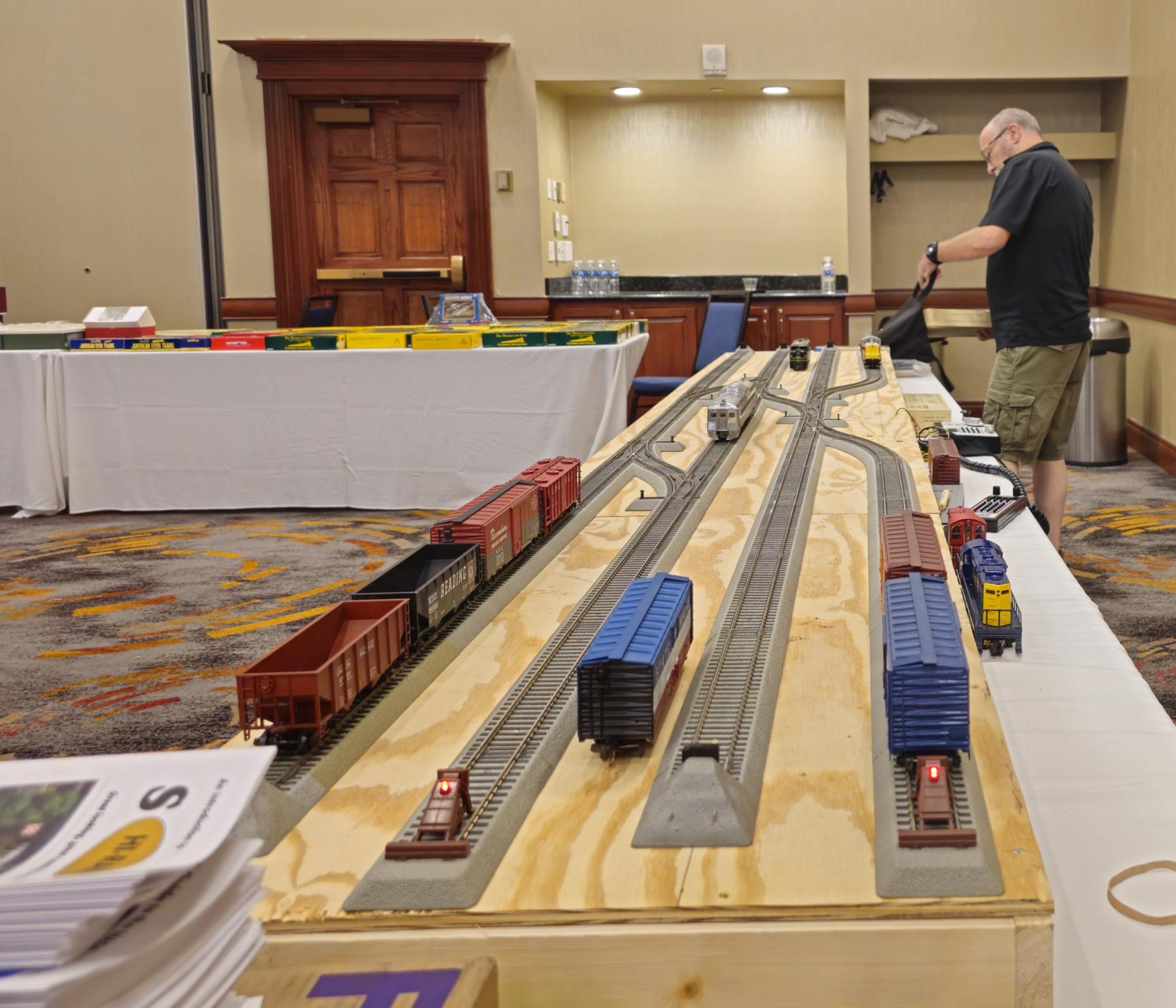
A nice-sized switching layout was set up in the vendor hall, managed by Hugh Sinn and Mike Berus.
photo © Bill Lane; used by permission
Local
SURREY VALLEY RAILROAD
Bill Bartlam
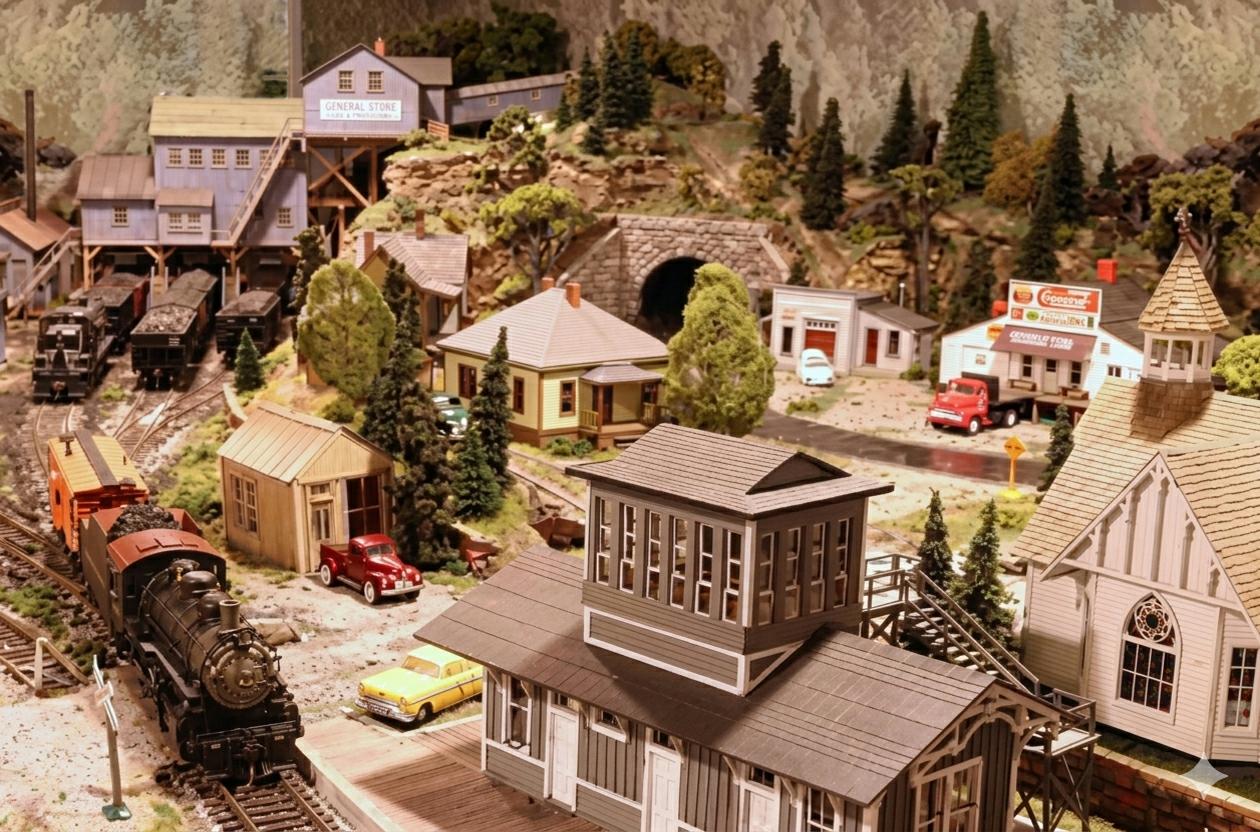
This proto-freelanced S scale layout is set in the steam-to-diesel transition era on the New York Central in northern Michigan. The single-track point-to-point railroad serves 19 industries, including coal mines and a paper mill, in seven small towns. Both visible and hidden staging are utilized. Structures are a mix of kit-bashed and scratchbuilt. A total of seven bridges span the aisleways, connecting parts of the layout together.
NORTHBROOK RAILROAD
Norm Charbonneau

Norm's YouTube Channel
Bill McMillan's Visit
Classic Toy Trains 2008 Visit
A 2012 Visit
A 2022 Visit
Norm's well-known layout is primarily a display for highly modified 3-rail O scale locomotives and rolling stock of the late 1950s era. A continuous 2-track mainline loop allows operation of large steam locomotives and long trains. The layout features a modest freight yard, an interchange, and a steam servicing facility with an operating turntable. The layout features both scratchbuilt and kit-bashed structures, many with interior lighting, and it has been featured in several magazines, including on the cover of Model Railroader.
DURANGO & SILVERTON
Tom Dart
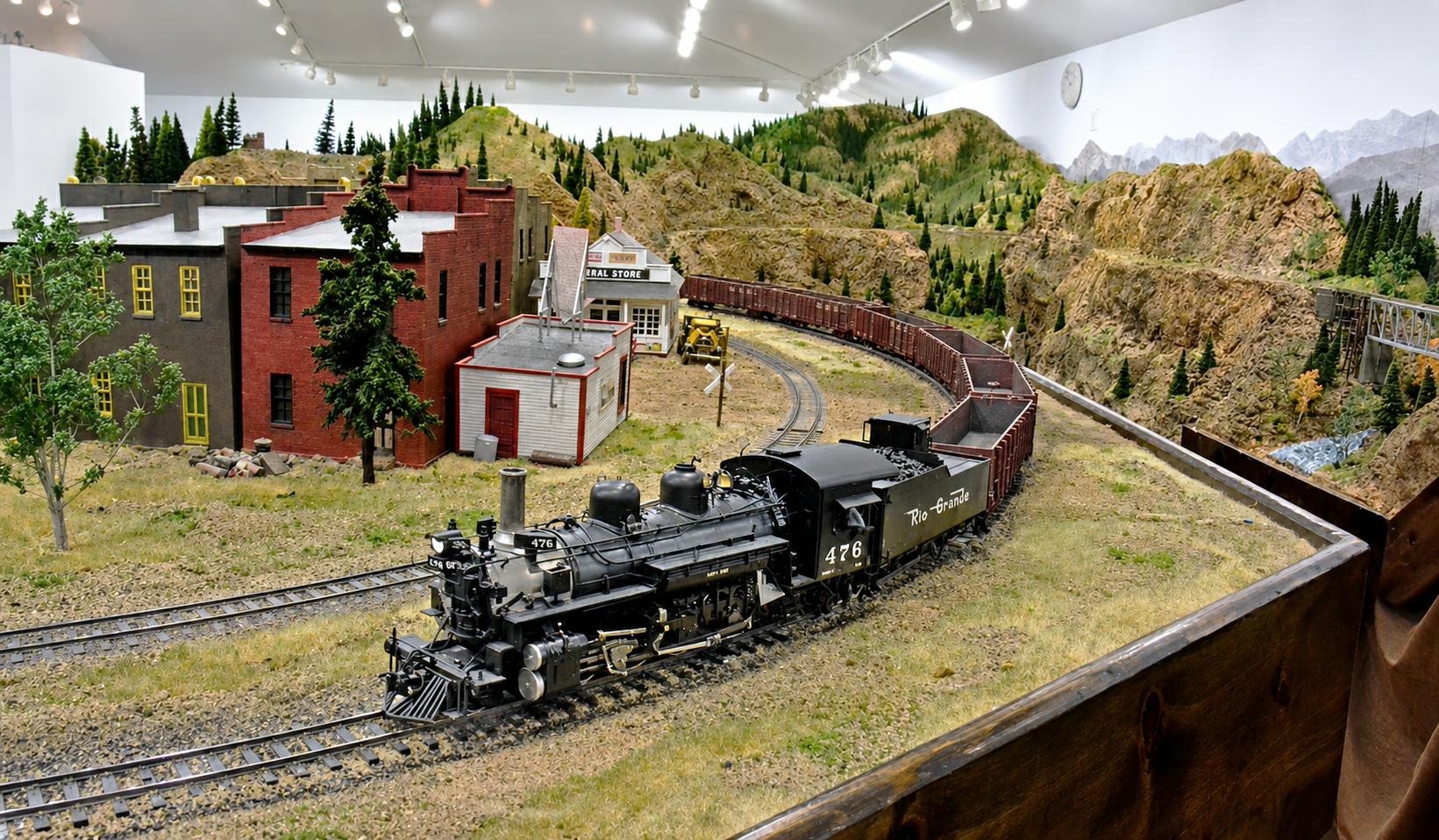
This 40' x 60' On3 layout accurately replicates the narrow-gauge Durango & Silverton RR of Colorado as it appeared and operated in the 1950s. The layout is point-to-point from Durango to Silverton and runs through the Colorado mountains. Featured are an ore mine at Silverton, and a replica of the famous "High Line" above the Animas River. The majority of structures are either scratch-built or kit-bashed to resemble the prototype. All the locomotives are sound-equipped. As a bonus, a 2-rail O-scale railroad circles the perimeter of the room.
BUFFALO & CHAUTAUQUA
Gaylord Gill

The Buffalo & Chautauqua is a scale S layout set in 1953, representing portions of the PRR's Northern Division in western New York State. Gaylord's layout features prize-winning structures, both scratch-built and kitbashed, along with hand-made trees and hand-painted backdrops. His modeling has appeared in NASG Dispatch, Model Railroader, and Railroad Model Craftsman magazines.
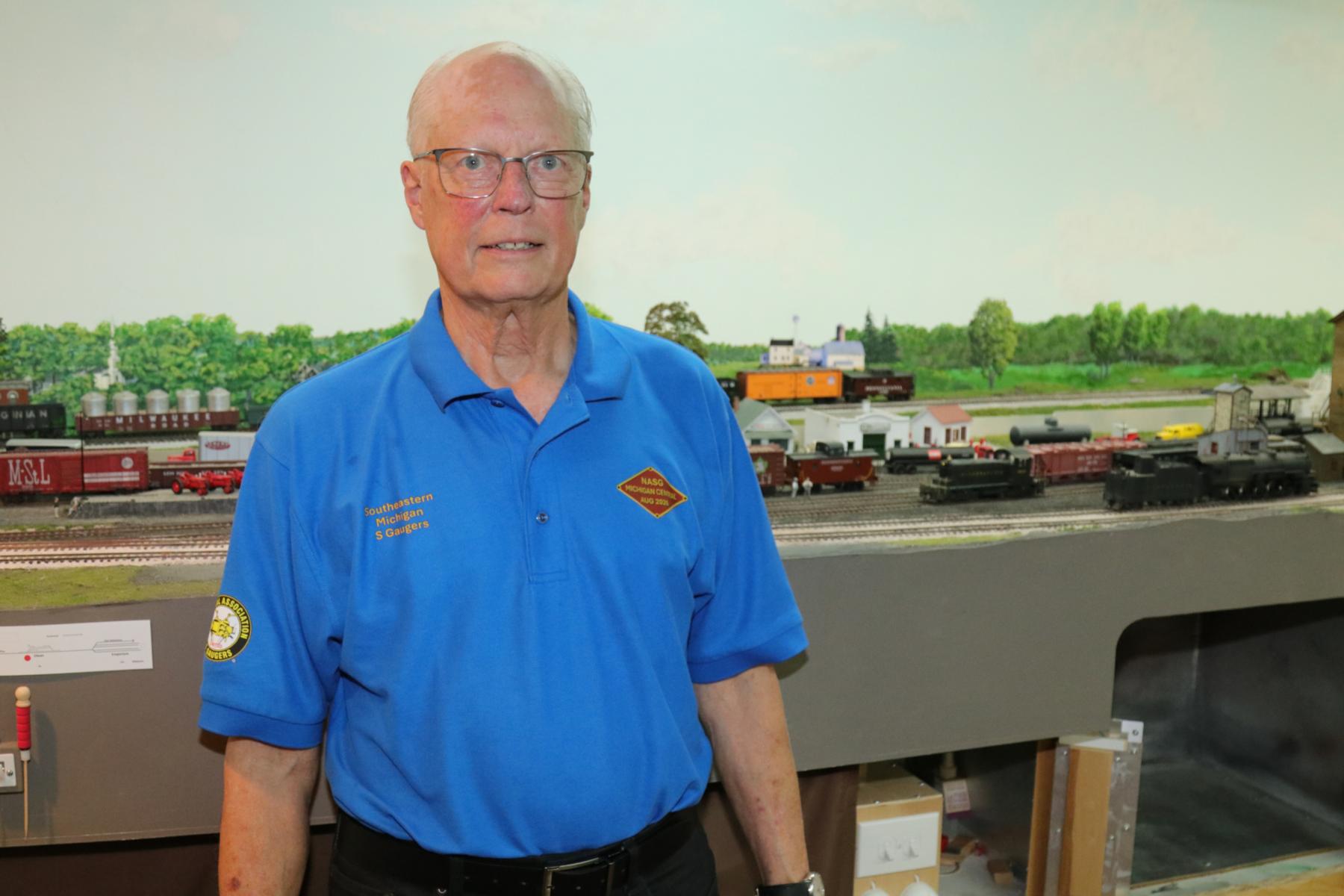
Gaylord poses in front of his layout. Bill Lane took a large number of photos of Gaylord's layout, and we have decided to put those photos in the dedicated page for his layout in the main "Layouts" section of this web site.
photo © Bill Lane; used by permission
READING LINES
Barry Hensel
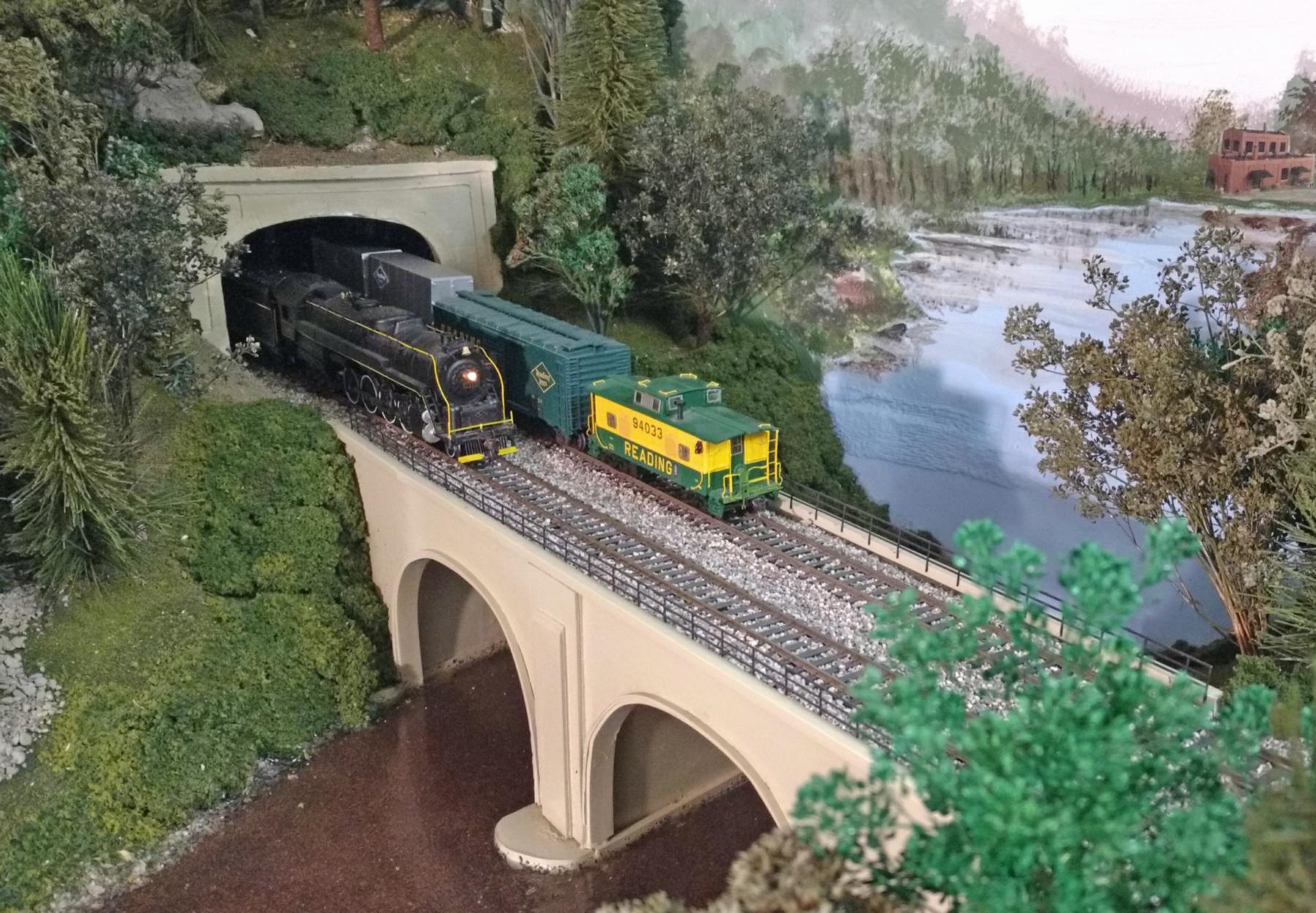
The proto-freelanced HO scale Reading Lines Central Division is set in Pennsylvania in 1970 and features coal and freight traffic as well as commuter traffic to Philadelphia. The railroad features a double-track mainline with continuous running. Trains are controlled by Easy DCC, and all locomotives are sound equipped. The 24' x 40' L-shaped Reading Lines is completely operational and scenicked. Operating sessions are held every ten weeks with five crews and a dispatcher.
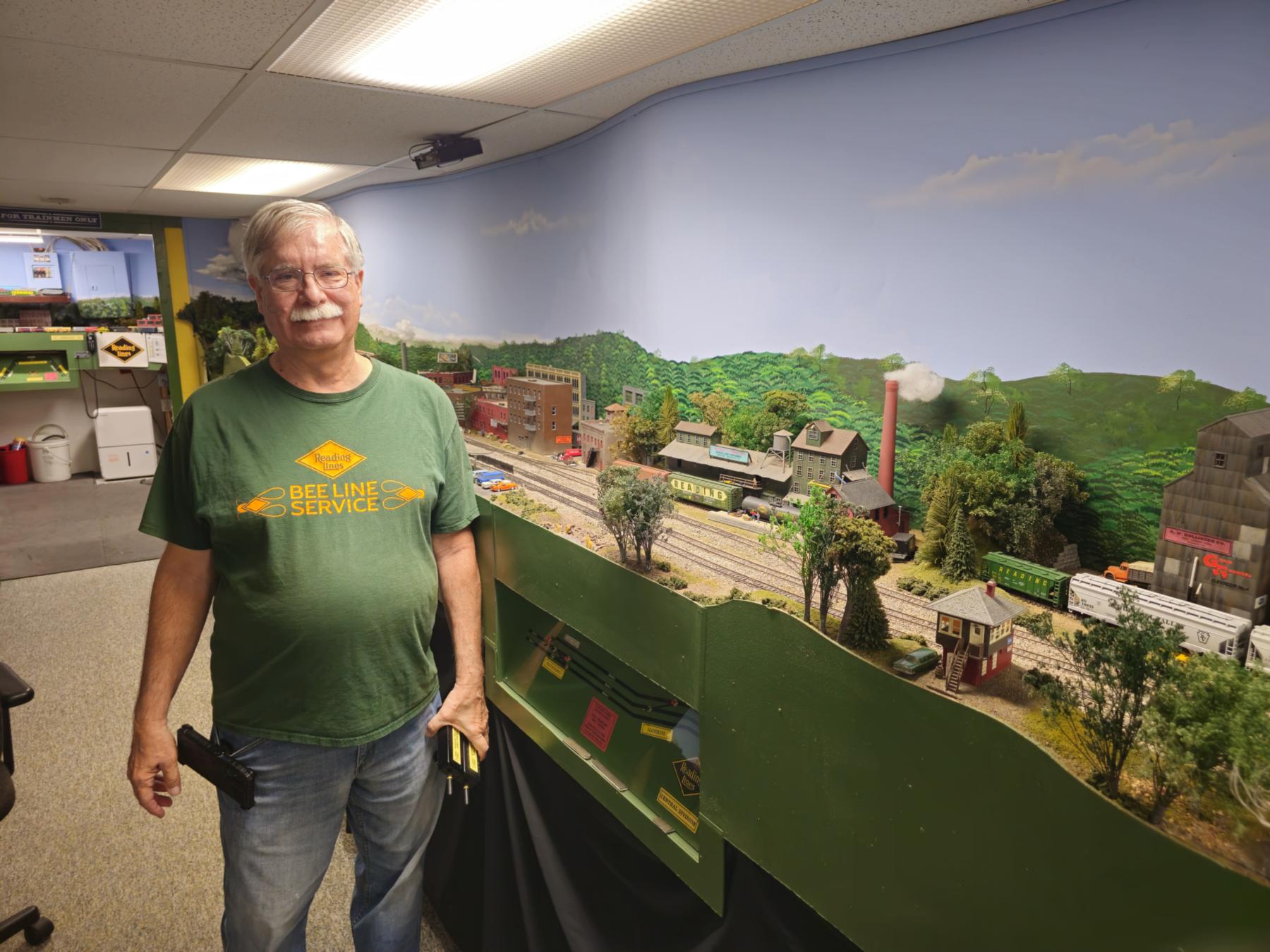
photo © Bill Lane; used by permission
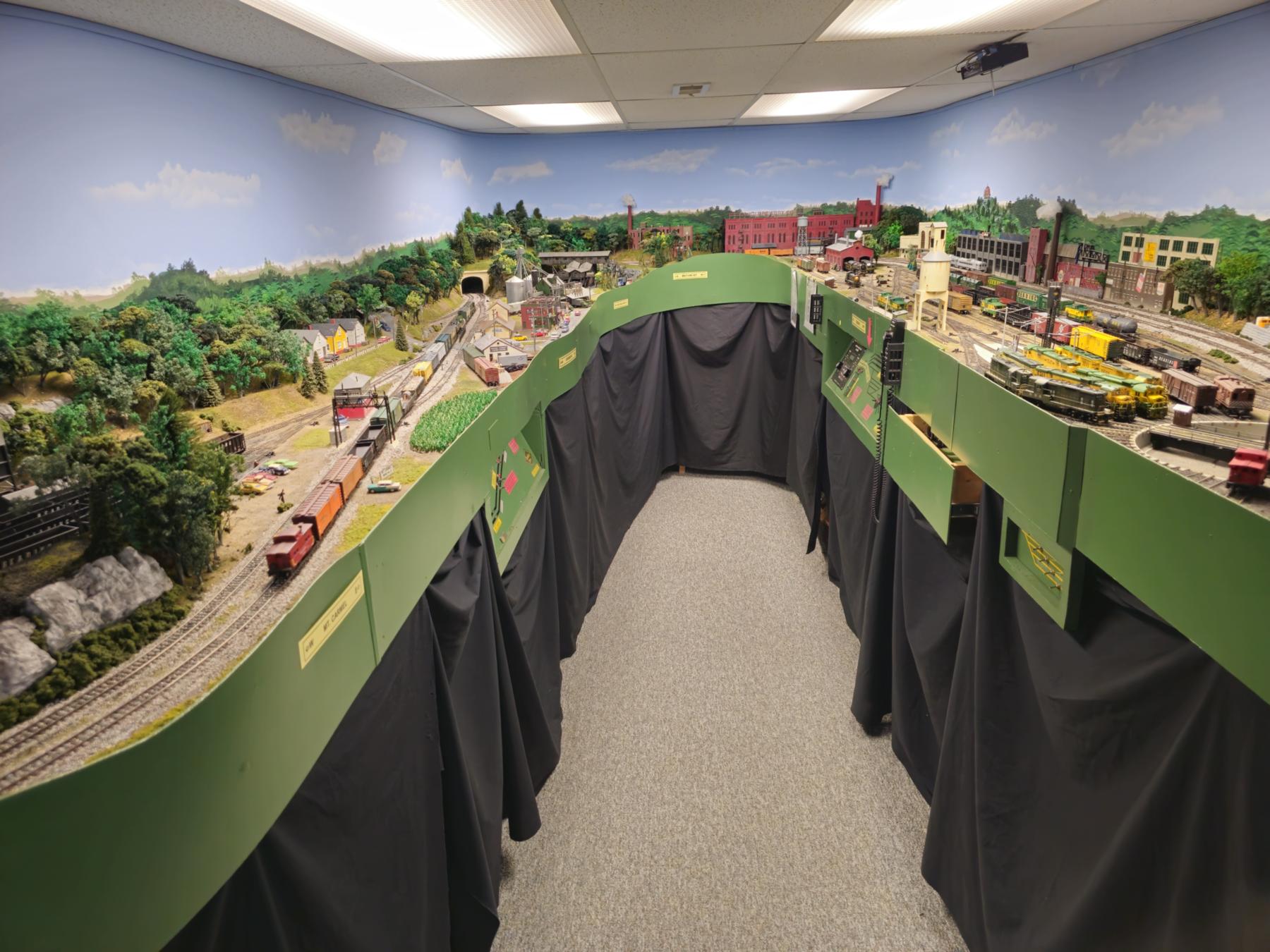
photo © Bill Lane; used by permission
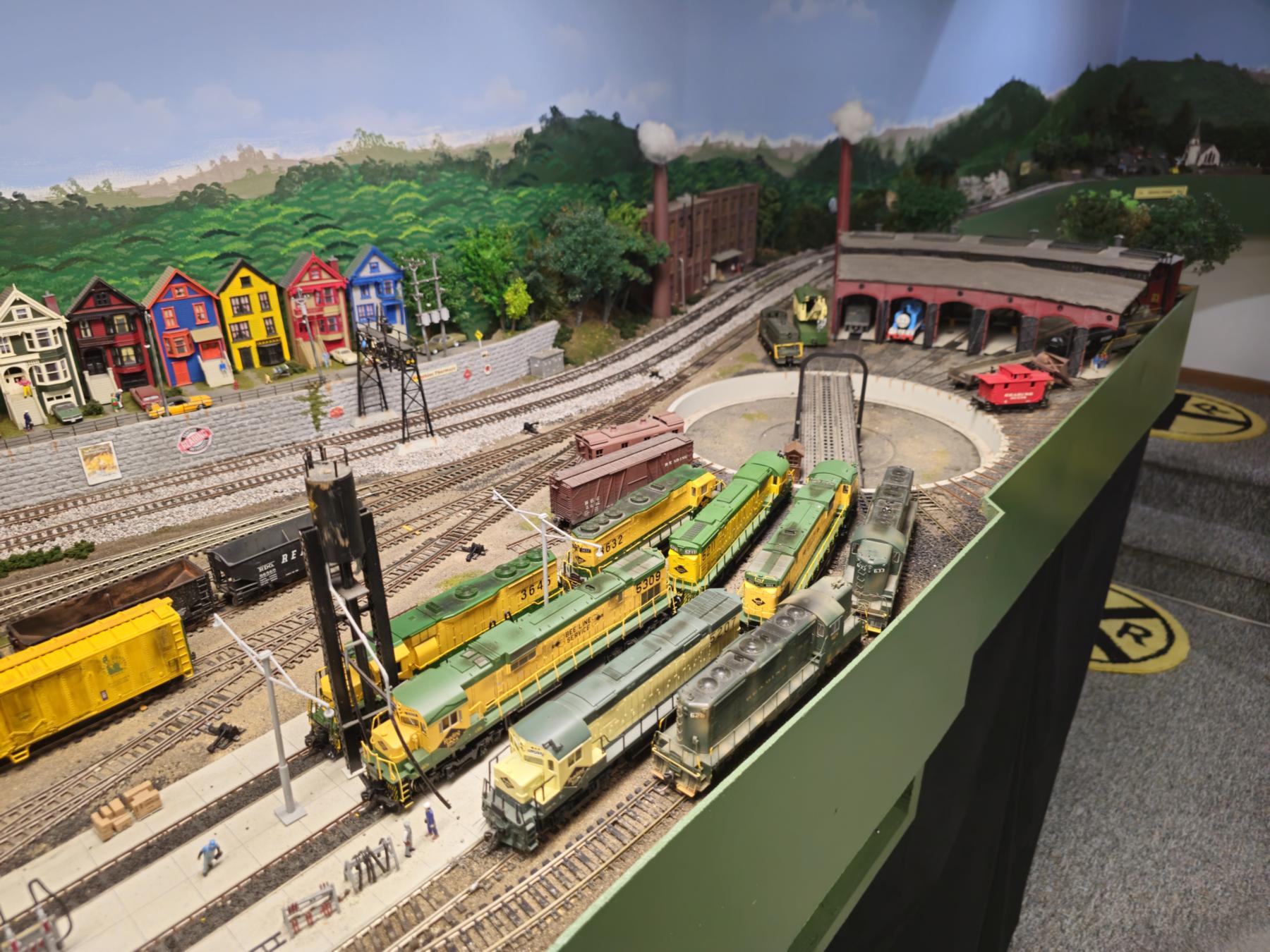
photo © Bill Lane; used by permission
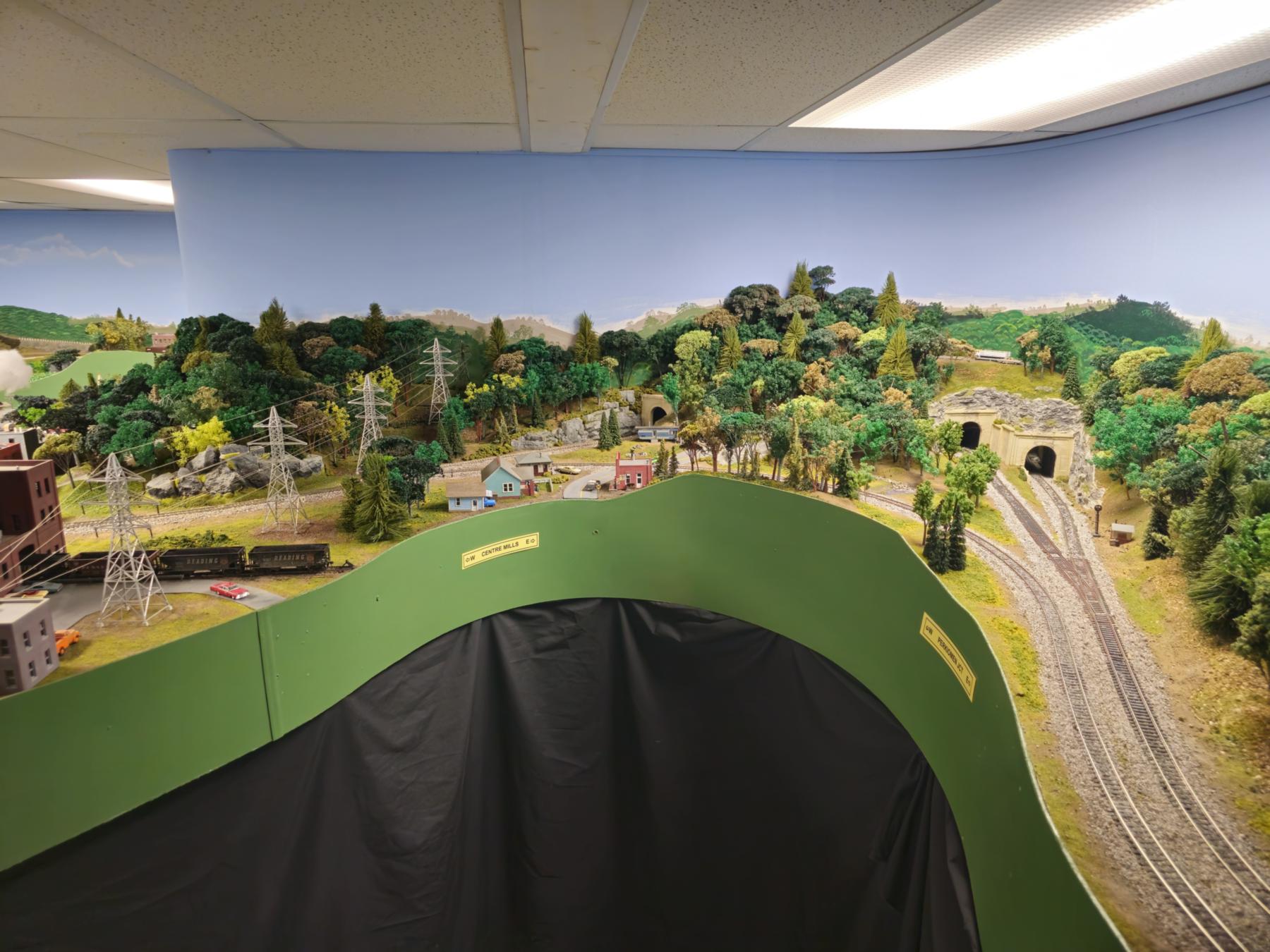
photo © Bill Lane; used by permission
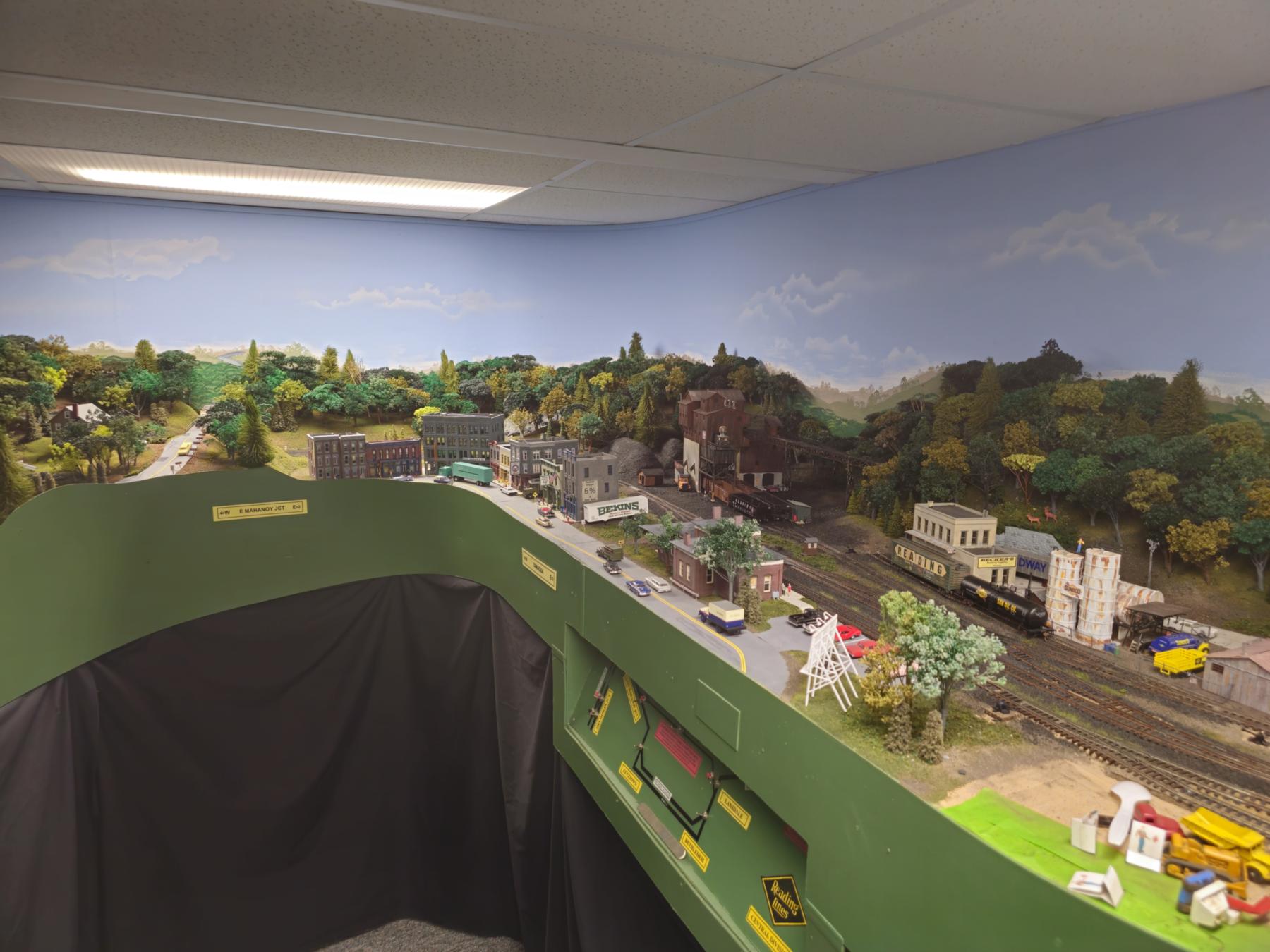
photo © Bill Lane; used by permission
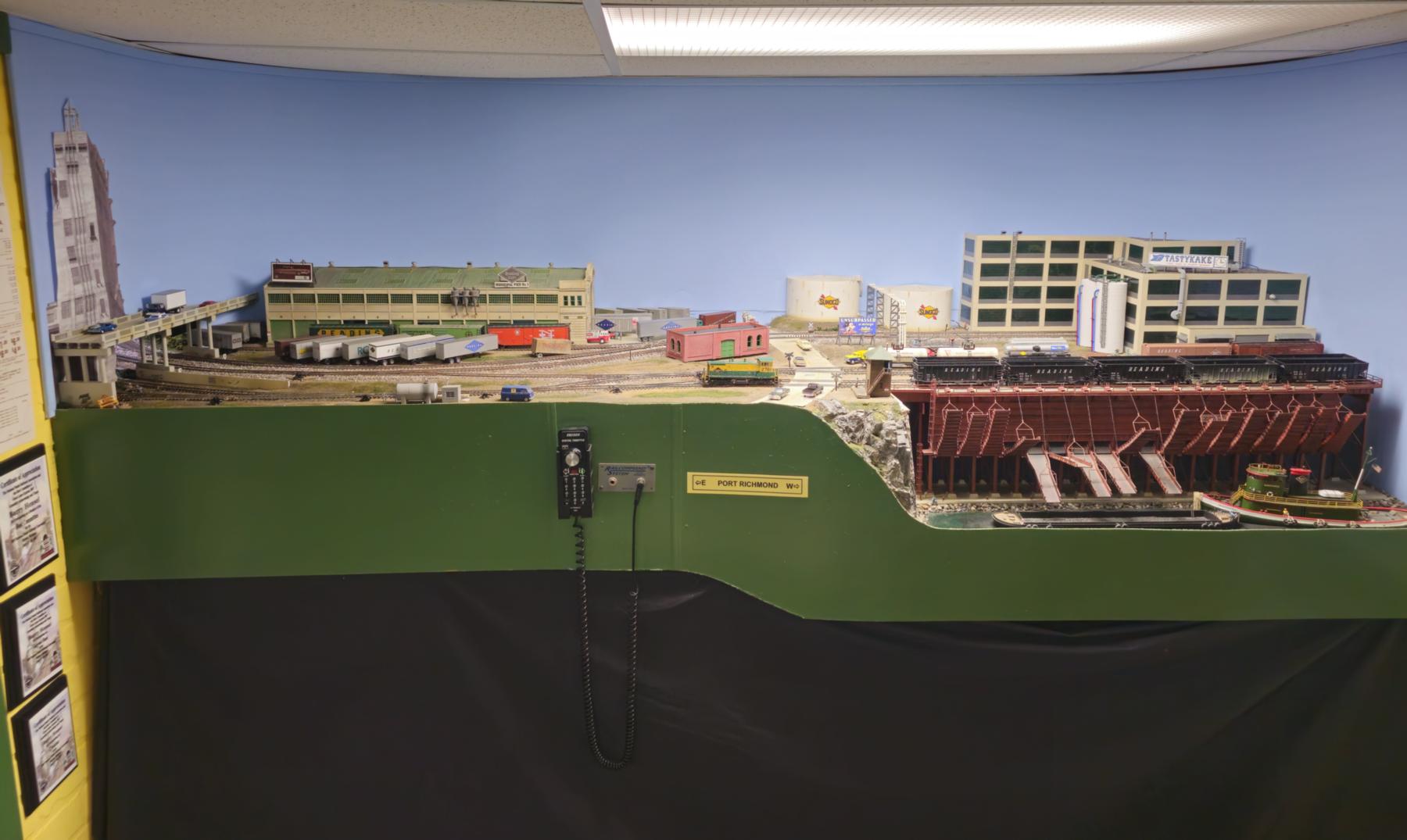
photo © Bill Lane; used by permission
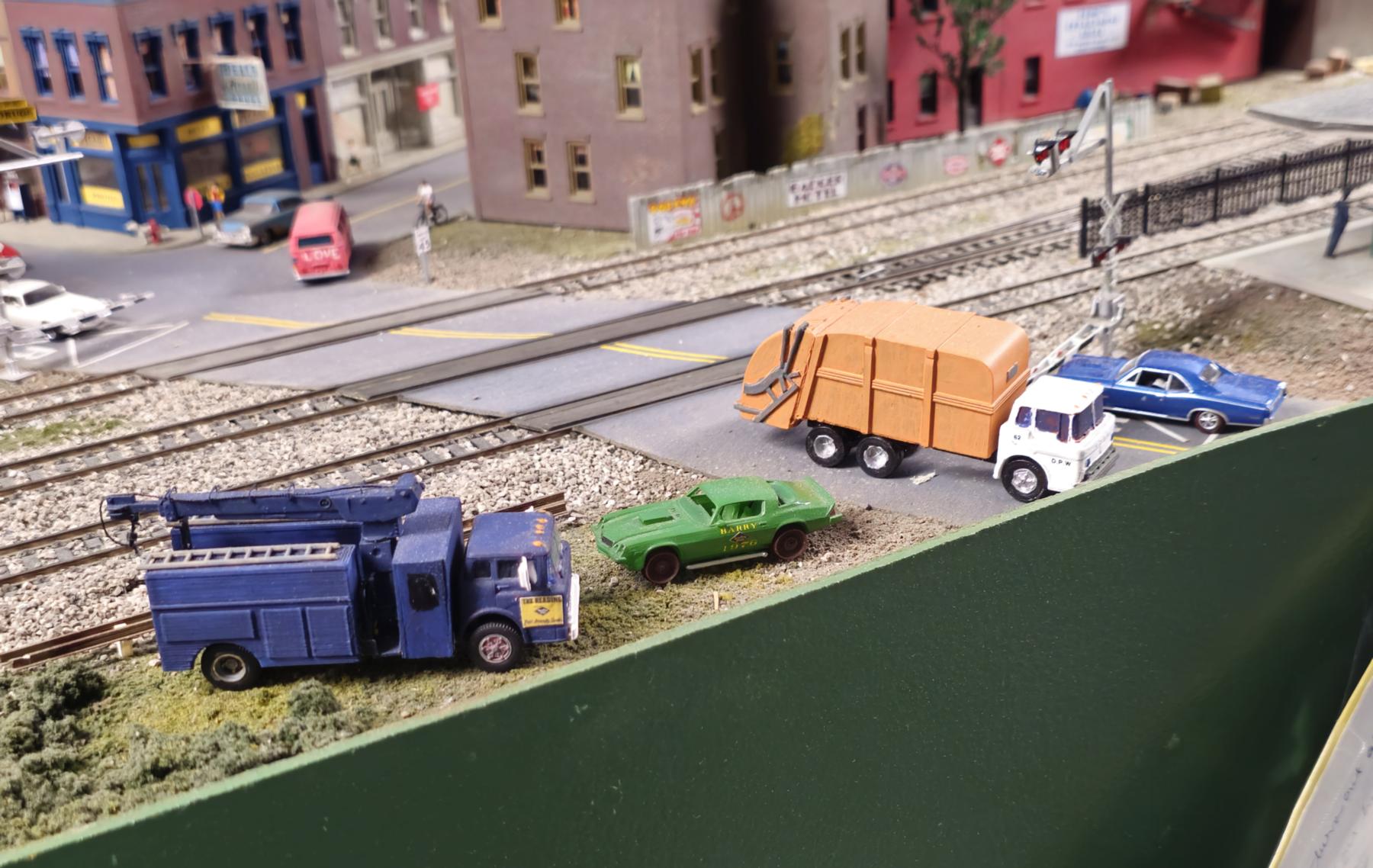
photo © Bill Lane; used by permission
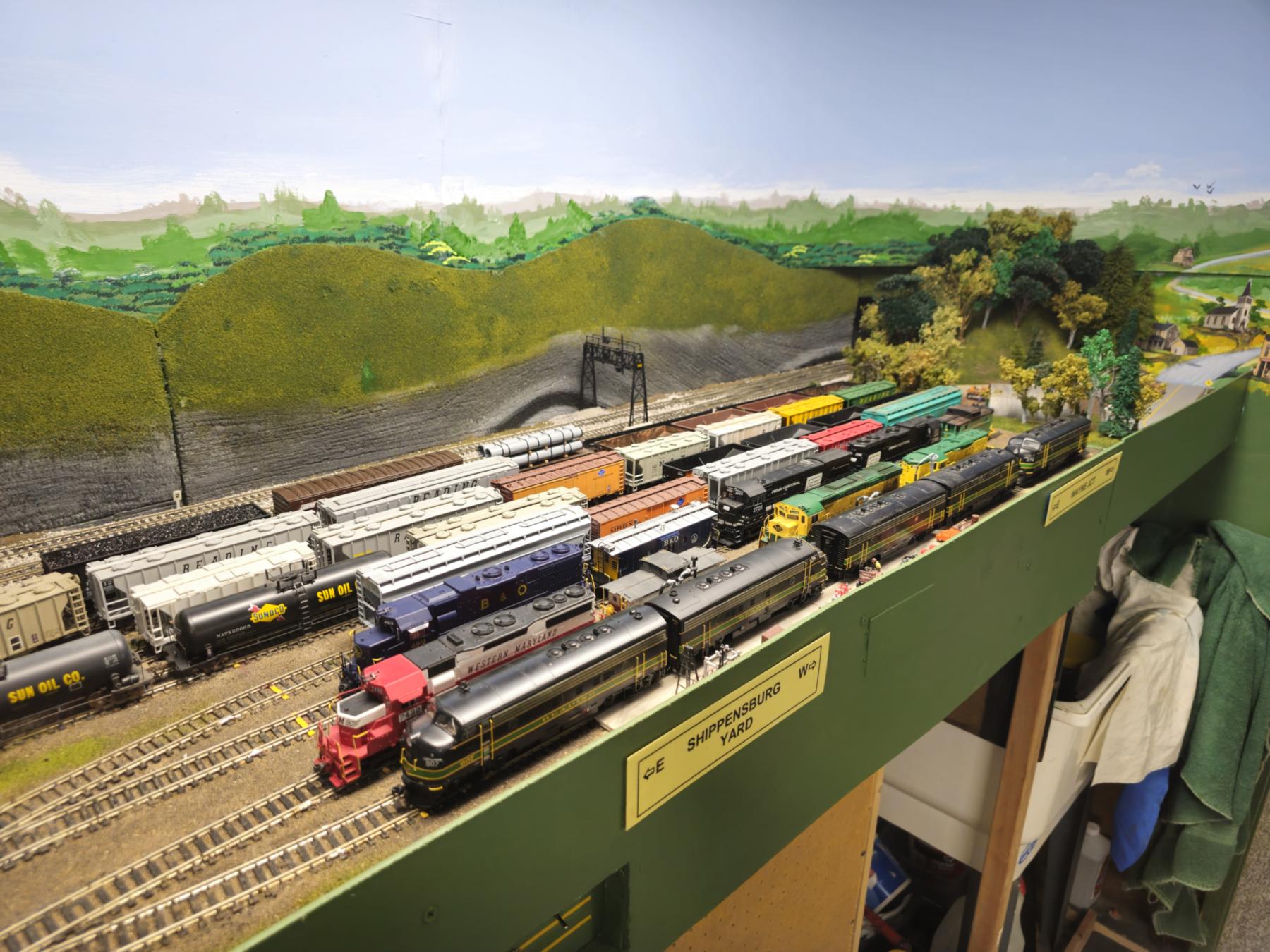
photo © Bill Lane; used by permission
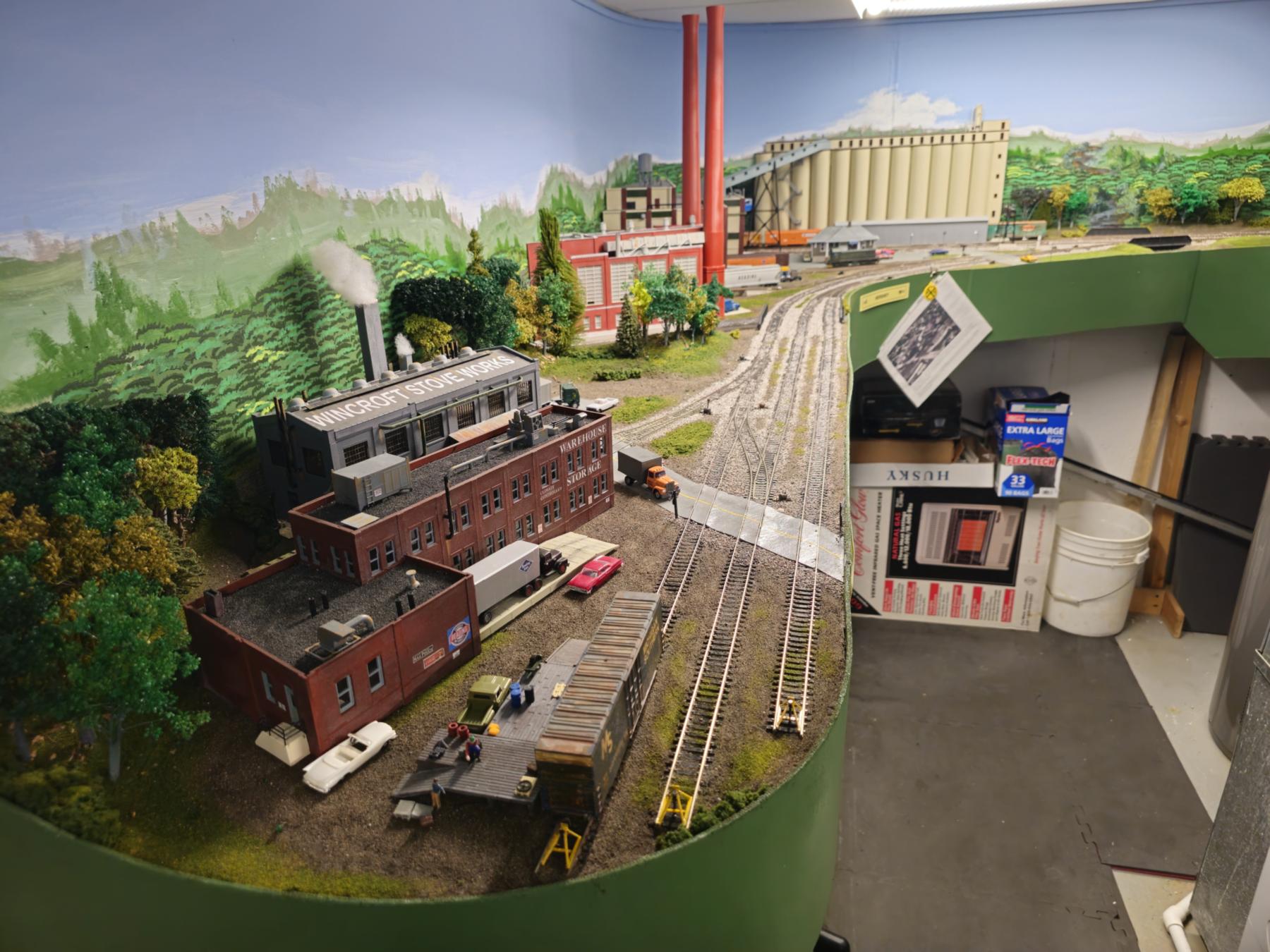
photo © Bill Lane; used by permission
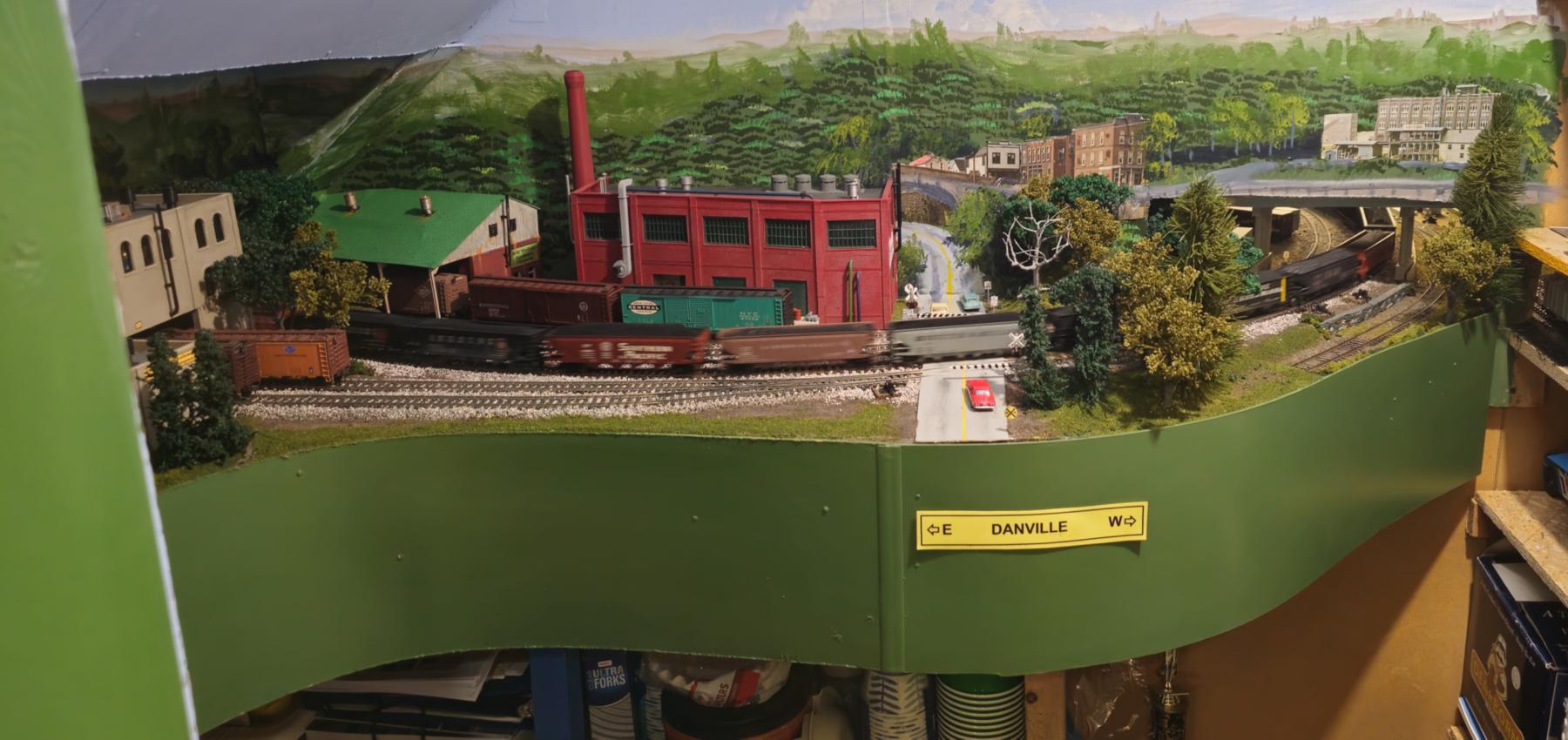
photo © Bill Lane; used by permission
DAKOTA RAILS
Jeff Jundt
Jeff's layout is just getting underway. It will be an 18' x 38' South Dakota-themed S-scale layout. No specific era will be modeled and equipment from the late 1800s to the 1970s will be run. The benchwork is about 60% complete and code 100 track will be used.
ERIE RAILROAD
Ron King, MMR
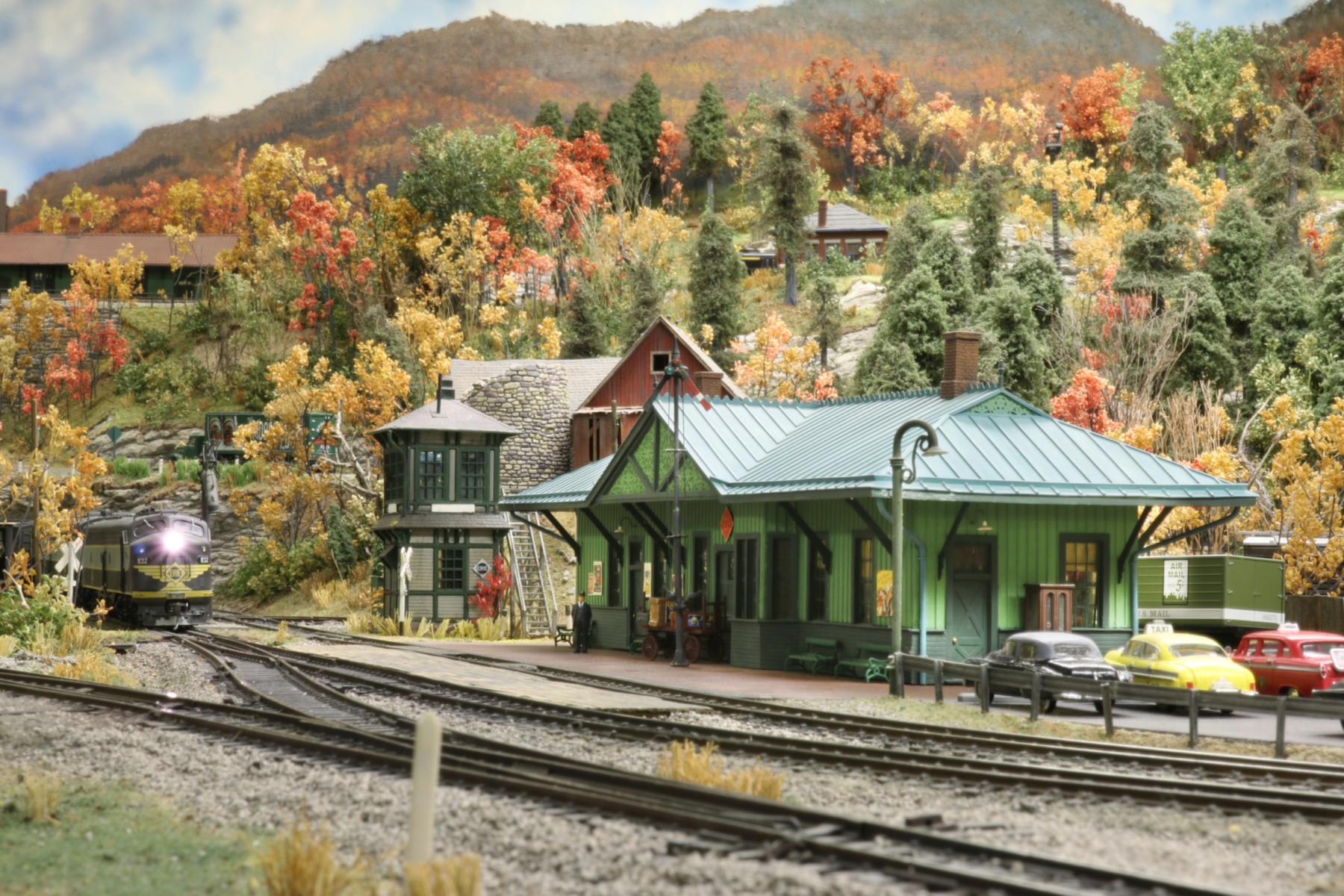
This large HO layout depicts the Erie Railroad between Cornell, NY and Marion, OH as it appeared and operated in October 1953. The line passes through Meadville, PA, which serves as the main staging yard. At Meadville, there is a large roundhouse and diesel servicing facility, and recently Ron added a coaling tower to the Meadville scene. The layout features many scratchbuilt and kit-bashed structures.
DETROIT WINDSOR CONNECTING RAILROAD
Bill McMillan
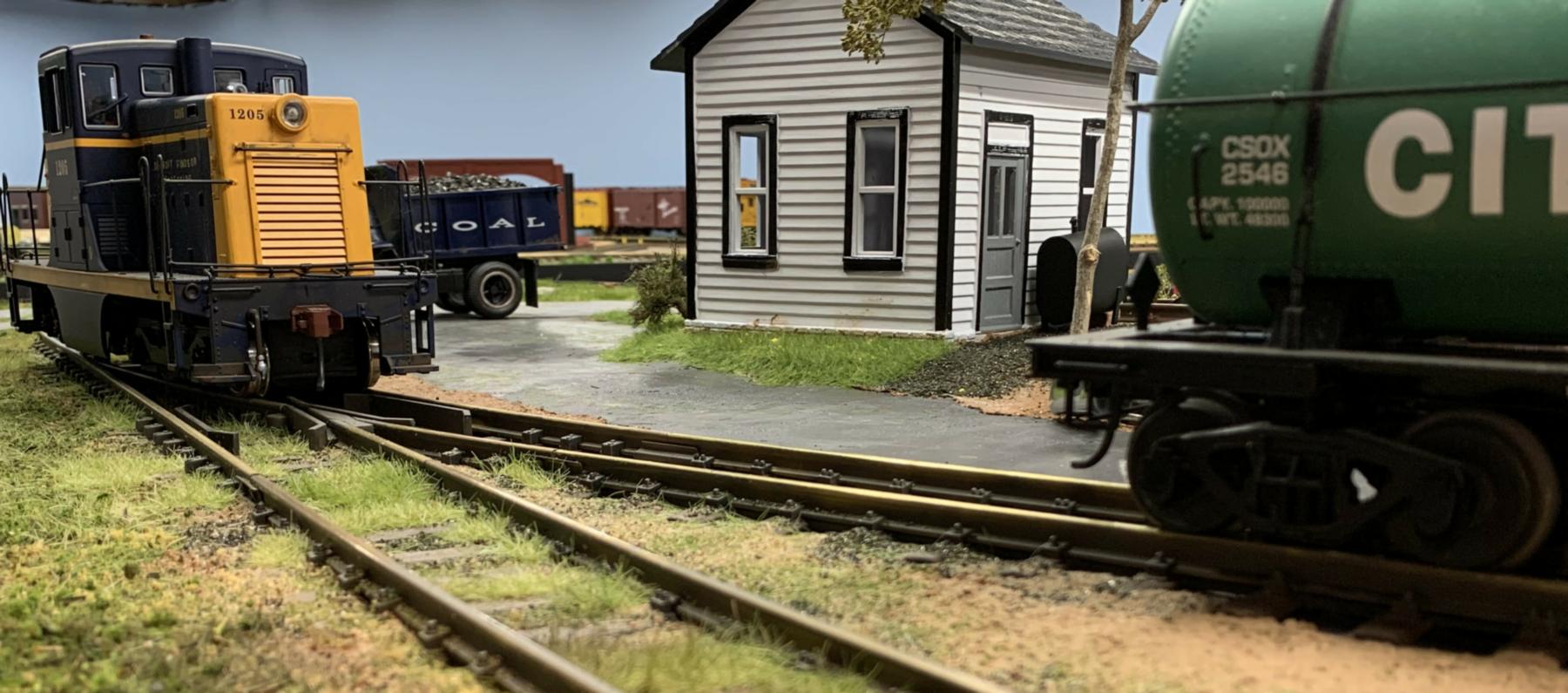
This G-scale (1:29) railroad is set in the area of west Detroit and Delray and serves a variety of industries, including packing plants, a foundry, and a produce terminal. Many of the structures have detailed interiors. A John Allen-style "time saver" has been worked into the track plan as a switching puzzle. A transfer table simplifies yard operations and the layout's lone bridge is used to span an aisleway. The layout has been featured in NMRA North Central Region's The HotBox magazine.
KEWEENAW BAY & RIVER RAISIN RR
Dan Navarre
The S scale Keweenaw Bay & River Raisin RR is based on the C&O Railway in the 1940s and is centered in West Virginia's New River Gorge. The featured location is Thurmond, WV. The station and mallet house were scratch-built from original C&O erection drawings and the coaling tower and downtown buildings were 3D-printed. The railroad is about 70% complete and operates on Loksound DCC. Dan Navarre was the co-owner of River Raisin Models, the company that brought us many stunning brass models over the decades.

Dan standing next to his layout. Bill Lane took a large number of photos of Dan's layout, and we have decided to put those photos in the dedicated page for his layout in the main "Layouts" section of this web site.
photo © Bill Lane; used by permission
S Hi-rail Display Layout
Jerry Poniatowski
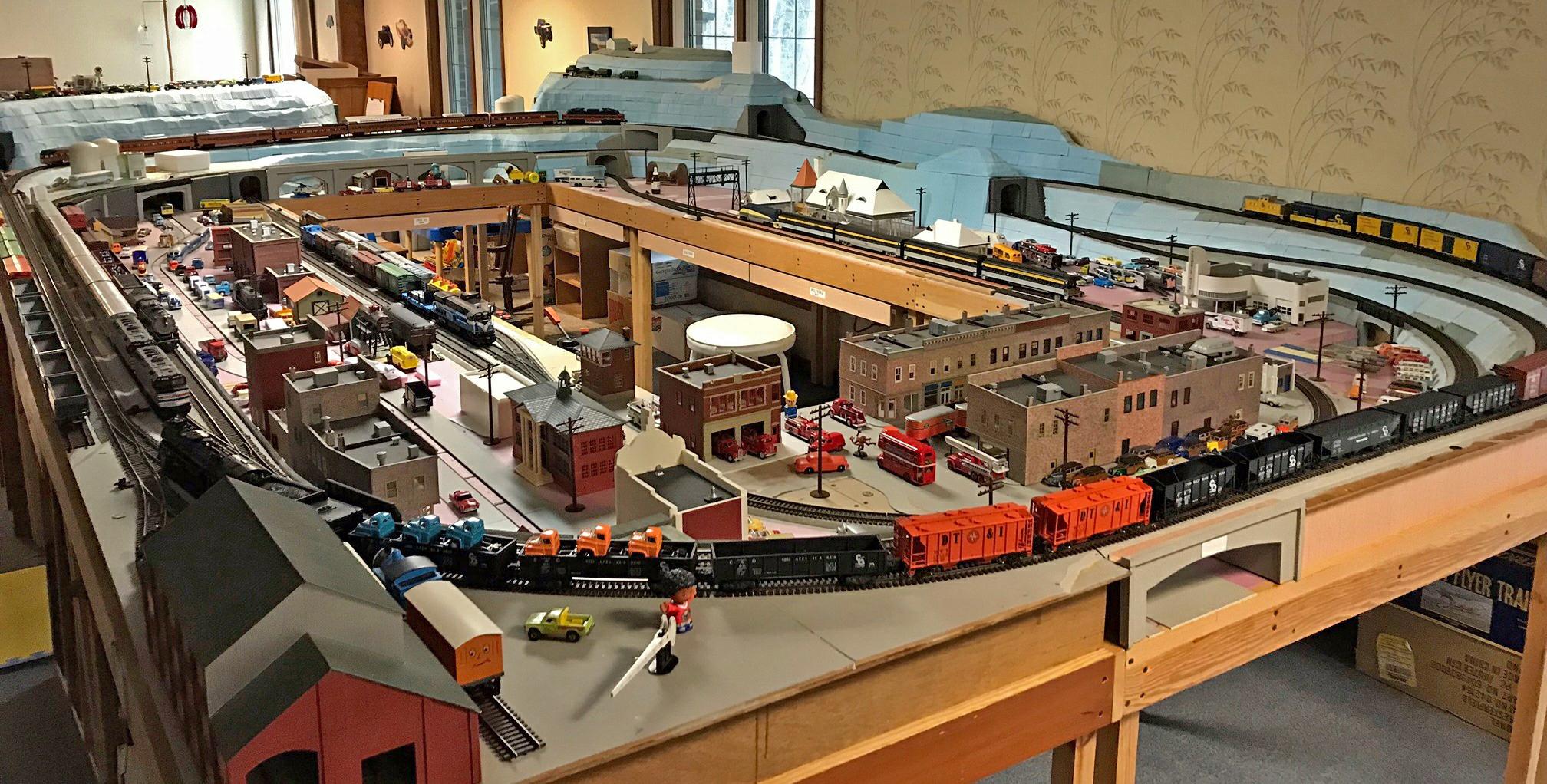
This 12' x 20' S hi-rail display layout is being built to run a collection of S trains including American Flyer and American Models as well as several of Jerry's show-winning models. Three interconnected routes wind over and under each other allowing for three trains to operate with another three trains on sidings. A trolley line runs along main street. The layout features a scratch-built model of New York Central's Ann Arbor depot, which is currently a work-in-progress.
RED PINE & OXVILLE
Bob Stelmach
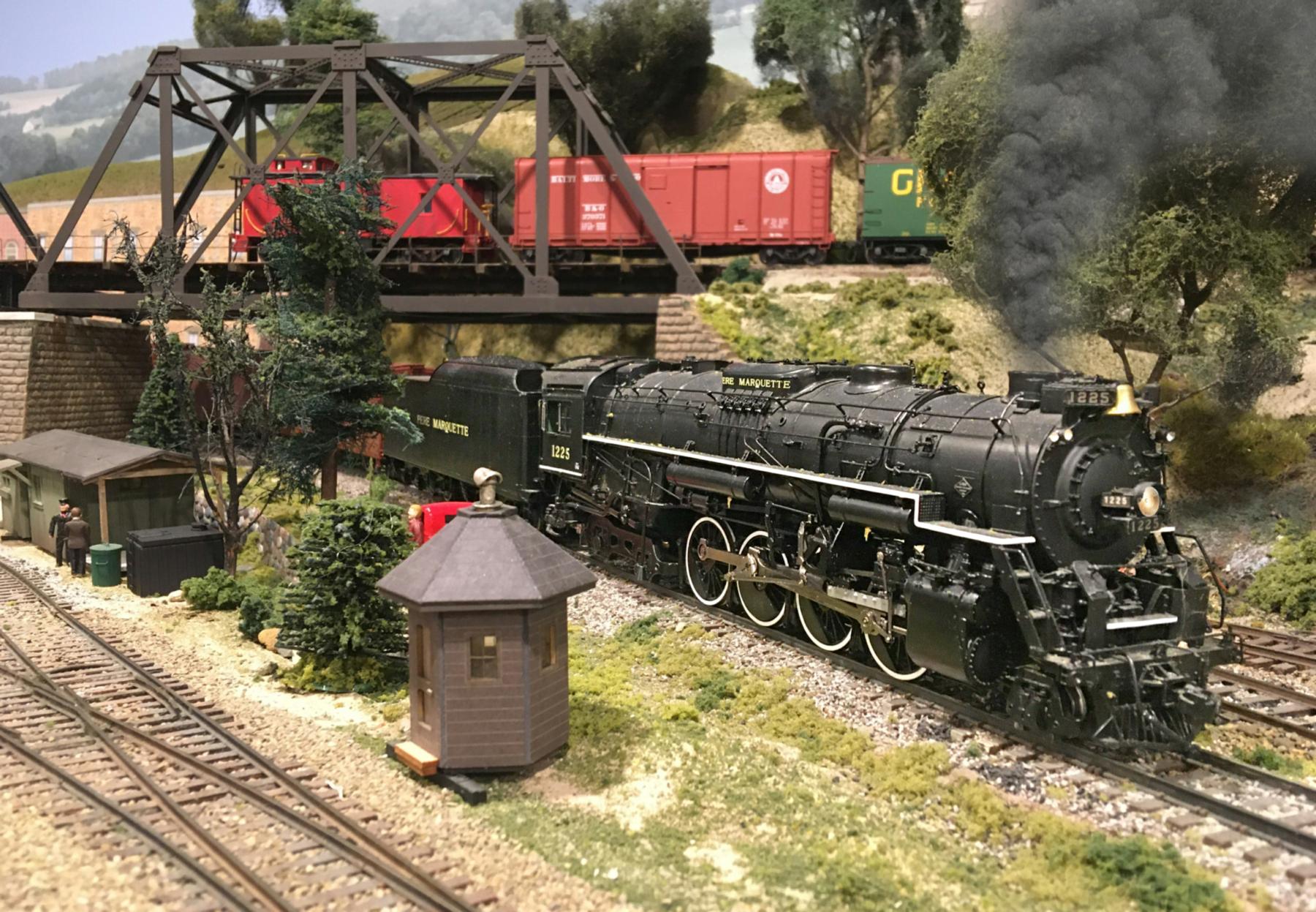
Both S hi-rail and scale S equipment co-exist on Bob's Red Pine & Oxville layout, accommodated by closing-frog turnouts. The RP&O shortline serves mid-Michigan, with an NYC mainline interchange. Industries include a coal mine, gravel business, logging, agriculture, and small-town operations. Bob's layout has been published in NMRA Magazine, Model Railroader, NASG Dispatch, and S Gaugian.
BURLINGTON PACIFIC
Mike Tranquilla
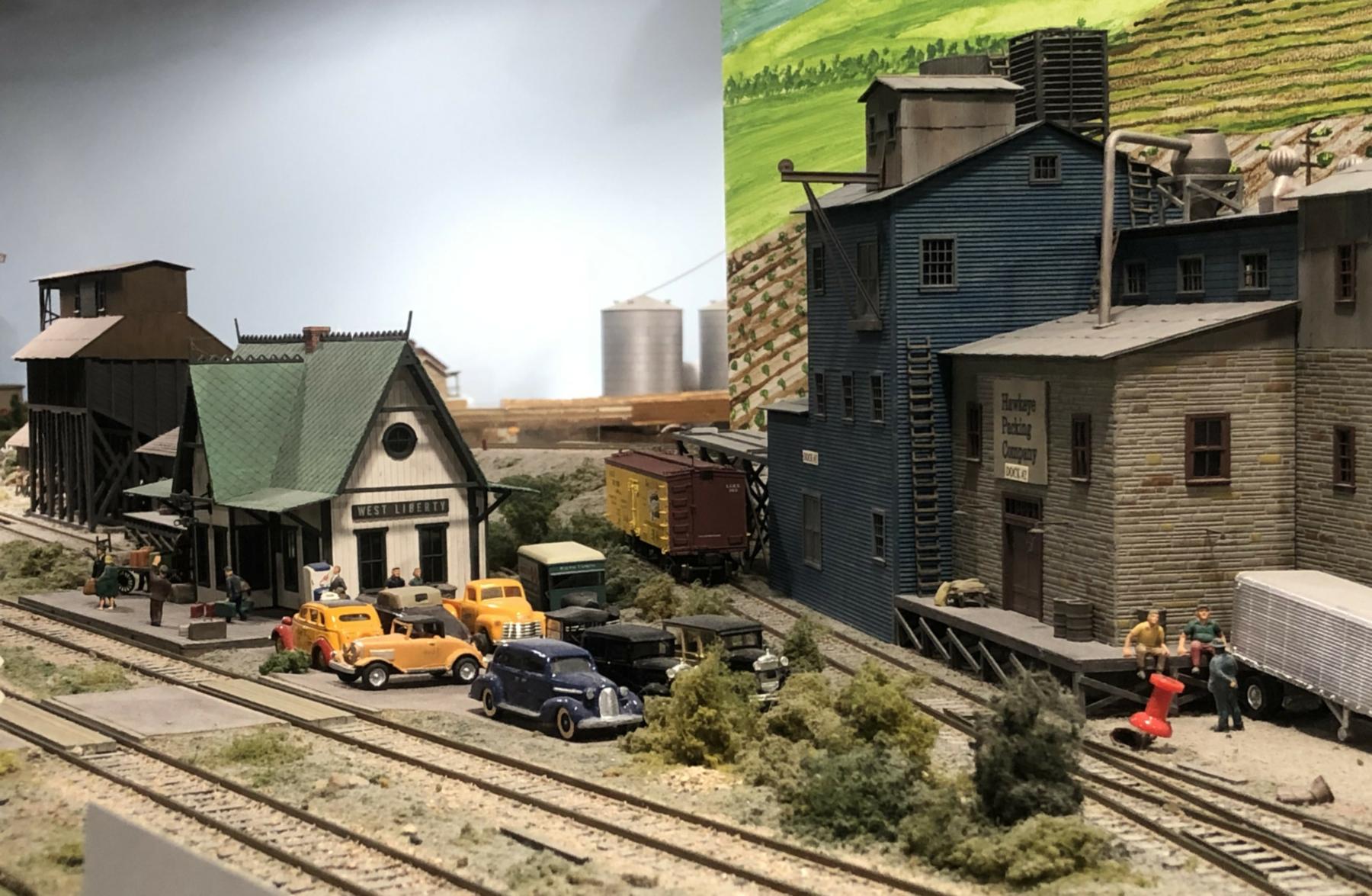
This free-lanced HO-scale railroad utilizes a comprehensive collection of rolling stock to allow representing a variety of eras from the 1920s to the present, of a small-town, mid-western railroad. The mainline runs around the walls while several branch lines support up to 8 operators serving several small-town industries. The layout features several turntables and many scratchbuilt structures, including a farm. The layout has been featured in NMRA North Central Region's The HotBox magazine.
ALLEGHENY & EASTERN
Pierre Willermet
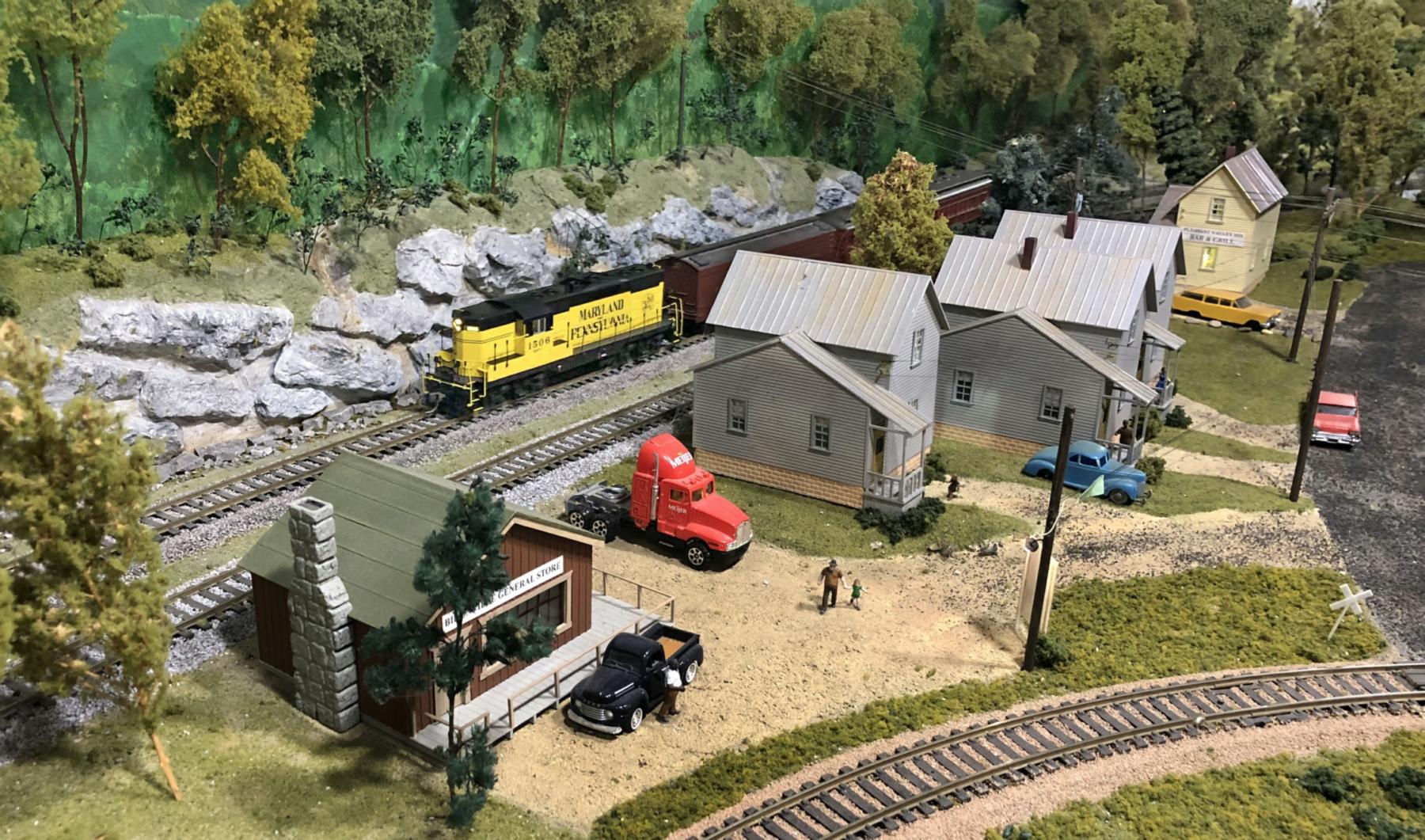
A Few Photos
Onboard Tour of Layout, part 1
Onboard Tour of Layout, part 2
Onboard Tour of Layout, part 3
The 20' x 25' Allegheny & Eastern is a freelanced HO-scale railroad set in the eastern United States in the steam/diesel transition era. The layout is a folded-dog-bone design with a major yard, which includes a turntable and engine servicing facility. A large industrial area contains several impressive scratchbuilt and animated industries. The A&E includes a unique prototypically-lighted synthetic oil facility in a lighted night scene, complete with a corner burger joint. The layout has been featured in NMRA North Central Region's The HotBox magazine.
American Models Factory Tour
Instead of going on the Convention Tour #2 on Friday, Bill Lane went "down the street" to visit the American Models factory.
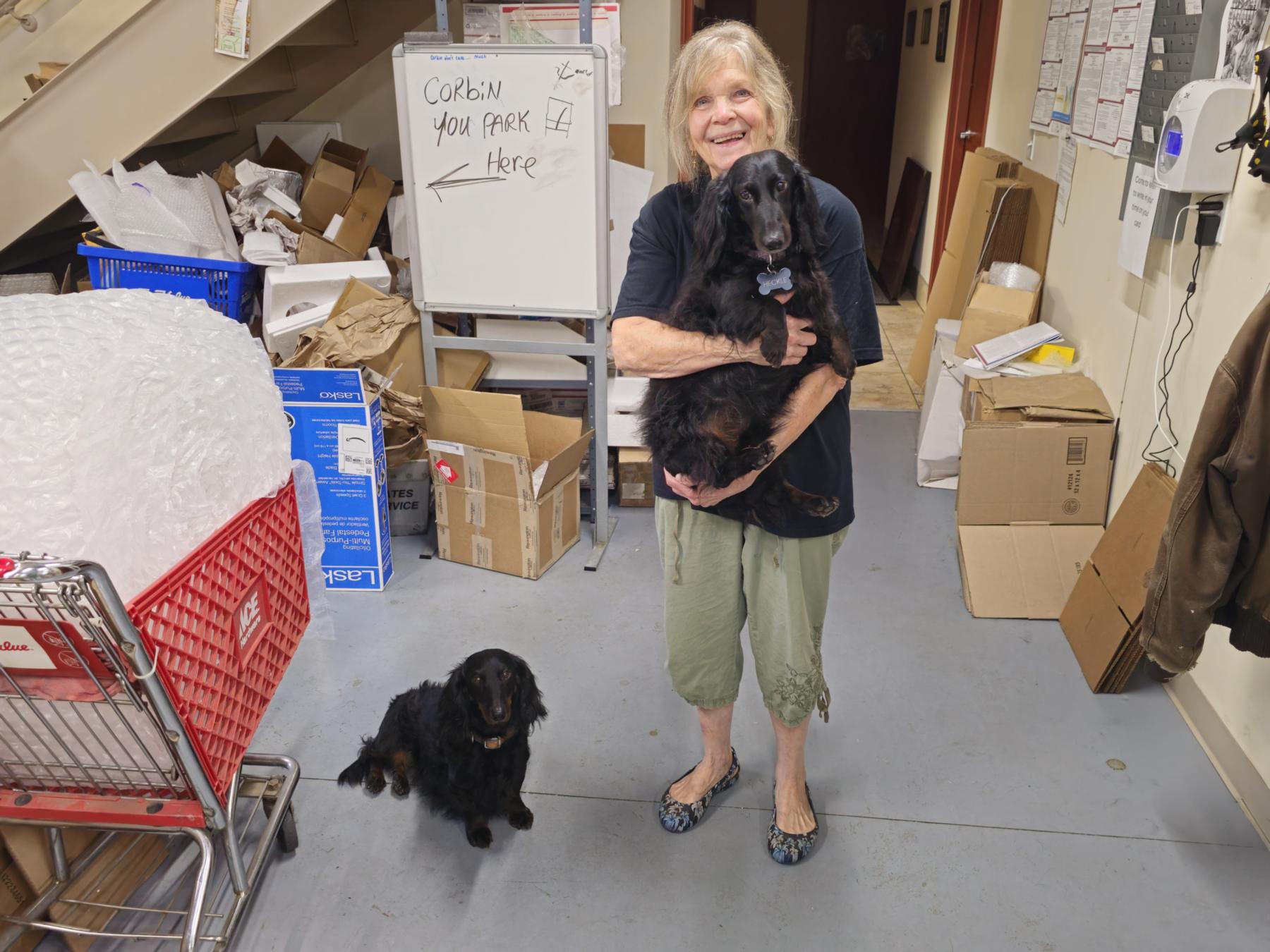
Company owner Karen Bashista Hanger, with the two company mascots.
photo © Bill Lane; used by permission
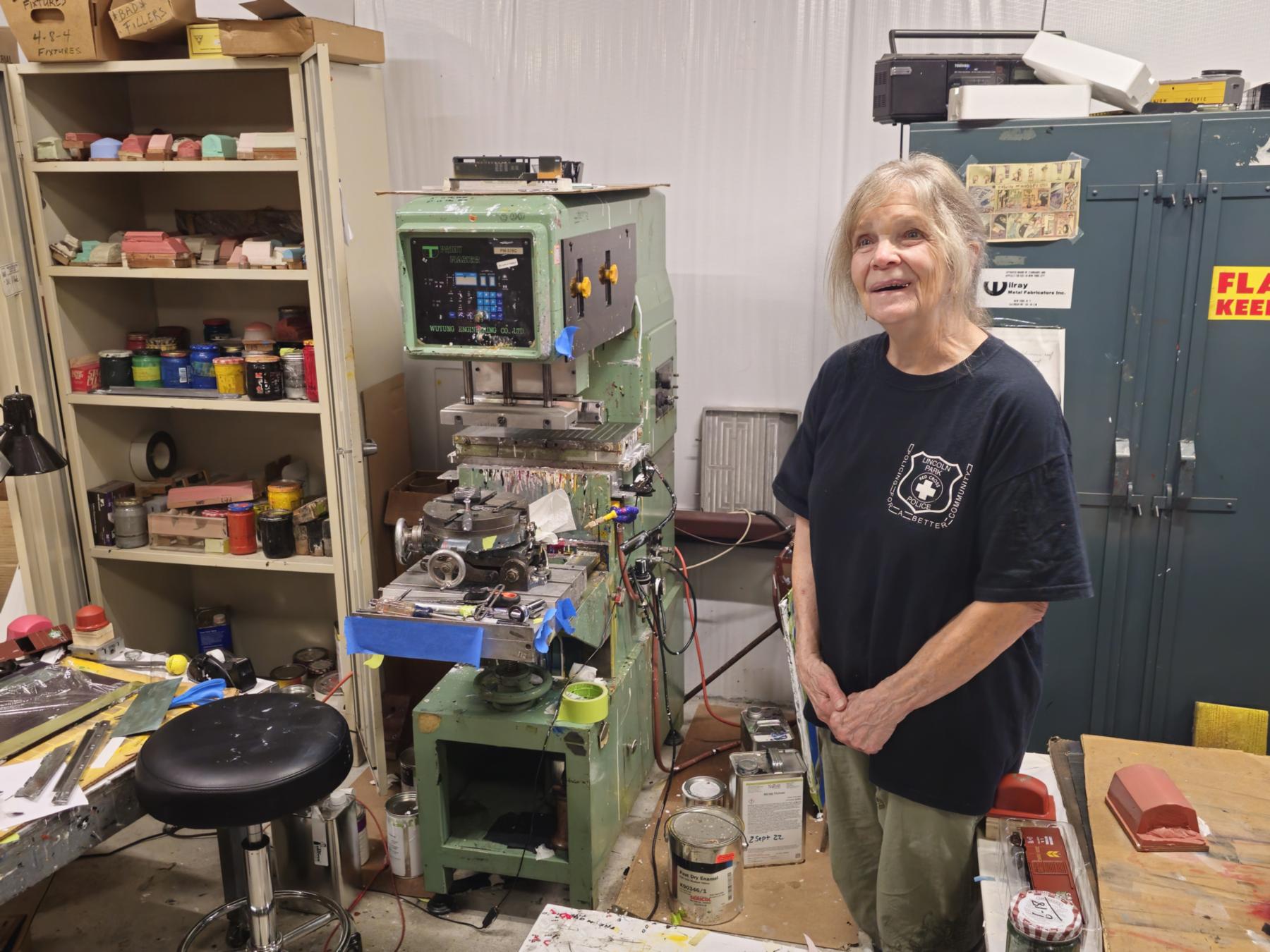
photo © Bill Lane; used by permission
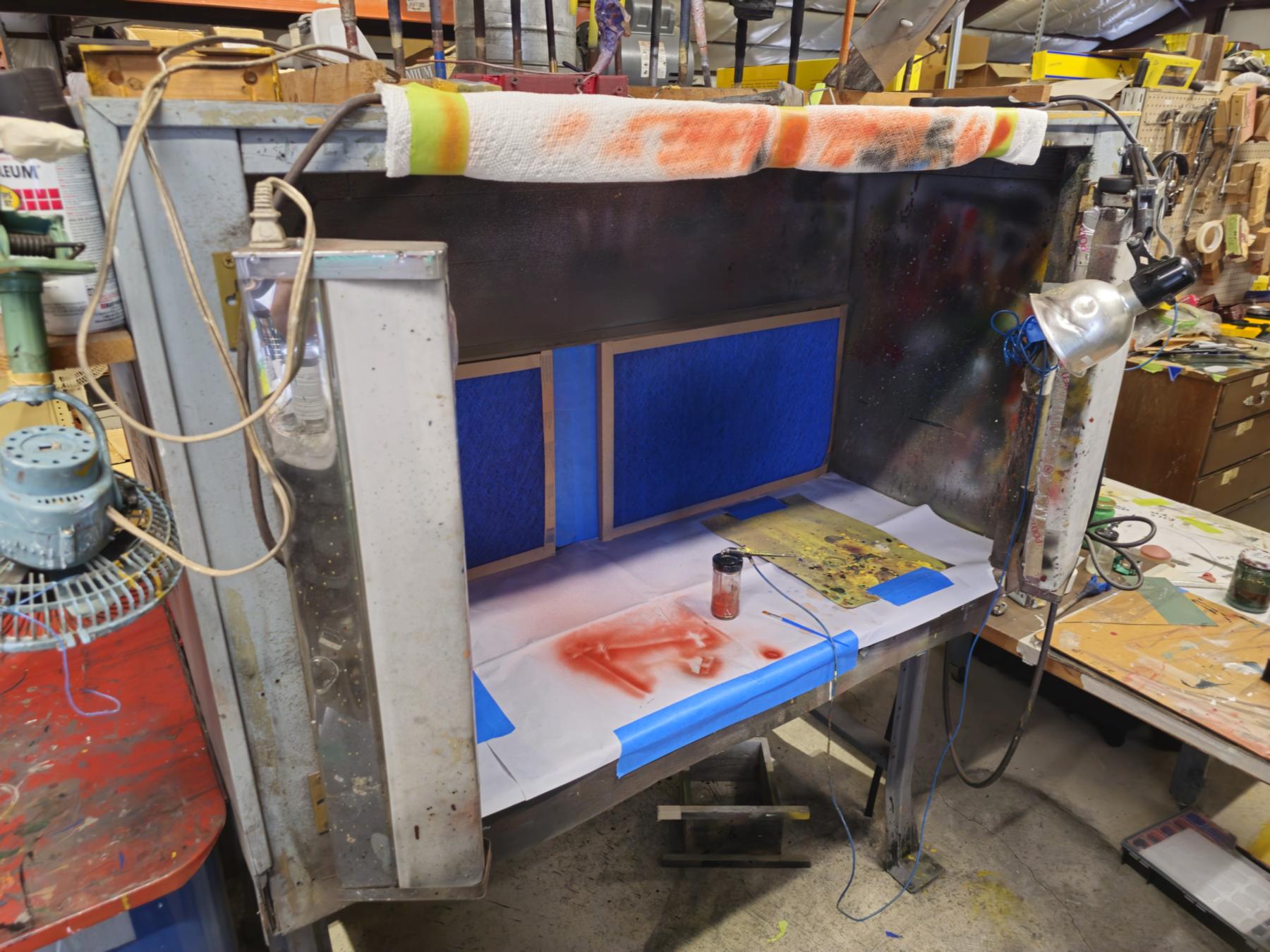
photo © Bill Lane; used by permission

photo © Bill Lane; used by permission

photo © Bill Lane; used by permission

Brian Jackson was also on the tour.
photo © Bill Lane; used by permission
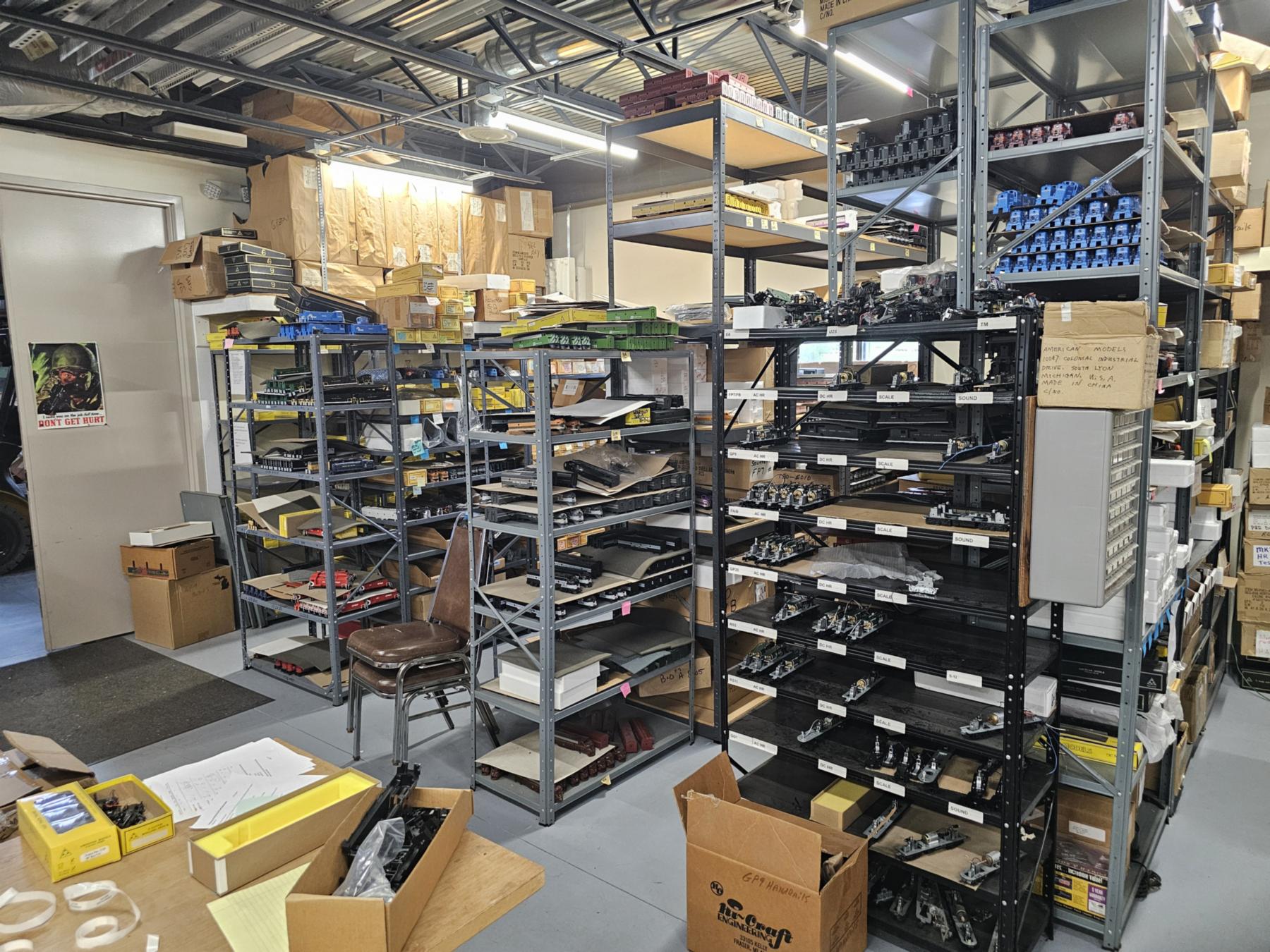
photo © Bill Lane; used by permission

photo © Bill Lane; used by permission
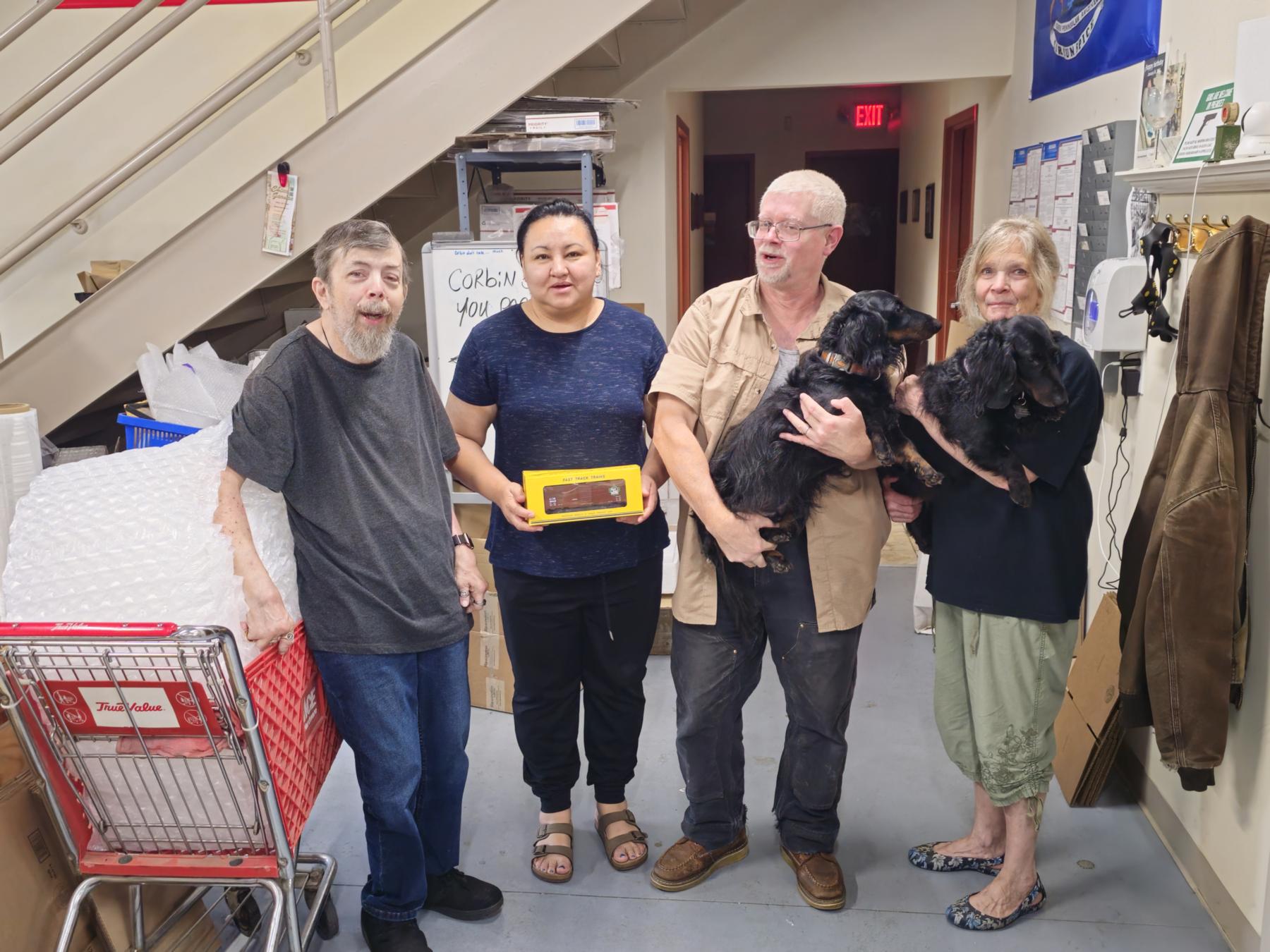
Some of the American Models crew.
photo © Bill Lane; used by permission
Durand Union Station Model Railroad Engineers
Bill Lane took a side tour of the Durand Union Station Model Railroad Engineers' impressive HO-scale layout.
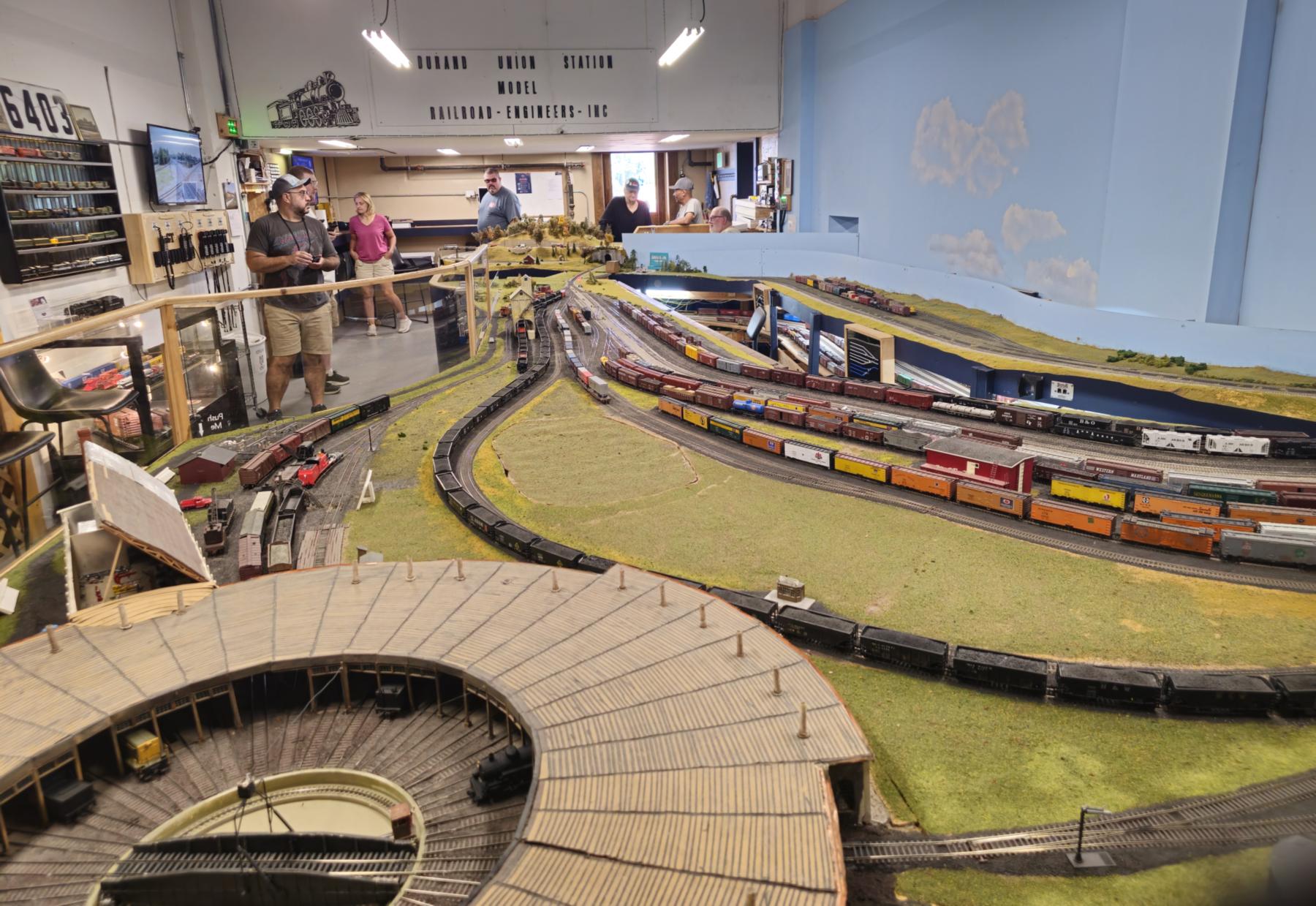
photo © Bill Lane; used by permission

photo © Bill Lane; used by permission
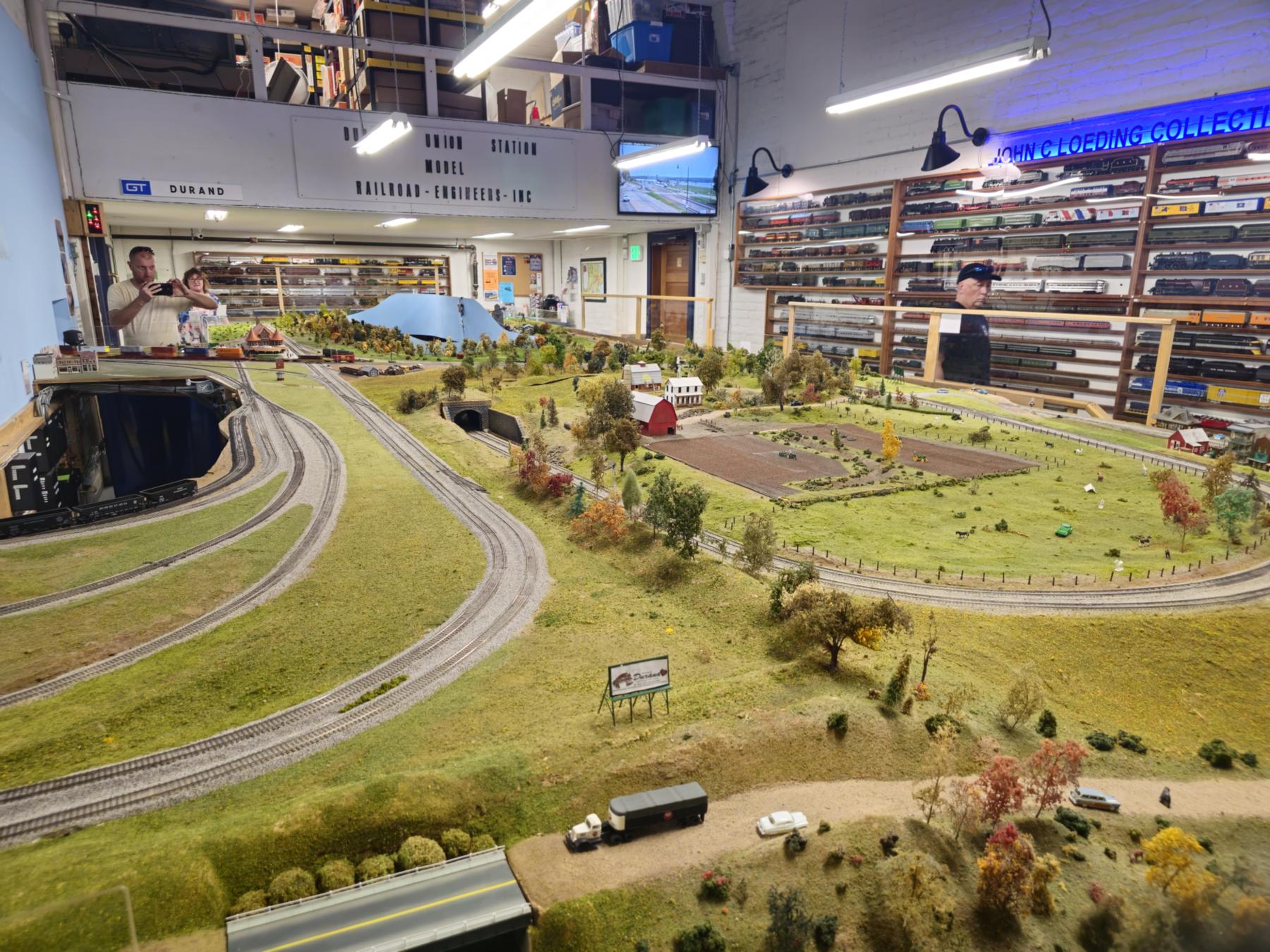
photo © Bill Lane; used by permission
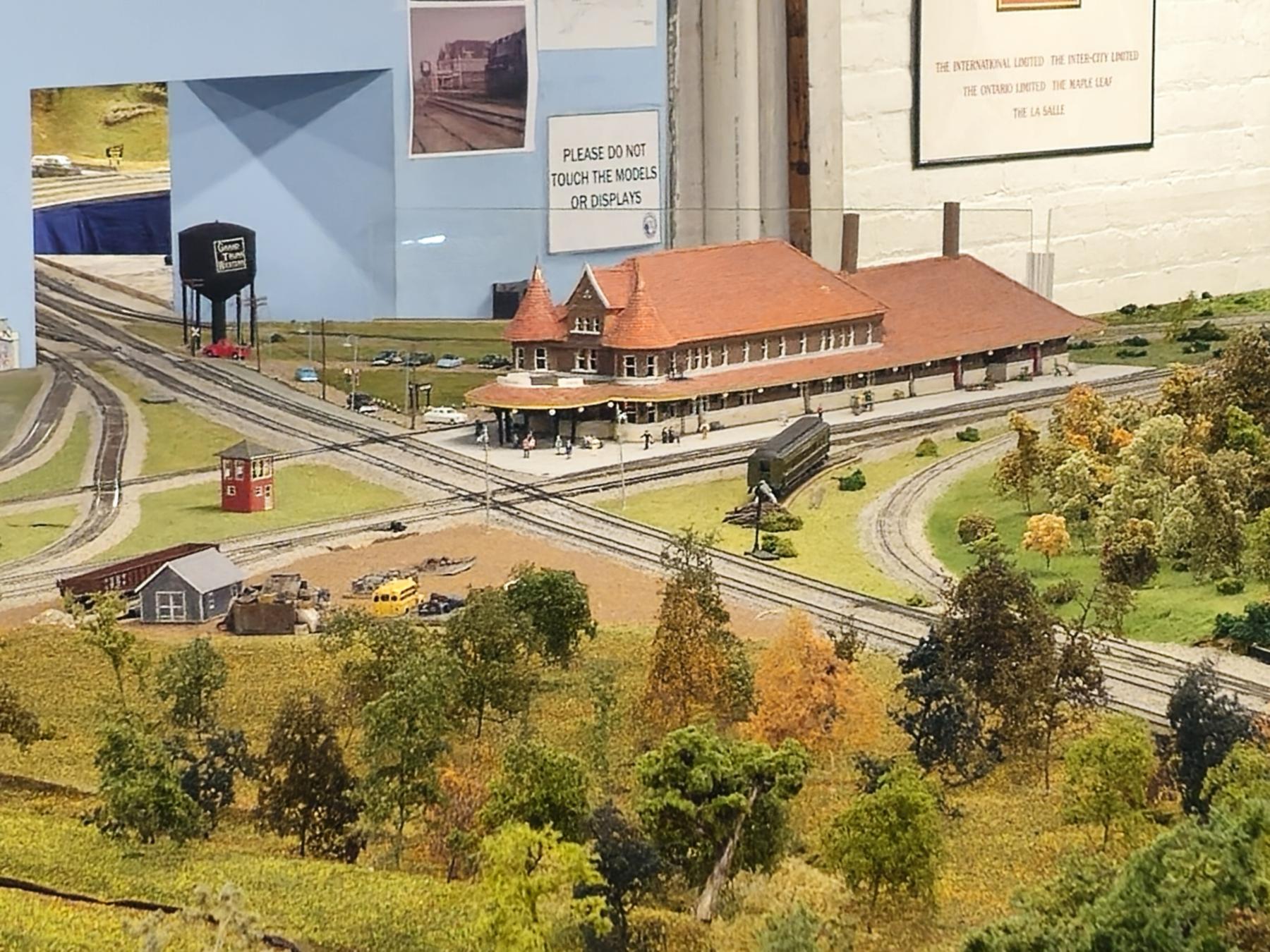
photo © Bill Lane; used by permission

photo © Bill Lane; used by permission
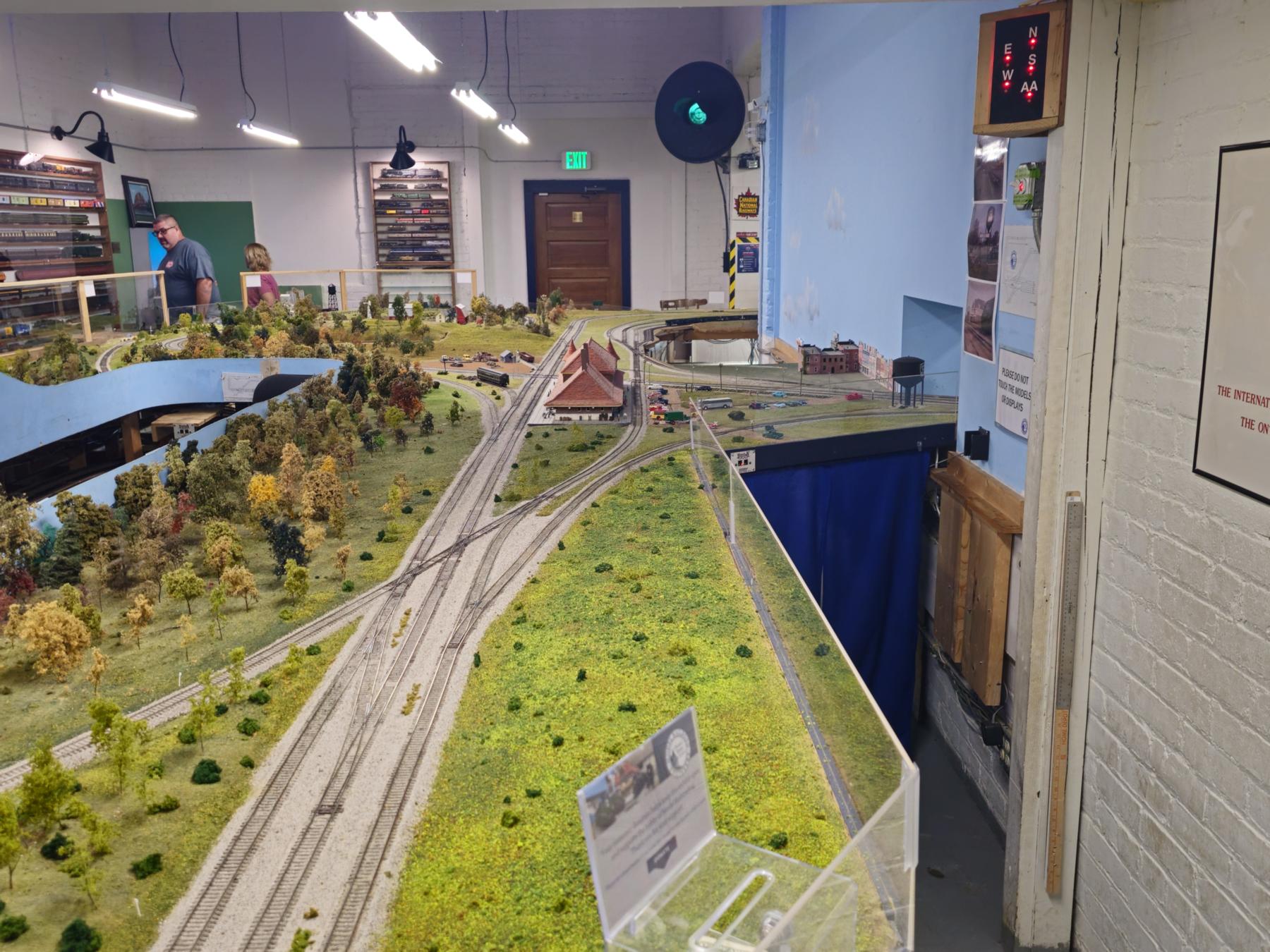
photo © Bill Lane; used by permission
Sightseeing
Bill Lane got to do some sightseeing while in Dearborn, Michigan, so here are a few of the extra shots he provided.
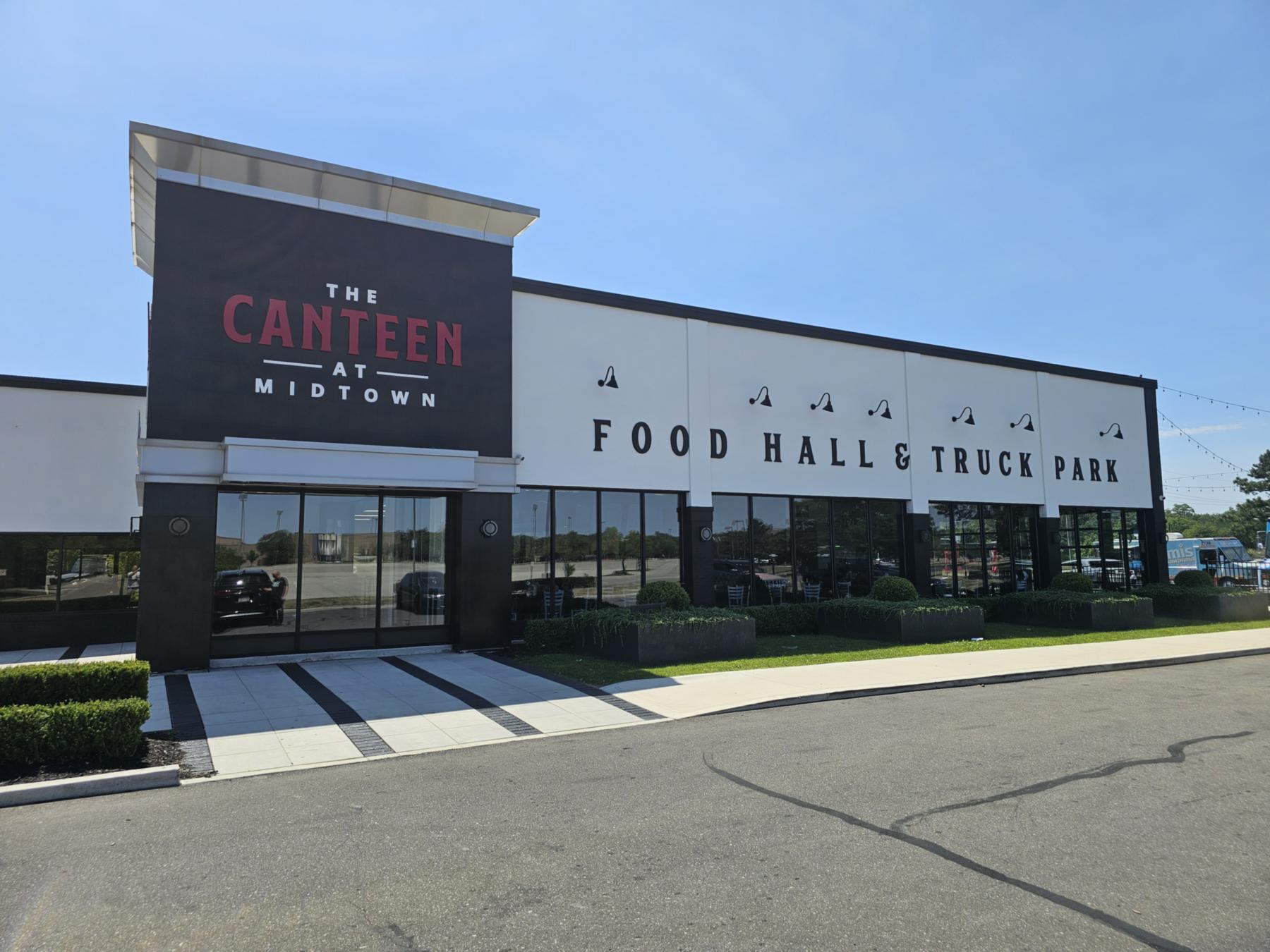
The Canteen at Midtown is a place to get the best of a variety of food-truck vendors' offerings. It provides a safe place to eat. It also just so happens that the three owners of the facility are "car guys".
photo © Bill Lane; used by permission
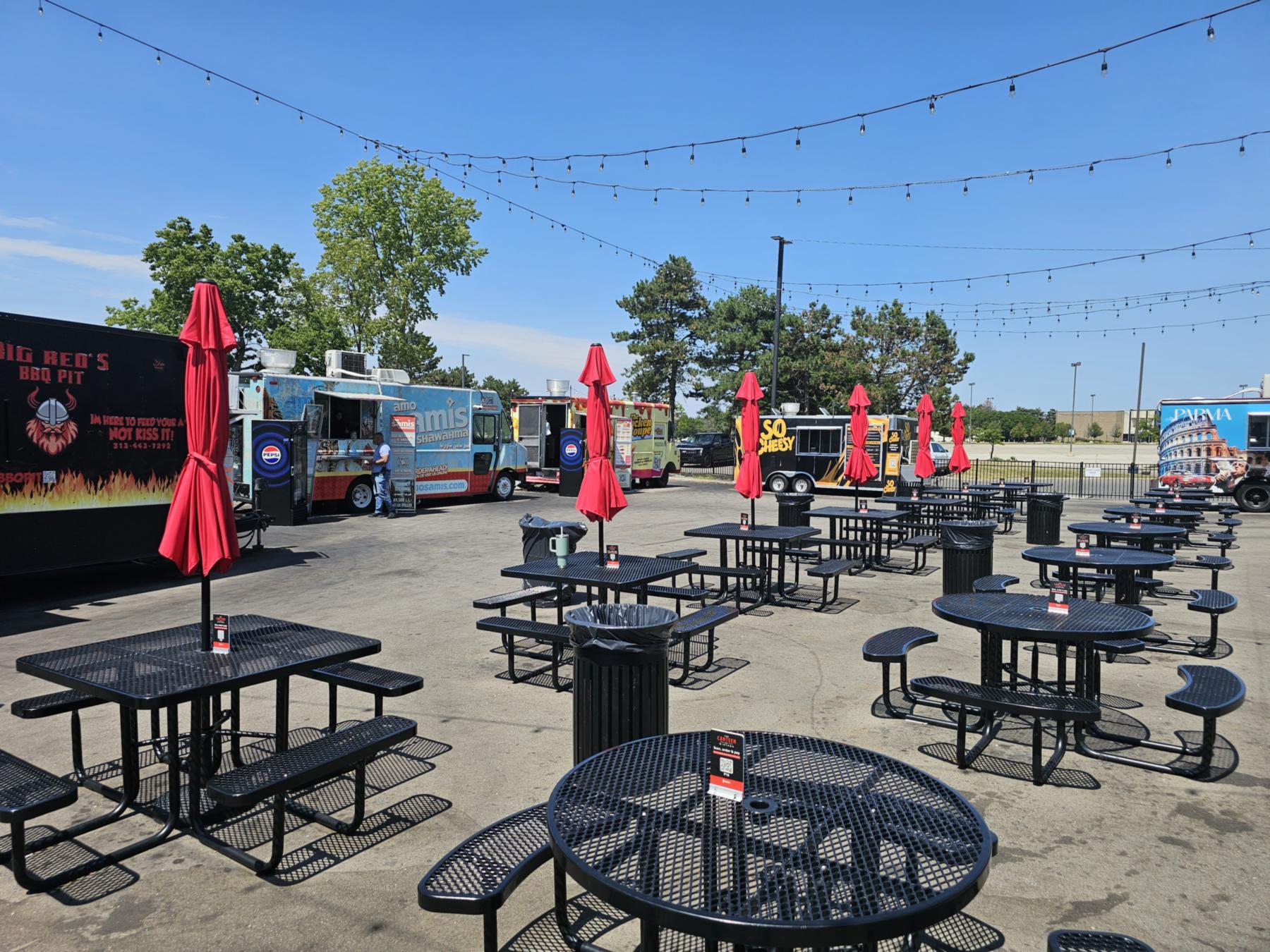
photo © Bill Lane; used by permission
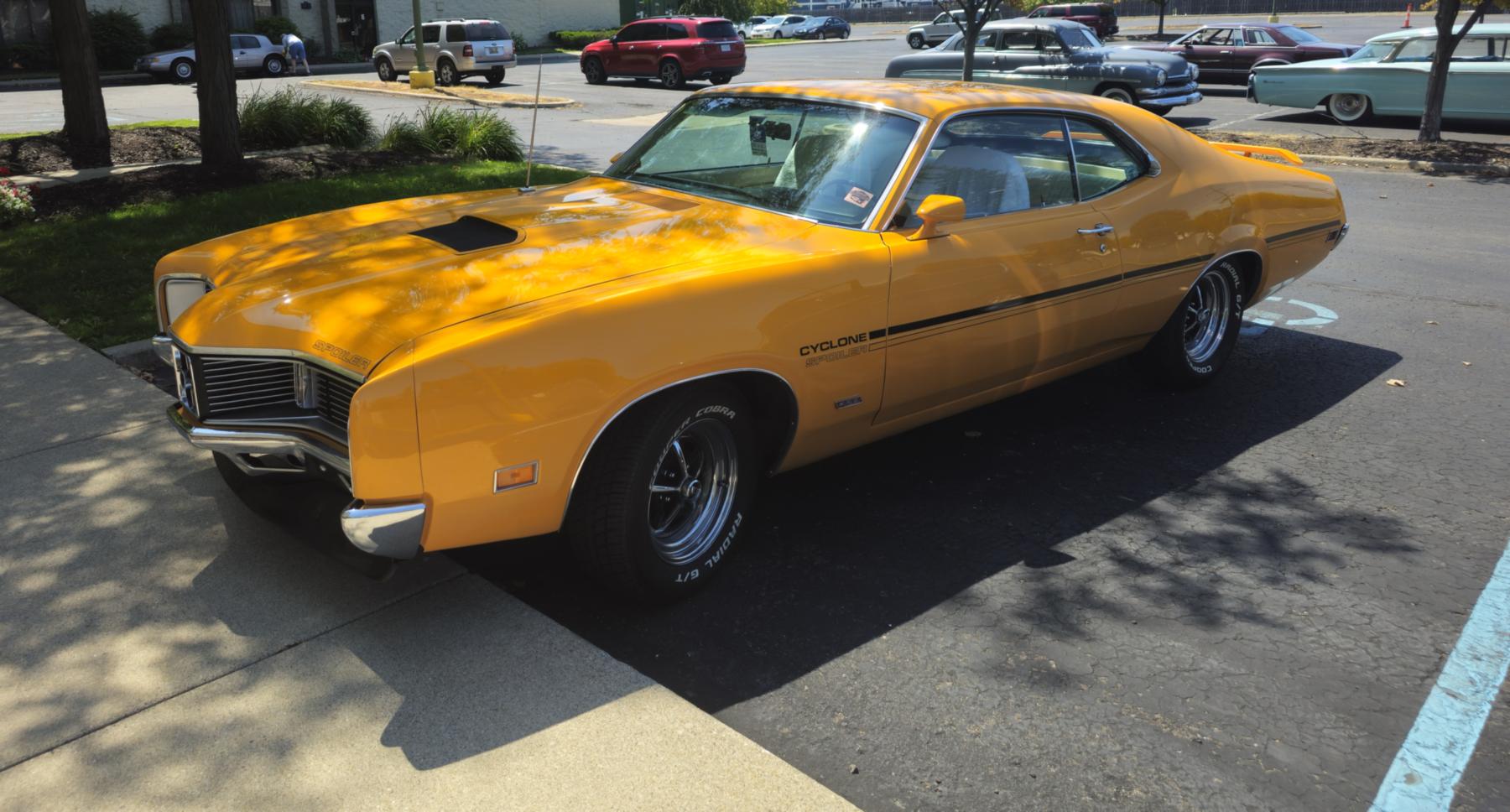
Bill was able to do some "car spotting".
photo © Bill Lane; used by permission
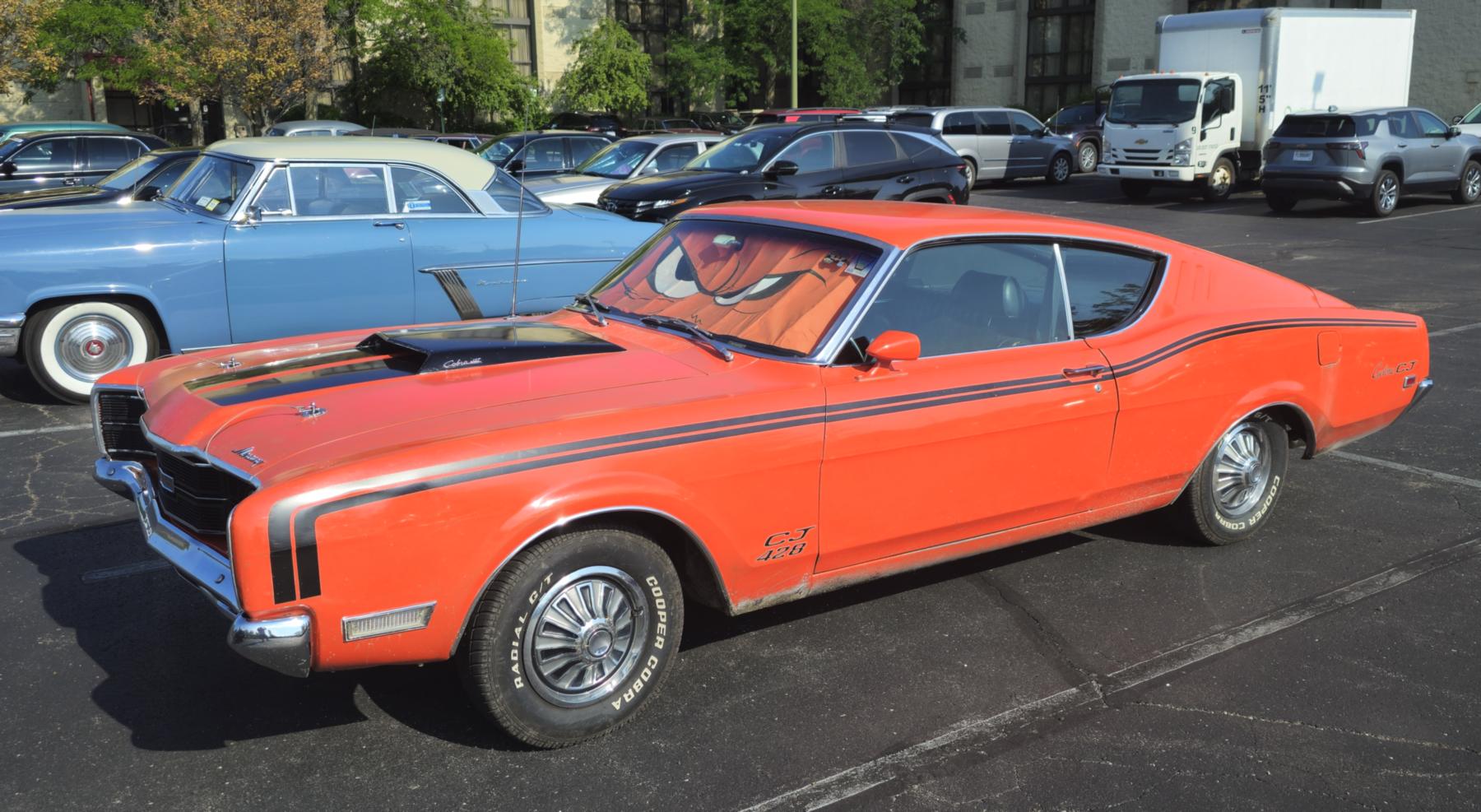
photo © Bill Lane; used by permission
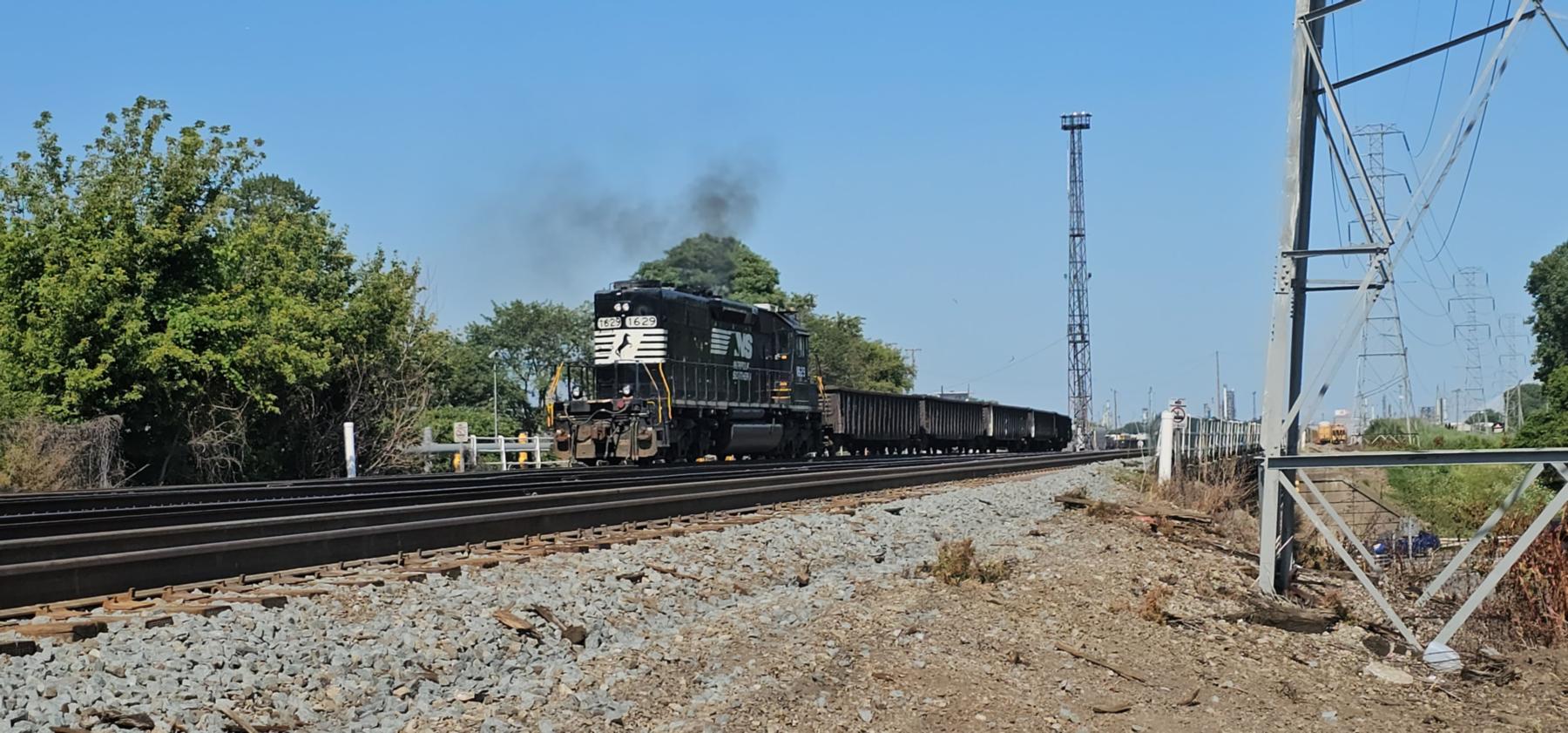
Some Norfolk Southern, Canadian Pacific, Canadian National, and KCS railfanning.
photo © Bill Lane; used by permission
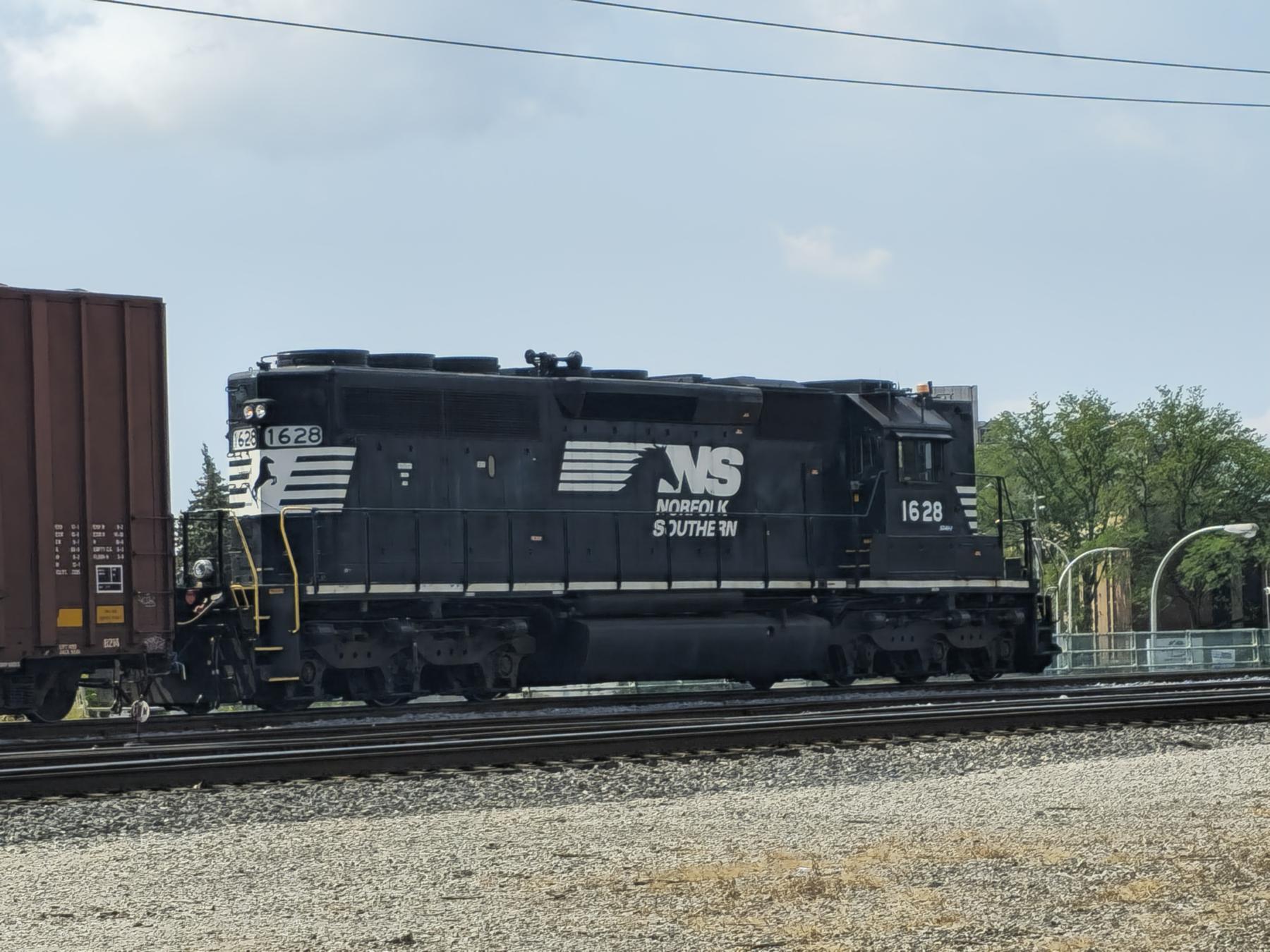
photo © Bill Lane; used by permission

photo © Bill Lane; used by permission
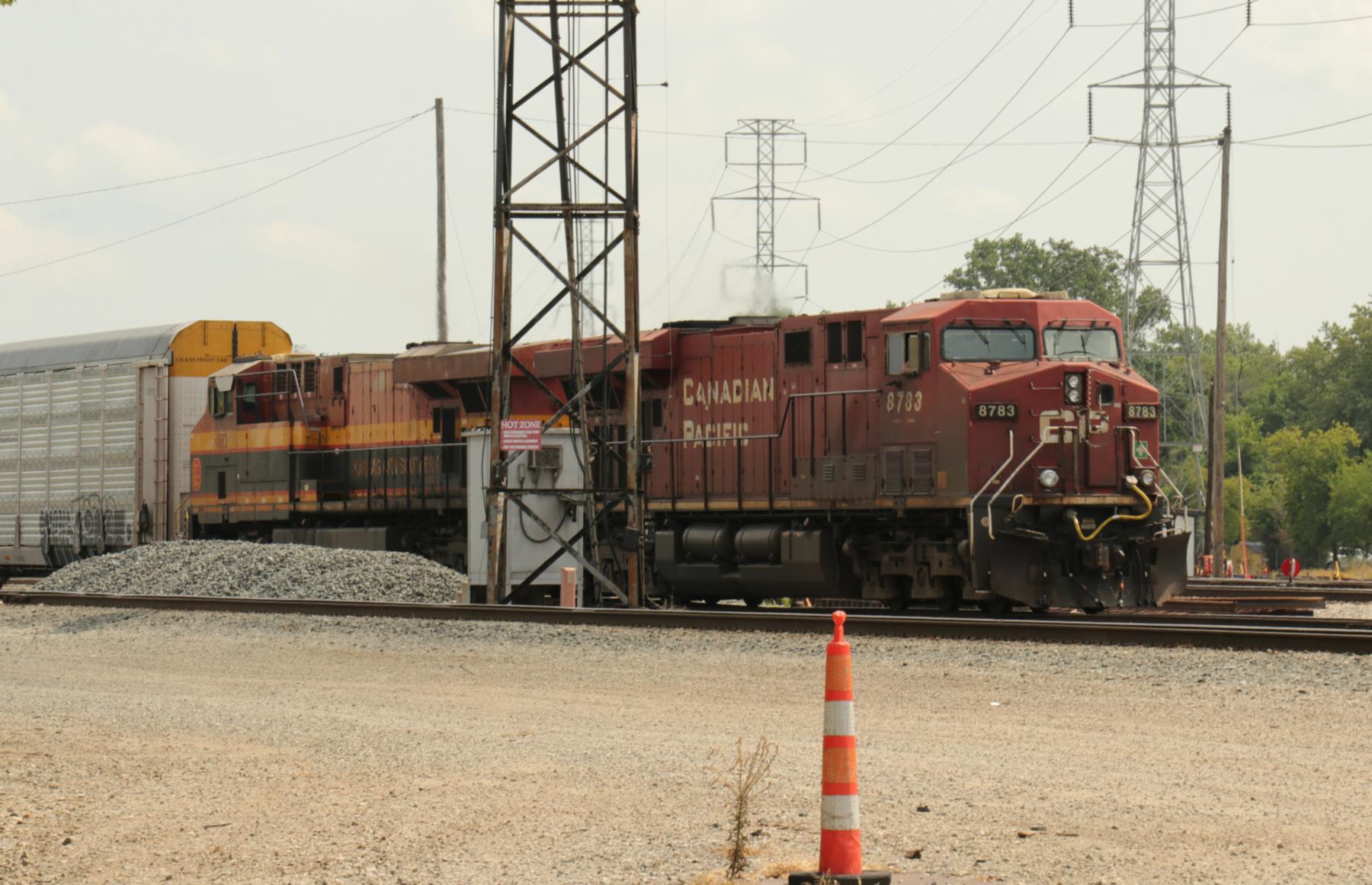
photo © Bill Lane; used by permission

photo © Bill Lane; used by permission
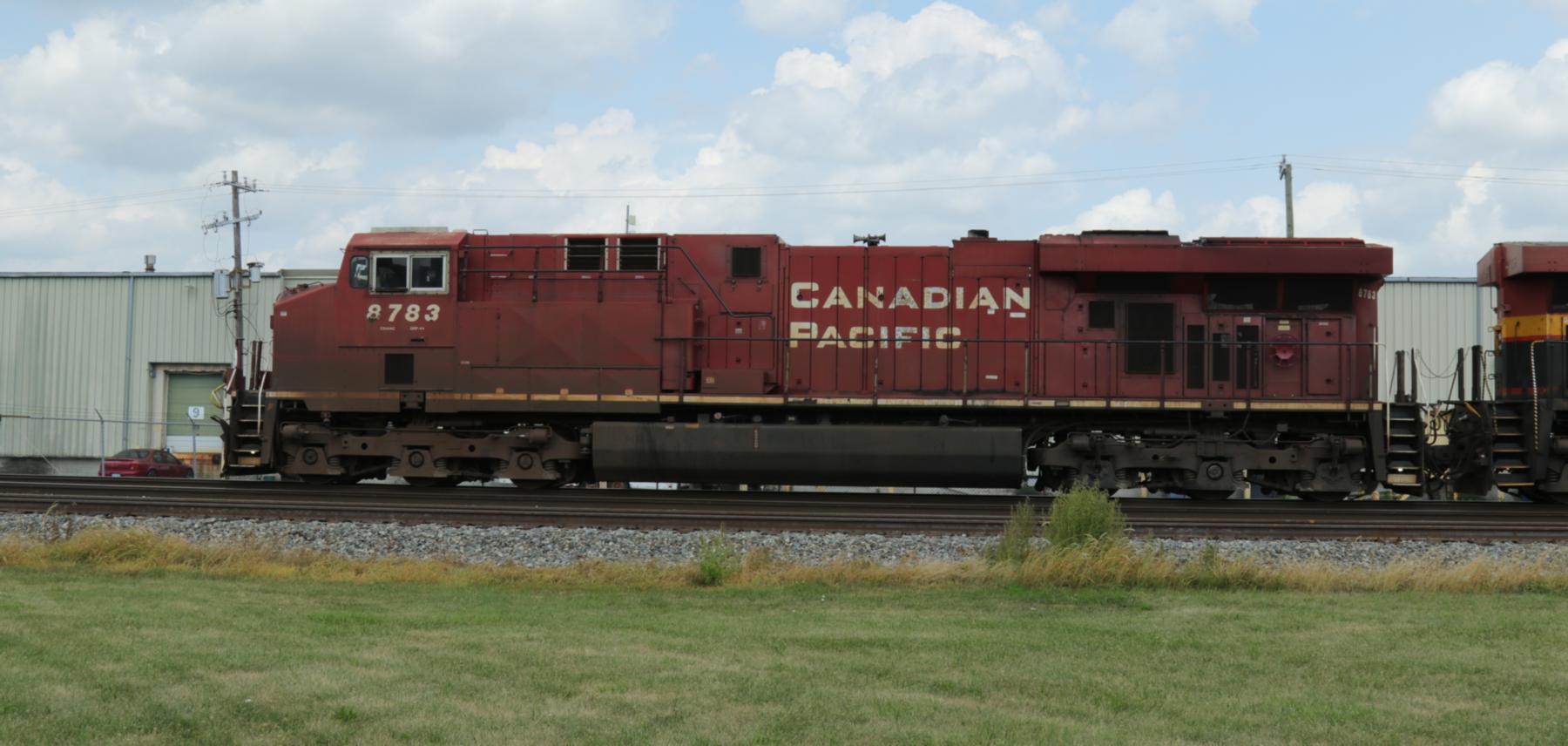
photo © Bill Lane; used by permission

photo © Bill Lane; used by permission
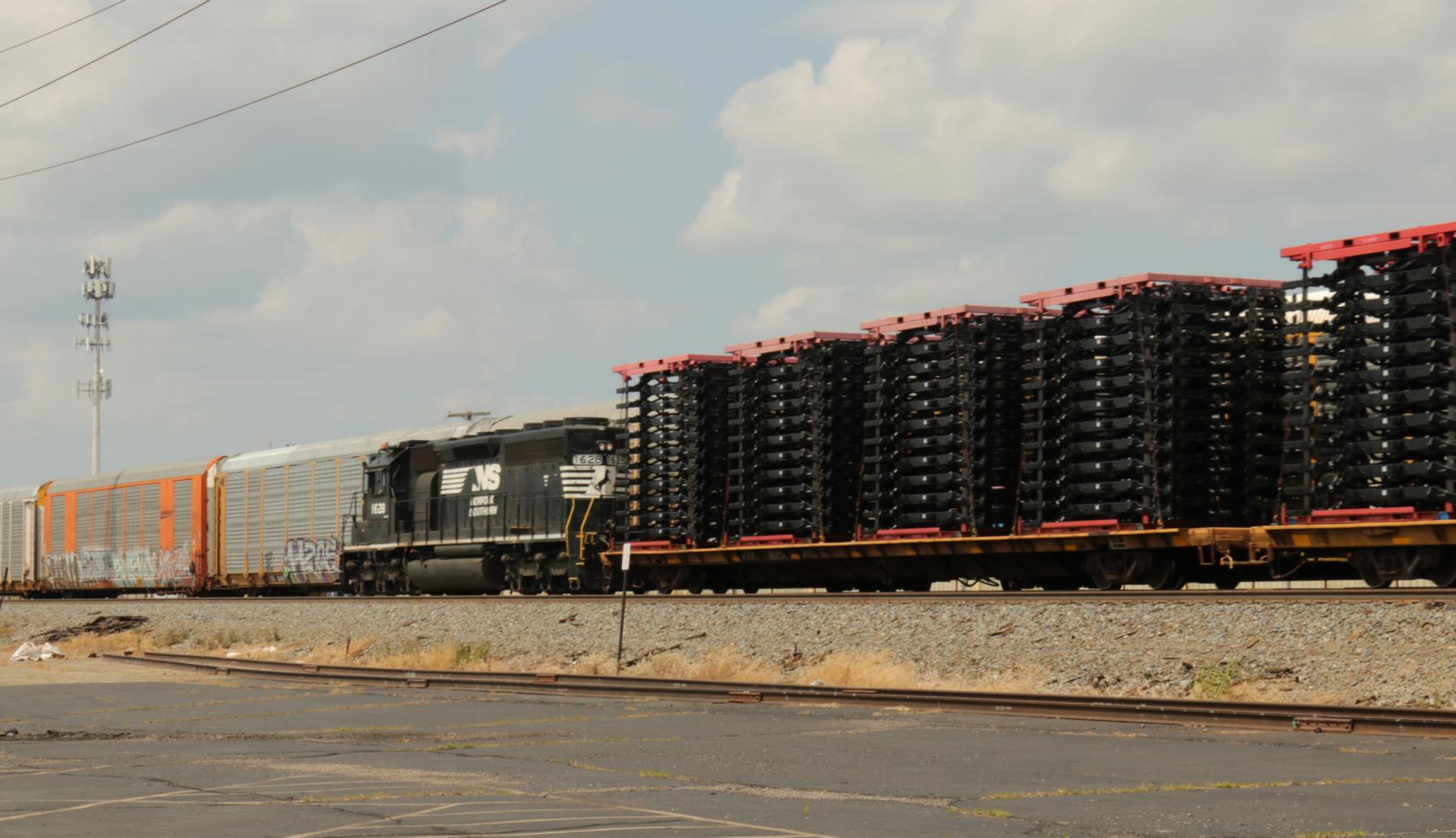
photo © Bill Lane; used by permission
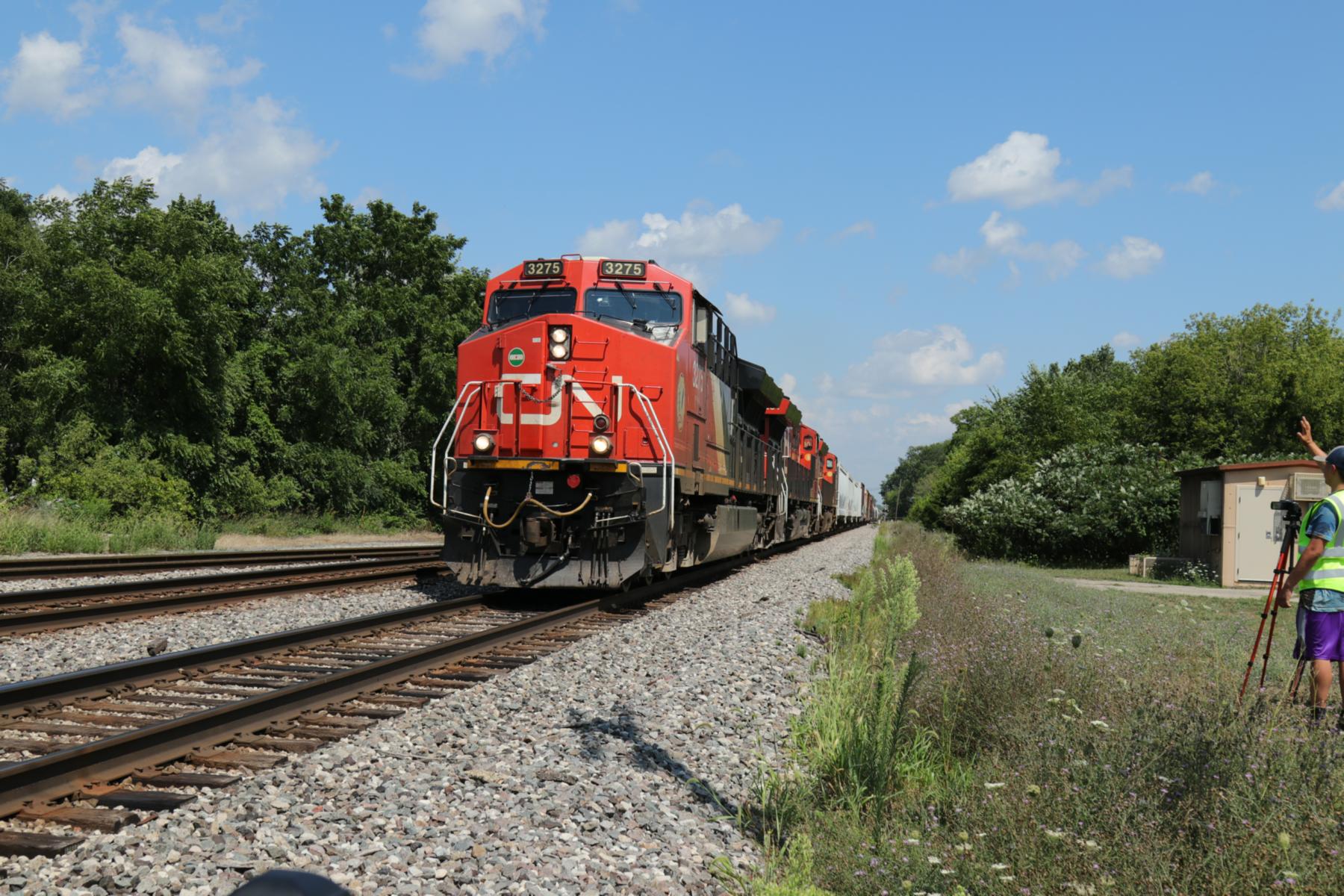
photo © Bill Lane; used by permission

The Detroit, Toledo & Ironton used concrete arches to hold up their catenary, but only for a few years. Henry Ford owned the railroad for about ten years, and he started the electrification in 1927. The electrification effort failed in 1930, but the concrete arches remain, even to this day. Earnest Trains is a model railroading company who happened to release several versions of these in S-scale using 3D-printers just two months before the Convention.
photo © Bill Lane; used by permission
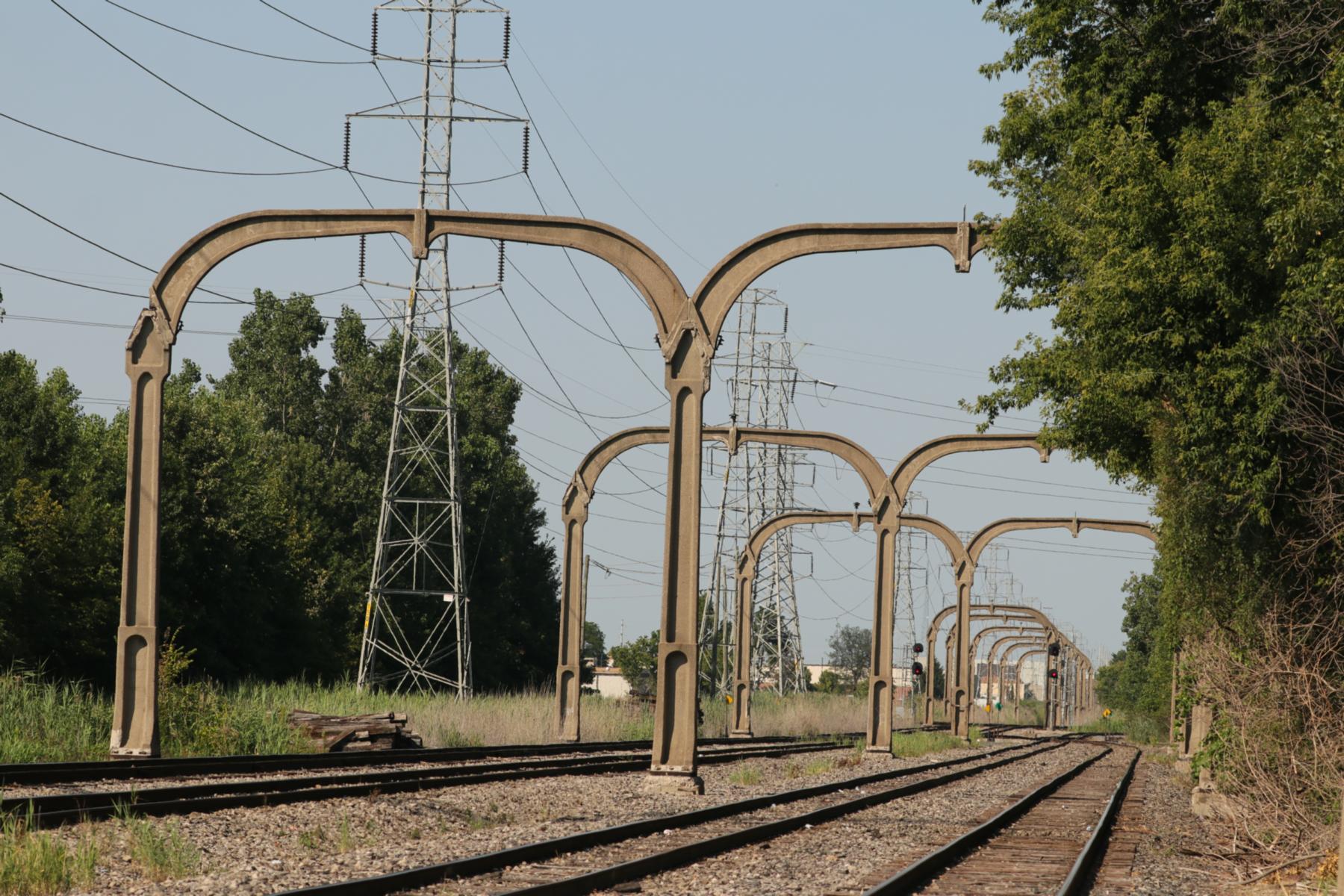
photo © Bill Lane; used by permission

Bill used the trip to also see some other sights of interest after the Convention.
photo © Bill Lane; used by permission

photo © Bill Lane; used by permission
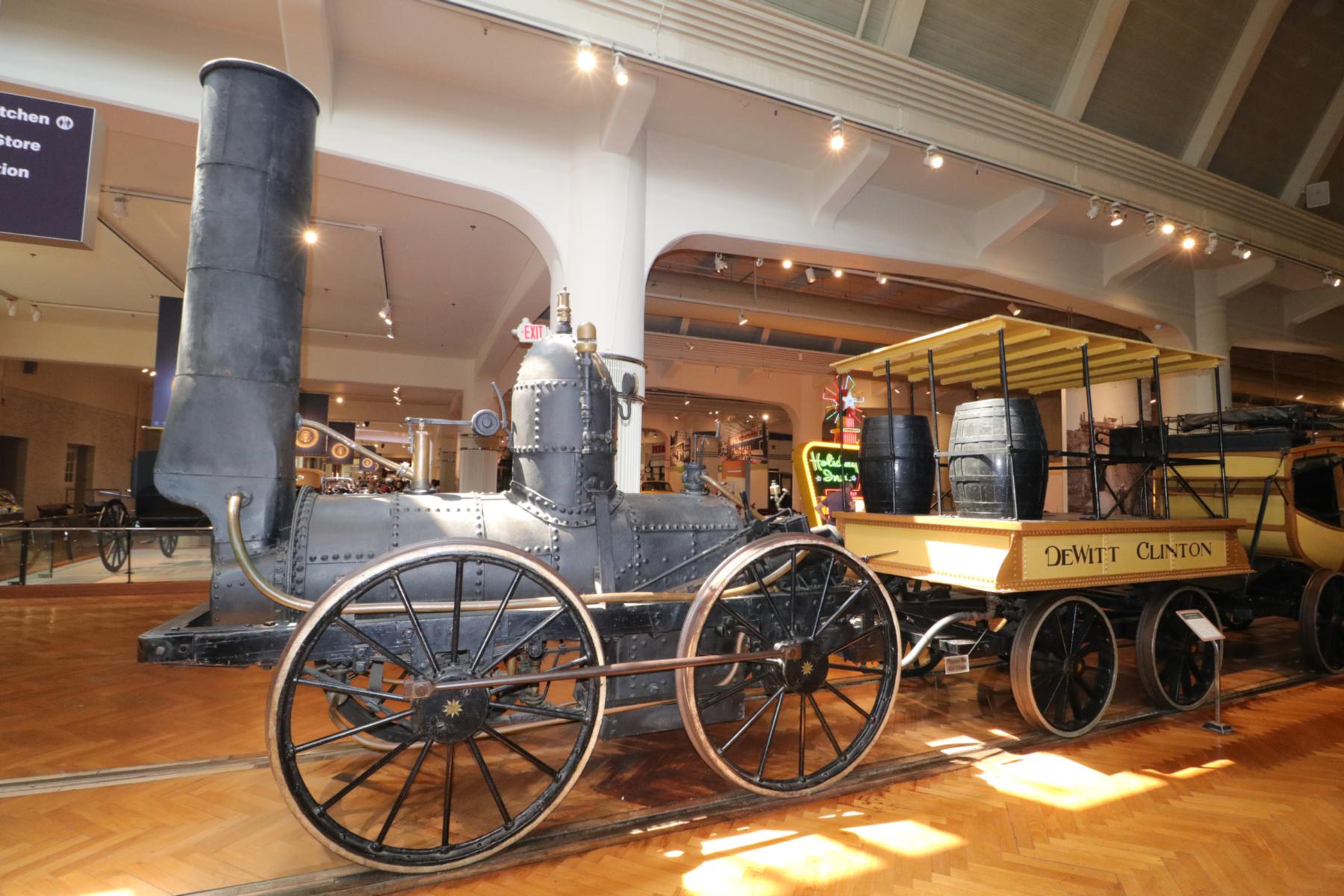
photo © Bill Lane; used by permission
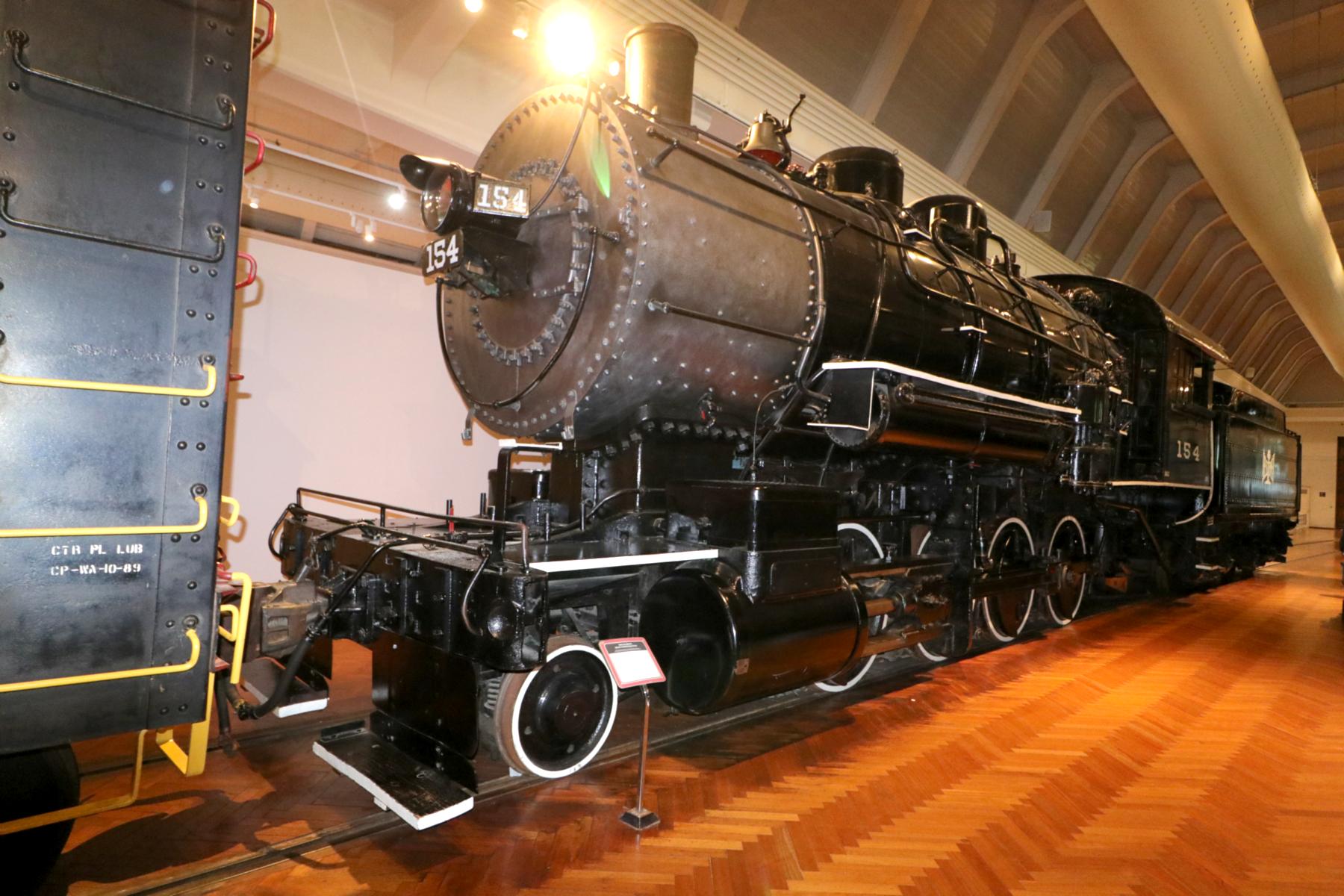
photo © Bill Lane; used by permission
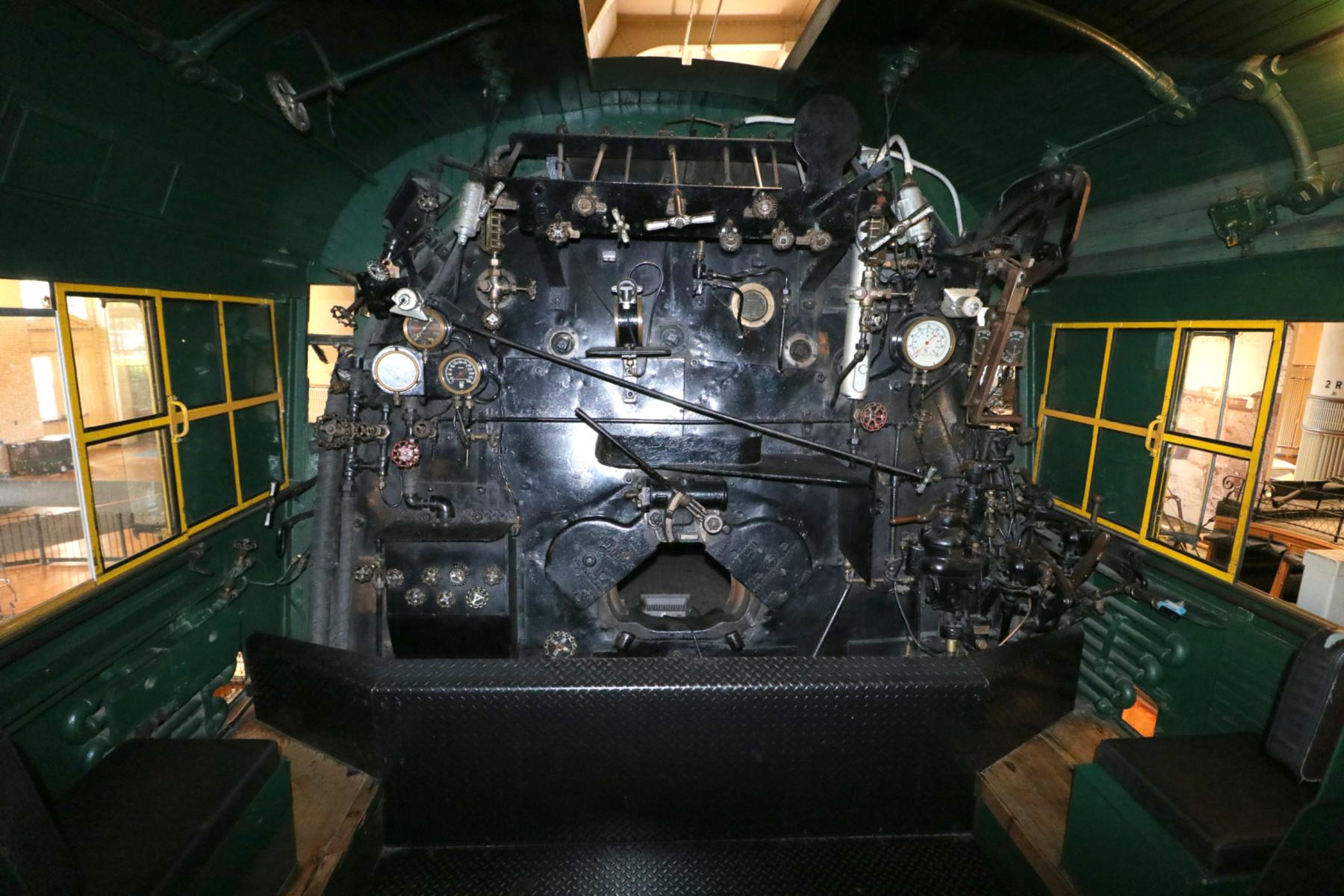
photo © Bill Lane; used by permission

photo © Bill Lane; used by permission
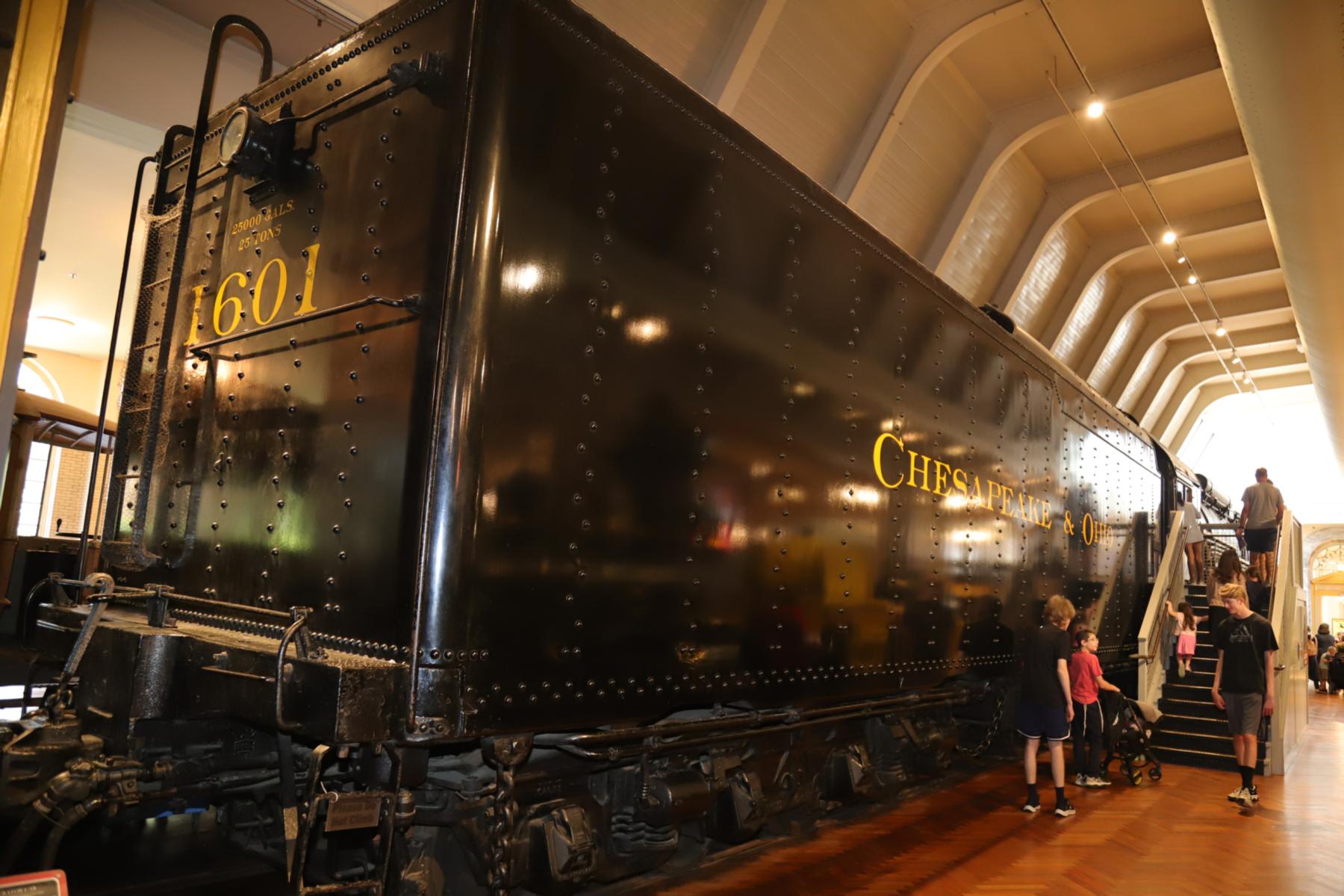
photo © Bill Lane; used by permission

photo © Bill Lane; used by permission

photo © Bill Lane; used by permission

photo © Bill Lane; used by permission

Being a Ford fan, Bill had to make a pilgrimage to the Ford Headquarters.
photo © Bill Lane; used by permission
Bill Lane spent a few extra days after the Convention visiting the area.
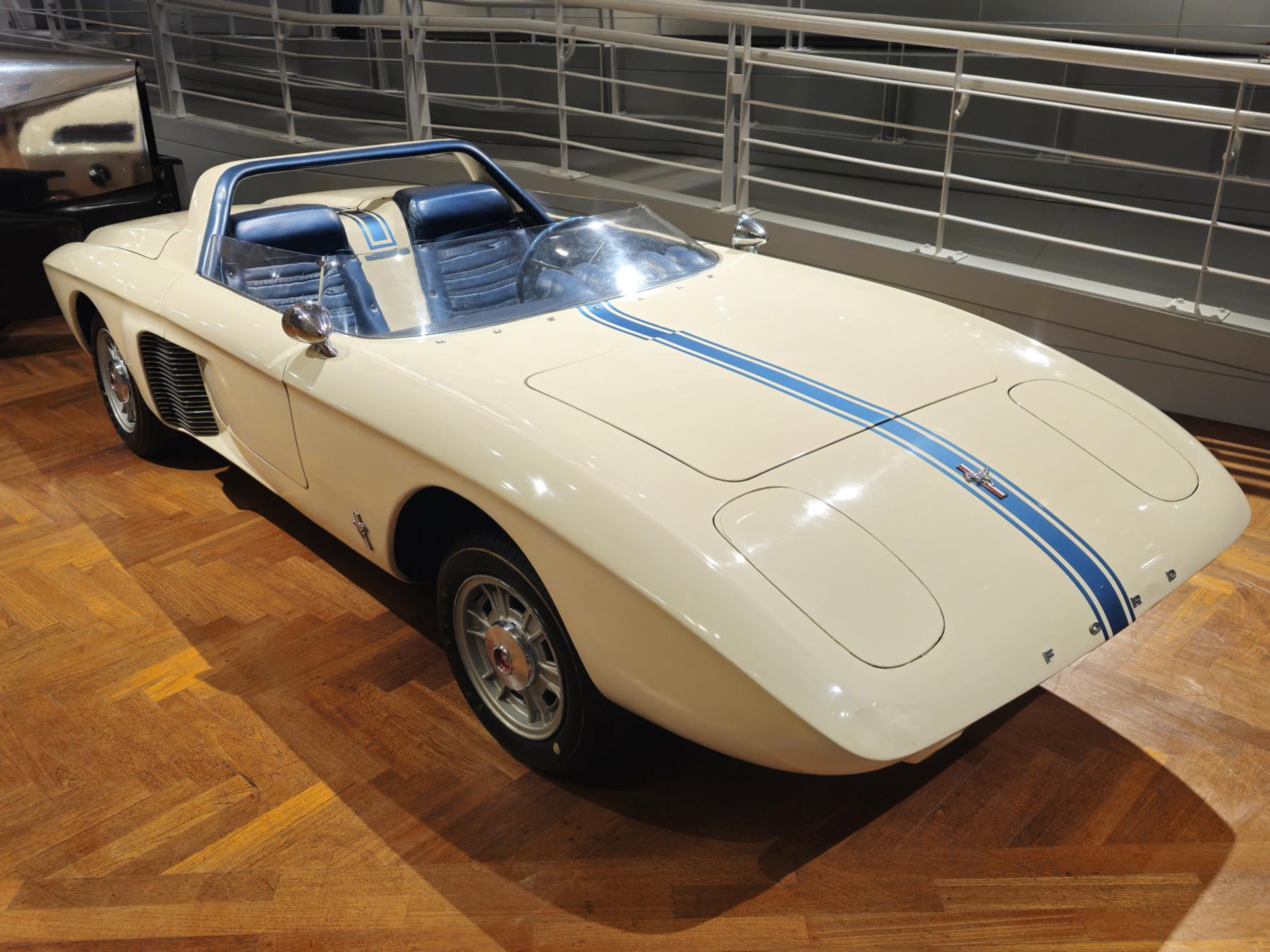
photo © Bill Lane; used by permission

photo © Bill Lane; used by permission

photo © Bill Lane; used by permission
photo © Bill Lane; used by permission
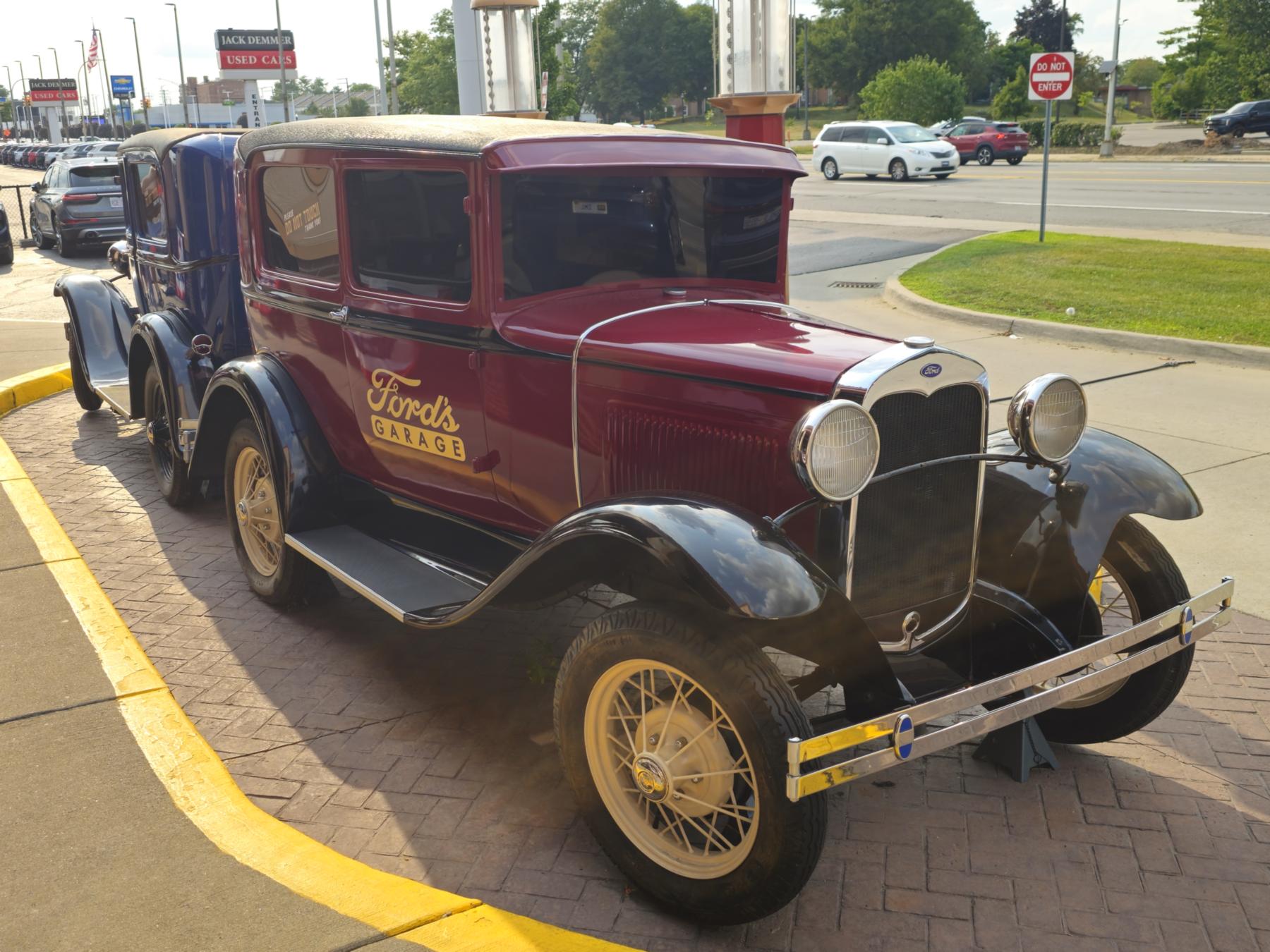
photo © Bill Lane; used by permission
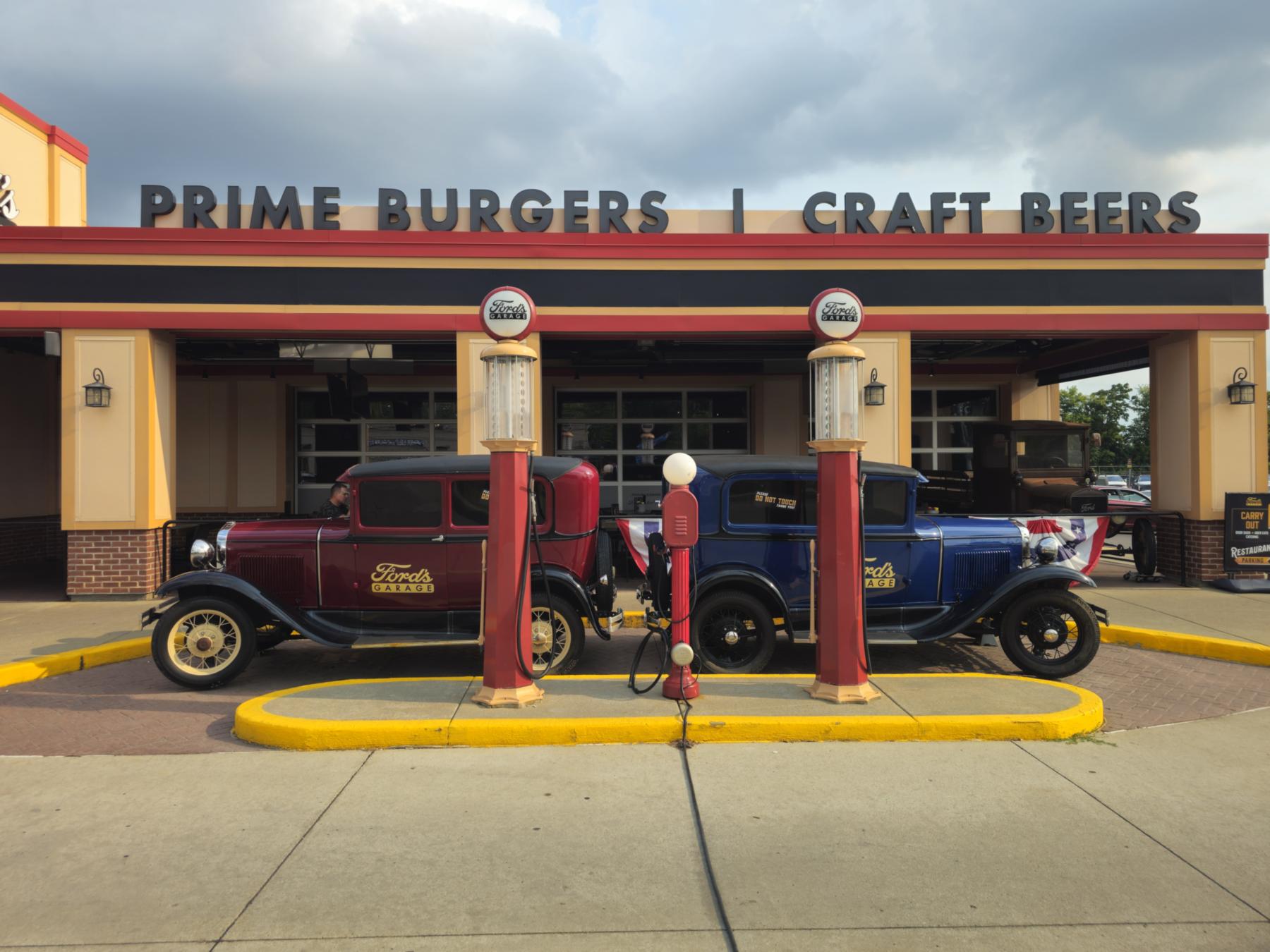
photo © Bill Lane; used by permission
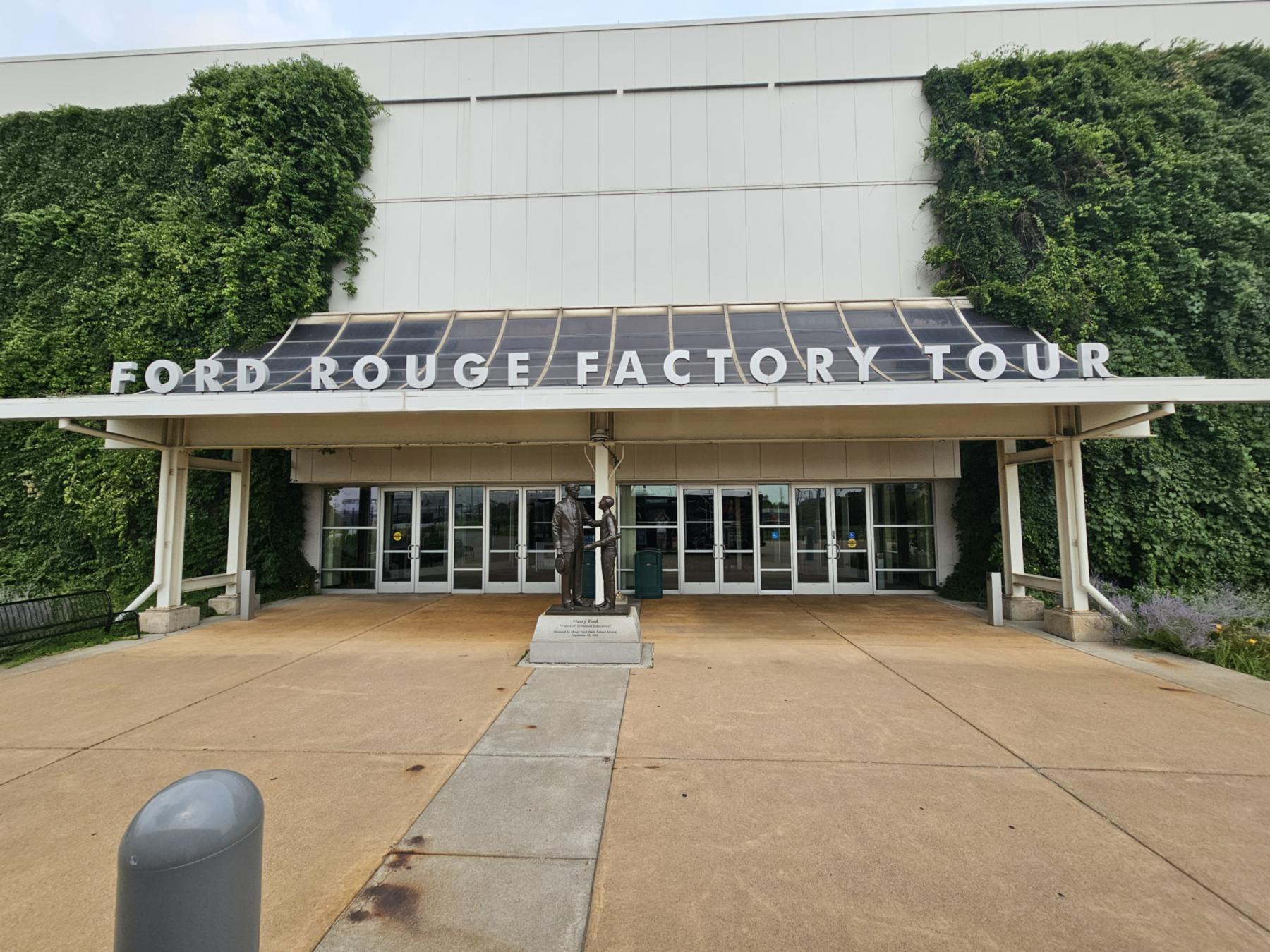
photo © Bill Lane; used by permission

photo © Bill Lane; used by permission
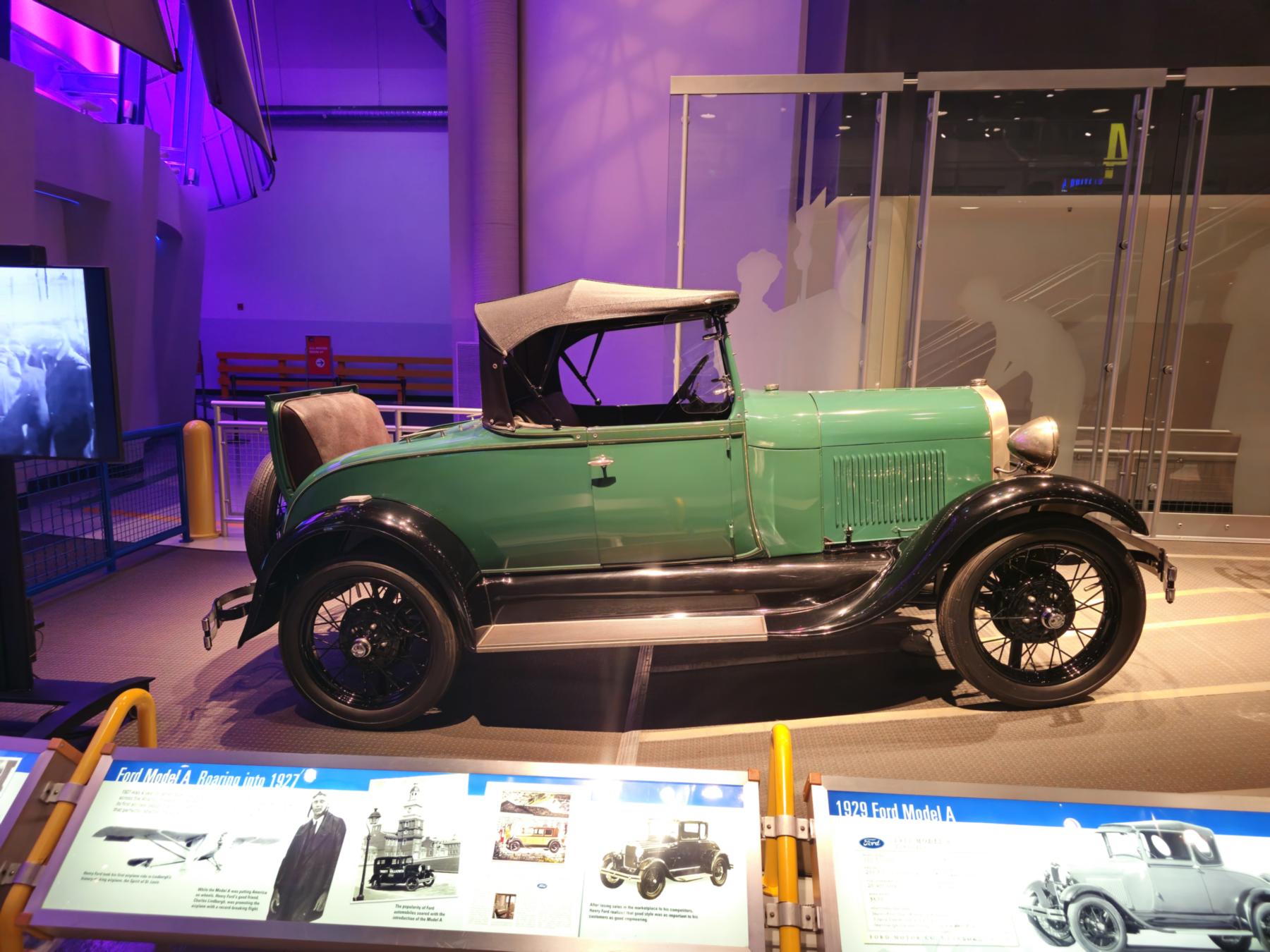
photo © Bill Lane; used by permission

Since the event was so close to the border, Jamie officially rode his bike to Canada. Jamie also did the "New Tracks Modeling" monthly S-scale presentation in which he briefly reviewed this year's Convention.
photo © Bill Lane; used by permission