
Paints

Testors has ended production of the following brands: Floquil, Polly-Scale, Pactra, Aztek, Model Master. They gave no explanation as to why for the first two, but for the latter three, they mentioned that fewer and fewer modelers are painting their own models any more, so the demand for those brands has gotten to be too low. They were bought out by Rust-Oleum, so some speculate that that was the cause of the discontinuation of these brands.
As modelers, we now have to re-evaluate our paint choices. This page attempts to keep current with what is available. In light of the disturbance, these color chart cross references are now available:
- MicroScale Industries
- Model Railroad Hobbyist (free if registered as an MRH reader)
Paint Types
If a strong odor bothers you, or if you are concerned about your health, you will want to stay away from enamel- and lacquer-based paints, or only use them in a well-ventilated area (preferably outdoors) with proper respiratory protection. For safer, or indoor use, acrylic- or latex-based paints are your best choices.
The advantage of an enamel- or lacquer-based paint, though, is that they are more resilient. They adhere better to the surface to which they are applied. Acrylic- or latex-based paints are relatively easily damaged, and will likely need some coat of protection applied over them.
A primer layer is also recommended for most paints. This is for three reasons.
- Without a primer coat, the final paint layer may not be opaque enough to hide the color of the base material.
- Without a primer coat, the final paint color may not match the desired color when the paint dries.
- Generally, primer is cheaper than final paint colors, so if you need to apply two or more coats, the final cost of the project may be cheaper.
Acrylic
A fast-drying, low- or non-toxic paint that cleans up with water, and has low odor. It is usually made of pigment suspended in acrylic polymer emulsion. It becomes water resistant once dry.
Enamel
Usually an alkyd resin or oil-based paint, that dries to a hard, temperature-invariant, gloss finish.
Lacquer
A very durable paint that contains colors that remain once the volatile organic compounds (VOC) have evaporated. It, therefore, has strong odors, especially when applied and during the full curing period.
Latex
Known as "emulsion" in the UK. Color is carried in a water-based paint containing some sort of synthetic polymer such as acrylic.
Pigment
Usually used to color paints. Pigment absorbs or reflects certain wavelengths, thereby giving the impression of color. A pigment is insoluble.
Stain
Material, usually dyes, dissolved in a carrier medium.
Wash
A thinned, or watered-down, solution of paint.
Paints
Ammo RailCenter Paints
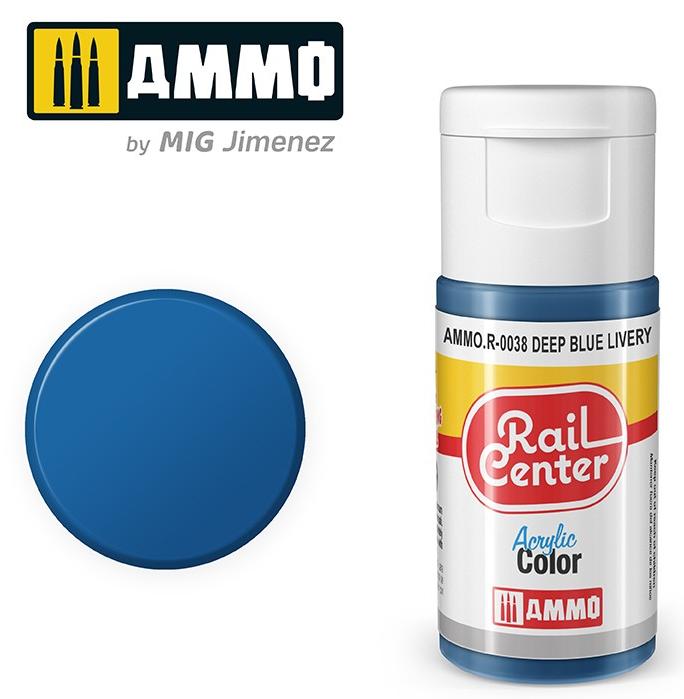
Railroad-specific Paints; copyright © Ammo RailCenter
This company, which specializes in military paints and powders, now has a RailCenter brand that contains common colors matching real railroad colors. These are acrylic paints that can be applied with a paint brush, or can be thinned for use with an airbrush. The company is based in Spain, but there are dealers in the U.S. and Canada that stock these items. The also carry cement, weathering powders, and paint sets that can accomplish painting bridges, scenery, or specific railroads.
Badger's MODELflex
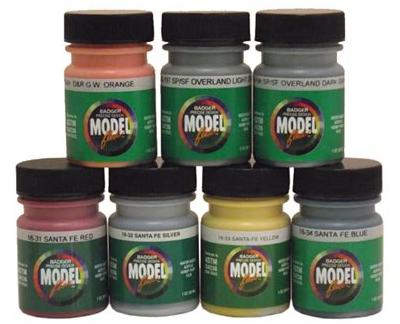
Railroad-specific Paints; copyright © Badger
A water-based acrylic paint line with quite a few railroad-specific colors (click their view-larger link for a big image). These are available in 1oz and 2oz bottles, sold both individually and in convenient color-matched sets. These paints can be relatively easily found online, in hobby shops, and in some arts-and-crafts stores.
They have a wargaming set of paints, which are good for painting figures. These come in 1oz bottles, and you can see the array of colors they offer on their web site.
For those of you who use a 3D printer, or 3D-printed models, Badger now has the 3D Prime primer available in black, gray, and white.
Badger also have their "Woods & Water" paints product line, which is designed to be applied to natural materials, such as wood. They are heavily-pigmented paints, intended for use in airbrushes.
Delta's Ceramcoat
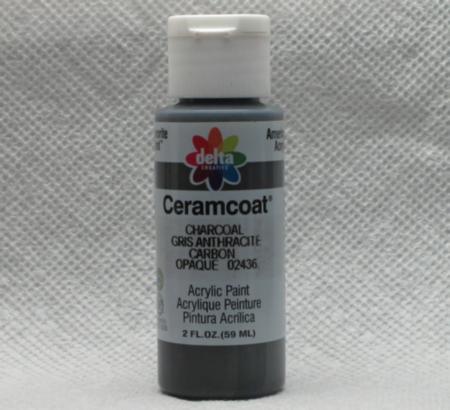
copyright © Peter Vanvliet
This is a water-based acrylic paint product manufactured by Plaid. These are relatively thick paints, but they can be easily thinned with water. These are great for scenery, structure, or backdrop painting. They are available at nearly all general crafts stores (Hobby Lobby, JoAnn, Michaels, etc.), as well as online.
Humbrol
copyright © Humbrol
Humbrol, a British company that is owned by Hornby (since 2006), manufactures both enamel and acrylic paints. The latter is available in two different bottle formats. They offer rail-specific colors, which may be biased toward British railroads. The paints are available directly from their web site, as well as via US retailers, such as Mega Hobby, Hobby Bunker, HobbyTown,
Hunterline
copyright © Hunterline
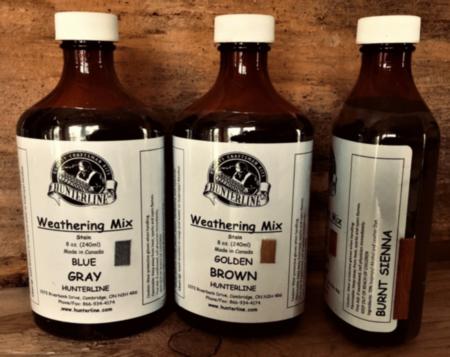
Hunterline has an extensive set of weathering mixes, generally used for aging wood (for example, flat car decking boards).
Liquitex's Acrylic Artist Colors
copyright © Peter Vanvliet
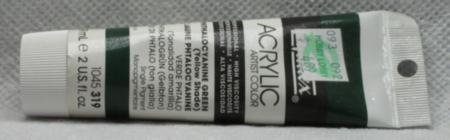
This is a water-based acrylic paint product manufactured by Liquitex. These are relatively thick paints, but most can be thinned with water. They are great for scenery or backdrop painting. They are available in both their "Basic" and "Professional" brands, and can be found at nearly all general crafts stores (Hobby Lobby, JoAnn, Michaels, etc.), as well as online.
Mission Models
copyright © Mission Models
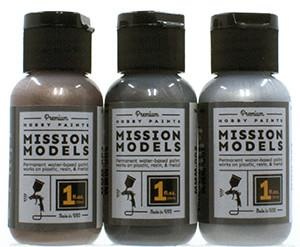
Although this company targets their airbrush-ready paints for military models, there may be some overlap with colors needed by model railroaders. Products are sold via their web site and through dealers throughout the world.
P-B-L Star Brand
Star Brand paints are solvent-based (see web site). They are a lacquer-type paint, similar to automotive body paints. It dries very quickly. Experience has shown that you have to use their thinner to thin their paints; nothing else works as a thinner (lacquer thinner will clean the hand brushes, though). Some people believe their paints are acetone-based, so acetone could be used as a thinner (experiment at your own risk). Their web site is a bit confusing to use, but if you go to it, click on the "Online Catalog" entry on the left, then in the "Categories" list, select "8 - Paints & Cements" for a listing of the paint colors they have (the "Photo" links are not photos of the color; very confusing!). They carry railroad paint colors, but most are aimed at the narrow-gauge railroads. These paints can be found elsewhere online, and in some hobby shops.
Right On Track Models
copyright © Modelers Decals and Paint
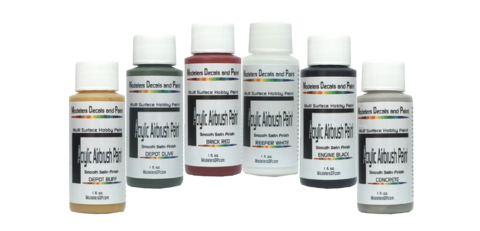
The company used to be called "Modelers Decals and Paint", but apparently Right On Track Models has bought out their paints product line. They produce acrylic paints designed for airbrush application, specifically for model railroaders, in 1oz bottles. This is a very thin paint. Their "Series 22" acrylic paints are intended for manual brush-on applications. The company also carries airbrushing supplies through their web site.
Scalecoat
copyright © Peter Vanvliet
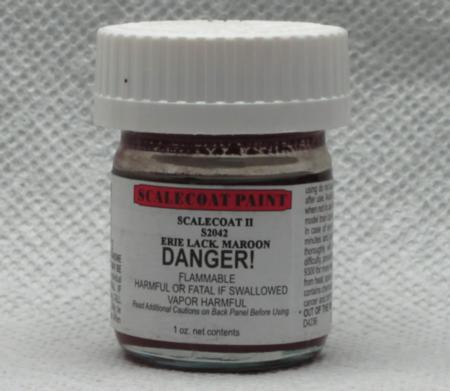
Please note that Scalecoat paints are gone. The parent company, MinuteMan Scale Models, seems to have disappeared. Contact Kevin Macomber, of Narrow Gauge Modeling Co., as he has been stockpiling out-of-production paints.
All Scalecoat paints are solvent-based enamel paints, and most dry with a gloss finish. They have two paint types.
Scalecoat I is designed for use directly on metal and wood without the need for a primer coat. When applied to brass models, a low-heat baking in the oven will cure the paint layer within hours.
Scalecoat II is designed for use on plastics. Curing may take several days. Don't put plastic models in the oven!
All paints are focused on railroad modeling. Once cured, the coat should be glossy, immediately ready for application of decals. For airbrushing, Scalecoat has their own thinner, but some people report that thinning the paint with lacquer thinner works well (thin about 50/50; thin the to-be-used paint, not in the bottle, because the paint will be ruined over time). If any dulling appears on the painted surface, not enough paint was applied. Once a paint bottle is opened, there is a limited shelf-life. These paints can be found online, and in some hobby shops.
Tamiya
copyright © Tamiya
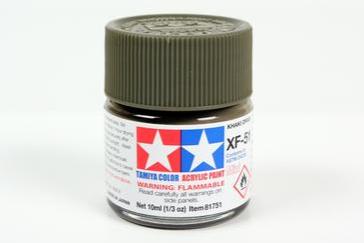
Tamiya's paint is available as a synthetic lacquer or an acrylic paint in a variety of colors for plastic surfaces, available in both flat and gloss. Since Tamiya is a manufacturer of plastic car and airplane kits, their paints are more geared toward those products. However, some may be applicable to the railroad modeler. These paints can be found online, in hobby shops, and some arts-and-crafts stores.
Tru-Color Paint
copyright © Peter Vanvliet
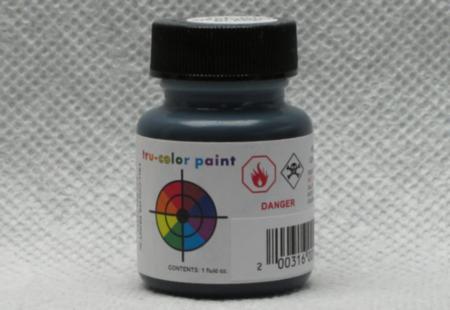
Tru-Color Paint focuses on model railroad paints. These are solvent-based paints. For airbrushing, it is recommended that you thin them either with the company's thinner, or with acetone. For some people, it doesn't seem to dry to a gloss finish. It is recommended that brass be primed with the company's primer first. Direct adherence to cars made out of resin can be a problem (priming might be important there). Thorough stirring of the paint is highly recommended. It is sold in two variations; one for airbrushing (glossy) and one for hand-painting (flat/matte). They now also have spray-cans in the various colors. They also now have paints specially formulated for 3D-printed items. There are various color charts available on their web site.
Vallejo
copyright © Peter Vanvliet
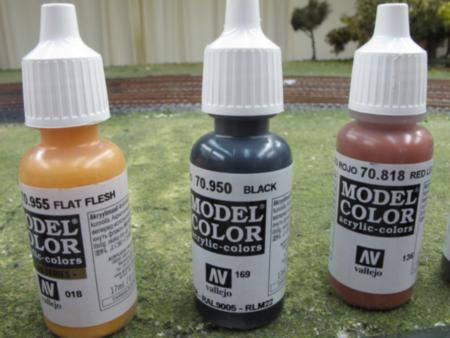
Vallejo is based in Spain. They manufacture a variety of paint products, including pigments (for weathering), acrylic, washes, mediums, and inks. They don't offer railroad-specific colors as their target audience is military and airplane modelers. They have a huge product line, which may be a bit overwhelming. For us model railroaders, the two product lines that are of primary interest are their "Model Color" (matte hand-paint), "Model Air" (matte airbrushing), and "Model Wash" (weathering wash) paints. If you are interested in applying a primer coat first, also check out their "Surface Primer" product line. They are available in individual containers, and in color-combined sets for specific purposes. A sealer coat is recommended as experience has shown that their paints can be damaged easily (as with any acrylic paint). Since they are not a US-based company, getting their paints may be a bit of challenge. Here are a few retailers you might want to check out: Burbank's House of Hobbies, Hobby Lobby, HobbyLinc, Internet Hobbies, Mega Hobby, Micro-Mark, Miniature Market, Midwest Model Railroad, Showcase Miniatures.
Paint Finishing & Decal Preparation
copyright © Peter Vanvliet
Some paints leave a flat finish and some leave a gloss finish.
A flat finish is one where the surface consists of many irregular small surfaces, all at different angles. The light is refracted such that it appears to not be reflective.
A gloss finish is one flat, smooth surface, which appears to be shiny or reflective.
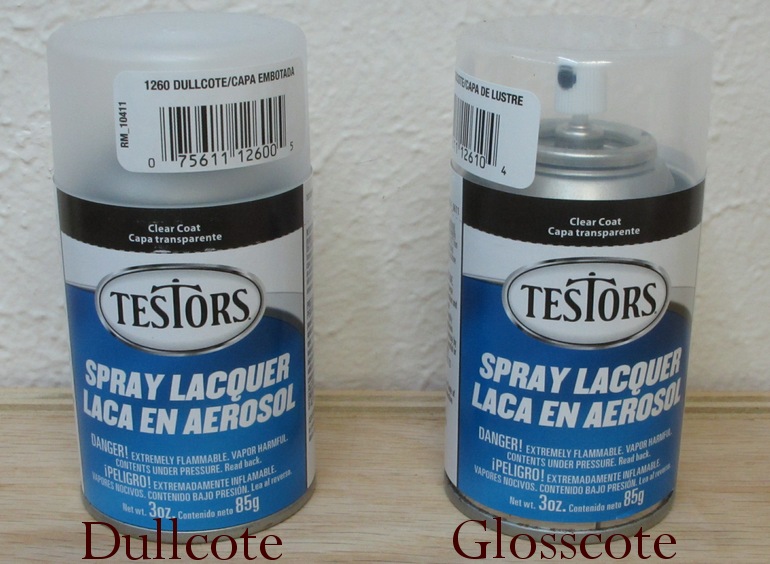
When applying decals, you will want a glossy surface, so that the decals can be easily applied and somewhat moved around while they are still wet. They might tear or not adhere properly on a matte surface. If you used a flat paint, you will need to apply a gloss spray to the model first. Typically, model railroaders use Testors Glosscote or a similar product.
Decal Protection
For model railroading, we typically don't want the cars and locomotives to be shiny. In the real world these are typically dull or dusty. So, once the decals have been applied, typically a spray is applied, such as Testors Dullcote or a similar product. This not only dulls the shine, but it also protects the decals and the underlying paint layer from possible future damage.
One note about Dullcote. If you apply too many coats of this clear lacquer, the irregular small surfaces mentioned above will start to fill in, and eventually become a smooth surface. So, too many coats of Dullcote, will cause the model to have a glossy surface. Try to limit it to one, continuous spray when applying.
Most decals will deteriorate over time if they are left on their original sheet. If you then attempt to use them, they may be brittle or tear easily. Some modelers have had success with first spraying them with Testors Dullcote and letting that cure before handling and applying the decals.
Weathering
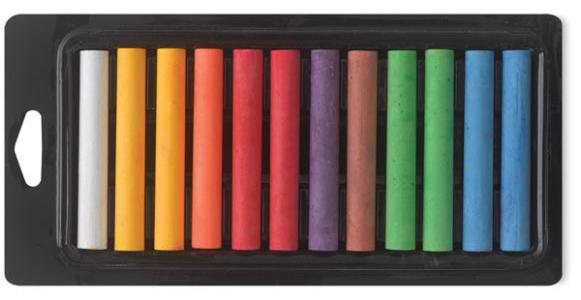
To protect models where artists chalks have been used for weathering, do not use Testors Dullcote, because it will effectively nullify the effect of the chalks. Use an acrylic clear spray to protect weathering chalks, if necessary.
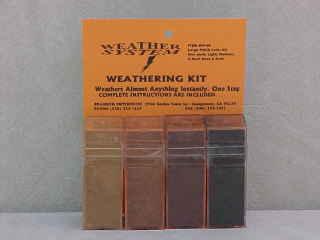
Bragdon Enterprises' weathering powders will turn into a muddy mess if you use Testors Dullcote on them. If the Bragdon powders have been sufficiently rubbed into the surface, they should, generally, not come off, so no top coating should be necessary.
artist chalks
copyright © Quartet
The original way of weathering our models was to scrape off some artist chalk, mix them if necessary, and then apply them to the model with a paint brush. When all was to your liking, a clear protective coat could be sprayed on to prevent the chalk from falling off. These chalks are available at nearly any artist-related hobby store. Online, the company Dick Blick is a good resource to see what is available.
Bragdon Enterprises
copyright © Bragdon Enterprises
The advantage of using Bragdon's weathering powders is that once they are worked into the model, they don't come off very easily, which means that an over-spray isn't really needed. The friction of working them into the model's surface activates an adhesive mixed in with the powders. Regular artists chalks do not have that, so they can be easily removed from a model with regular handling, and may require an over-spray. The weathering powders are available individually in small and large containers, as well as in convenient sets.
Doc O'Brien's
copyright © Micro-Mart
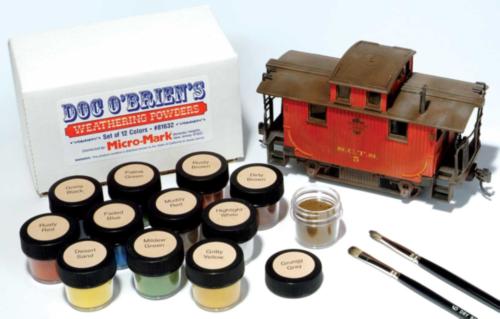
Micro-Mart carries the Doc O'Brien's Weathering Powders set.
Humbrol
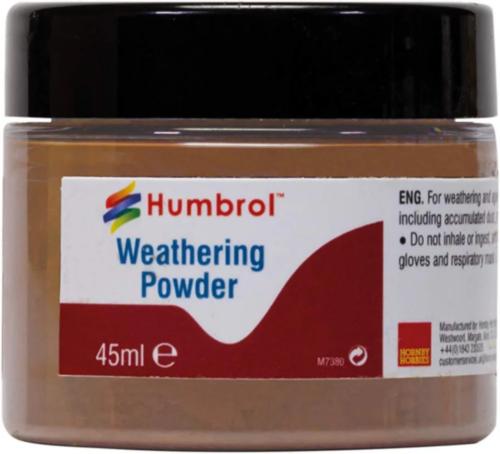
copyright © Humbrol
The British company Humbrol (now owned by Hornby) has a number of weathering powders available. These are available in the U.S. online as well as in some stores.
Monroe Models
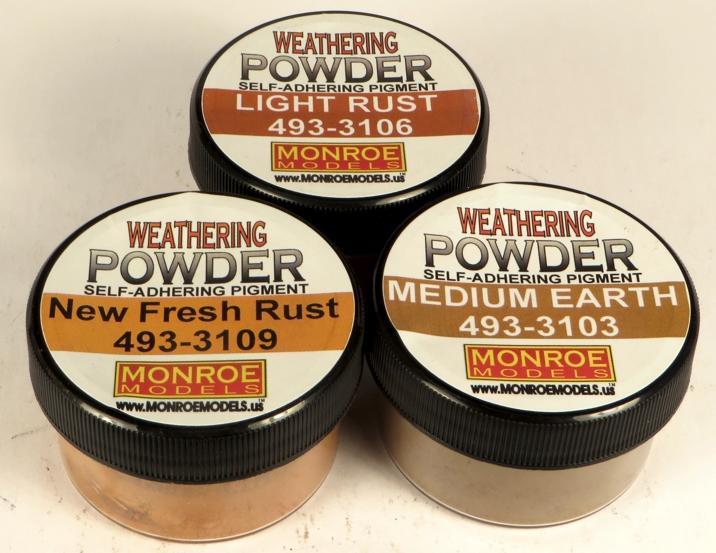
copyright © Monroe Models
Monroe Models are specifically designed for use with model railroading, and are available individually and organized sets, with color samples shown on their web site. These are the former AIM weathering powders.
PanPastel
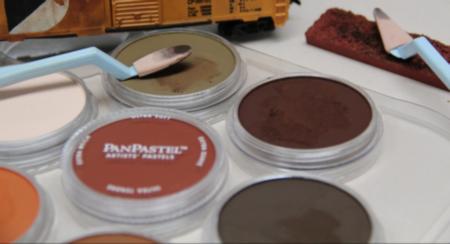
copyright © PanPastel
Another alternative to artist chalks or Bragdon's is PanPastel. The weathering powders are available individually as well as in coordinated sets.
WWScenics
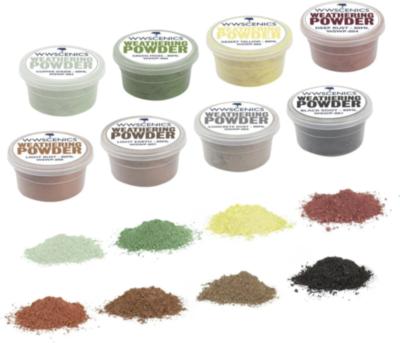
copyright © WWScenics
WWScenics is a British company, but their weathering powders are available in the U.S., especially online. These are intended mostly for use with scenery.
References
Southern Pacific equipment prototype paint matching