
1949 A.C. Gilbert A.F. Accessories

Manufacturer:
A.C. Gilbert
Manufacturer ID:
22
Category:
Accessory
Name:
Scenery Gravel
Model Introduced:
1949
Finish:
painted & lettered
Notes:
#22 was produced from 1949 through 1956 in two variations. Both variations came in a white paper bag which contained 22 ounces of the scenery gravel. Over time, the bag would turn yellow/tan with age. The difference in the two variation is that one variation has blue lettering on the bag, as shown in the photo, while the second has black lettering.
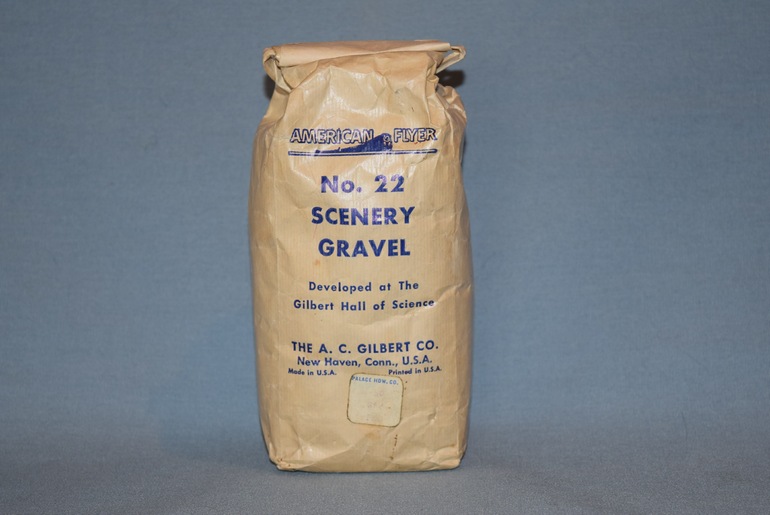
(image copyright © Ted Hamler)
Manufacturer:
A.C. Gilbert
Manufacturer ID:
23
Category:
Accessory
Name:
Artificial Coal
Model Introduced:
1949
Finish:
painted & lettered
Notes:
#23 Artificial Coal was produced from 1949 through 1956 in two variations. Both variations contained approximately one-half pound of coal (which were actually chips of Bakelite). The first variation shown on the left in the photo was manufactured by Paxton for Gilbert in 1949 and 1950. It came in a white cloth bag. On the right in the photo, the second variation came in a 3-1/2" x 9" plastic bag that was manufactured by Colber Corporation for Gilbert from late 1950 through 1956.
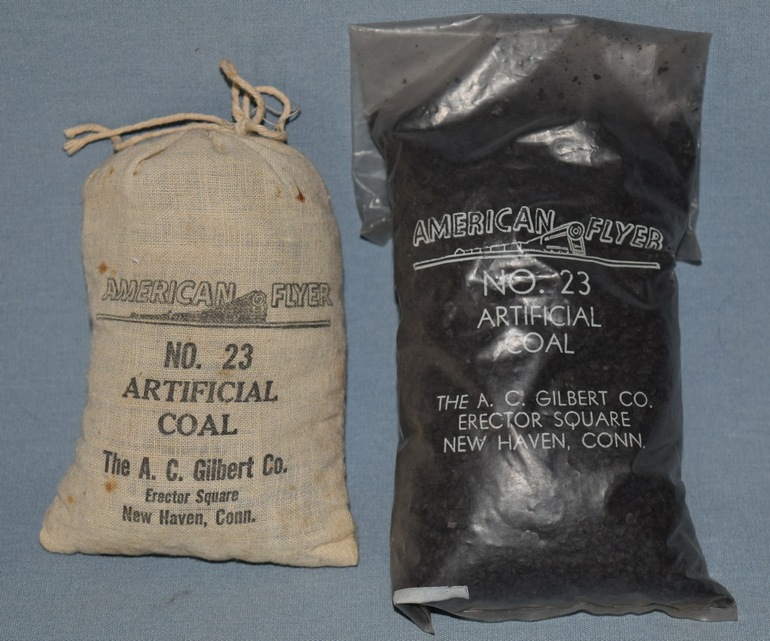
(image copyright © Ted Hamler)
Manufacturer:
A.C. Gilbert
Manufacturer ID:
30
Category:
Accessory
Name:
Highway Sign Set
Model Introduced:
1949
Finish:
painted & lettered
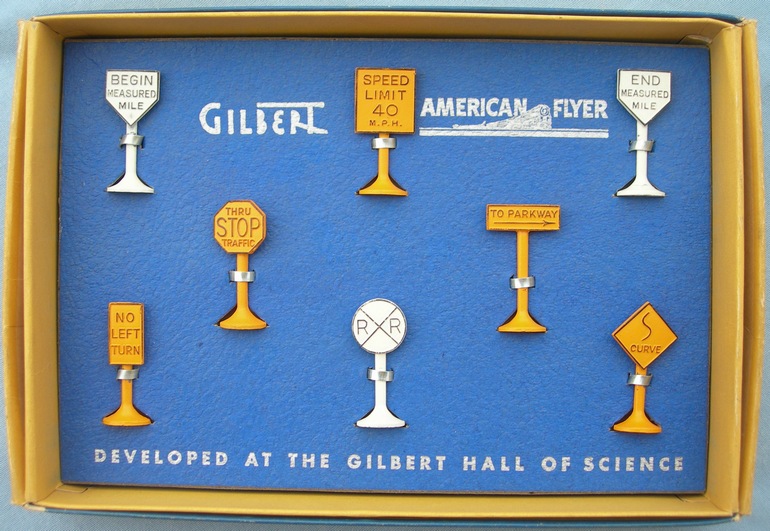
(image copyright © Ted Hamler)
Manufacturer:
A.C. Gilbert
Manufacturer ID:
32
Category:
Accessory
Name:
City Street Equipment Set
Model Introduced:
1949
Finish:
painted & lettered
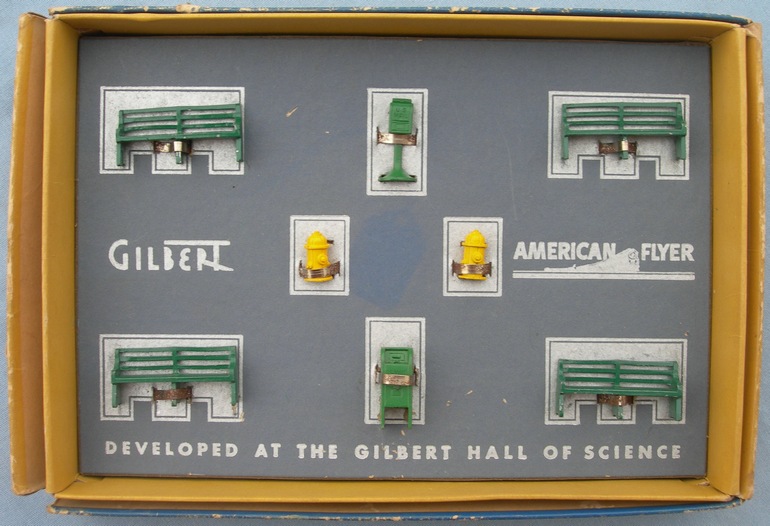
(image copyright © Ted Hamler)
Manufacturer:
A.C. Gilbert
Manufacturer ID:
758
Category:
Accessory
Name:
Sam the Semaphore Man
Model Introduced:
1949
Finish:
painted & lettered
Notes:
One-button operation. This accessory is covered in the Ted Hamler column of the January 2012 issue of the S Gaugian magazine.
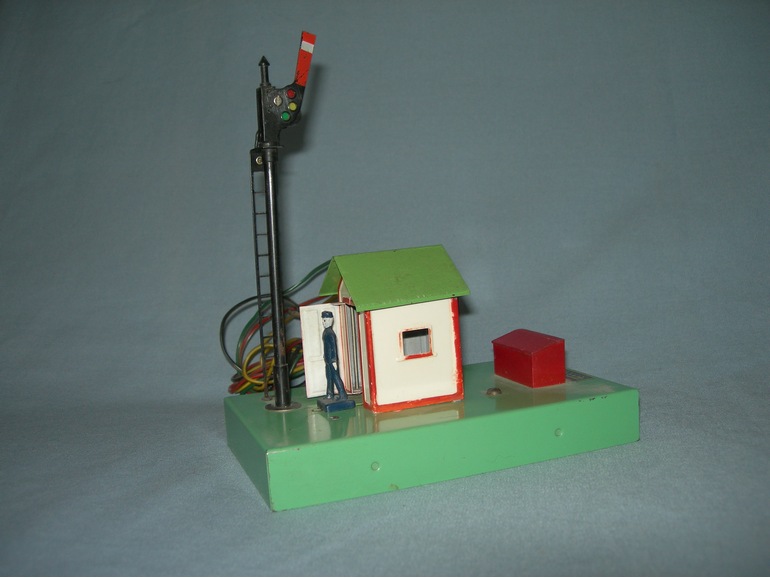
(image copyright © Ted Hamler)
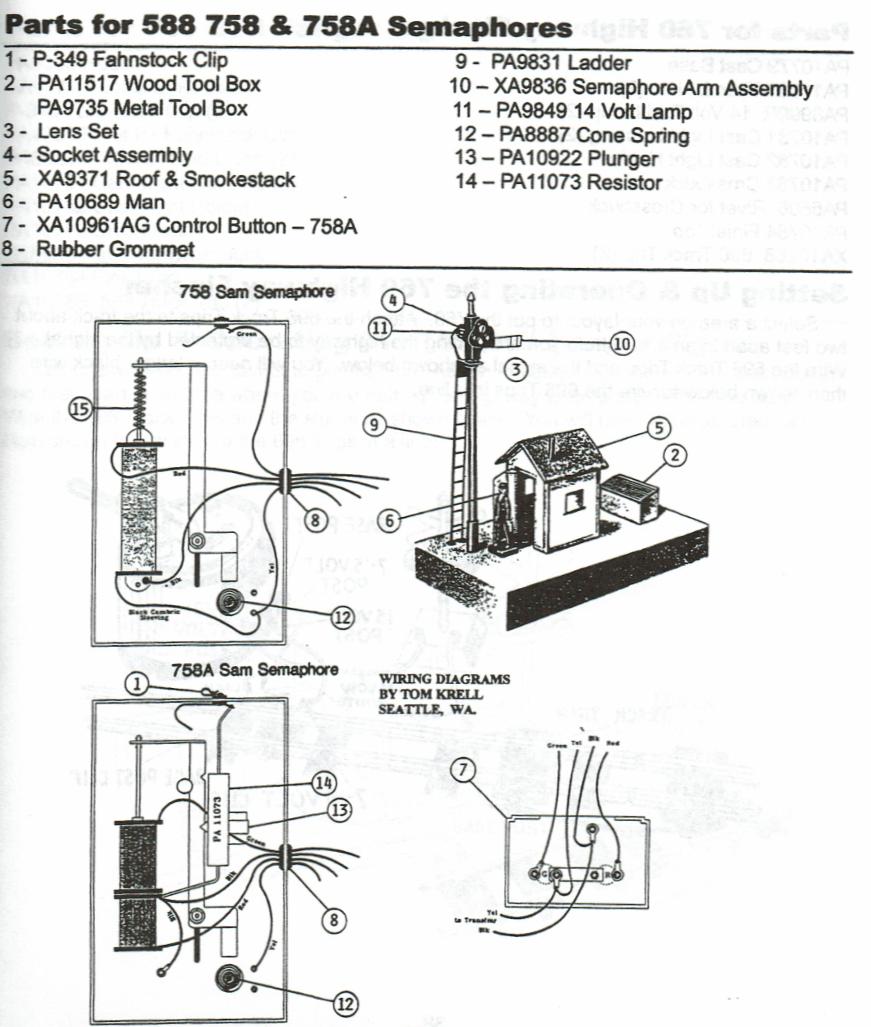
(image copyright © Roger Walton)
Manufacturer:
A.C. Gilbert
Manufacturer ID:
760
Category:
Accessory
Name:
Highway Flasher
Model Introduced:
1949
Finish:
painted & lettered
Notes:
The #760 Flasher was produced from 1949 through 1956 while the #23760 Flasher produced from 1957 through 1960 is essentially identical to #760. The main differences are the boxes they came in, and the type of trips that accompanied the flasher. The #760 came with two #696 Track Trips while the #23760 came with one #696 Track Trip and one #XA16A593 Pike-Master Flasher Trip. The #760 has two variations; the first is identical to the unit in the photo. The second and rarer unit has the wording "RAIL-ROAD/CROS-SING" printed on both side of the cross buck while the #23760 has only one variation.
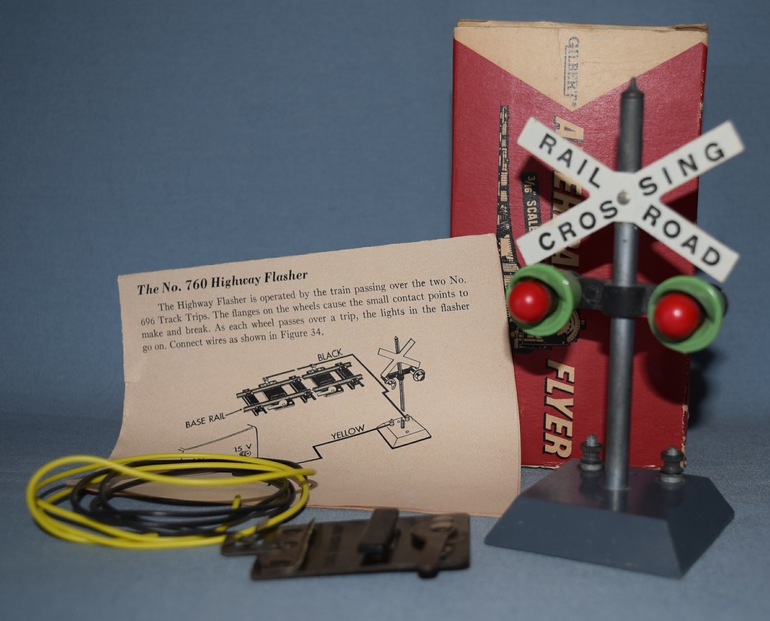
(image copyright © Ted Hamler)
Manufacturer:
A.C. Gilbert
Manufacturer ID:
761
Category:
Accessory
Name:
Semaphore
Model Introduced:
1949
Finish:
painted & lettered
Notes:
The #761 Semaphore was offered from 1949 through 1956, in two variations. The first variation has either a light or dark green base with "American Flyer" imprinted on the base. The second variation, which is shown in the main photo, produced in 1949 has "American Flyer Lines" imprinted on the base. In both cases they came with two #697 Track Trips, two #692 Fiber Pins, one #707 Track Terminal, a packing list, an M2620 Tag (which reads "CAUTION -- Do not allow train to stand on track trip at anytime or coil may become overheated"), and an instruction sheet showing the wiring diagram. How to install and operate this model is covered in the May 2011 issue of the S Gaugian magazine.
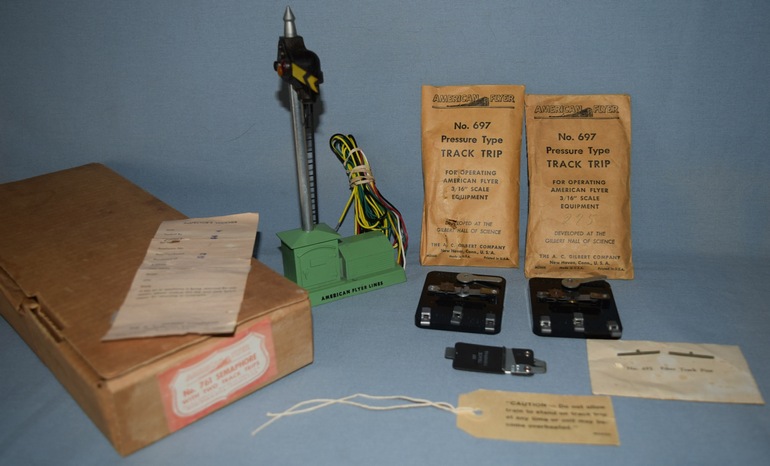
(image copyright © Ted Hamler)
Manufacturer:
A.C. Gilbert
Manufacturer ID:
762
Category:
Accessory
Name:
Billboard Whistle
Model Introduced:
1949
Finish:
painted & lettered
Notes:
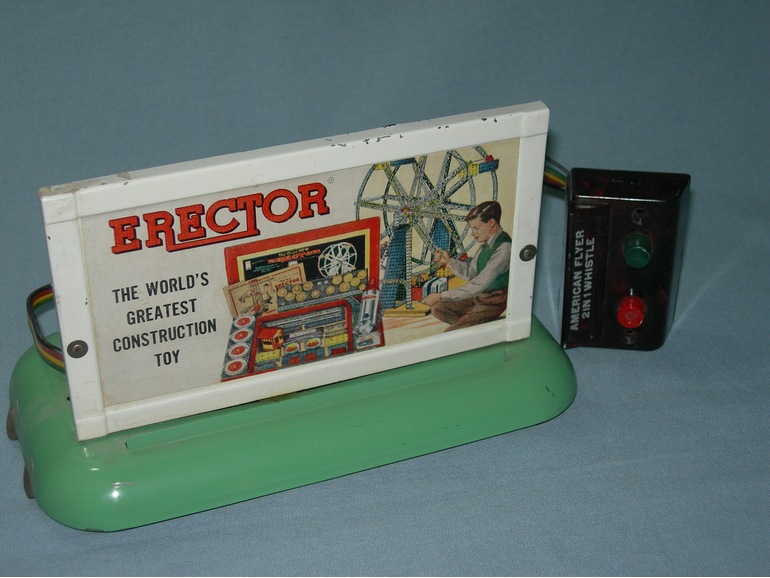
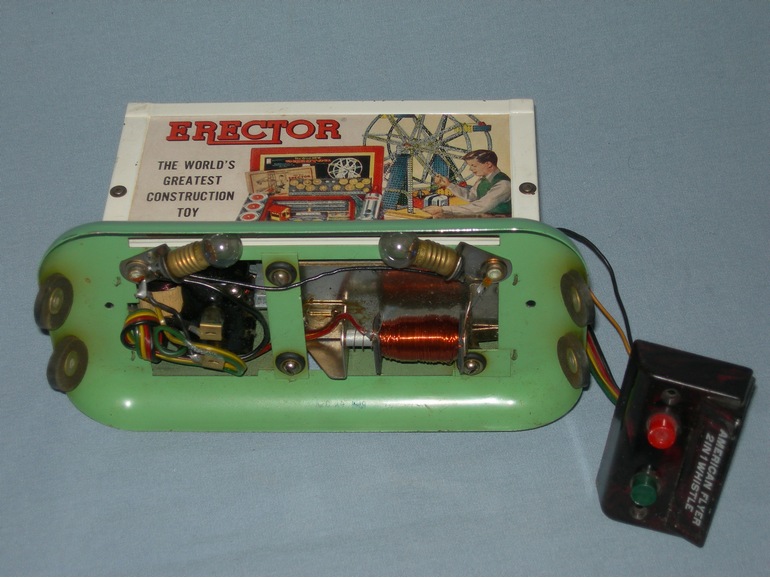
Produced in 1949 and 1950, the 2-in-1 Billboard Whistle has only one variation. The purpose of this whistle is to give two distant sounds for the model railroader. By pressing one of the two buttons it generates the sound of a distant train. Pressing the second button it gave the sound of a nearby train. This magic was achieved by using a solenoid that diverts the air from the motor through a different chamber in the whistle assembly. In the second photo, which shows the underside of #762, you can see the solenoid and the whistle assembly.
(image copyright © Ted Hamler)
(image copyright © Ted Hamler)