
2-8-0 Steam Locomotives

Model Manufacturer Info
Manufacturer:
Cleveland Model & Supply
Prototype Info
Category:
2-8-0
Model Info
Gauge:
S
Product Type:
Die-cast, Wood, Cardboard Kit
Finish:
unpainted
Wheels:
hi-rail
Online Article:
Model Manufacturer Info
Manufacturer:
Locomotive Workshop
Prototype Info
Category:
2-8-0
Model Info
Gauge:
S
Introduced:
1983
Product Type:
Craftsman Kit
Finish:
unpainted
Model Manufacturer Info
Manufacturer:
Rex Engineering
Prototype Info
Category:
2-8-0
Model Info
Gauge:
S
Product Type:
White Metal Kit
Finish:
unpainted
Notes:
Here is a one-of-a-kind Rex engine, a prototype/pilot model, it never got in production. It was built by John Sudimak using existing parts from production engines fitted together to make what could have been the next reasonable addition to the company's locomotive line.
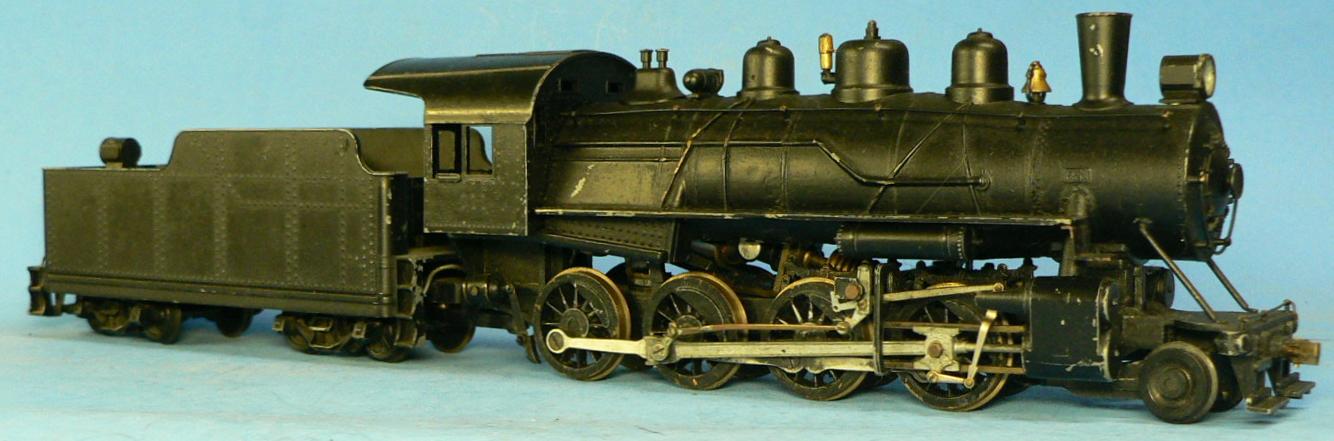
(image copyright © Ed Kirstatter; used by permission)
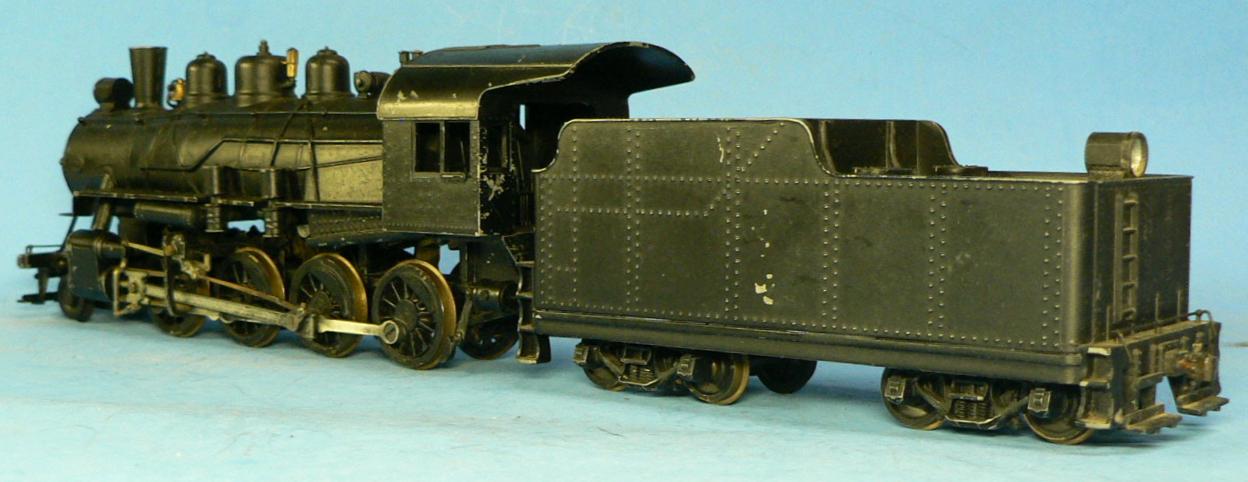
(image copyright © Ed Kirstatter; used by permission)
Model Manufacturer Info
Manufacturer:
S Scale Locomotive & Supply
Prototype Info
Category:
2-8-0
Model Info
Gauge:
S
Introduced:
1978
Product Type:
Brass Kit
Finish:
unpainted
Wheels:
scale
Online Article:
Notes:
The kit was available for the UP, SP, MP, B&O, C&O, NYC, Nickel Plate (main photo), and the B&M, all using the same basic model with only the external details differing. The appropriate tenders were available separately as kits.
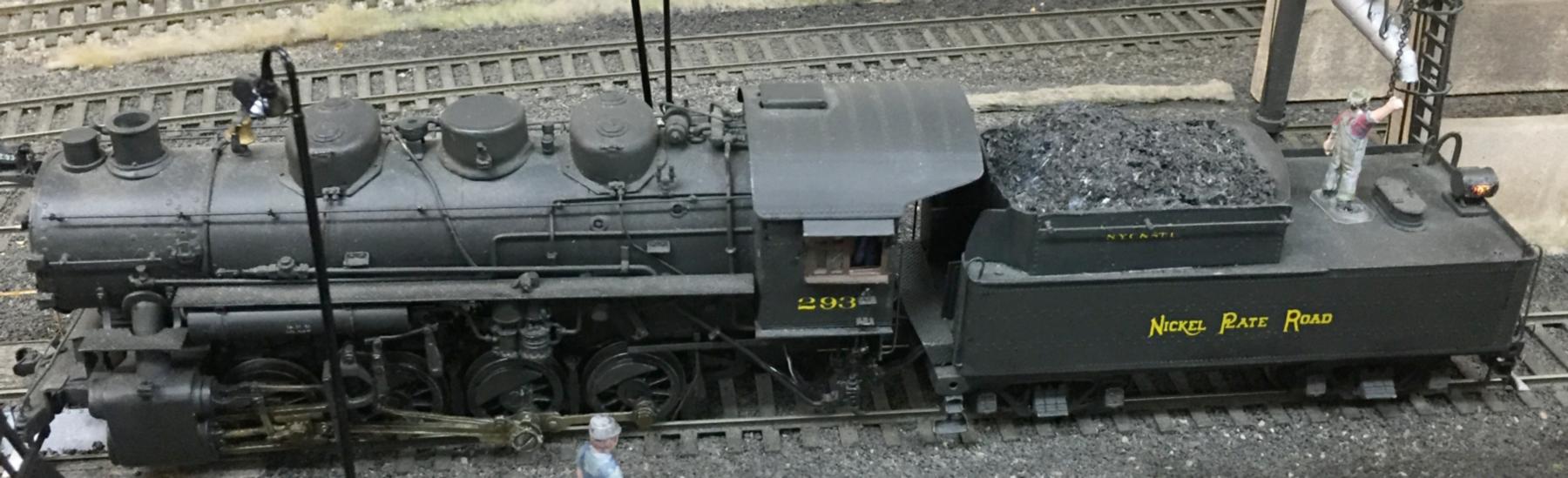
(image copyright © Chris Rooney; used by permission)

(image copyright © Jace Kahn; used by permission)
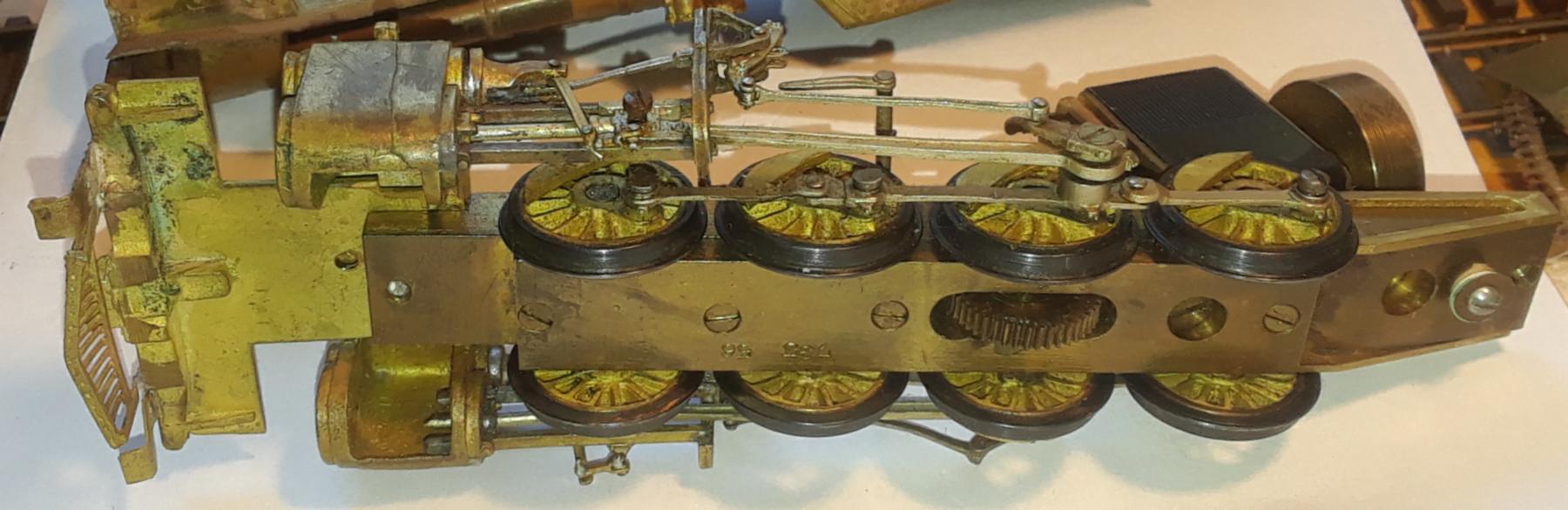
(image copyright © Jace Kahn; used by permission)
Watch one of these engines in action on a section of test track.
Model Manufacturer Info
Manufacturer:
S-Helper Service
Manufacturer ID:
01791
Prototype Info
Category:
2-8-0
Model Info
Gauge:
S
Introduced:
2006
Product Type:
Plastic
Finish:
painted, not lettered
Power:
AC | DC | DCC, with or without sound
Wheels:
scale or hi-rail
Couplers:
scale or hi-rail
Product Notes:
Notes:
Produced as follows:
SHS #01051: AC/DC, LM sound, hi-rail wheels.
SHS #01071: DCC, sound, hi-rail wheels.
SHS #01091: DC, no sound, hi-rail wheels.
SHS #01751: AC/DC, LM sound, scale wheels.
SHS #01771: DCC, sound, scale wheels.
SHS #01791: DC, no sound, scale wheels.
The first run of DCC-enabled engines used the 1-amp Soundtraxx Tsunami decoders, but they would get hot and shut down. In subsequent runs, the company used the QSI sound decoder, which was rated for 1.5amps.

(image copyright © Eric Hopkins; used by permission)
Model Manufacturer Info
Manufacturer:
The Nord Company
Prototype Info
Category:
2-8-0
Model Info
Gauge:
S
Introduced:
1948
Product Type:
Metal Kit
Finish:
unpainted
Product Notes:
Online Article:
Notes:
Made of heavy brass construction, with some parts being castings. These kits were released in four parts. A customer had to buy part 1 (first section of the locomotive), then later part 2 (the rest of the locomotive), followed by part 3 (the drive train) and part 4 (the tender) before all of the kit was accumulated to actually build the model. The model did not run well.
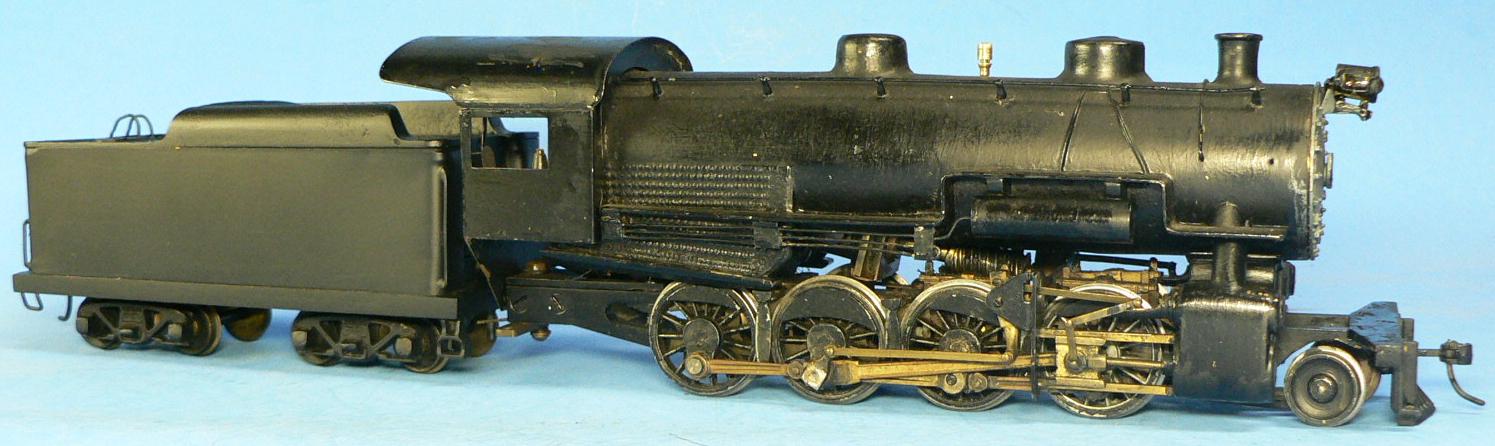
(image copyright © Ed Kirstatter; used by permission)